
Holiday recognition Worksheets for Ages 3-7
3 filtered results
Difficulty Level
Grade
Age
-
From - To
Subject
Activity
Standards
Introduce your little learners to the joy of holiday celebrations with our engaging Holiday Recognition Worksheets designed for ages 3-7. These fun and interactive printables help young children explore various holidays, fostering their understanding of seasonal traditions and symbols. Each worksheet encourages creativity and enhances skills such as coloring, matching, and critical thinking. Perfect for home or classroom use, our holiday recognition resources make learning enjoyable and festive. Guided by vibrant illustrations and playful themes, children will develop a deeper appreciation for diverse holidays. Start celebrating and learning today with our dynamic selection of worksheets tailored for early learners!
Favorites
With answer key
Interactive
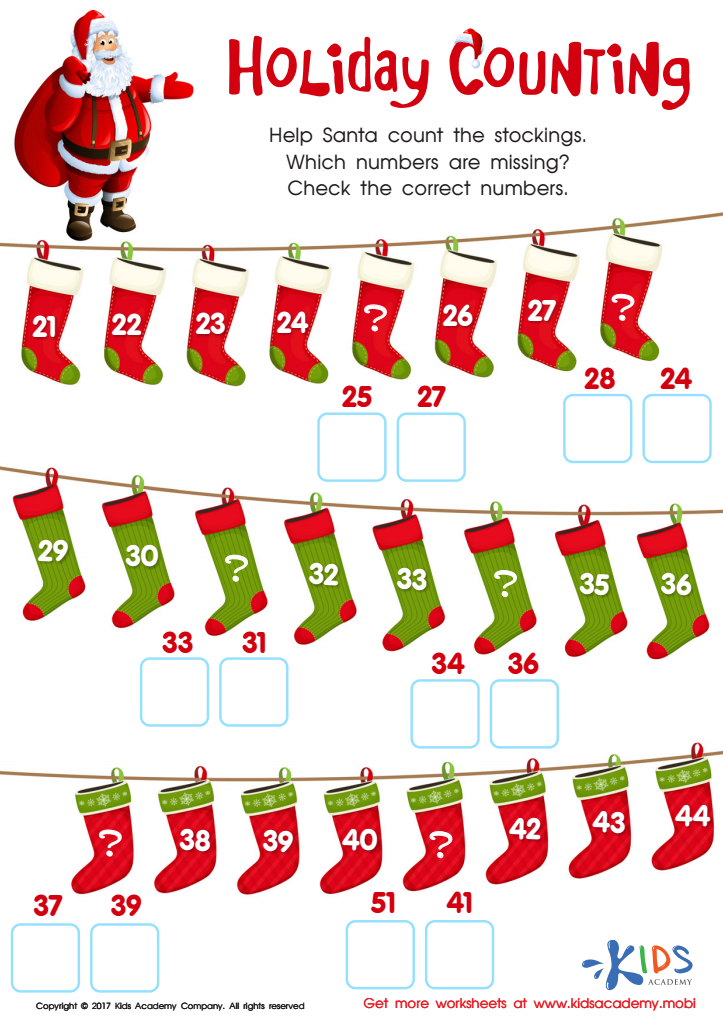
Holiday Counting Worksheet
Let's spread some holiday cheer! Santa needs help counting stockings hung up for gifts - can your little one lend a hand? Find the missing numbers on the worksheet and have them check the boxes for the correct answers. Time to get counting!
 Assign to My Students
Holiday Counting Worksheet
Worksheet
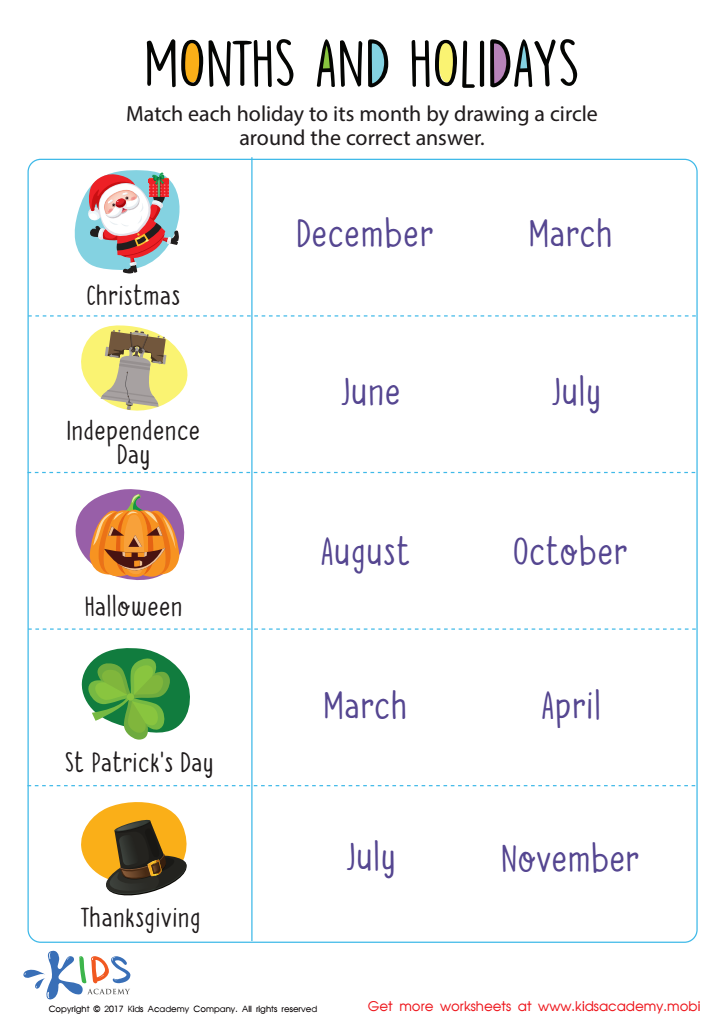
Months and Holidays Worksheet
Kids have fun learning about holidays and the calendar with this PDF worksheet! As they work, they'll connect holiday sights and symbols to their respective months. It's a great way for kids to gain an understanding of the yearly cycle!
Months and Holidays Worksheet
Worksheet
Join Kids Academy for Free
Who is primarily going to use this learning content?






Recognizing holidays for children aged 3-7 is essential for several reasons. Firstly, celebrating holidays helps to instill cultural awareness and understanding in young learners, fostering a sense of belonging and community. It enables children to connect with their families and heritage, enhances their identity, and promotes respect for diversity as they learn about various traditions from around the world.
Secondly, holiday recognition provides opportunities for social and emotional development. Activities surrounding holidays often encourage collaboration, sharing, and communication among peers, which are vital skills for early development. Through storytelling, crafts, and music, children can express their feelings, imagination, and creativity, effectively enhancing their emotional intelligence.
Moreover, holidays serve as a practical context for teaching foundational concepts. Educators can integrate math, literacy, and sensory experiences through themed activities, making learning engaging and relevant. These activities can include counting ornaments, reading holiday-themed books, and exploring seasonal changes.
Lastly, recognizing holidays can establish a sense of rhythm and anticipation in children's lives, giving them structure and excitement. Overall, inclusive holiday recognition enriches the learning environment, nurtures essential life skills, and helps create a positive classroom community.








