
Identifying patterns Worksheets for Ages 3-7
7 filtered results
Difficulty Level
Grade
Age
-
From - To
Subject
Activity
Standards
Unlock your child’s potential with our expertly designed Identifying Patterns Worksheets for Ages 3-7! Tailored to stimulate young minds, these worksheets foster critical thinking and problem-solving skills. Engaging and colorful activities make learning fun as children find and complete patterns using shapes, colors, and sequences. Perfect for preschool and early elementary students, our worksheets build a strong foundation for math and logic. Watch as your child’s confidence grows while they explore patterns and develop crucial early learning skills. Download today and turn everyday learning into an exciting adventure!
Favorites
With answer key
Interactive
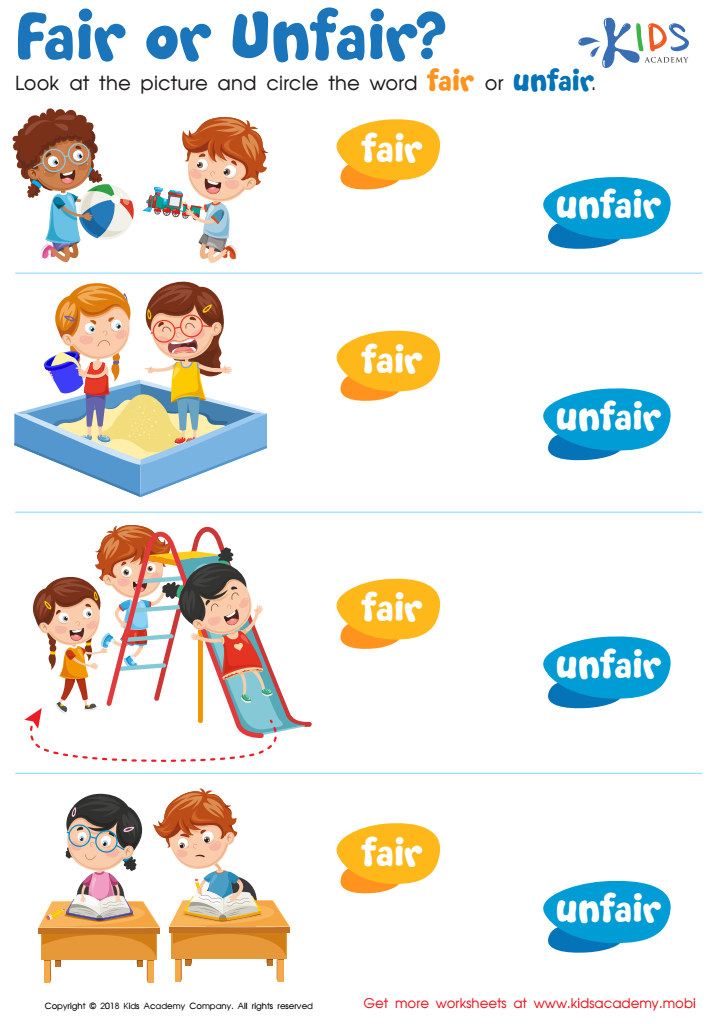
Fair or Unfair Worksheet
Look at the pictures in this worksheet with kids. Can they tell if the actions are fair or unfair? Help them decide and circle the appropriate option. When something causes harm to one person, it is unfair; when all parties benefit, it is fair.
 Assign to My Students
Fair or Unfair Worksheet
Worksheet
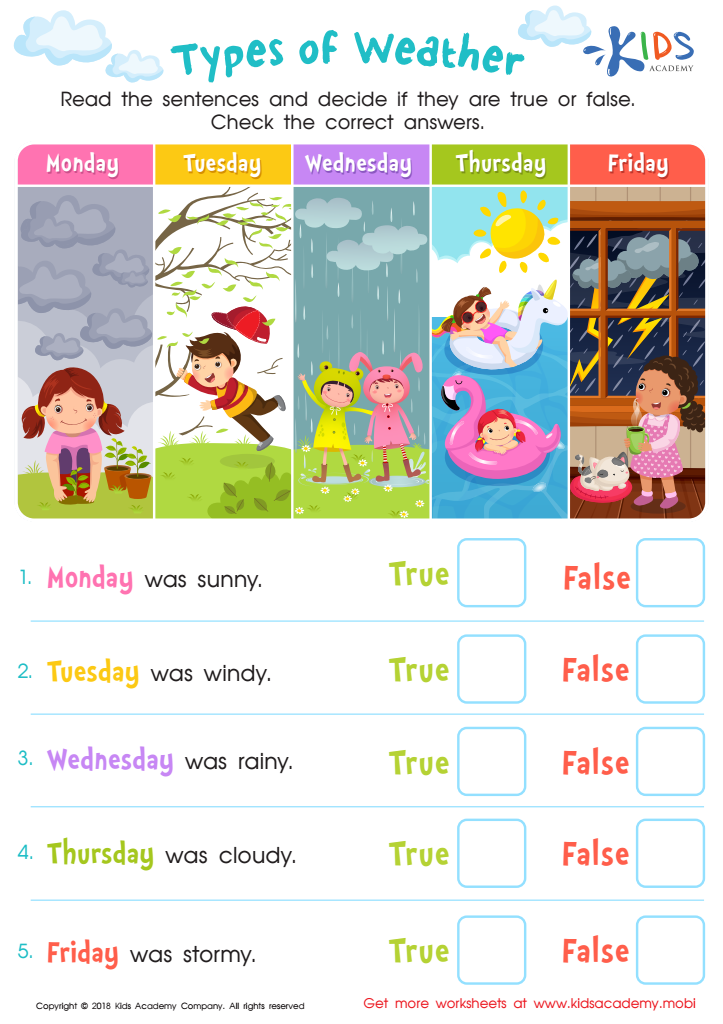
Types of Weather Worksheet
This worksheet will test your child's knowledge of the weather. Show them the pictures of five days of the week, each with a different weather and ask them to describe it. Then read the sentences and ask if they're true/false. Help them find the right answers.
Types of Weather Worksheet
Worksheet
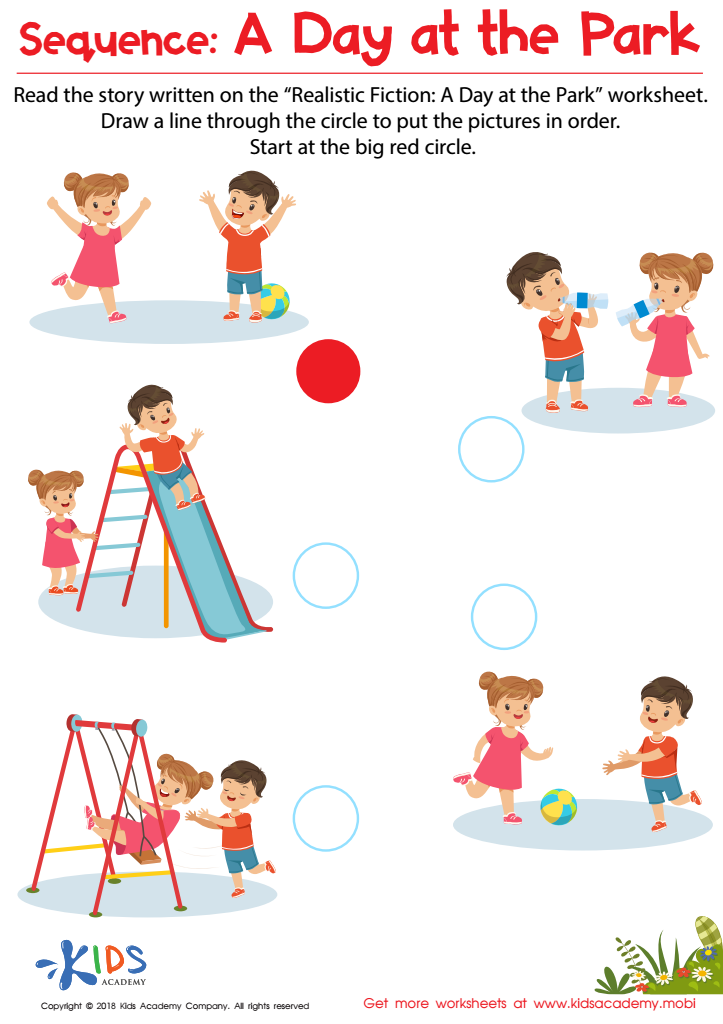
Sequence: A Day at the Park Worksheet
Help your child sequence the events of the story they just read with this activity! Start with the big red circle and draw lines to the other circles next to the images in the correct order. It's a great way to practice their reading skills! Try this downloadable worksheet today!
Sequence: A Day at the Park Worksheet
Worksheet
Join Kids Academy for Free
Who is primarily going to use this learning content?







Identifying patterns for children aged 3-7 is crucial because it lays the foundation for cognitive, mathematical, and problem-solving skills. At this stage, children's brains are rapidly developing, and recognizing patterns helps them understand the world more systematically and logically. Early exposure to patterns aids in the development of critical thinking as children start predicting what comes next, enhancing their reasoning abilities.
Patterns are ubiquitous in everyday life, from the sequence of getting dressed to the rhythm of a song, and grasping these sequences helps children feel more secure and confident in their understanding of daily routines. This predictability is reassuring, boosting their sense of order and stability.
Moreover, pattern recognition is directly linked to mathematics. Identifying patterns in numbers, shapes, and quantities prepares children for more complex math concepts like addition, subtraction, and skip counting. It also applies to reading skills, as recognizing the patterns in letters, sounds, and eventually words leads to better literacy.
Educators and parents should foster an environment where pattern exploration is encouraged through games, activities, and real-life examples. This active engagement hones children's attention to detail, memory, and analytical skills, setting a robust groundwork for future academic and life success.








