Rhyming skills development Worksheets for Ages 3-7
5 filtered results
-
From - To
Unlock your child’s creative potential with our Rhyming Skills Development Worksheets for ages 3-7! These engaging, interactive worksheets are designed to cultivate essential phonemic awareness through fun activities that promote language development. Young learners will explore word families, identify rhyming pairs, and enhance vocabulary skills while enjoying colorful illustrations and relatable themes. Perfect for homes, classrooms, or on-the-go learning, our worksheets offer a delightful way to make learning to rhyme enjoyable. Equip your child with critical literacy tools and watch them blossom into confident communicators. Start their rhyming journey today and foster a lifelong love for language with Kids Academy!
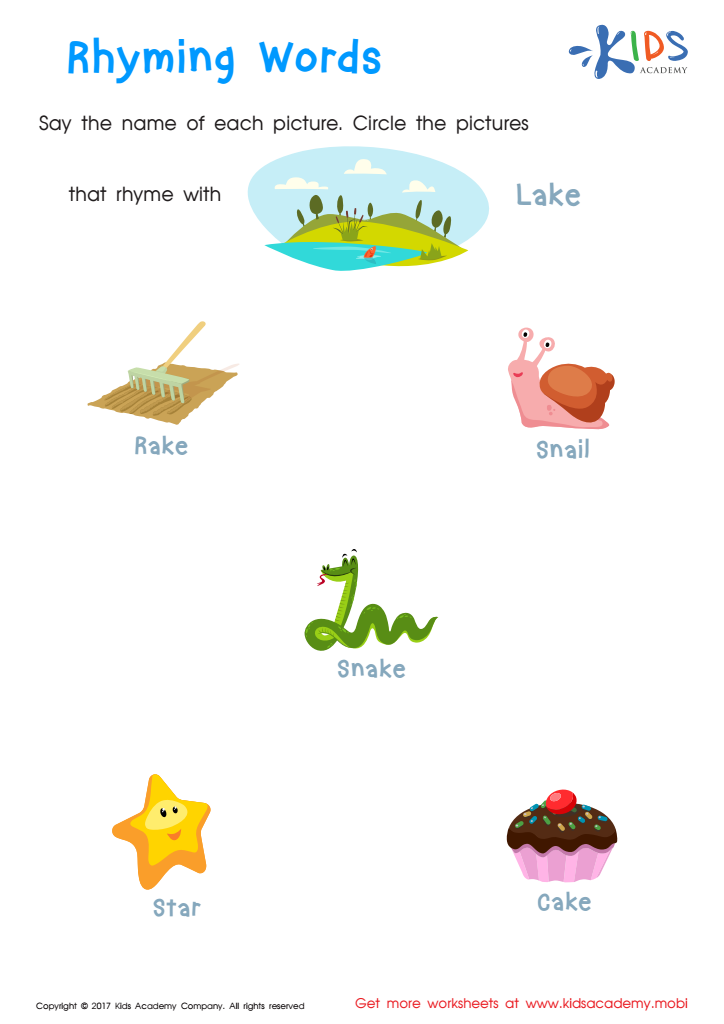
Rhyming Words Rhyming Worksheet
 Assign to My Students
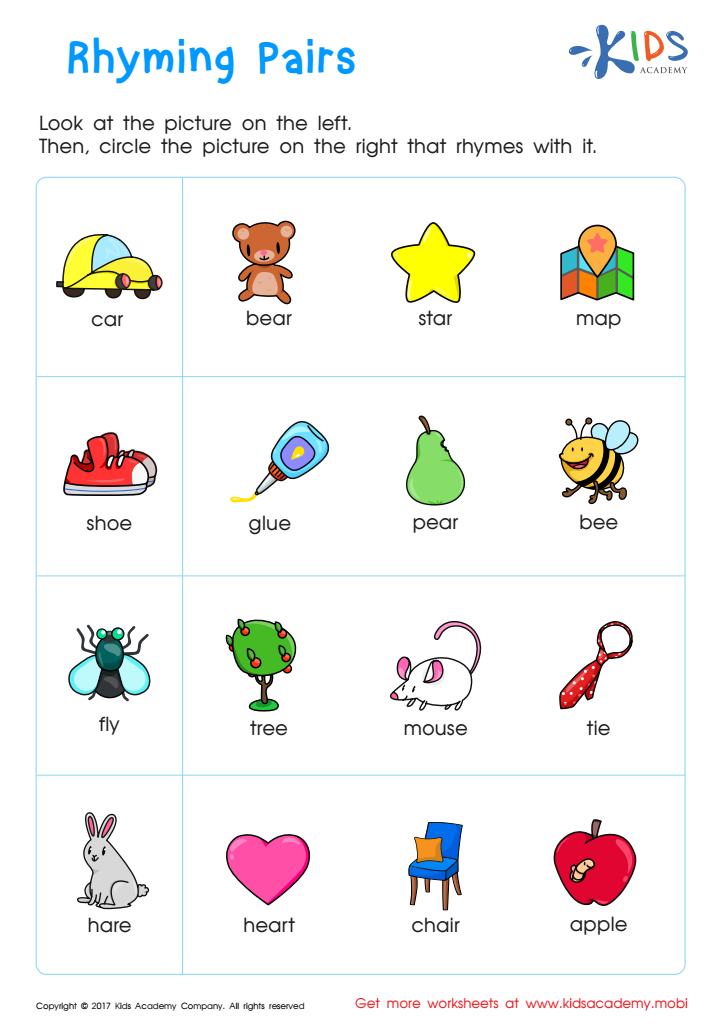
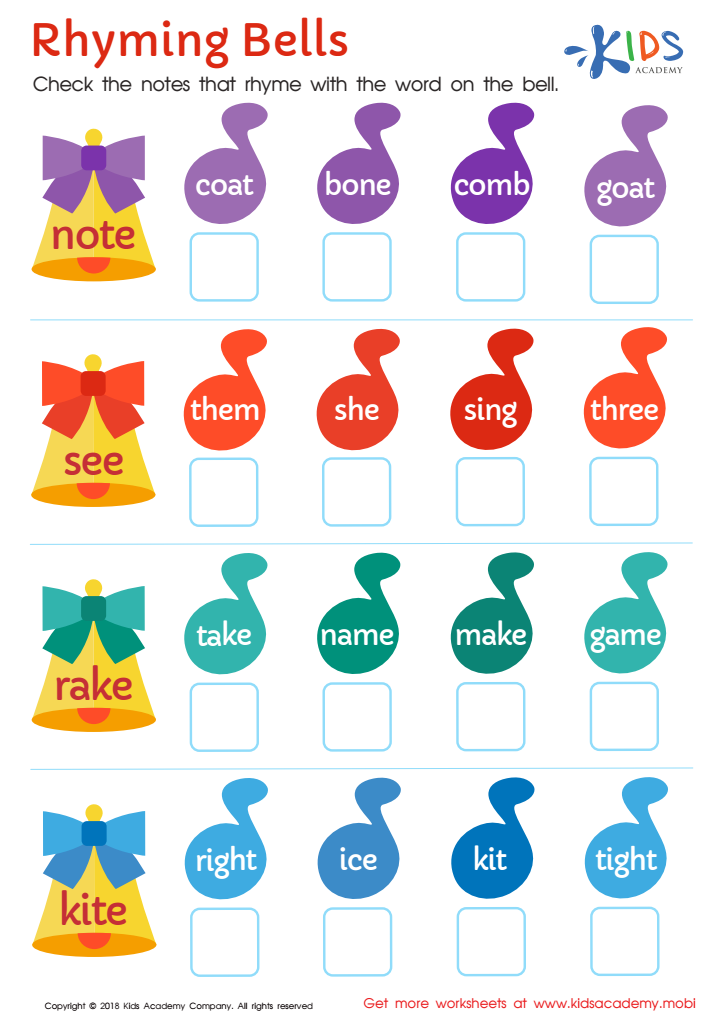
Rhyming Bells Worksheet
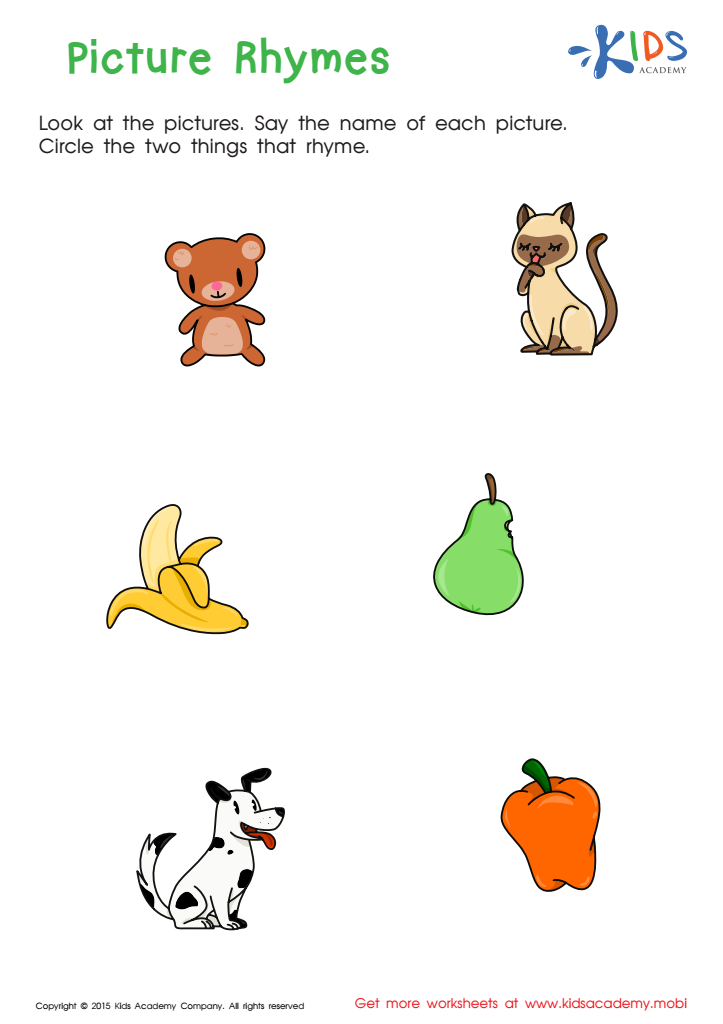
First Words: Picture Rhymes Worksheet
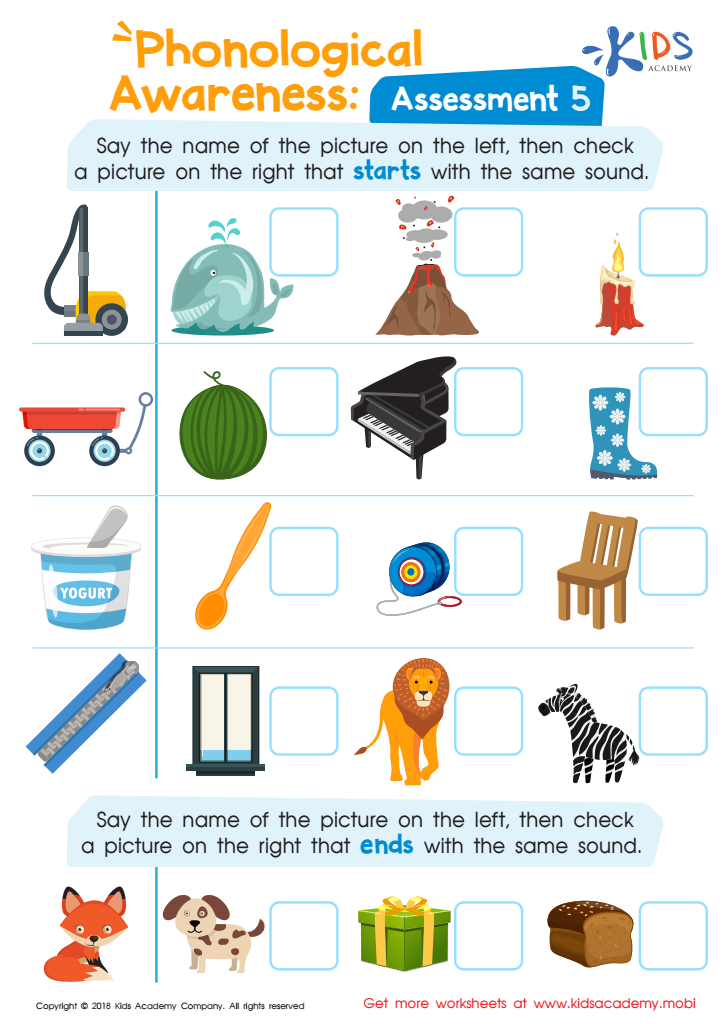
Phonological Awareness: Assessment 5 Worksheet






Rhyming skills are a fundamental aspect of early literacy development for children aged 3-7. Parents and teachers should prioritize rhyming because it lays the groundwork for phonemic awareness, an essential skill for reading. When children learn to recognize and produce rhyming words, they begin to understand the sound structure of language, which aids in decoding words as they read. This skill enhances vocabulary development, helping children to expand their language and express themselves more clearly.
Moreover, engaging in rhyming activities is enjoyable and interactive, making learning playful. Activities like reading rhyming books, singing songs, and playing rhyming games can foster a love for language and literacy at an early age. Such exposure cultivates listening skills and auditory discrimination, which are crucial for learning to read and write.
Additionally, rhyming aids in memory retention, making it easier for children to recall information while building confidence in their linguistic abilities. Creating a strong foundation in rhyming during these formative years supports overall cognitive development, reading mastery, and a lifelong love of literature. Therefore, by nurturing rhyming skills, parents and teachers equip children with vital tools that contribute to their academic success and enthusiastic engagement with language.








