Spatial understanding Worksheets for Ages 3-7
5 filtered results
-
From - To
Discover our expertly designed Spatial Understanding Worksheets tailored for children aged 3-7! These engaging activities will boost your child's ability to navigate and comprehend their physical world. With fun exercises focusing on shapes, sizes, positions, and directions, kids will enhance their spatial reasoning and critical thinking skills. Perfect for parents and educators, these worksheets are an essential resource for early learning. Help your little ones develop a solid foundation for future success in subjects like math, science, and reading. Transform learning into an exciting adventure with our Spatial Understanding Worksheets!
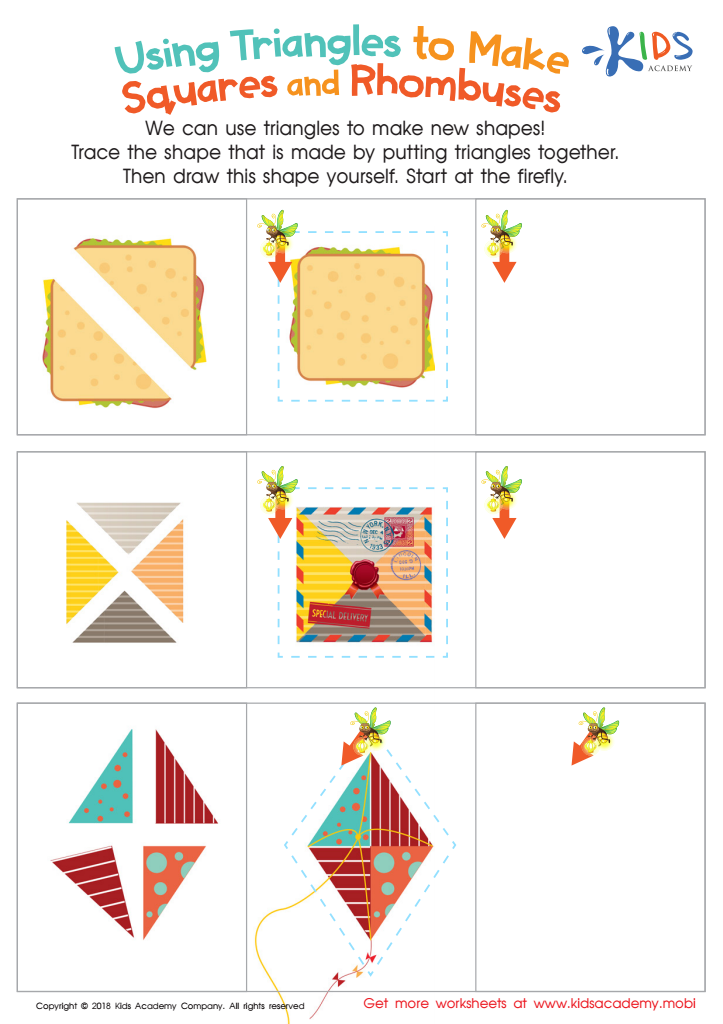
Using Triangles to Make Squares and Rhombuses Worksheet
 Assign to My Students
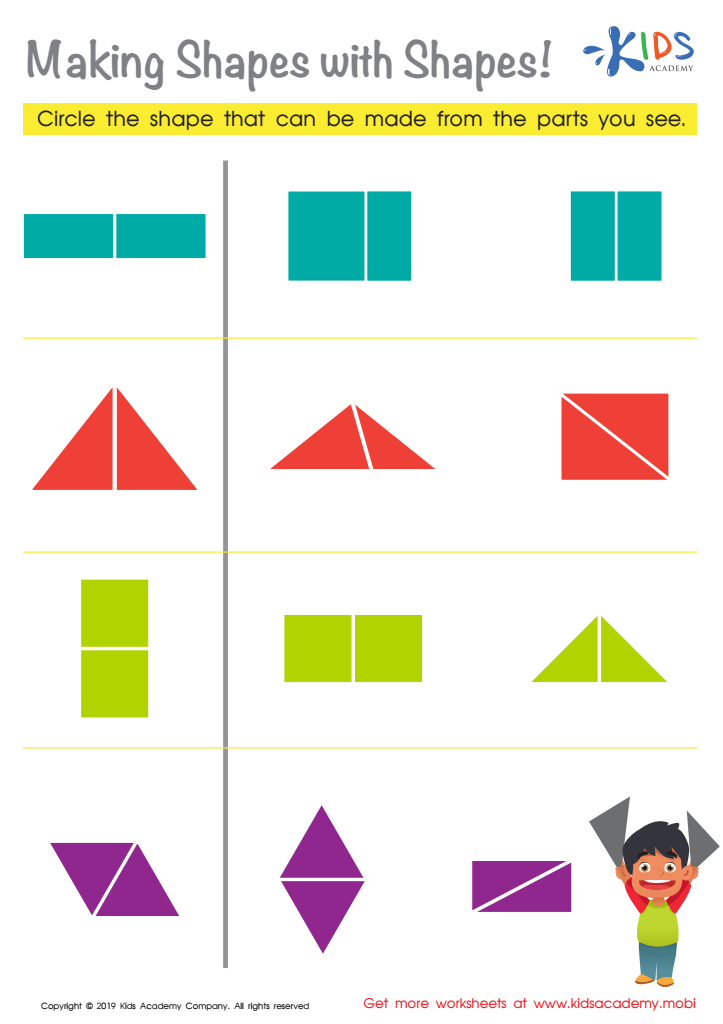
Making Shapes with Shapes Worksheet
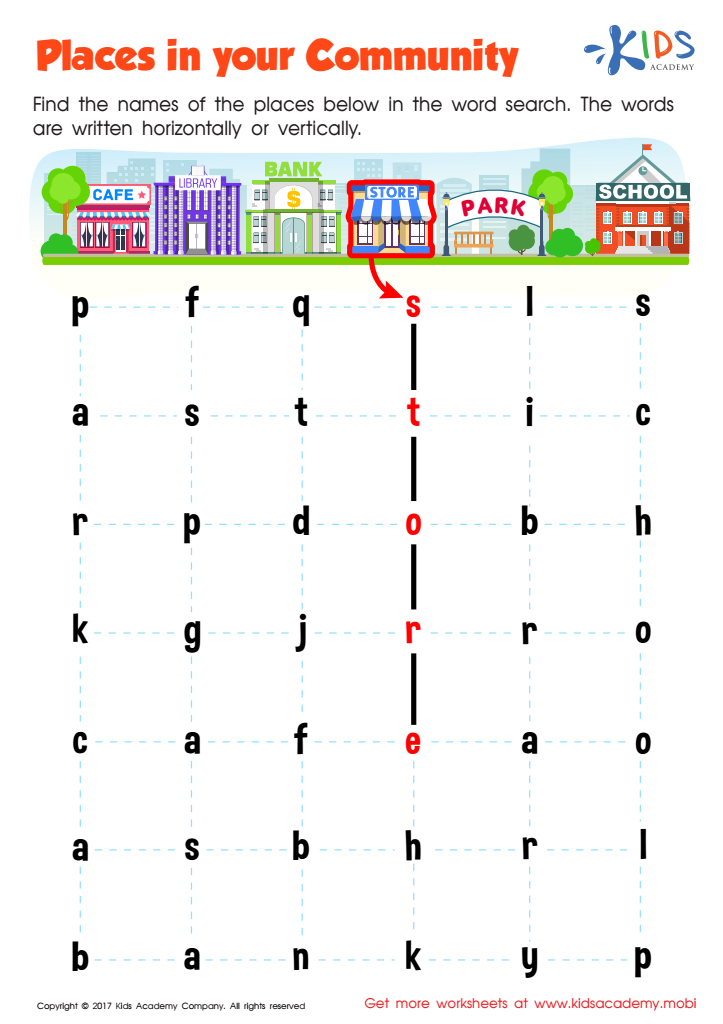
Places in Your Community Worksheet
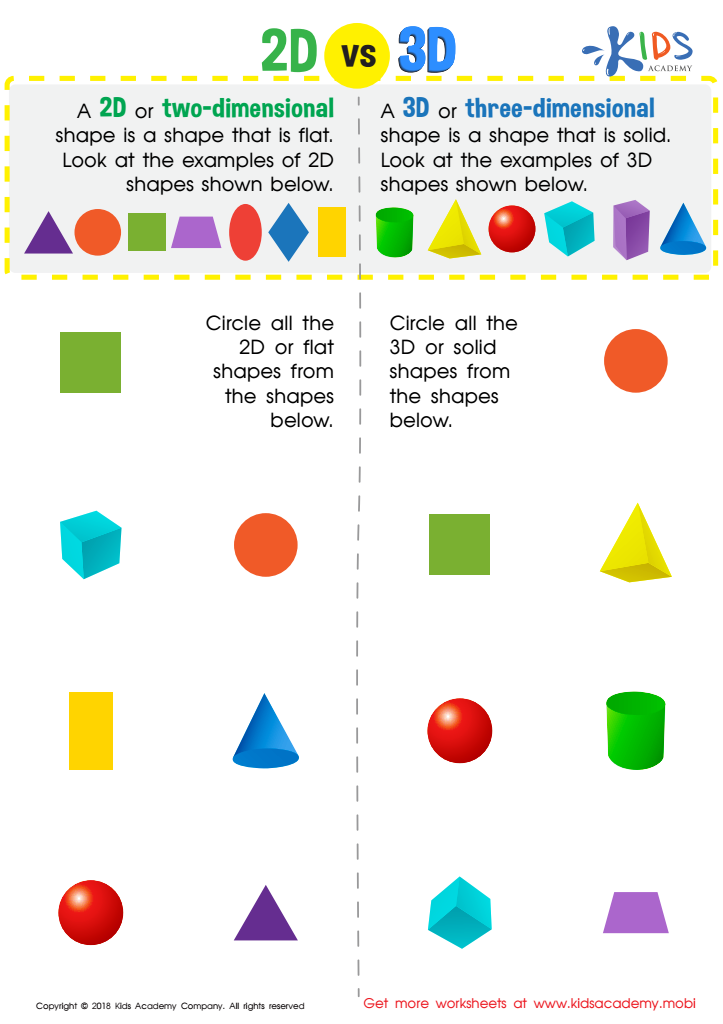
2D vs 3D Shapes Worksheet







Spatial understanding is crucial for young children (ages 3-7) as it forms the foundation for various developmental milestones and skills critical for later learning. At this age, children are beginning to comprehend and navigate the world around them. Encouraging strong spatial skills through play and guided activities helps them understand shapes, sizes, distances, and directions. This understanding is fundamental for mathematical reasoning, including geometry and problem-solving abilities.
Moreover, spatial awareness is closely linked to language development. When children manipulate objects and describe their actions, they enhance their vocabulary and communication skills. This relationship between spatial and linguistic skills can positively impact their reading and writing abilities later on.
Spatial reasoning also plays a pivotal role in scientific thinking. Activities that promote spatial skills, like building blocks, drawing, or puzzle-solving, encourage critical thinking, planning, and creativity. These are crucial for understanding and engaging with STEM (Science, Technology, Engineering, and Mathematics) subjects.
Additionally, fostering spatial understanding supports everyday functional skills, such as following directions, organizing spaces, and even social interactions during play. By nurturing these abilities early on, parents and teachers can support holistic cognitive development, laying the groundwork for academic success and practical, real-world problem-solving skills throughout a child's life.








