Subtraction skills Worksheets for Ages 3-7
27 filtered results
-
From - To
Enhance your child's subtraction skills with our engaging worksheets designed for ages 3-7. Tailored to young learners, these activities deliver a fun and interactive approach to mastering subtraction concepts. Our printable worksheets feature vibrant illustrations and simple exercises, gradually progressing in difficulty to build confidence and competence in early math. Whether you're a parent or teacher, these resources offer a fantastic way to support your child’s mathematical journey at home or in the classroom. Explore our collection today and watch your child develop essential subtraction skills effortlessly and enjoyably.
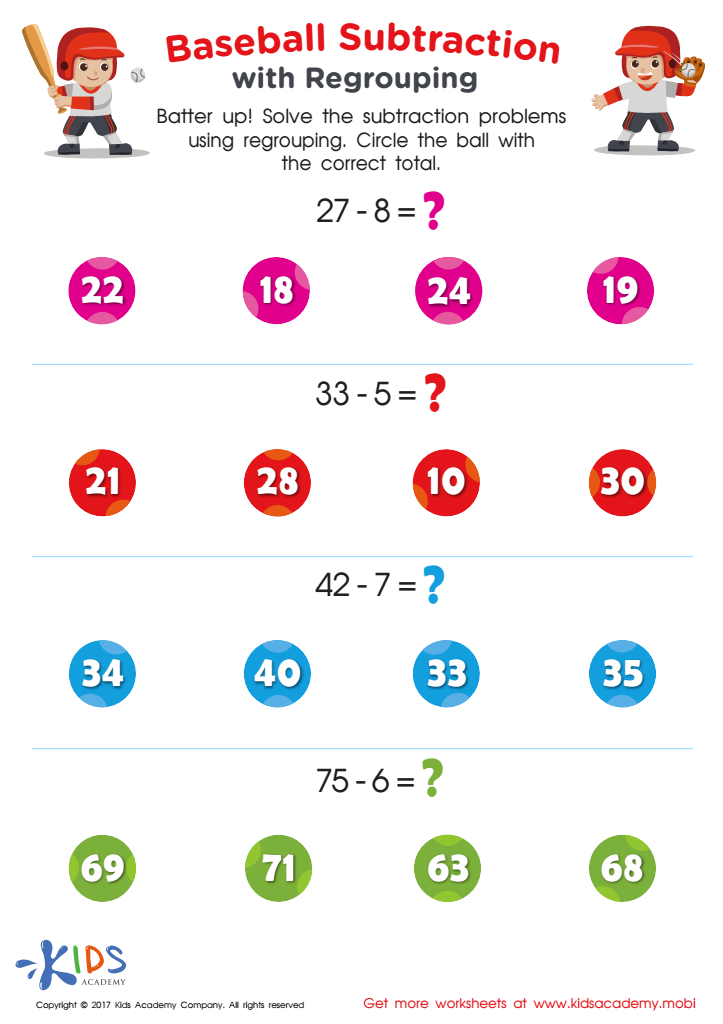
Subtraction With Regrouping for 2nd Grade Worksheet
 Assign to My Students
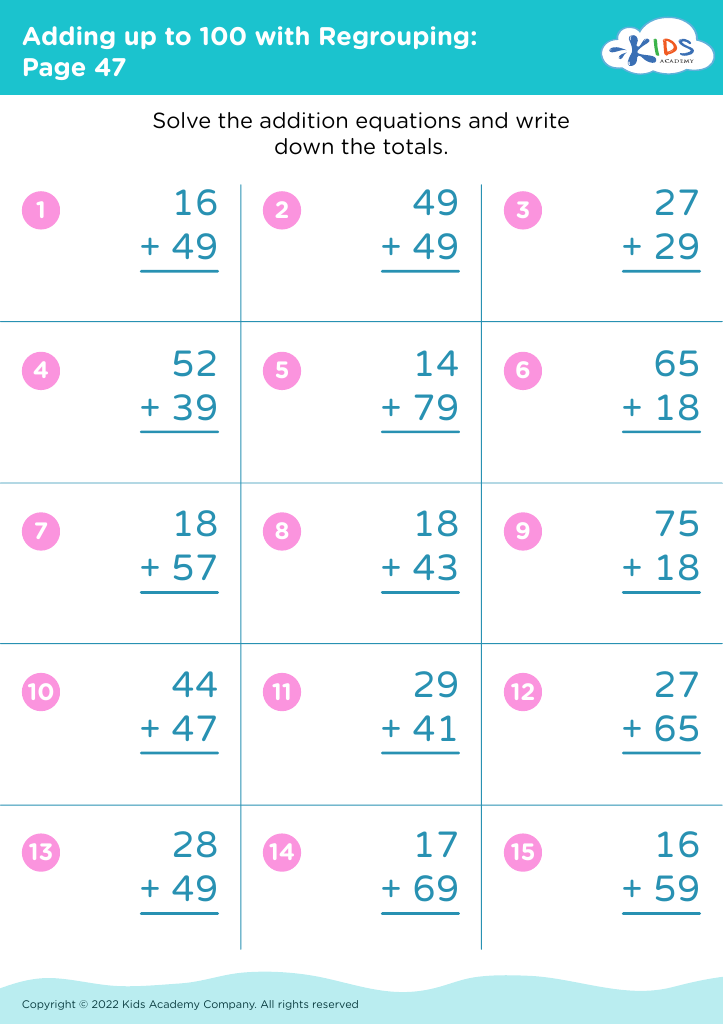
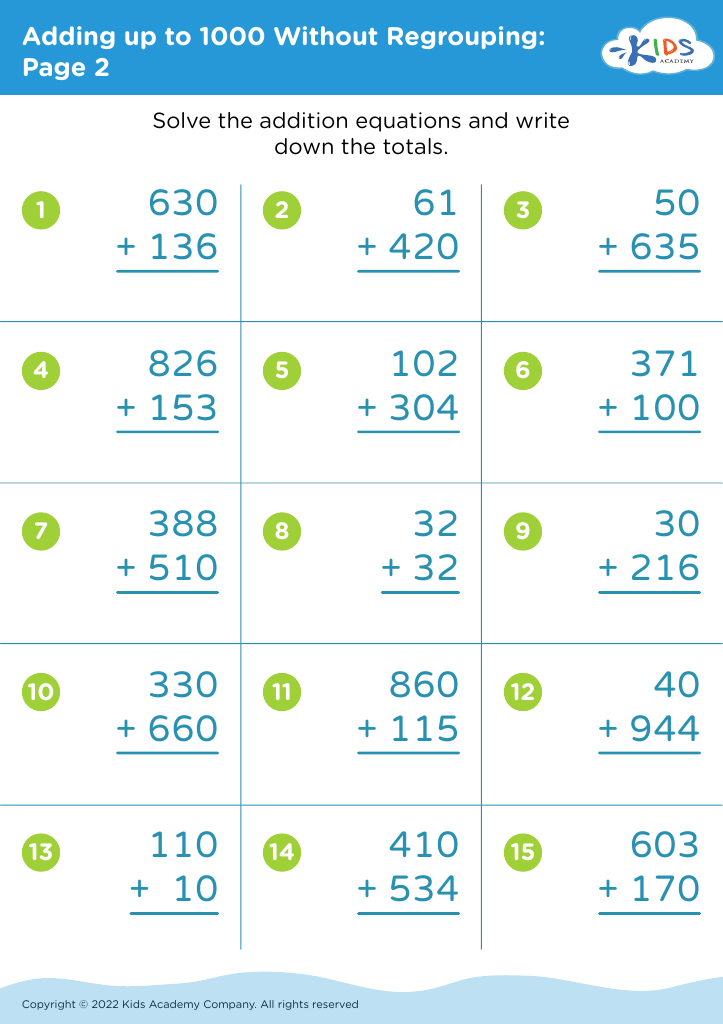
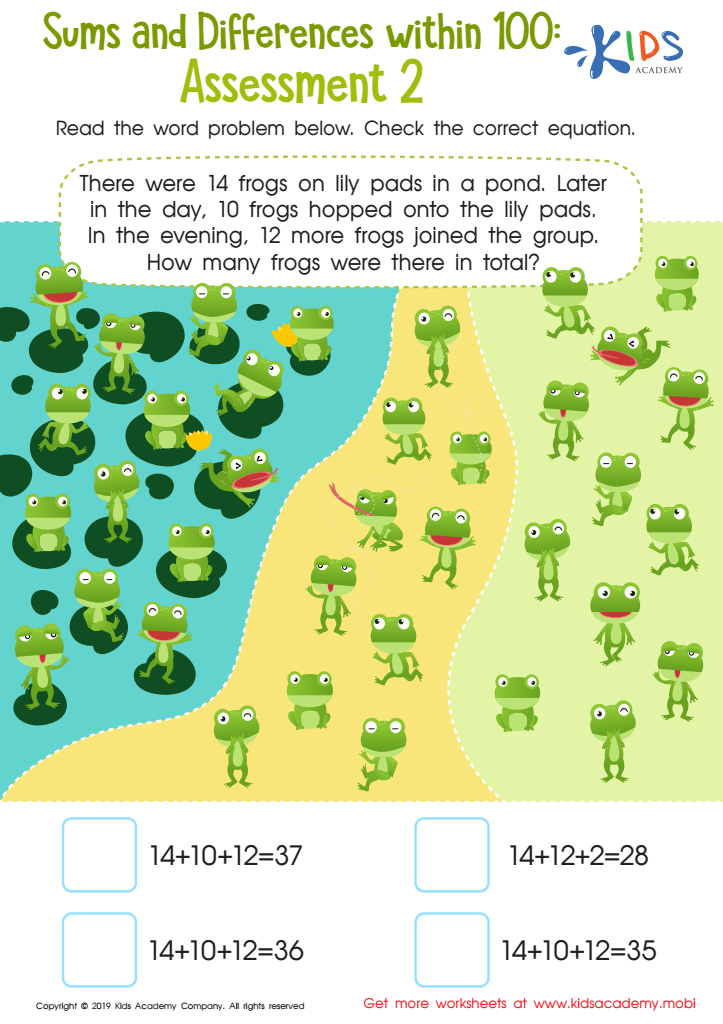
Sums and Differences Within 1 - Assessment 2 Worksheet
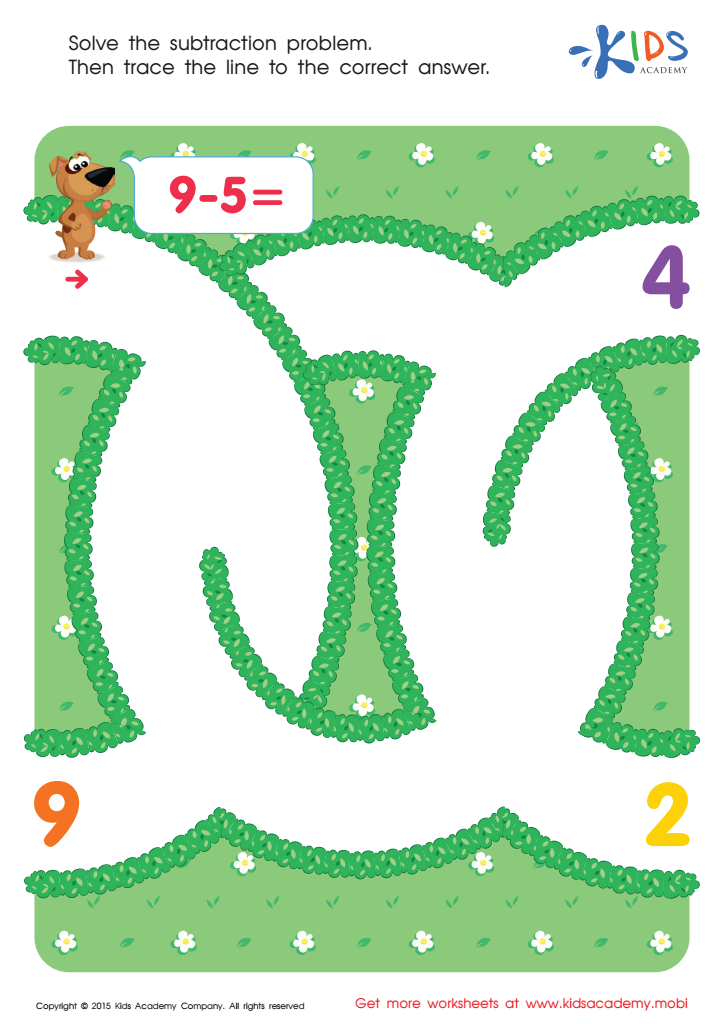
Subtraction Nine And Five Worksheet
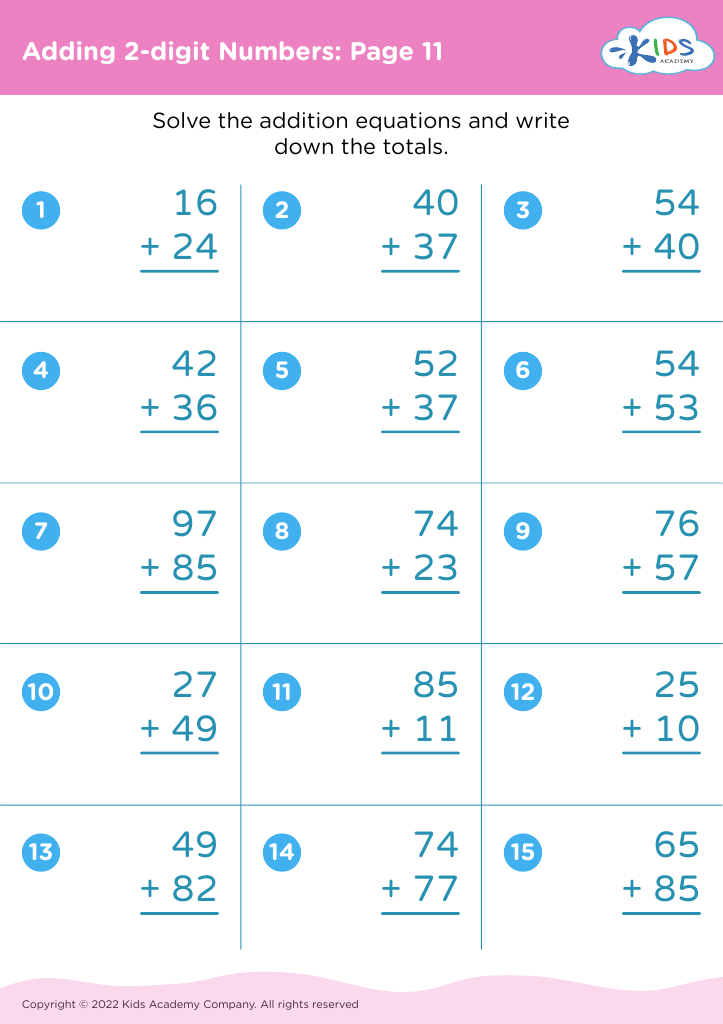
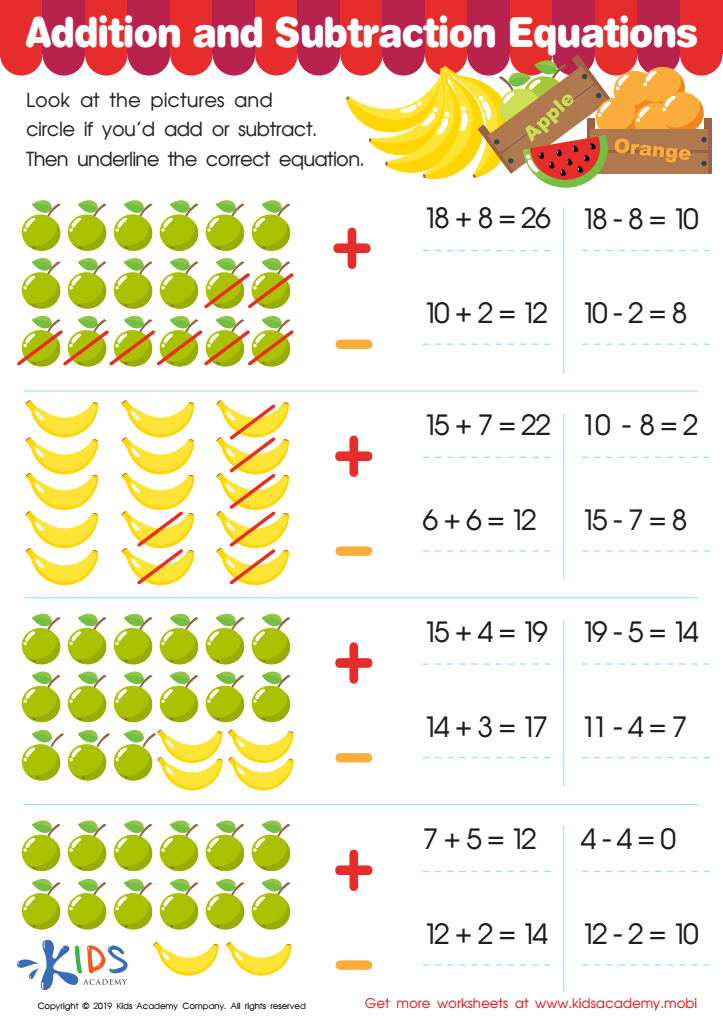
Addition and Subtraction: Equations Worksheet
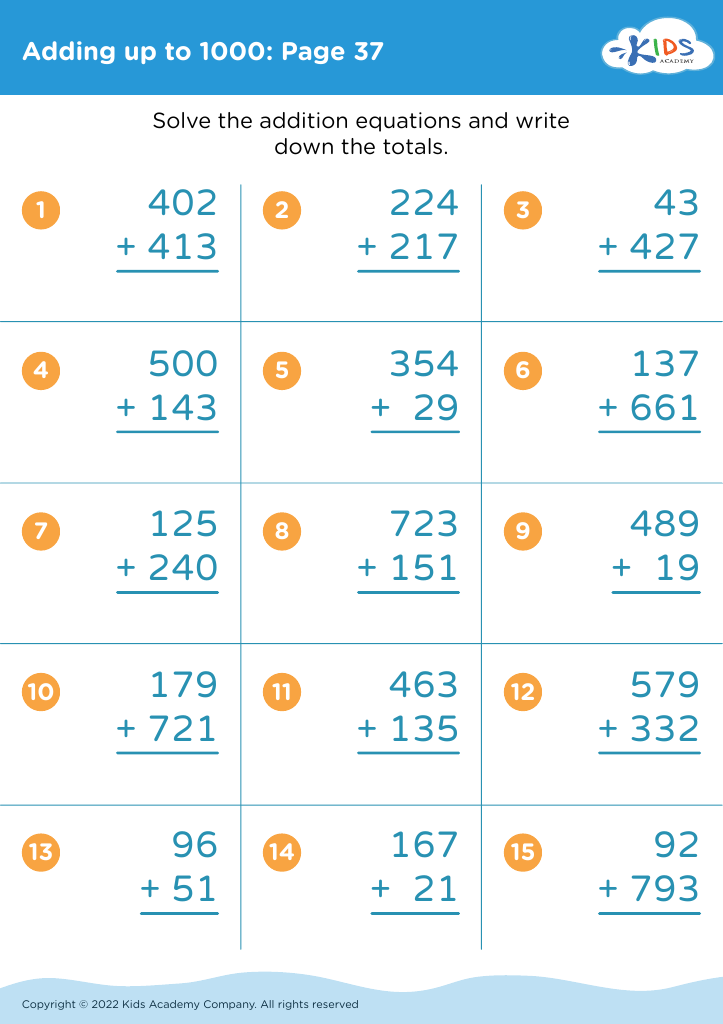
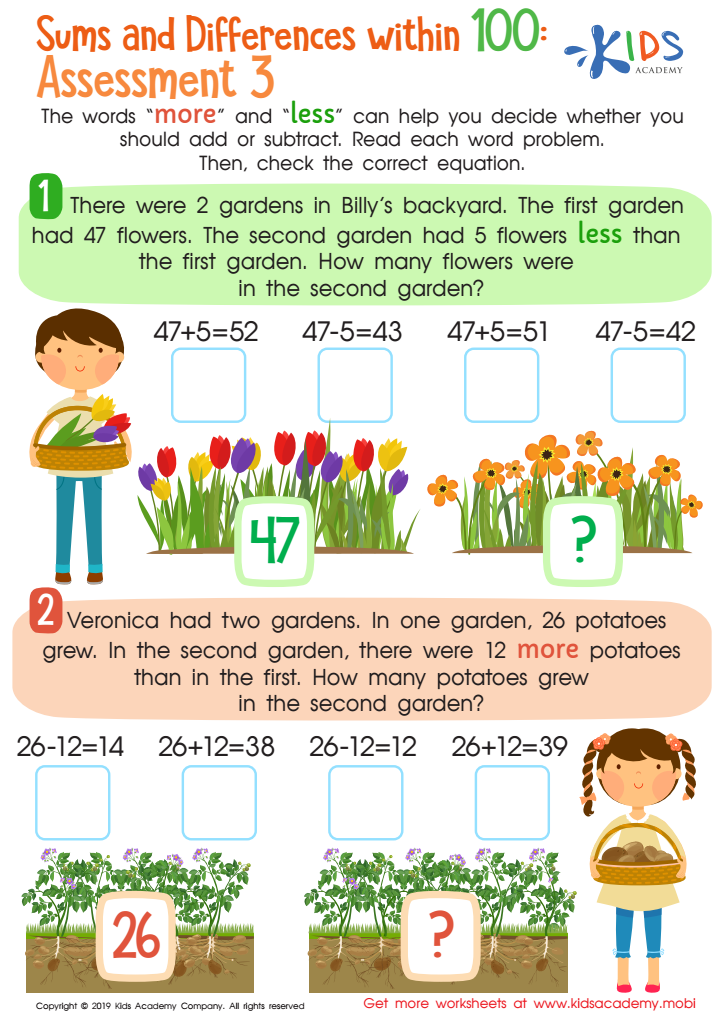
Sums and Differences Within 1 - Assessment 3 Worksheet
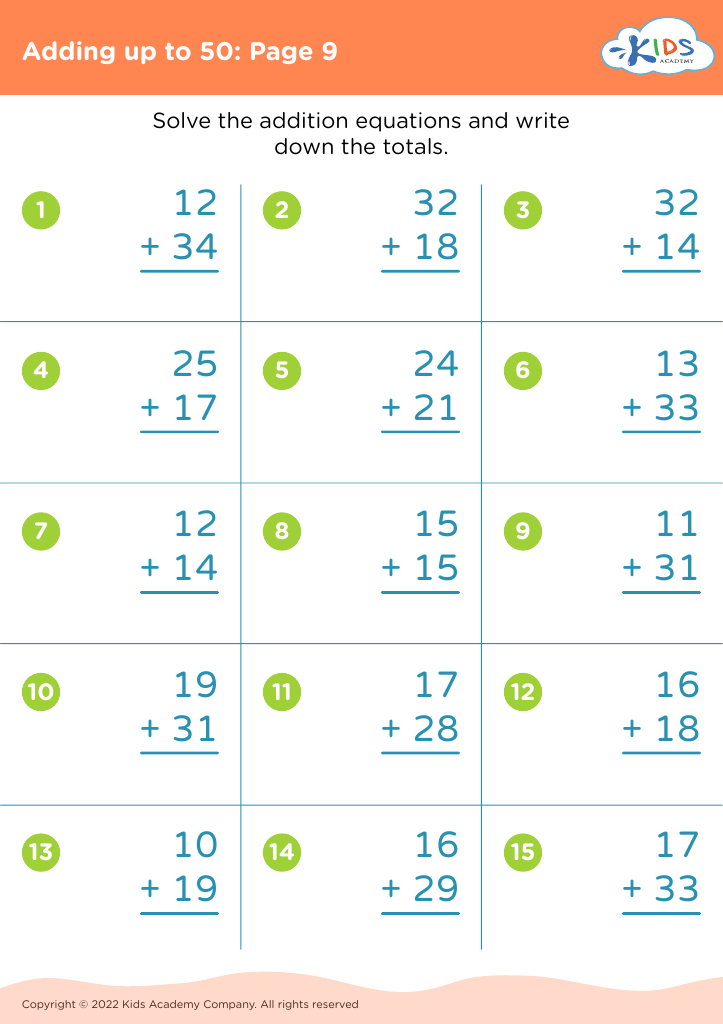
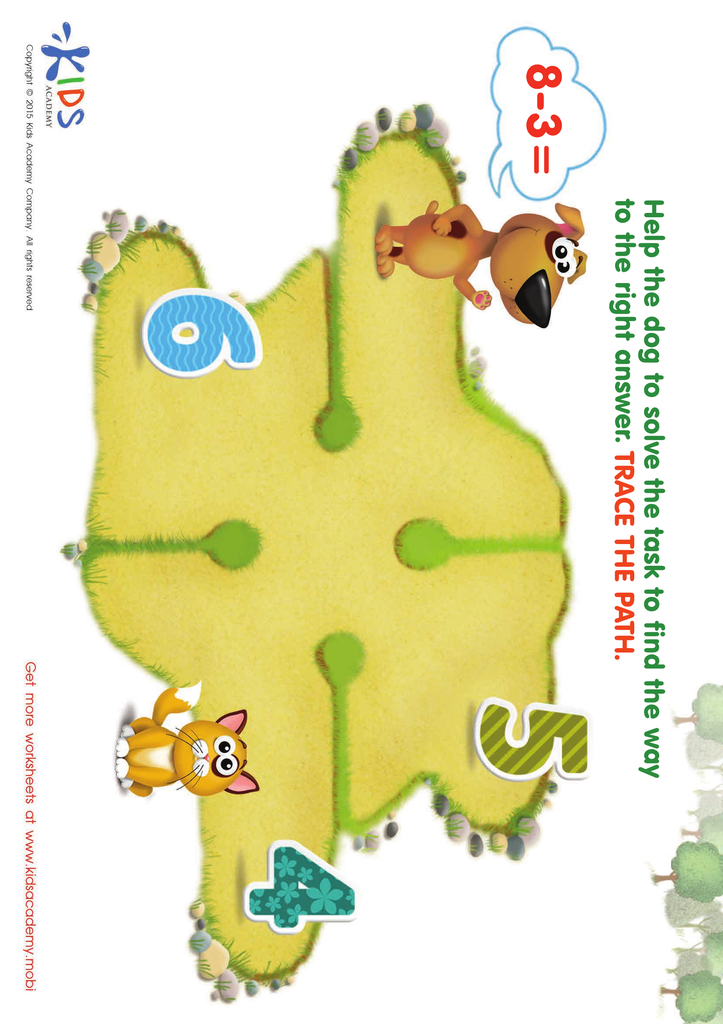
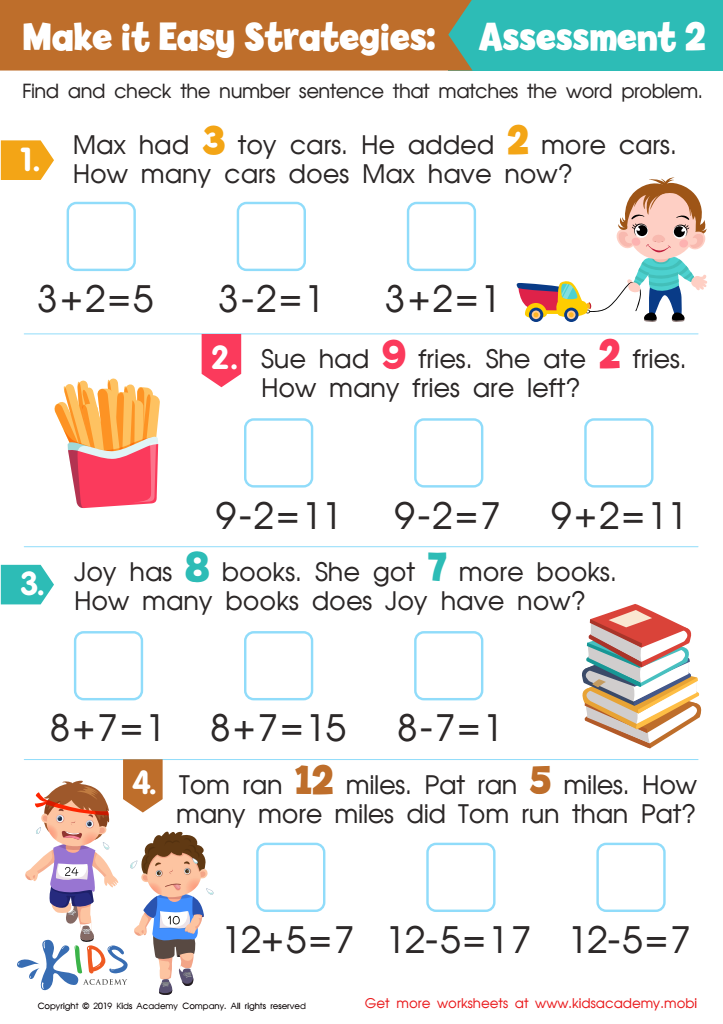
Make it Easy Strategies: Assessment 2 Worksheet
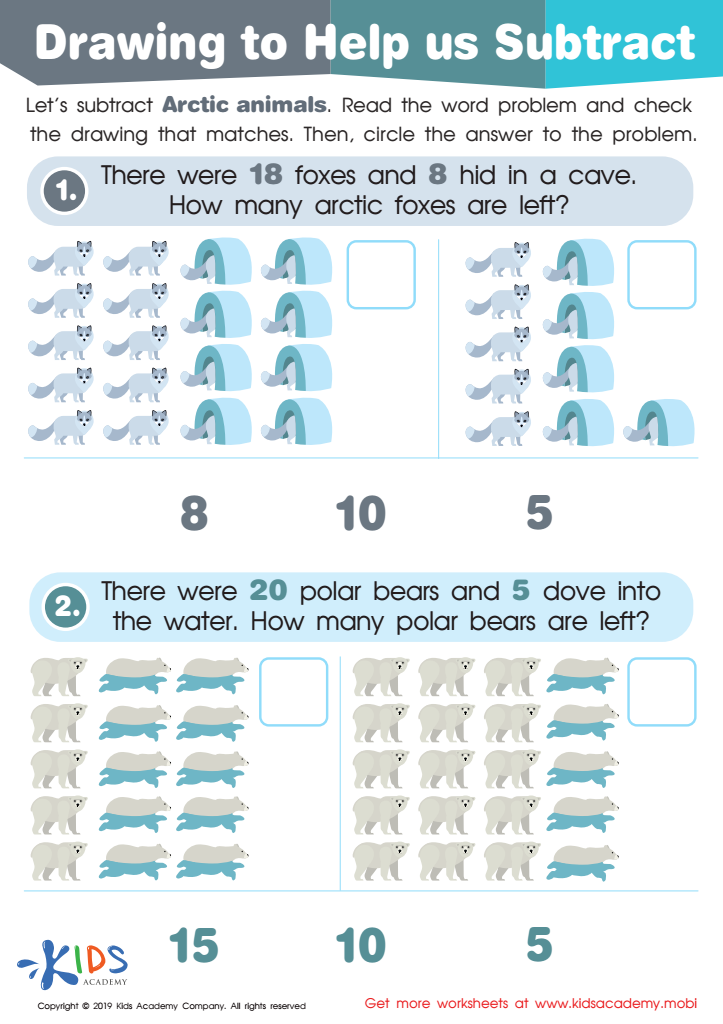
Drawing to Help Us Subtract Worksheet
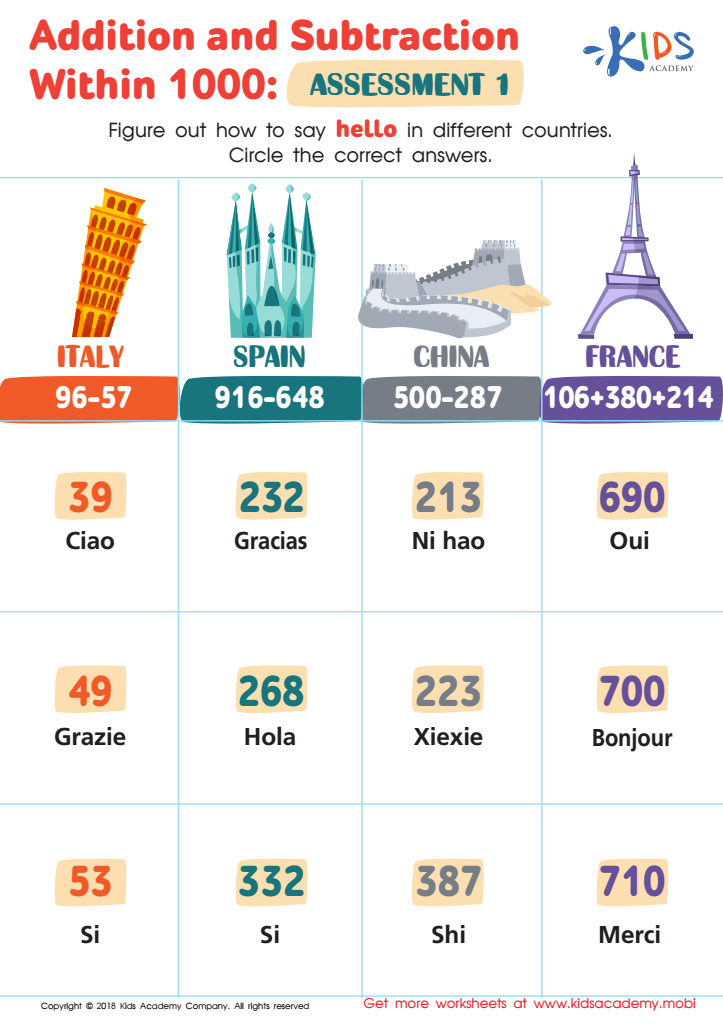
Addition and Subtraction Within 1000: Assessment 1 Worksheet
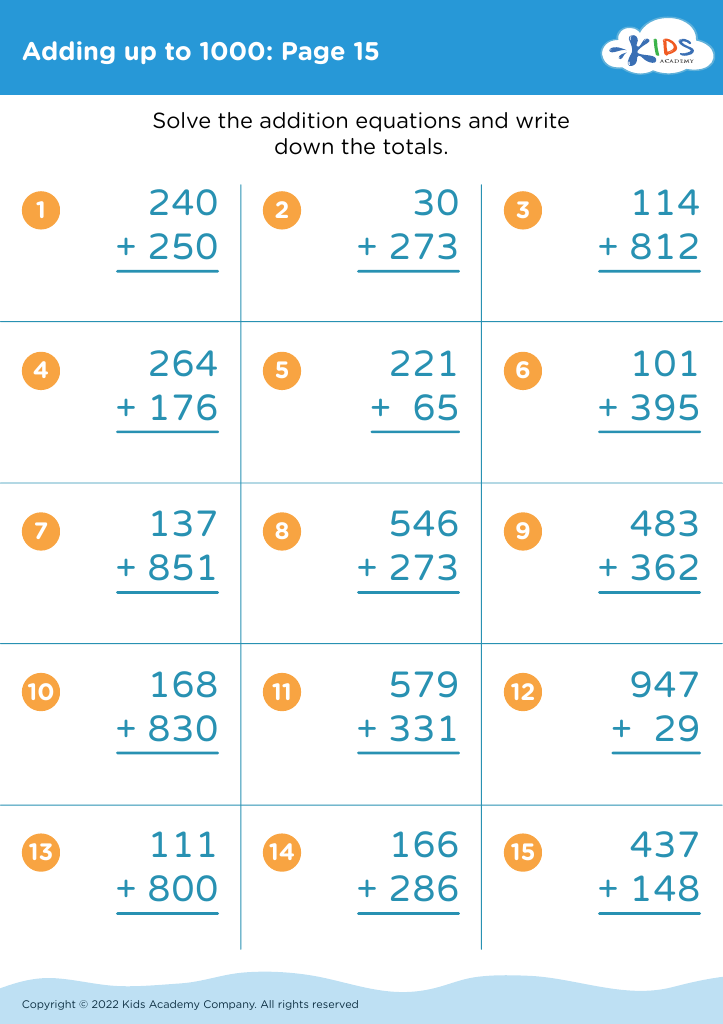
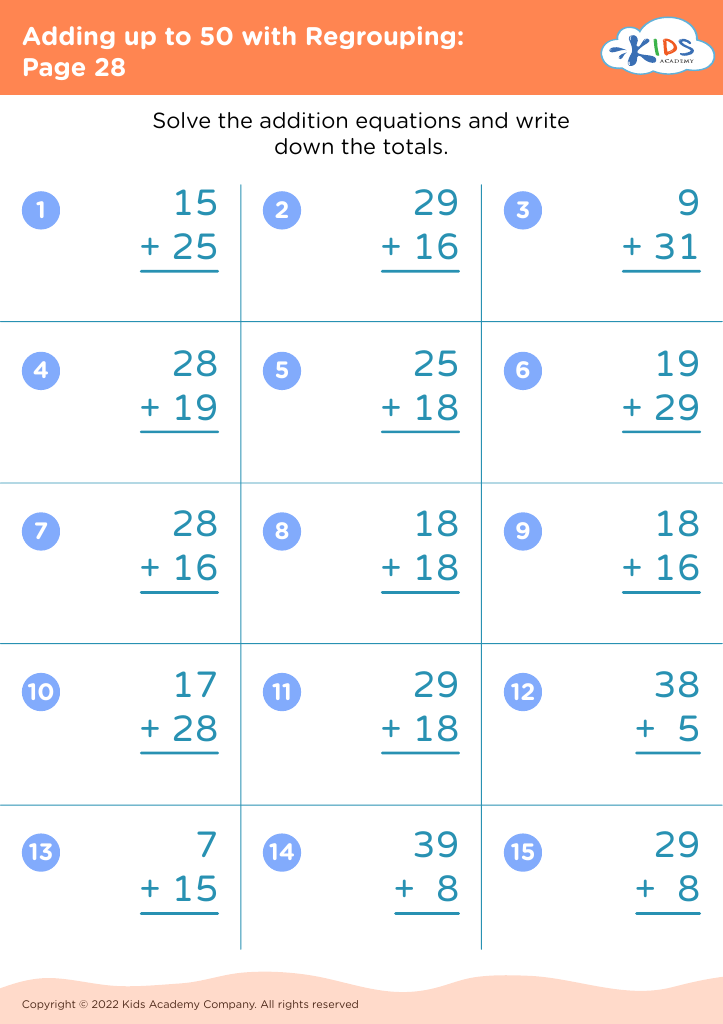
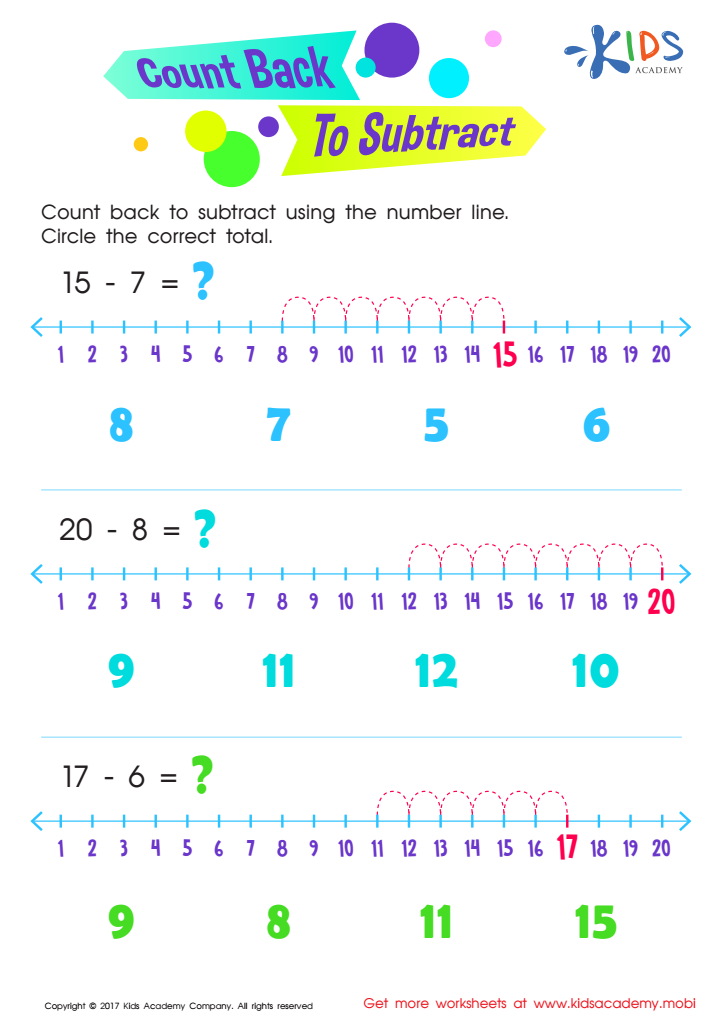
Count Back to Subtract Substraction Worksheet
Find the Difference Worksheet
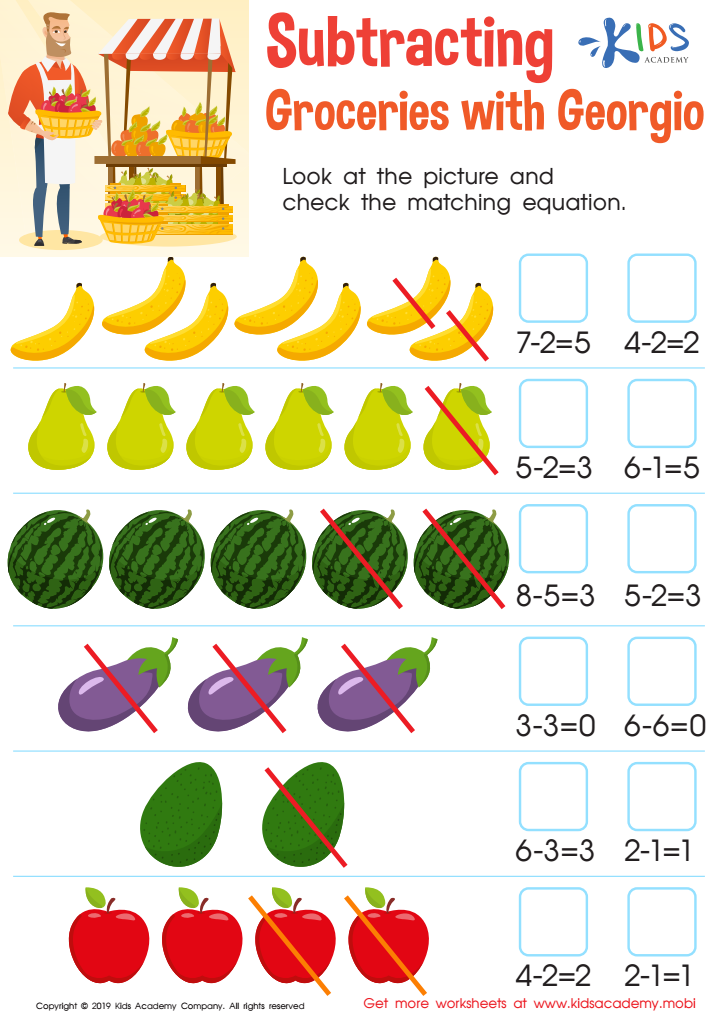
Subtracting: Groceries with Georgio Worksheet
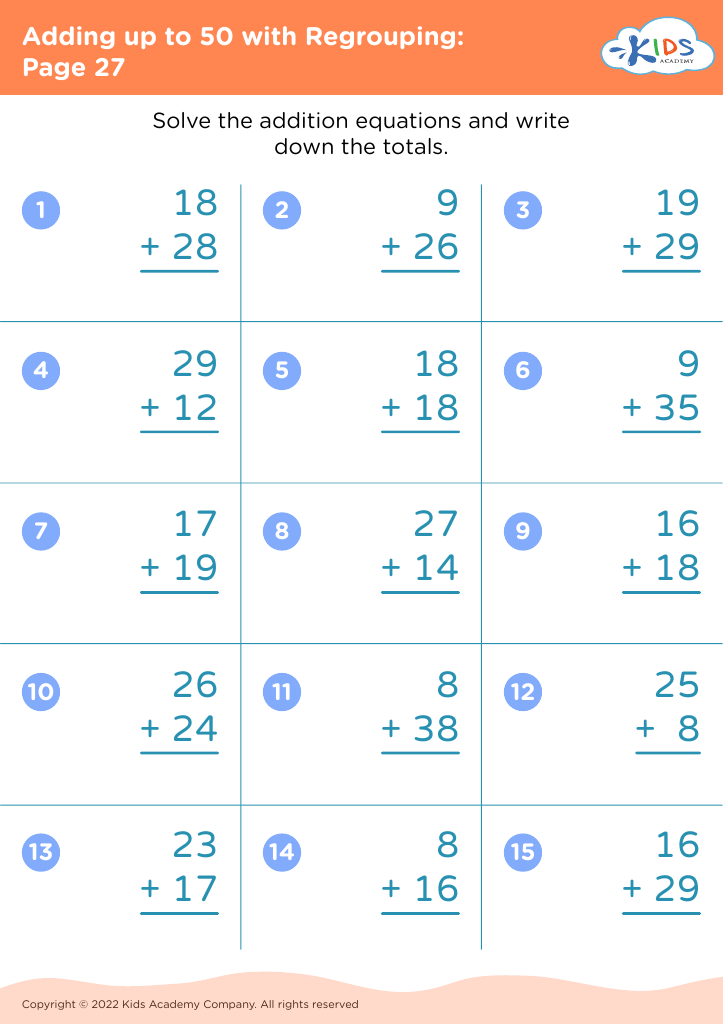
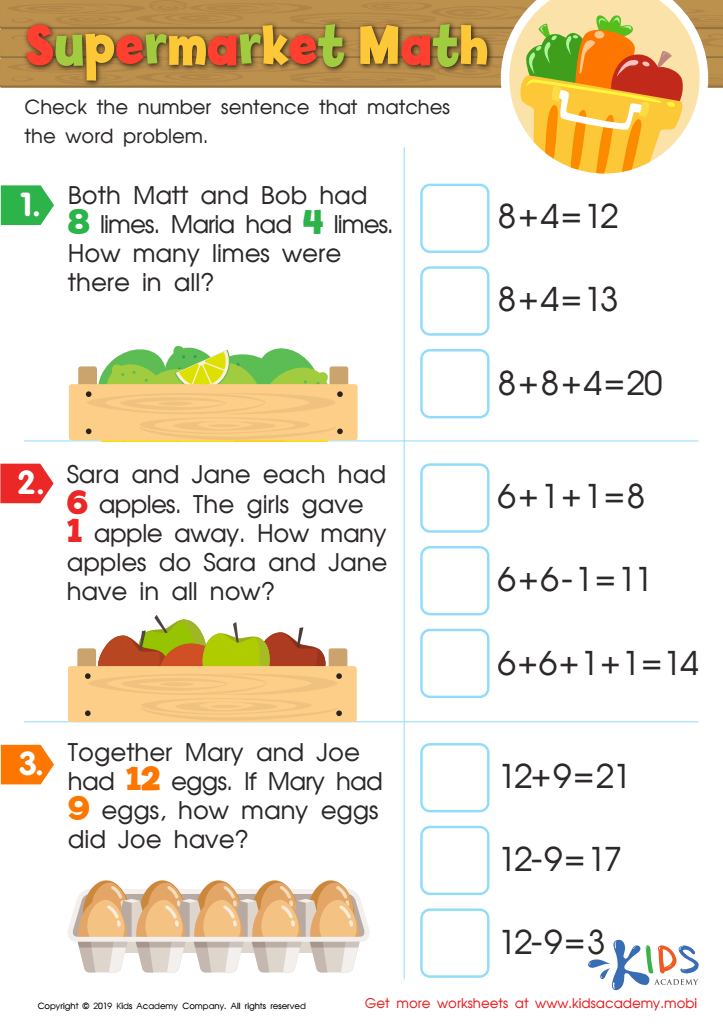
Supermarket Math Worksheet
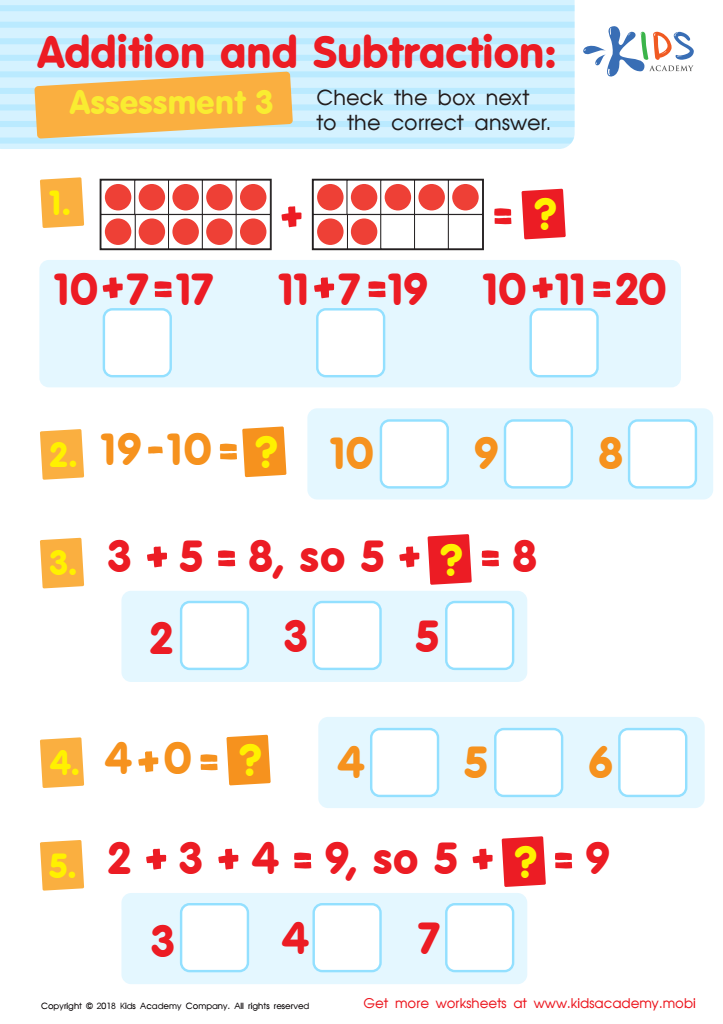
Addition and Subtraction Assessment 3 Worksheet
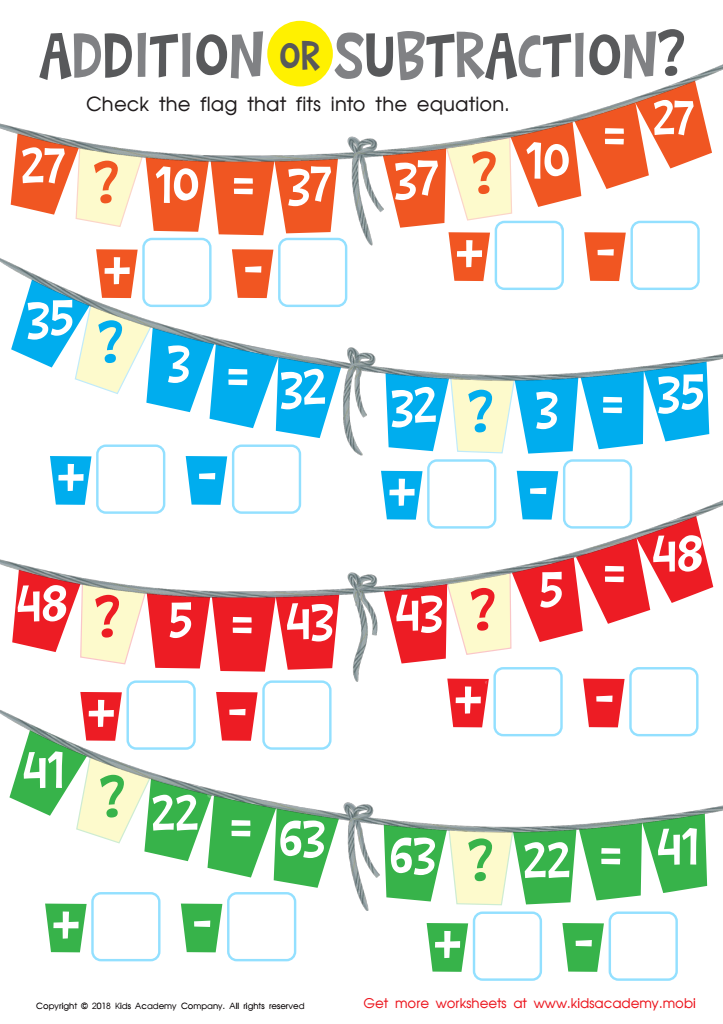
Addition or Subtraction? Worksheet
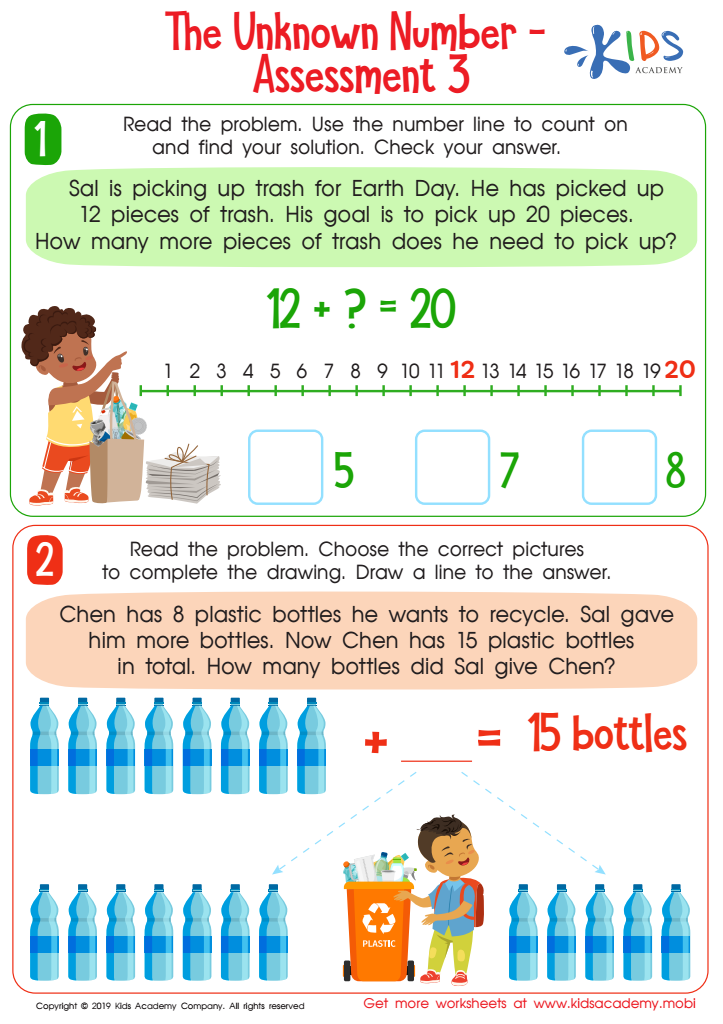
The Unknown Number - Assessment 3 Worksheet








Subtraction skills are crucial for children aged 3-7 as they lay the foundation for more complex mathematical concepts and critical thinking abilities. At this developmental stage, young minds are highly impressionable and adept at grasping basic numerical operations. Mastering subtraction not only bolsters mathematical proficiency but also fosters logical reasoning, problem-solving capabilities, and spatial awareness.
A strong grasp of subtraction allows children to understand the concept of 'taking away,' which is essential for everyday situations like sharing toys, dividing snacks, or understanding time. For parents and teachers, instilling these skills early helps in creating a positive and confident attitude toward mathematics. Moreover, these early skills have been linked to academic success across various subjects.
Subtraction also plays a significant role in cognitive development. By working through subtraction problems, children improve their memory, analytical thinking, and ability to focus. They learn to recognize patterns, practice persistence, and develop resilience when faced with challenging tasks. Engaging in subtraction from an early age sets the stage for a smoother transition to elementary mathematics, reducing anxiety and opening the door to advanced areas like multiplication, division, and fractions.
In short, focusing on subtraction skills in young children equips them with vital tools for both their academic journey and everyday life, making it indispensable for both parents and teachers to prioritize these foundational skills.








