Understanding number bonds Worksheets for Ages 3-7
3 filtered results
-
From - To
Discover our engaging Understanding Number Bonds Worksheets designed for children aged 3-7! These interactive resources provide a fun and effective way for young learners to master the concept of number bonds. Check out a variety of exercises that encourage critical thinking and hands-on learning, helping children identify pairs of numbers that combine to create a whole. Our worksheets support the development of essential math skills through colorful illustrations and relatable scenarios. Whether at home or in the classroom, these thoughtfully crafted worksheets will make learning about number bonds enjoyable and memorable for your little ones. Start their math journey today!
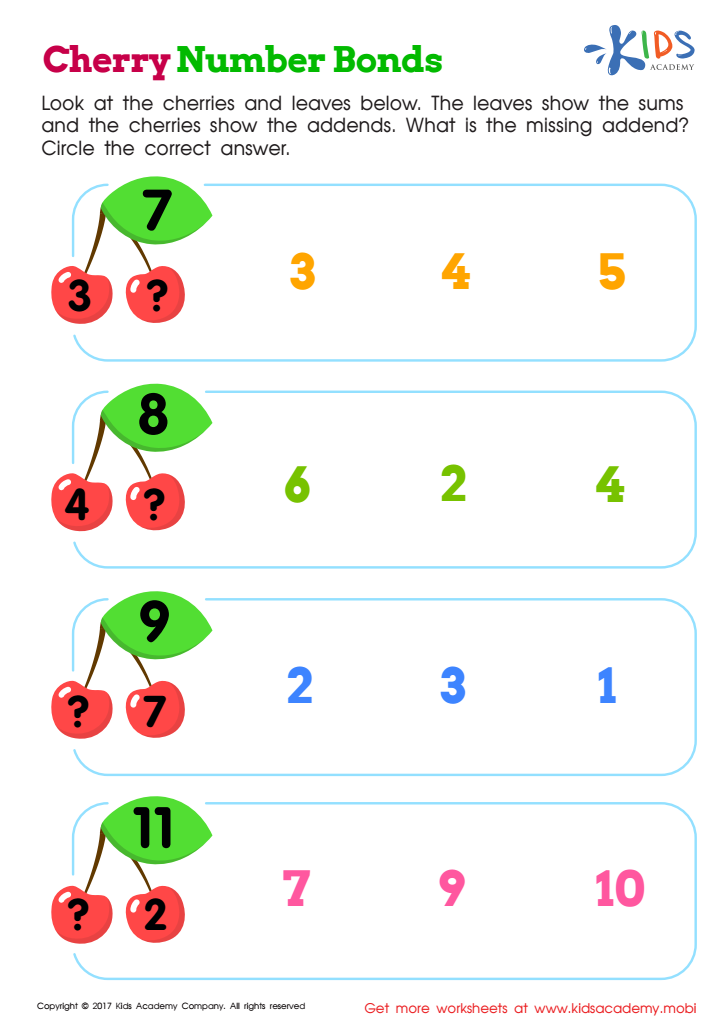
Cherry Number Bonds Worksheet
 Assign to My Students
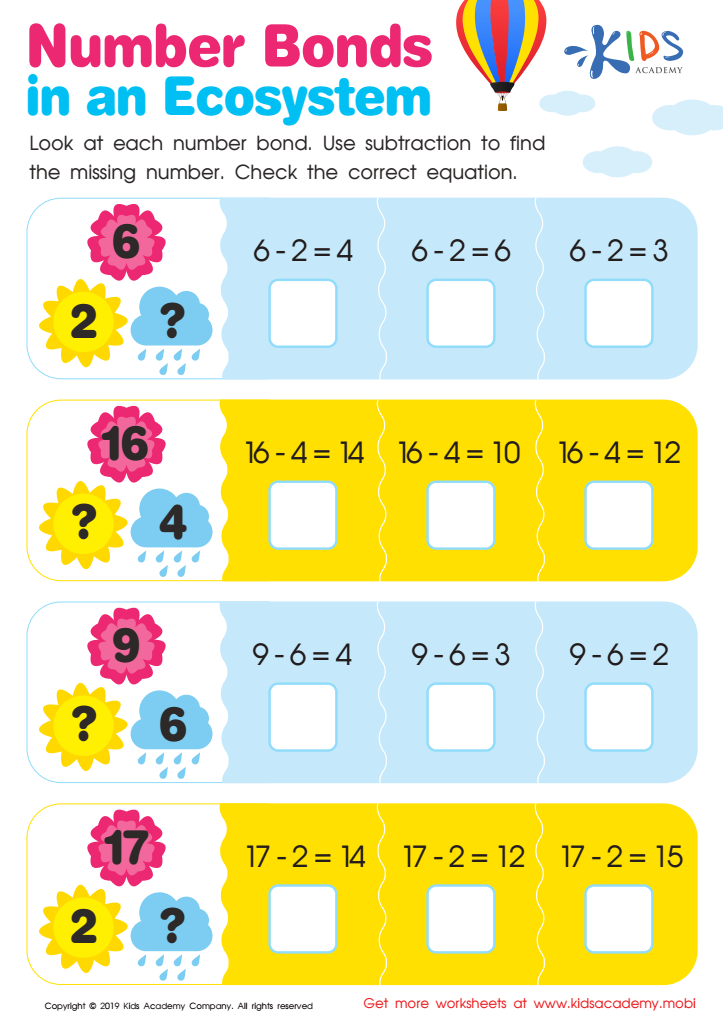
Number Bonds in an Ecosystem Worksheet
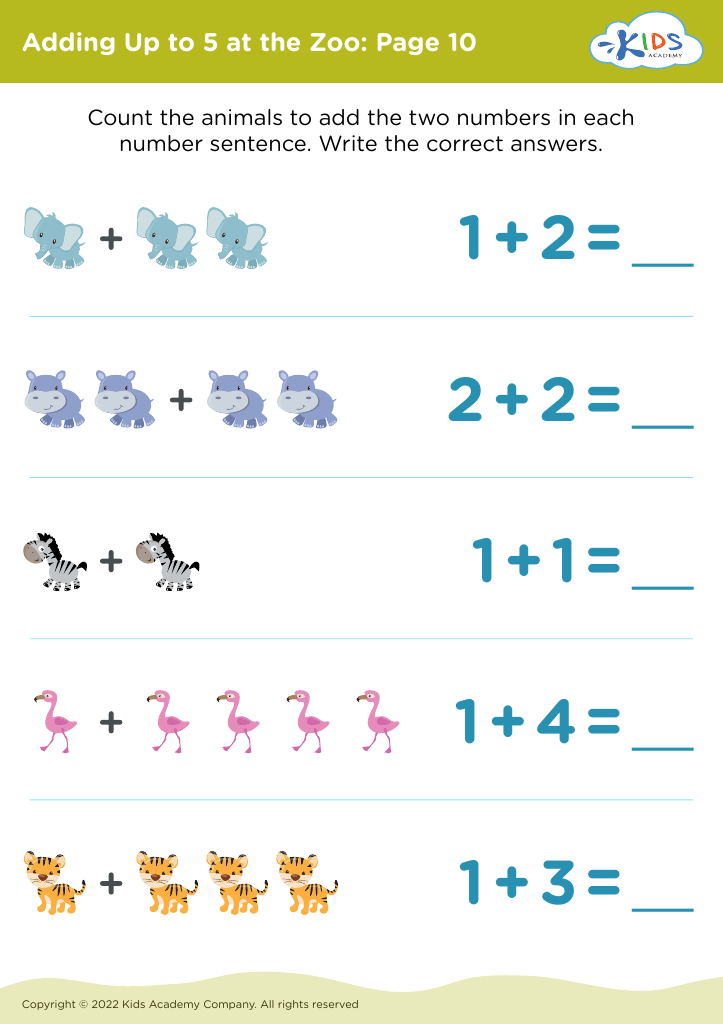








Understanding number bonds is crucial for children aged 3-7 as it lays the foundation for their math skills. Number bonds represent the relationship between numbers, illustrating how they can combine to form larger quantities and helping children visualize mathematical concepts. By grasping number bonds, young learners develop a solid understanding of addition and subtraction, essential skills for future mathematical learning.
Parents and teachers should care about number bonds because they foster early number sense, enabling children to recognize patterns and relationships among numbers. This understanding promotes mental math skills, helping children solve problems more efficiently and confidently. Furthermore, number bonds support the development of critical thinking skills as children learn to compare, sort, and manipulate numbers.
In addition, using number bonds helps simplify complex operations, making math less intimidating and more accessible. When children see that numbers can be broken down into parts and combined, they become better equipped to tackle more advanced concepts later on.
Lastly, fostering a love for math at an early age can positively influence children’s attitudes toward learning overall. By nurturing these skills early, parents and teachers set the stage for a lifelong appreciation of mathematics, encouraging success in both academic and everyday life.








