Understanding pollination Worksheets for Ages 3-7
4 filtered results
-
From - To
Unlock the wonders of nature with our "Understanding Pollination Worksheets for Ages 3-7". Specially designed for young learners, these worksheets introduce the fascinating process of pollination through engaging activities and colorful illustrations. Children will learn how bees and other pollinators help plants grow, fostering curiosity about the natural world. These resources not only support early science learning but also enhance fine motor skills and critical thinking. Perfect for both classroom and home use, our pollination worksheets provide a fun and educational way to explore essential environmental concepts. Start your child’s discovery journey with our comprehensive, age-appropriate materials today!
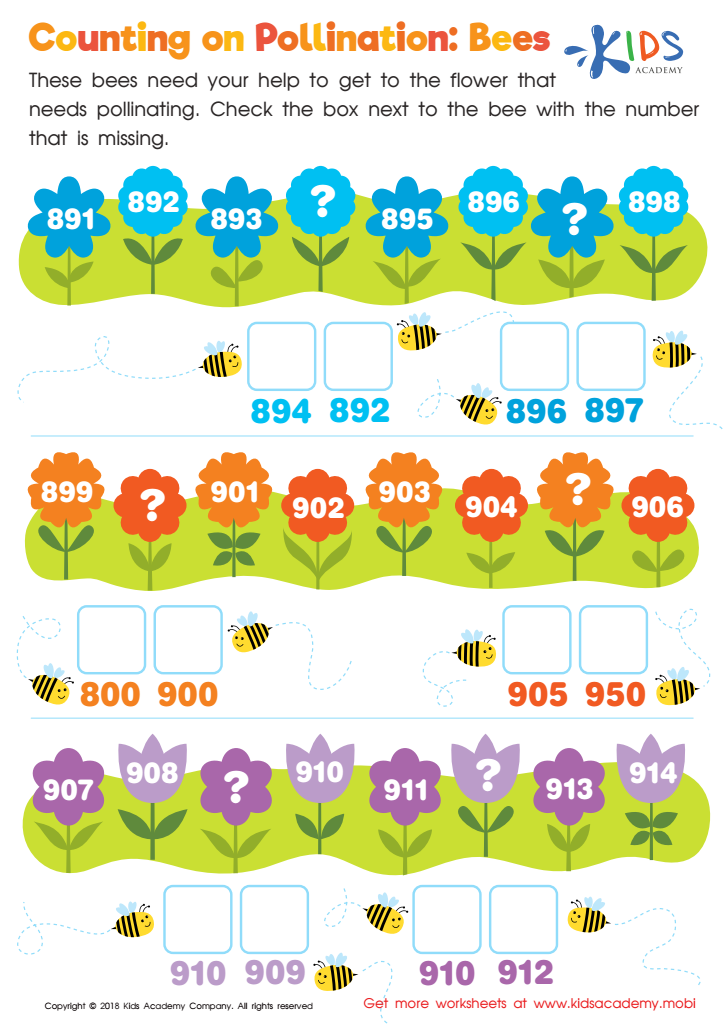
Counting on Pollination: Bees Worksheet
 Assign to My Students
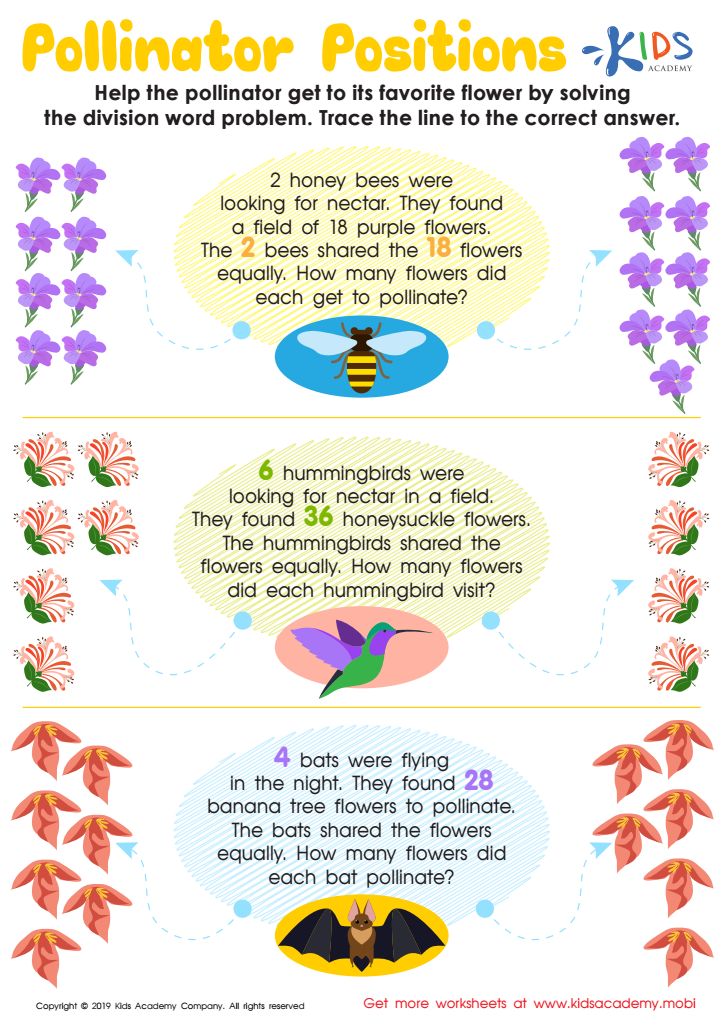
Pollinator Positions Worksheet
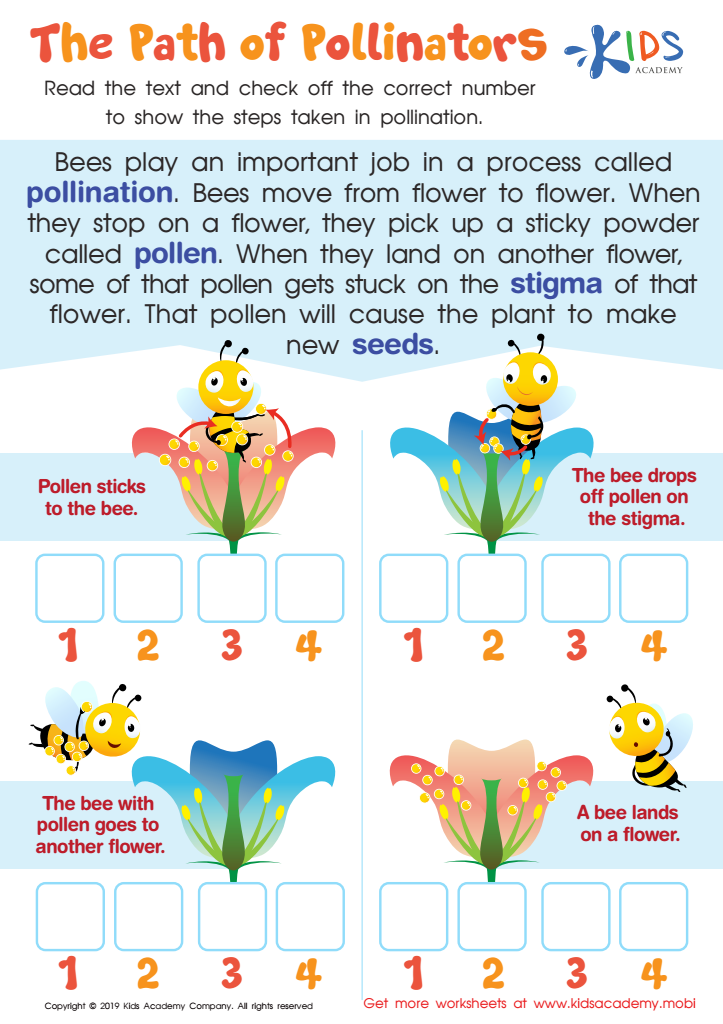
The Path of Pollinators Worksheet
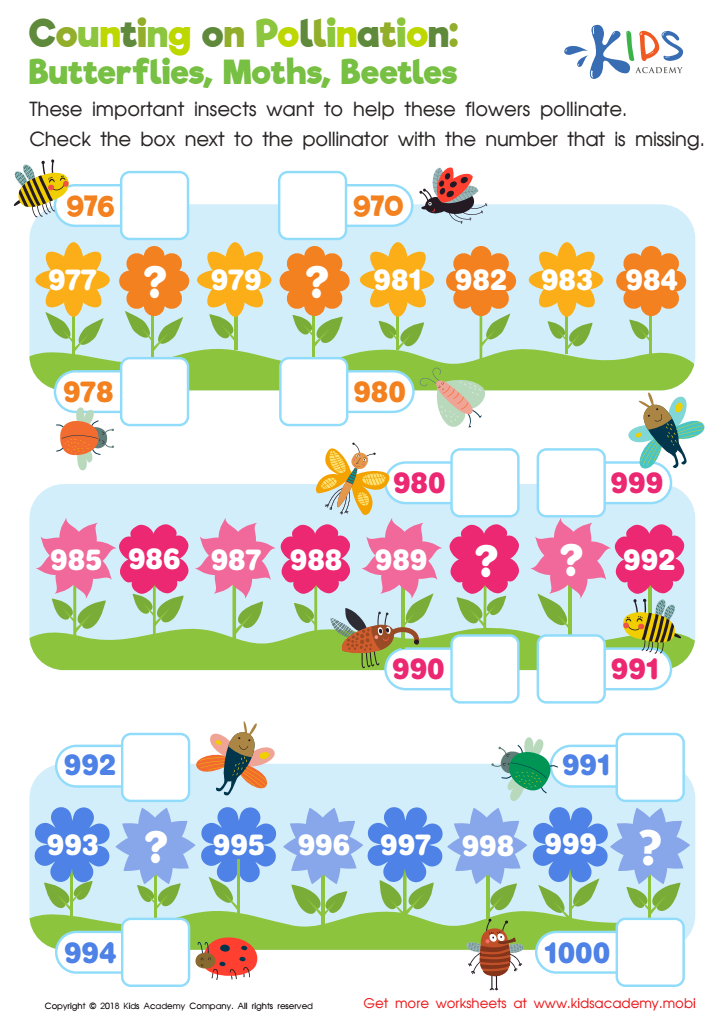
Counting on Pollination: Butterflies, Moths, Beetles Worksheet




Understanding pollination is crucial for young children because it helps them appreciate nature and recognize its importance at an early age. Parents and teachers who introduce the concept of pollination to children aged 3-7 can foster a sense of curiosity and respect for the environment. This educational foundation encourages lifelong learning about biological processes and ecosystems.
Learning about pollination also connects to broader educational goals like science literacy, critical thinking, and observation skills. Pollination, involving agents like bees, butterflies, and wind, can be explained through fun, tactile activities, such as planting flowers or creating DIY butterfly feeders. These activities improve motor skills and create engaging, hands-on experiences that make abstract scientific concepts tangible.
Additionally, understanding pollination points to broader themes like the interdependence of organisms, the importance of biodiversity, and food production. When children learn that many fruits and vegetables they eat depend on pollinators, it can cultivate healthy eating habits and an understanding of where food comes from.
Furthermore, teaching about the importance of pollinators at a young age can galvanize future stewards of the environment who are more inclined to protect natural habitats and advocate for sustainable practices. By integrating these lessons into early childhood education, parents and teachers provide a solid foundation for ecological awareness and responsibility.








