Understanding prepositions Worksheets for Ages 3-7
10 filtered results
-
From - To
Unlock the fun world of language understanding with our "Understanding Prepositions Worksheets for Ages 3-7"! Perfect for preschoolers and early elementary students, these engaging worksheets help children grasp the concept of prepositions through interactive activities and colorful illustrations. Designed by educational experts, each worksheet aims to promote spatial awareness and language skills by using relatable, everyday scenarios. From "in" and "on" to "under" and "next to," kids will learn to navigate prepositions with ease. Ideal for both classroom and at-home learning, these worksheets make mastering prepositions an enjoyable adventure. Start downloading now for a foundational step in early literacy!
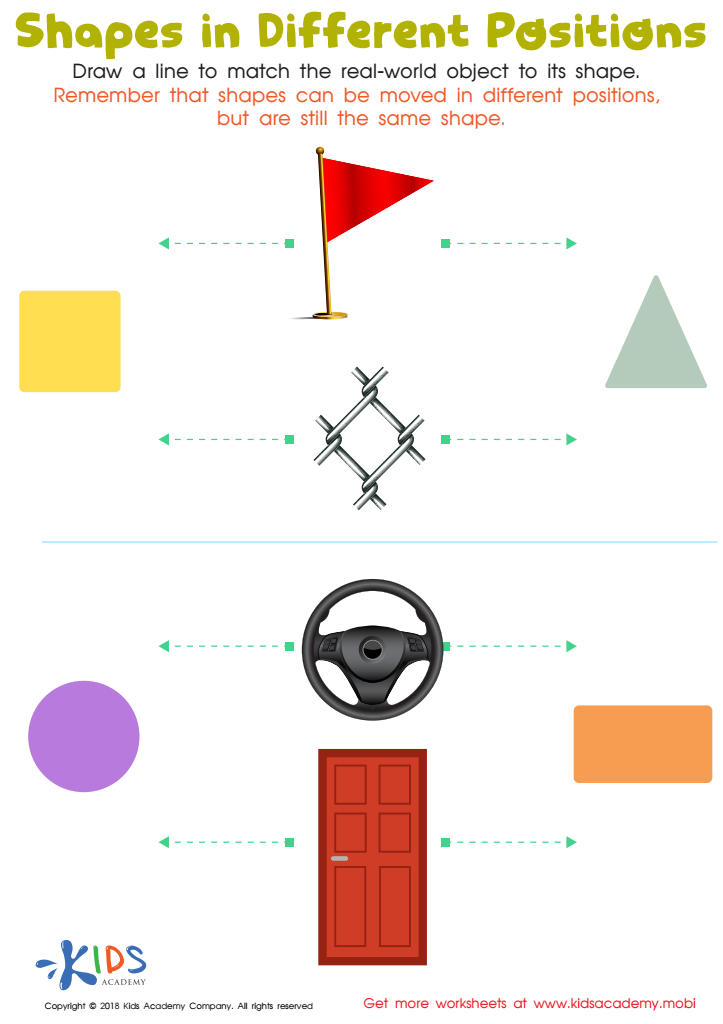
Shapes in Different Positions Worksheet
 Assign to My Students
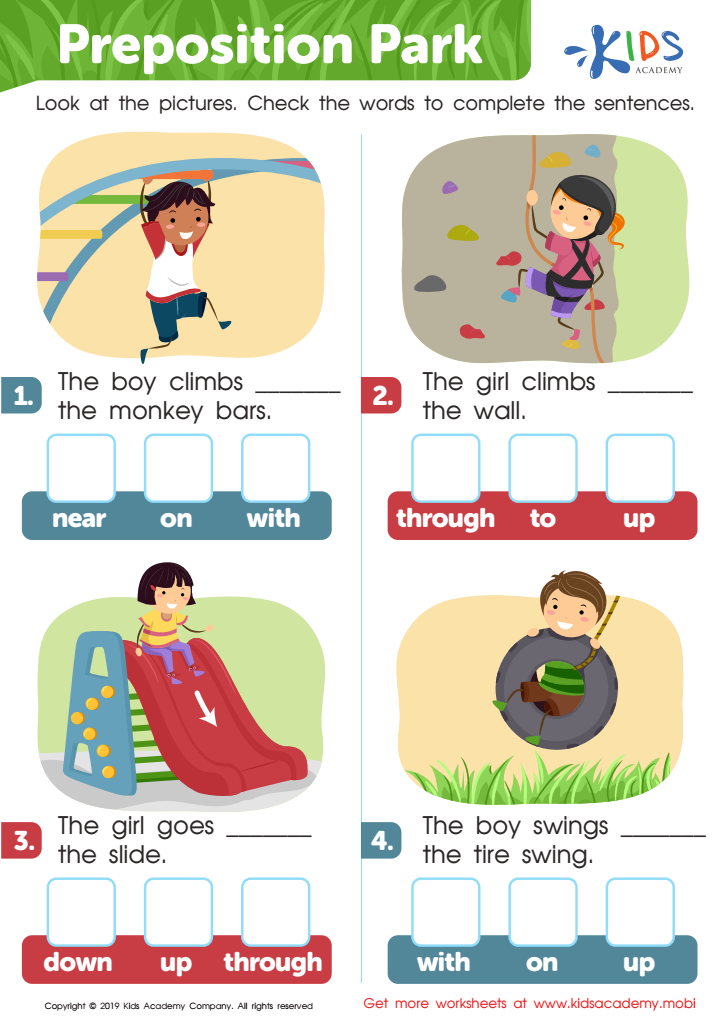
Preposition Park Worksheet
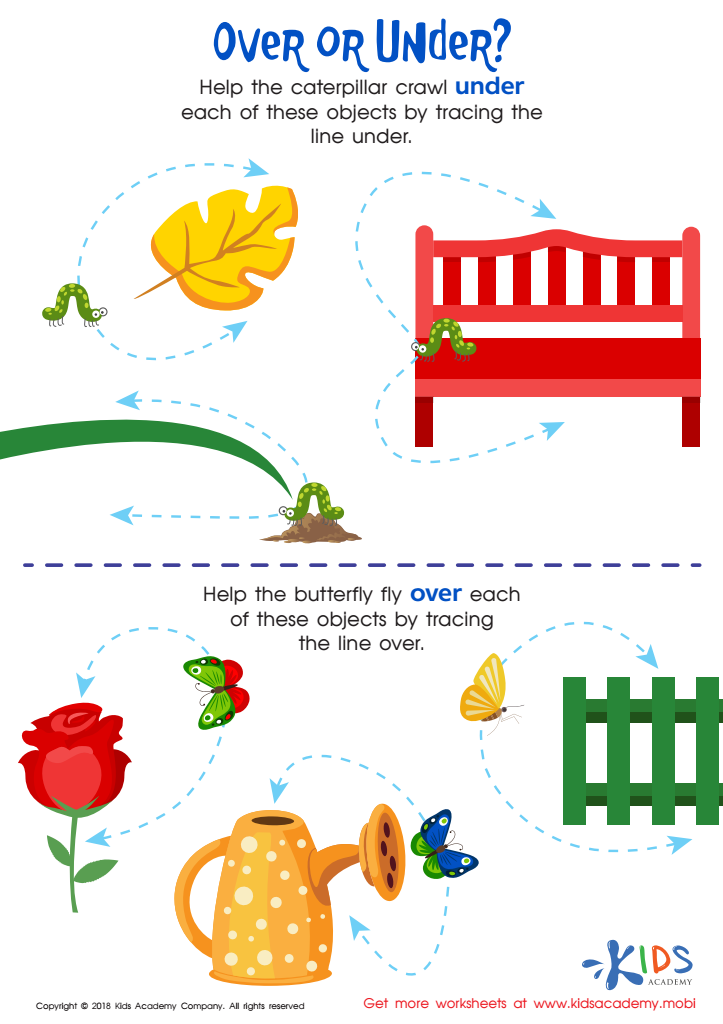
Over or Under? Worksheet
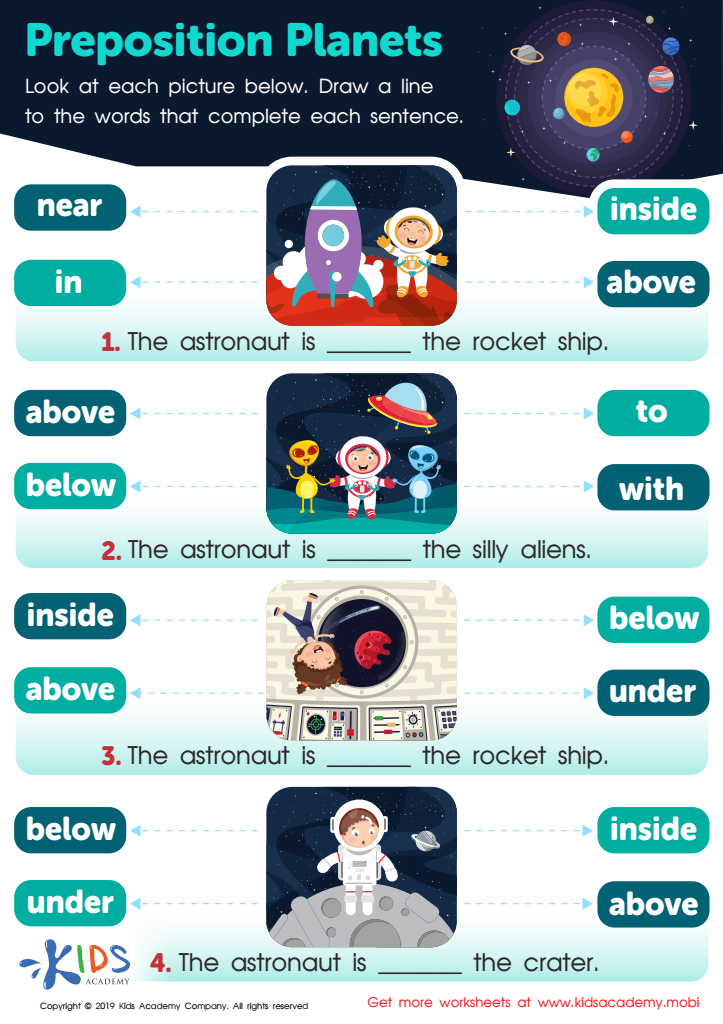
Preposition Planets Worksheet
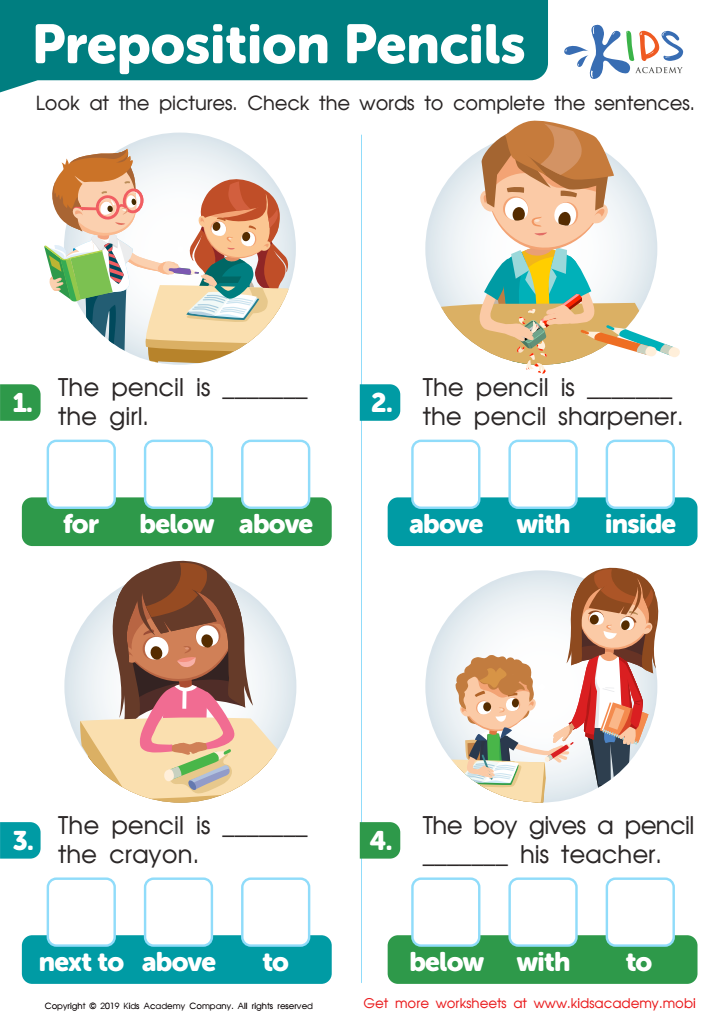
Preposition Pencils Worksheet
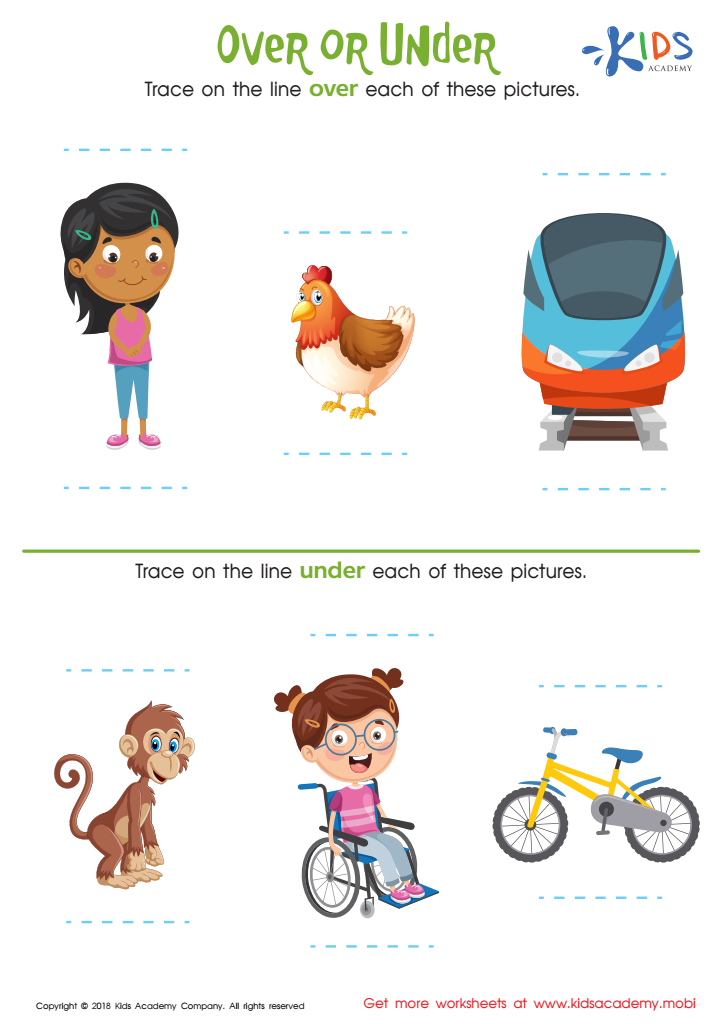
Over or Under Worksheet
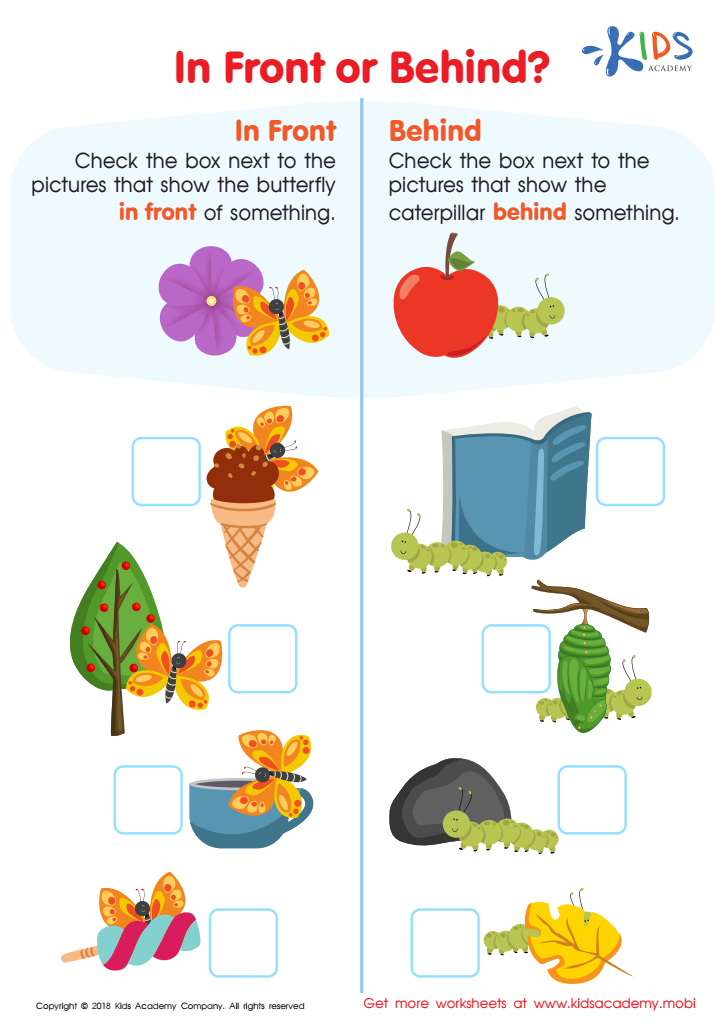
In Front or Behind Worksheet
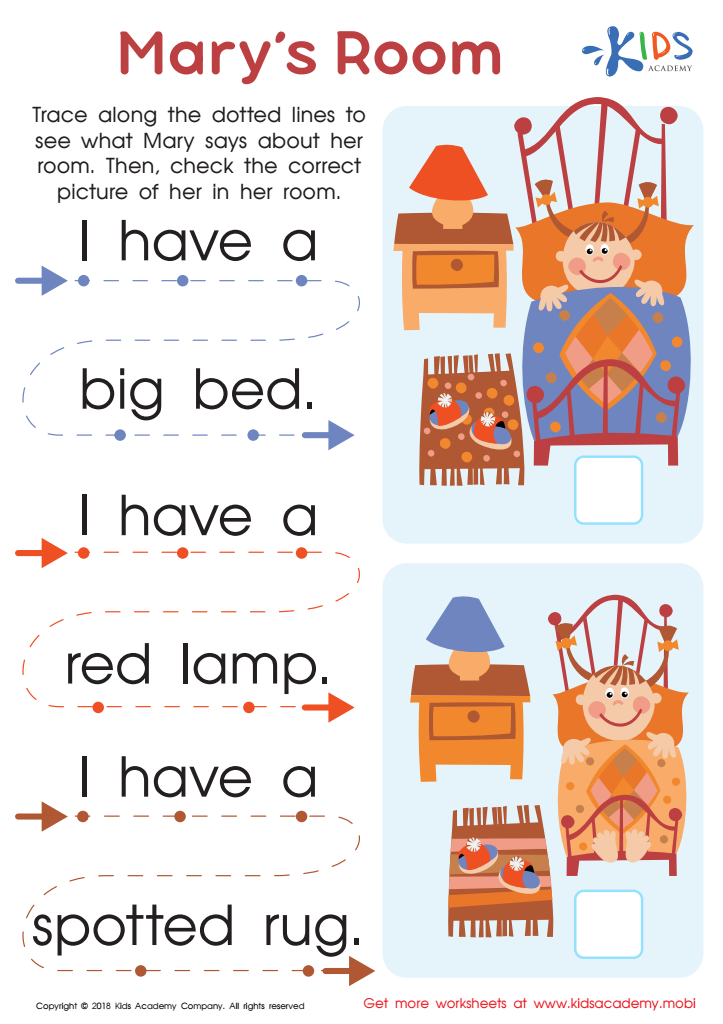
Mary's Room Worksheet





Understanding prepositions is critical for children aged 3-7 as it forms a foundation for effective communication and language development. Prepositions are the building blocks that help kids describe the relationships between objects, people, and places. For example, understanding the difference between "on," "under," "next to," and "in front of" helps children follow instructions like "Put the book on the table" or "Stand next to the door." Mastery of prepositions also aids in storytelling and comprehension, enabling kids to describe detailed scenes and actions more accurately.
Moreover, comprehension of prepositions enhances spatial awareness and cognitive development. Activities that involve prepositions naturally incorporate physical movement and spatial relationships, such as when children follow directions in a game. These activities can improve problem-solving skills and understanding of the physical world. By practicing these skills, children can develop better vocabulary and grammar needed for reading and writing readiness, essential as they progress in their education.
For parents and teachers, focusing on prepositions during the early years helps ensure children aren’t at a disadvantage as they enter more advanced language learning stages. Thus, early understanding of prepositions supports overall language proficiency and intellectual growth, forming the bedrock for more complex learning later.








