Visual discrimination Worksheets for Ages 3-7 - Page 2
28 filtered results
-
From - To
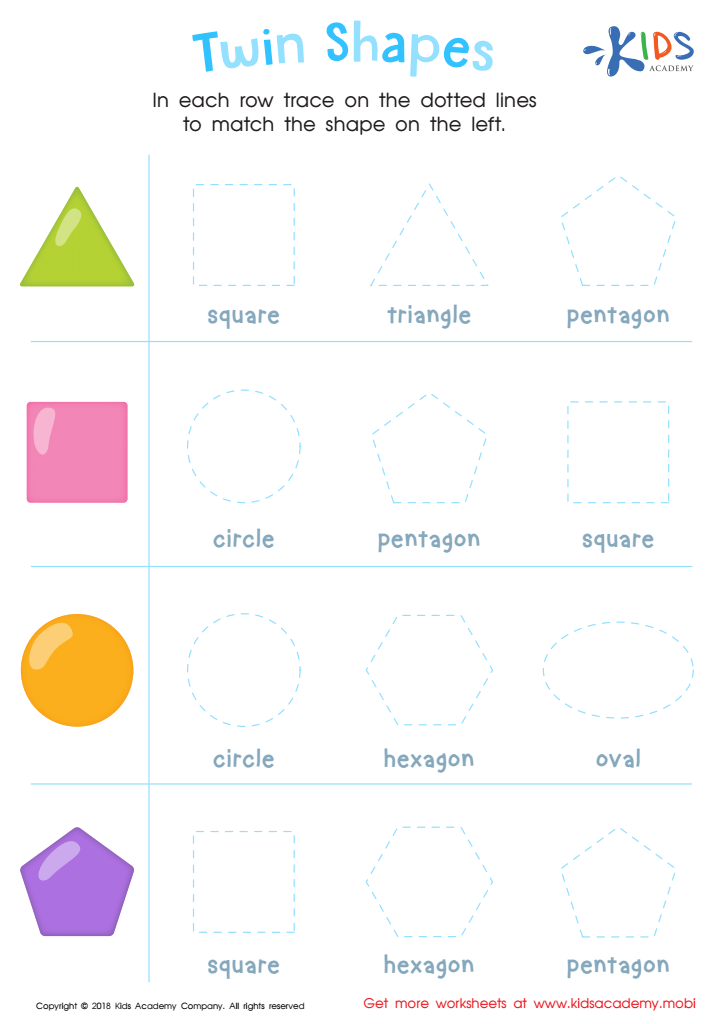
Twin Shapes Dot-to-Dot Worksheet
 Assign to My Students
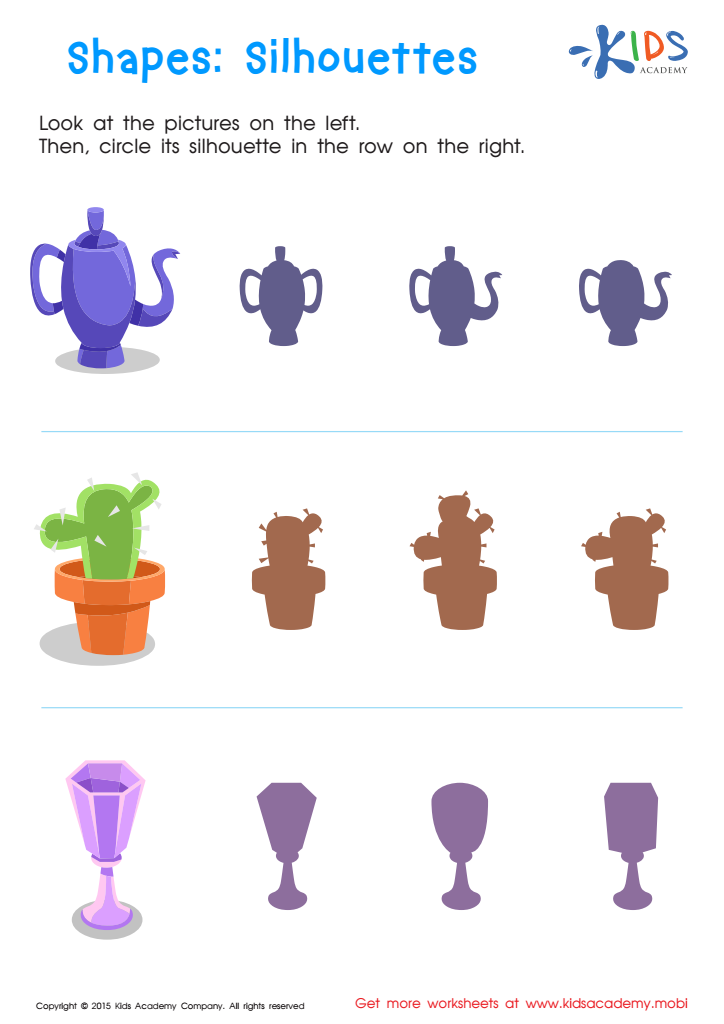
Silhouettes – Shapes Worksheet
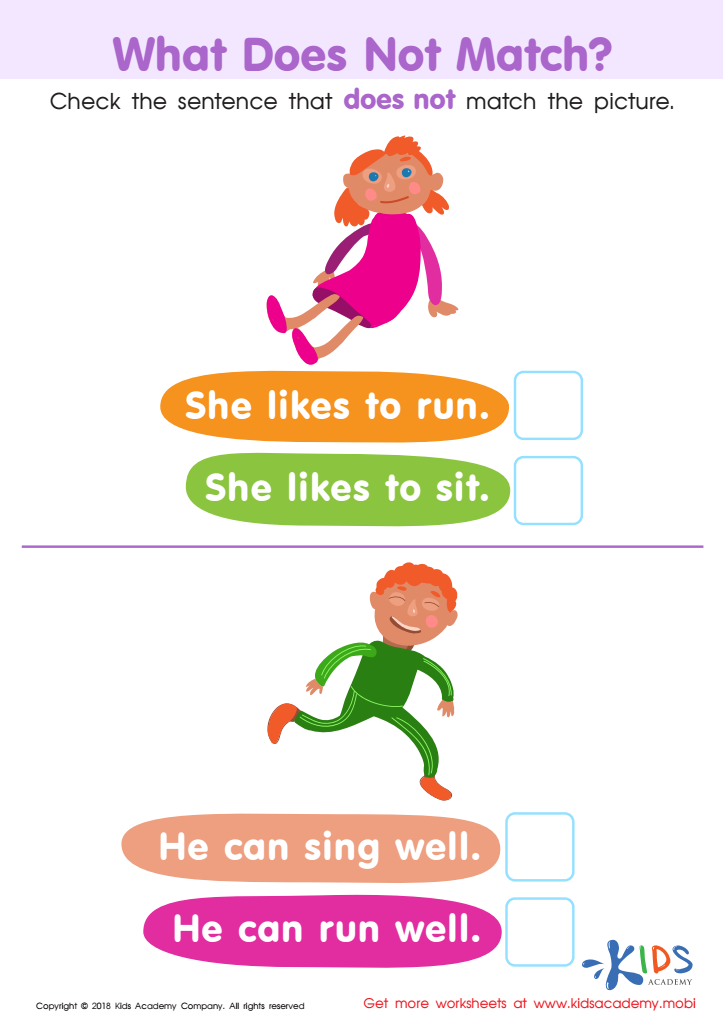
What Does Not Match? Worksheet








Visual discrimination is crucial for children aged 3-7 as it forms the foundation for essential learning skills. This cognitive ability allows children to distinguish between similar shapes, colors, and patterns, enabling them to identify letters and numbers accurately, which is vital for early reading and math. For parents and teachers, attention to visual discrimination can significantly impact a child's academic journey.
Improved visual discrimination skills can enhance a child's ability to follow instructions, complete puzzles, and engage in activities that require organization and categorization. For example, children with strong visual discrimination can quickly identify differences in images, which not only contributes to art skills but also to reading comprehension when distinguishing between similar words or letters.
Moreover, developing visual discrimination fosters critical thinking and problem-solving abilities. When kids learn to compare and contrast, they build analytical skills that are essential for later academic success. Lastly, as most children learn through visual modalities, supporting these skills at an early age ensures they are better prepared to thrive in a structured learning environment. Parents and teachers play a key role in nurturing these skills through games, reading, and hands-on activities, leading to a well-rounded educational experience.








