
Visual representation Worksheets for Ages 3-7
3 filtered results
Difficulty Level
Grade
Age
-
From - To
Subject
Activity
Standards
Discover the perfect Visual Representation Worksheets for children ages 3-7 at Kids Academy! Our expertly designed printables foster crucial learning skills through engaging visual activities. These worksheets help young learners grasp concepts like shapes, patterns, and spatial understanding while developing fine motor skills. Each fun-filled worksheet combines education and creativity to captivate young minds and make learning an exciting adventure. With various themes and difficulty levels, our visual representation worksheets are tailored to suit every child's unique developmental needs. Provide your little ones with the tools they need to succeed and watch their confidence bloom as they explore, learn, and grow with Kids Academy!
Favorites
With answer key
Interactive
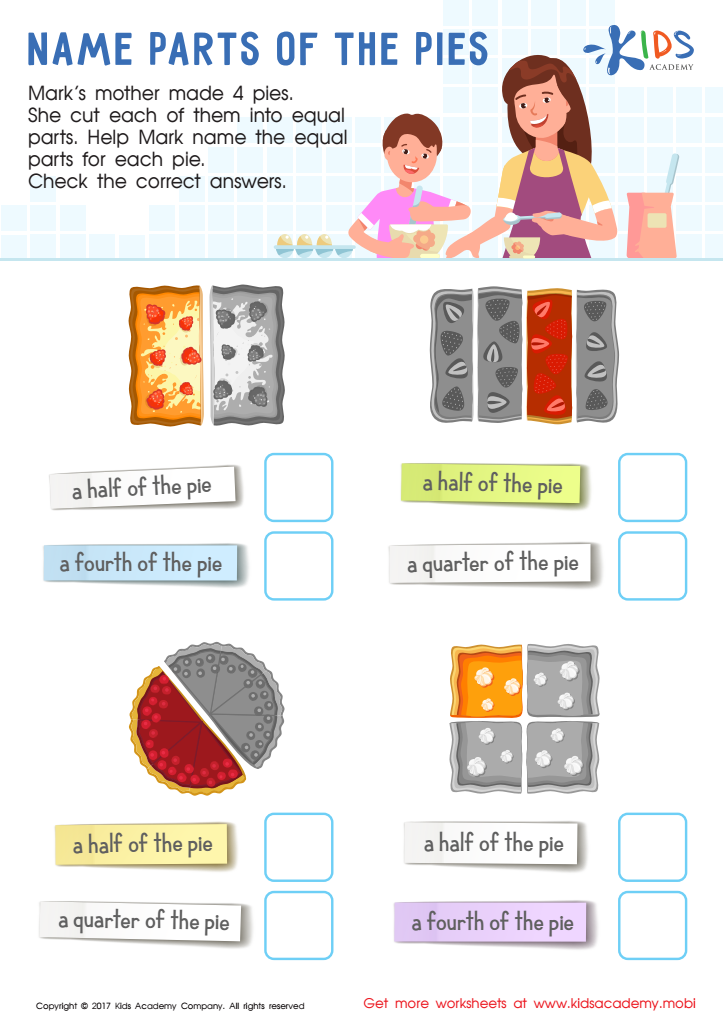
Name Parts of the Pies Worksheet
Mark and his mom are making pies. He's dividing them into equal parts and needs help to name them. Let your students aid him by checking the correct answer for each picture. Have them think of their own roles in the kitchen when they're done. How do they help their moms?
 Assign to My Students
Name Parts of the Pies Worksheet
Worksheet
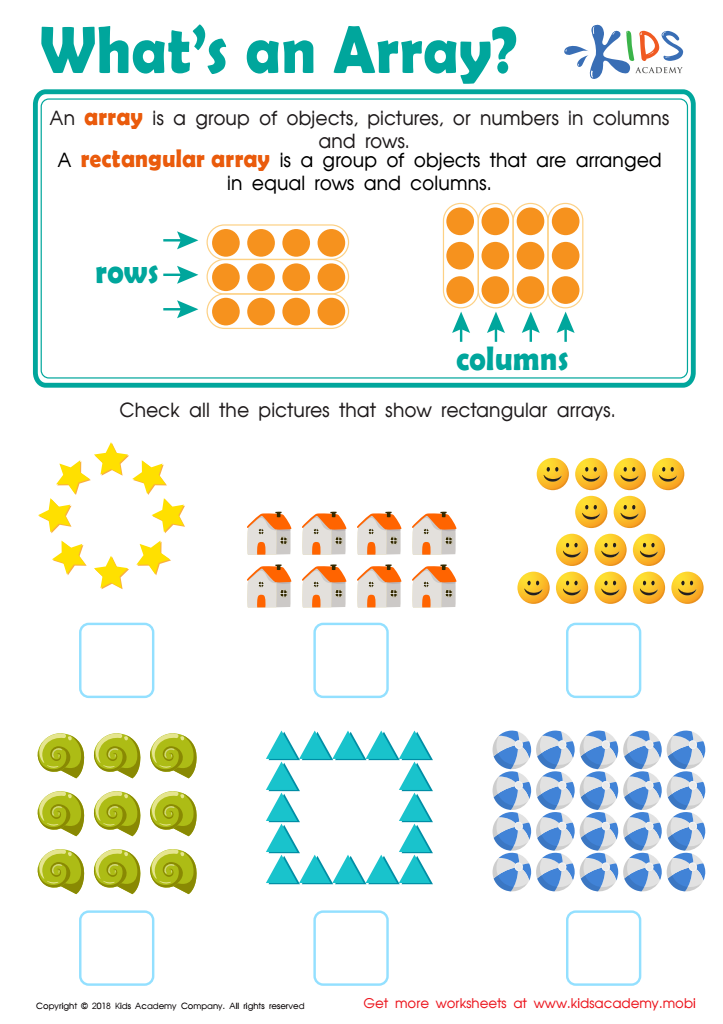
What's an Array? Worksheet
Explain to your child that an array is a group of objects, pictures, or numbers in columns and rows. Show them a rectangular array is a group of objects in equal rows and columns. Guide them to check the pictures in the worksheet to spot any rectangular arrays. Help them remember this concept.
What's an Array? Worksheet
Worksheet
Join Kids Academy for Free
Who is primarily going to use this learning content?





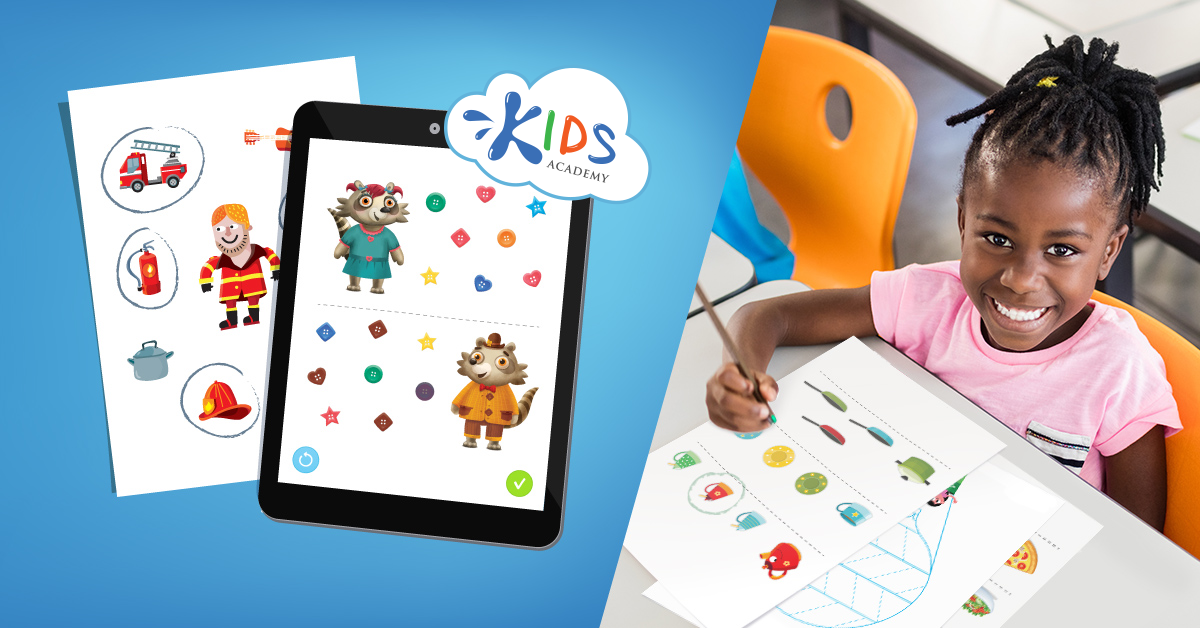

Visual representation plays a critical role in the cognitive and emotional development of children aged 3-7. At this influential stage, young minds are highly receptive to information in a format they can easily process. Visual aids such as pictures, charts, and drawings serve as powerful tools for comprehension and retention. For instance, visual aids in storytelling can help children better understand the narrative, remember key details, and promote imagination.
For teachers, incorporating visual elements in lessons can significantly enhance engagement. Children in this age group have shorter attention spans, and colorful, engaging visuals can captivate their interest and sustain their focus. Moreover, visuals can simplify complex concepts, making abstract ideas more tangible. For instance, math lessons using visual aids like counting blocks or number lines enable young learners to grasp numbers and basic arithmetic more instinctively.
Parents, too, should capitalize on visual activities at home—such as puzzles, drawing, or educational cartoons—to augment a child's learning experience. Visual learning caters to diverse learning styles and supports inclusive education for children who may struggle with traditional, text-only instruction. Overall, visual representation enriches the learning environment, bolsters understanding, and fosters a love for learning from an early age.








