Filters

19 filtered results

Clear all filters
Favorites
With answer key
Interactive

19 filtered results

Difficulty Level

Grade


Help your child sharpen their counting abilities with our engaging "Adding Up to 100" worksheets, designed specifically for ages 3-7. These interactive resources introduce young learners to essential math concepts while making counting fun and accessible. Each worksheet offers a variety of exercises that will keep your child motivated, from simple addition problems to more complex challenges, ensuring a well-rounded approach to learning. By using vibrant illustrations and relatable themes, children will develop confidence in their counting skills and enjoy the process. Start fostering a love for math early with these printable worksheets that support critical skill development!
Check out this FREE Trial Lesson on Adding up to 100 for age 3-7!

Match Objects that Fit Together

Favorites
With answer key
Interactive
  • 3-7
  • Improve counting skills
  • Adding up to 100
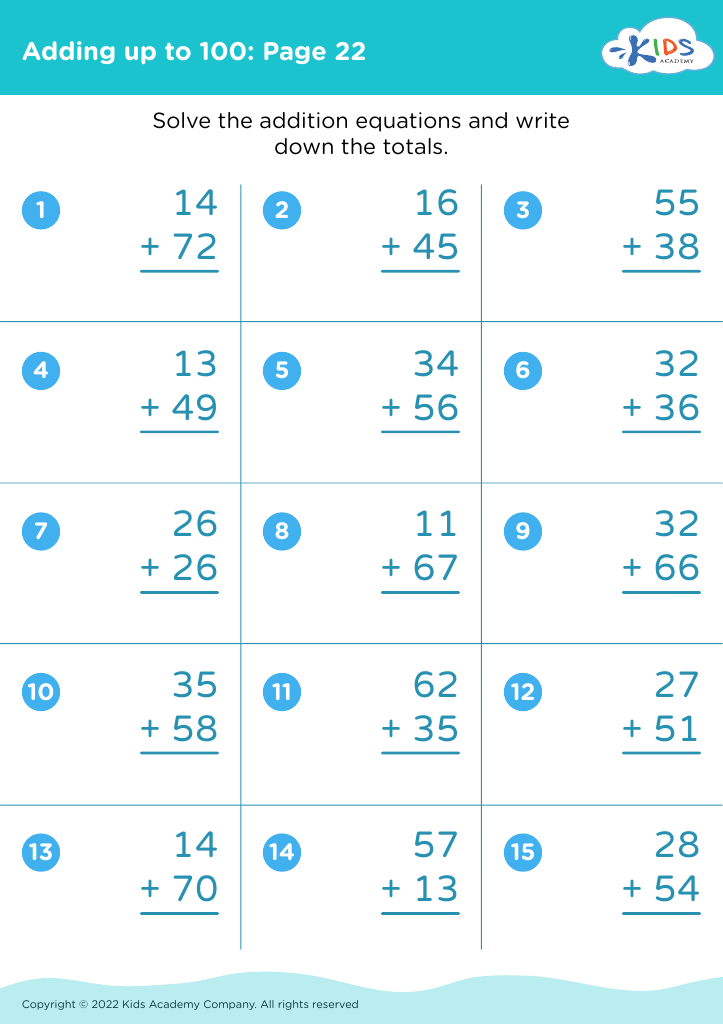
Adding up to 100: Page 22

Adding up to 100: Page 22

Adding up to 100: Page 22
Worksheet
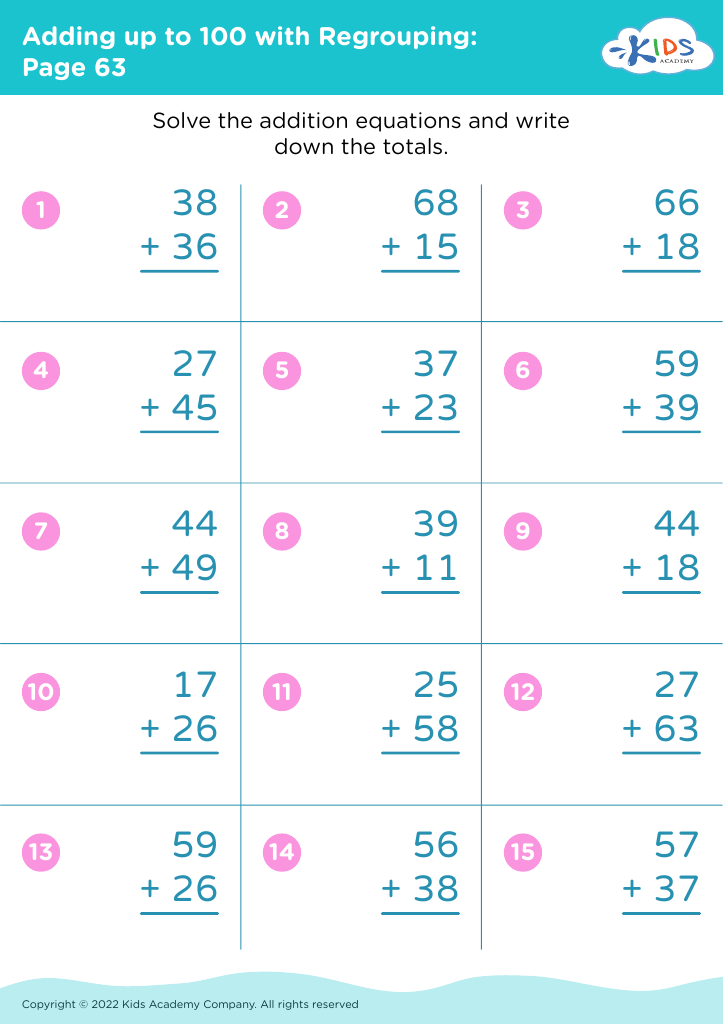
Adding up to 100 with Regrouping: Page 63
Worksheet
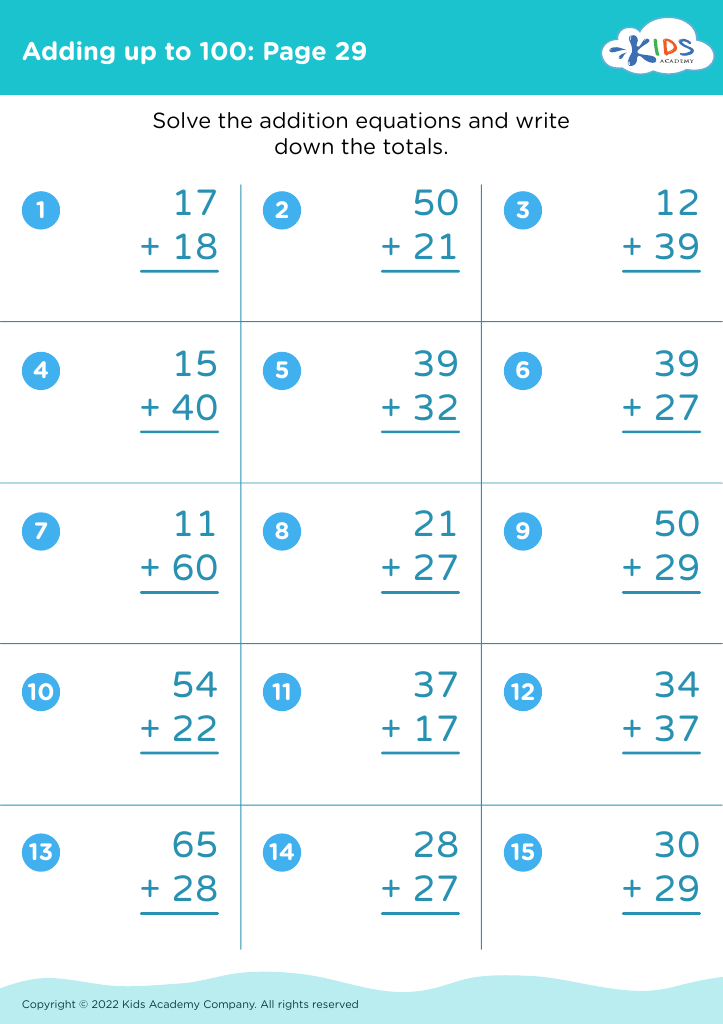
Adding up to 100: Page 29

Adding up to 100: Page 29

Adding up to 100: Page 29
Worksheet
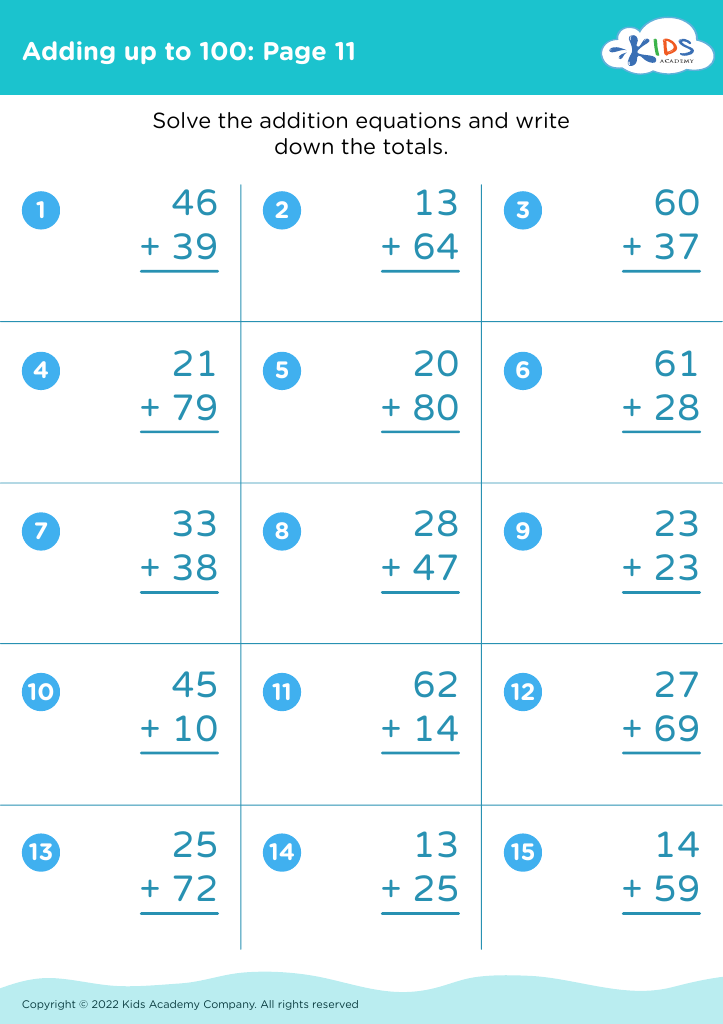
Adding up to 100: Page 11

Adding up to 100: Page 11

Adding up to 100: Page 11
Worksheet
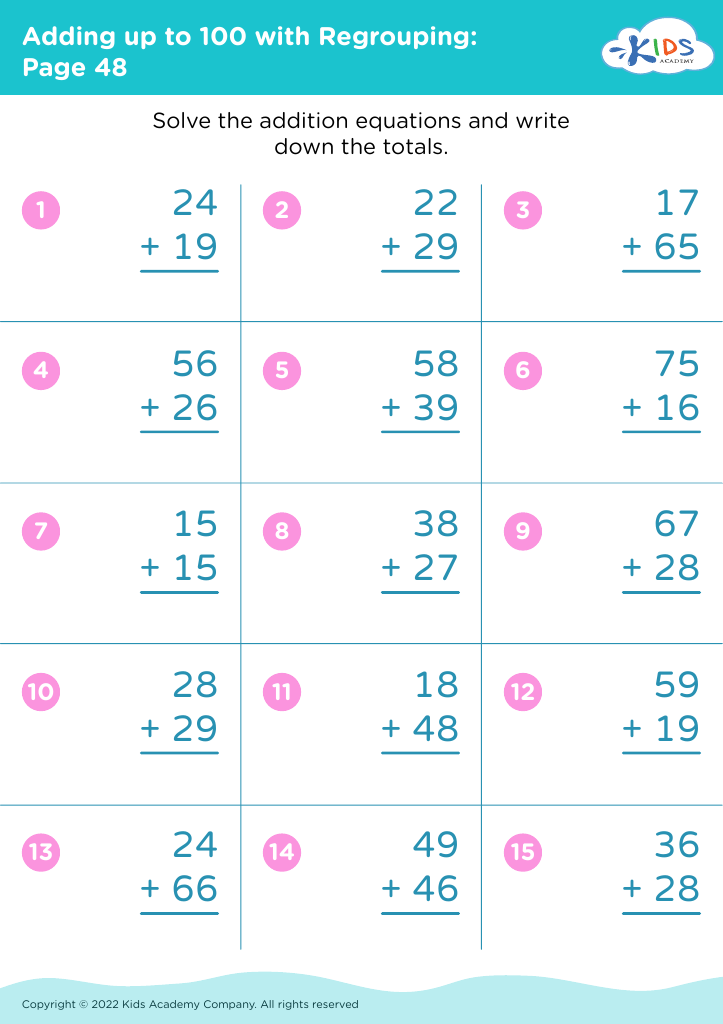
Adding up to 100 with Regrouping: Page 48
Worksheet
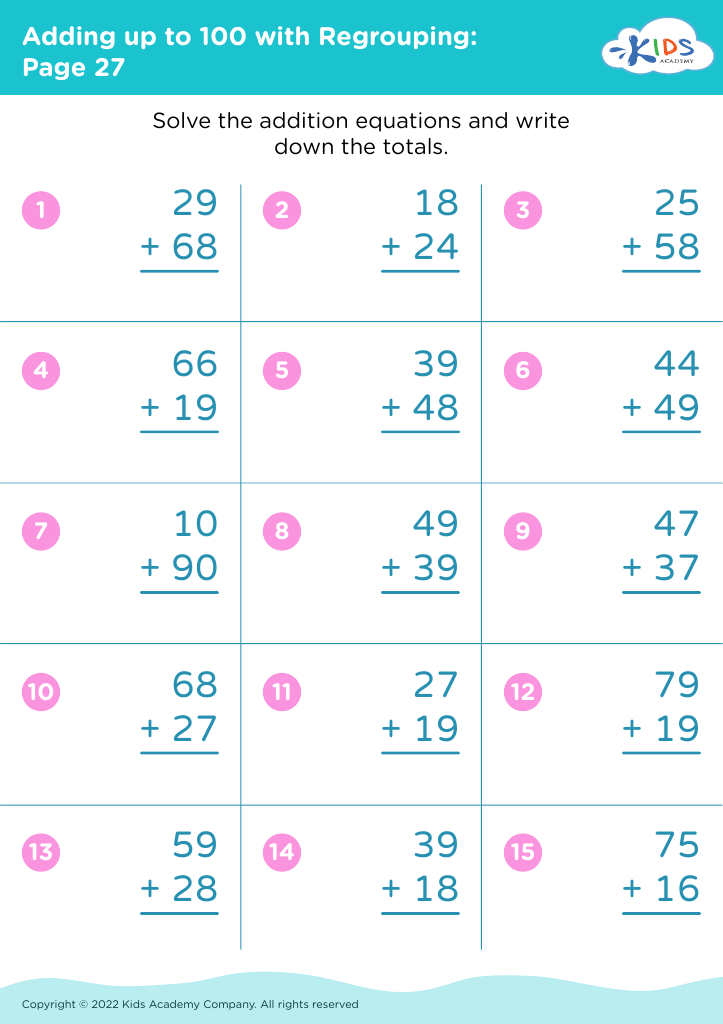
Adding up to 100 with Regrouping: Page 27
Worksheet
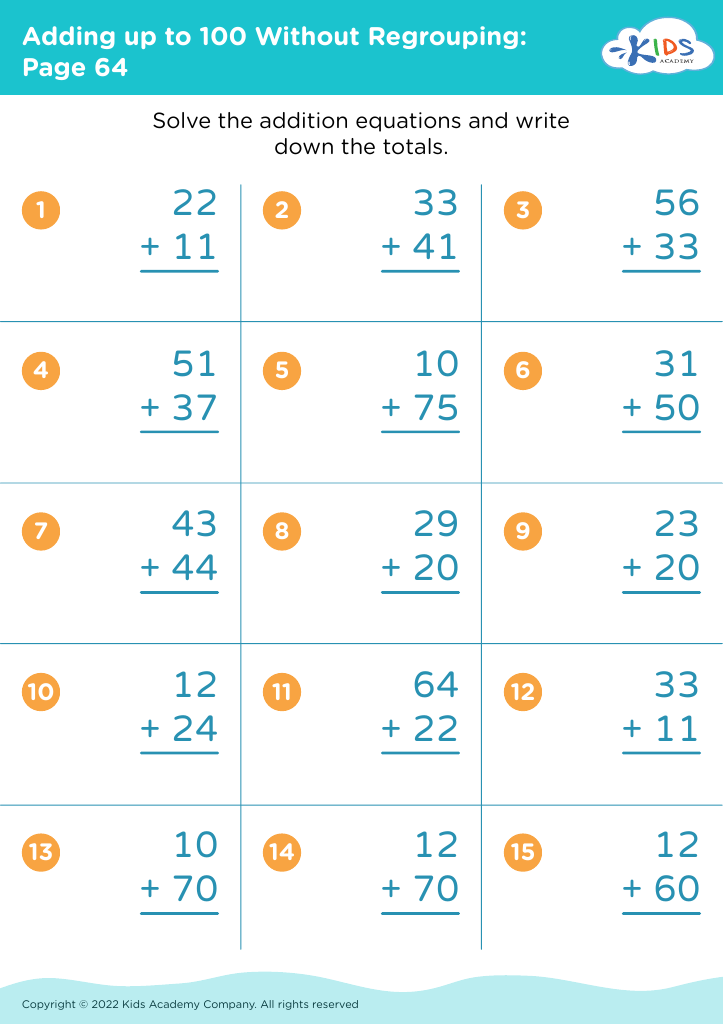
Adding up to 100 Without Regrouping: Page 64
Worksheet
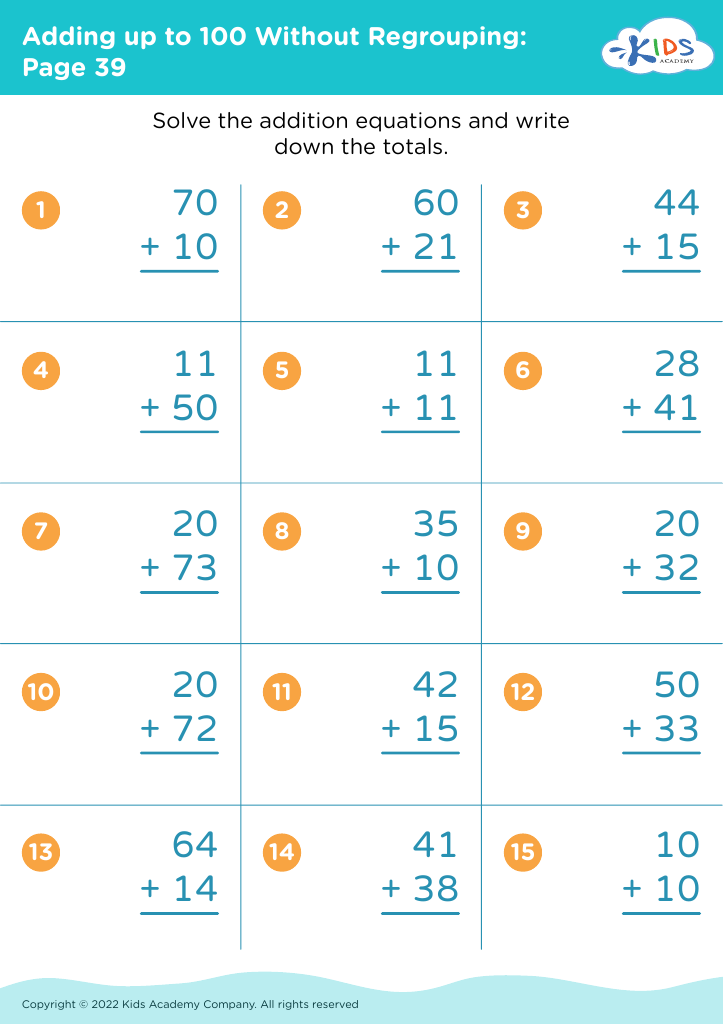
Adding up to 100 Without Regrouping: Page 39
Worksheet
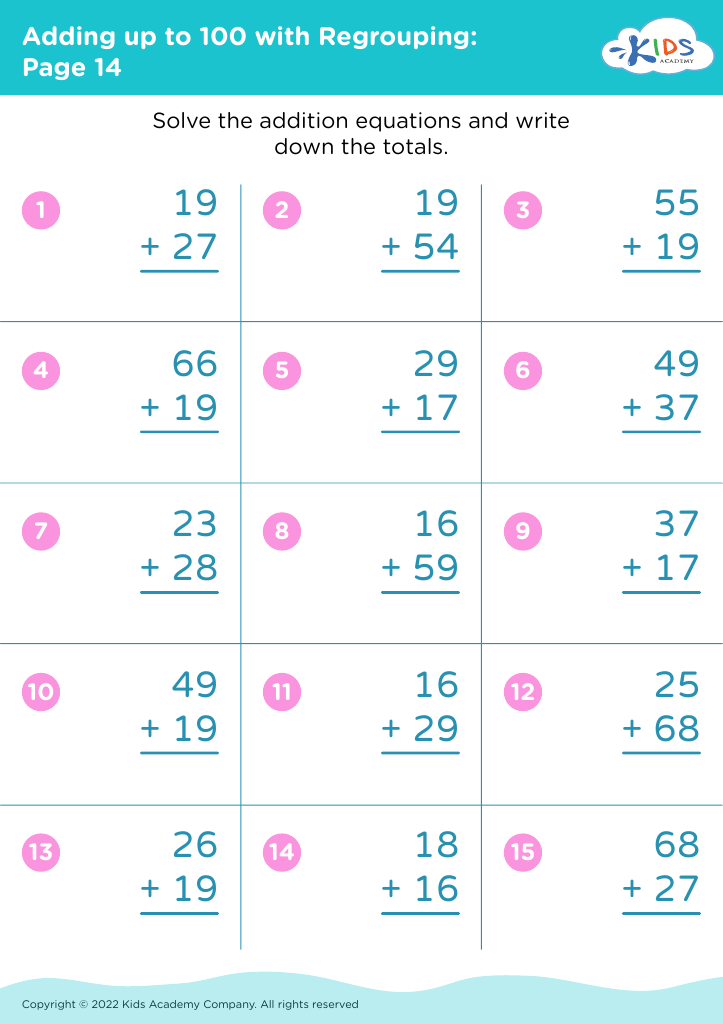
Adding up to 100 with Regrouping: Page 14
Worksheet
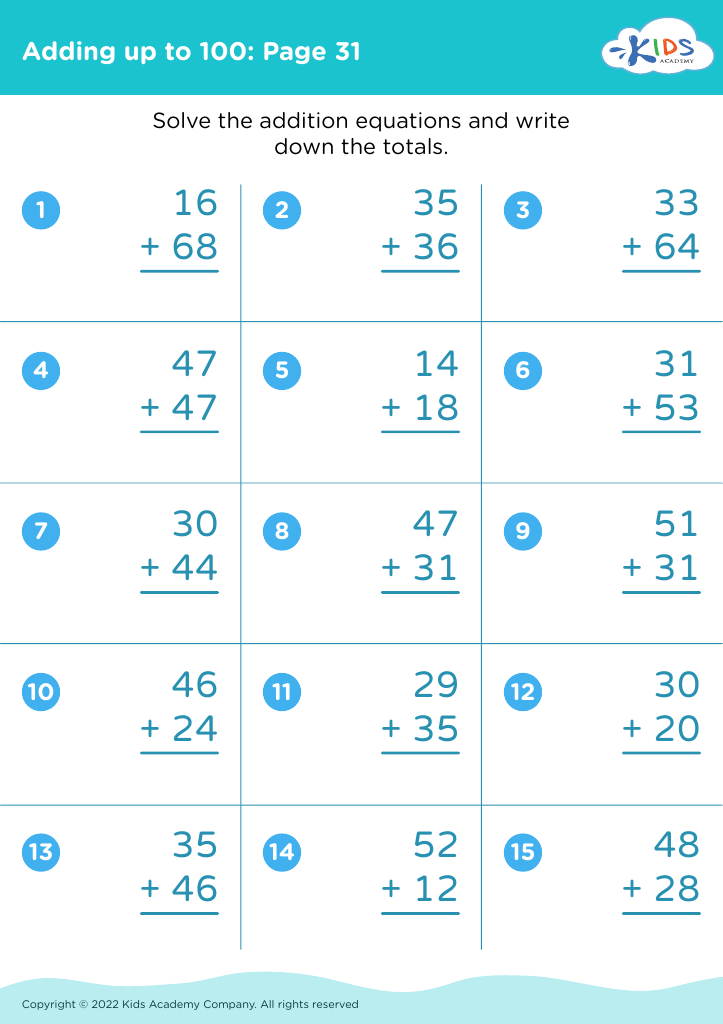
Adding up to 100: Page 31

Adding up to 100: Page 31

Adding up to 100: Page 31
Worksheet
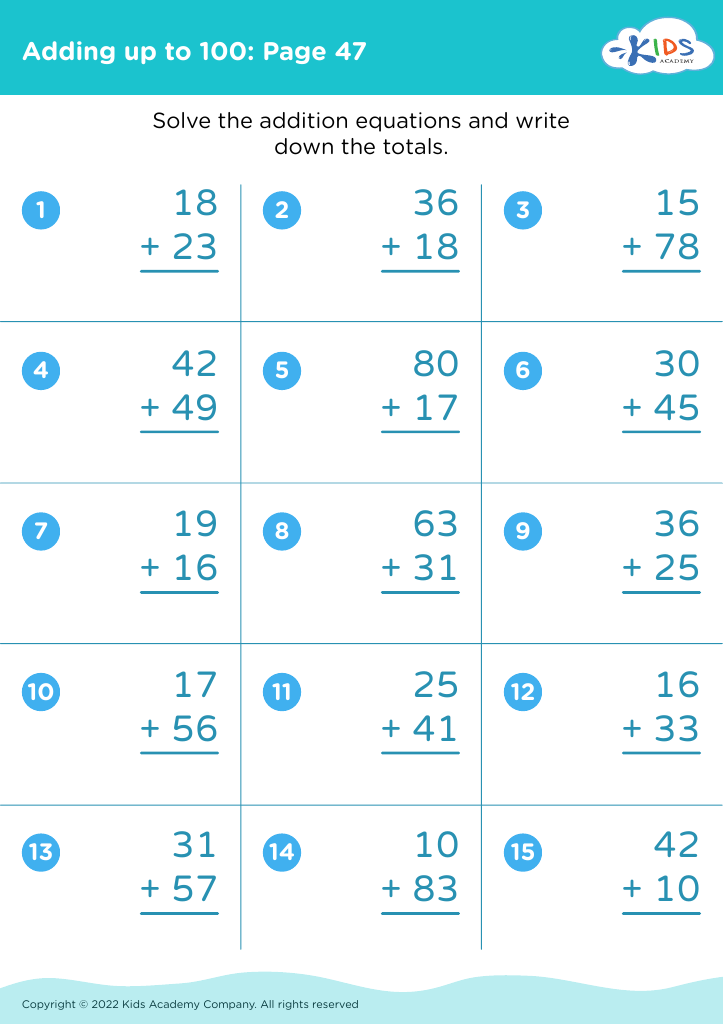
Adding up to 100: Page 47

Adding up to 100: Page 47

Adding up to 100: Page 47
Worksheet
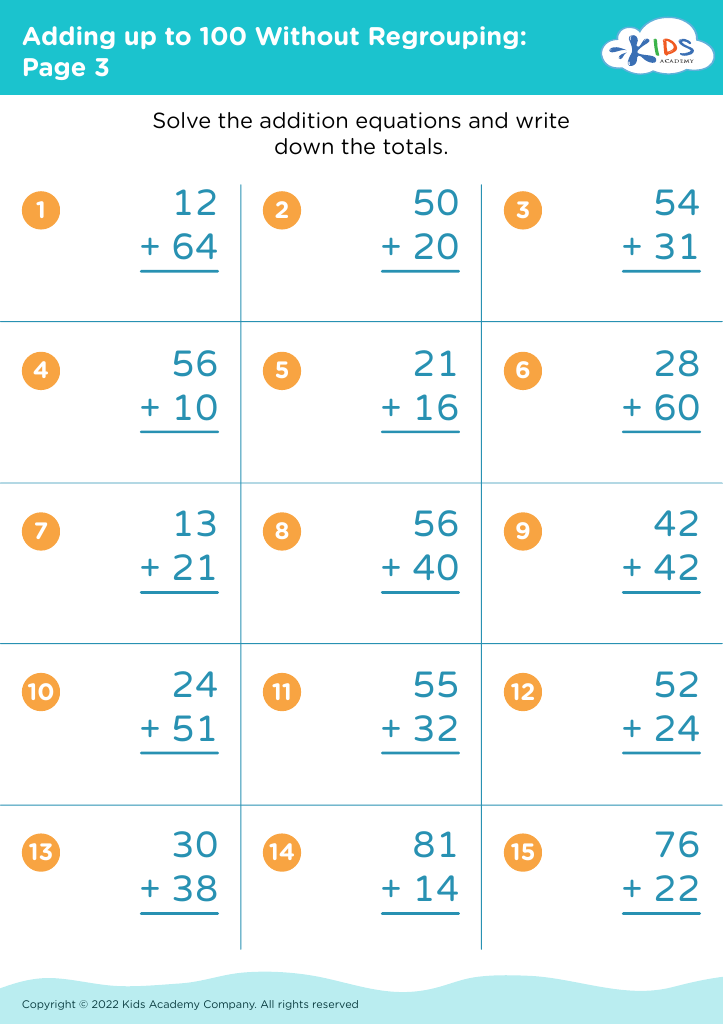
Adding up to 100 Without Regrouping: Page 3
Worksheet
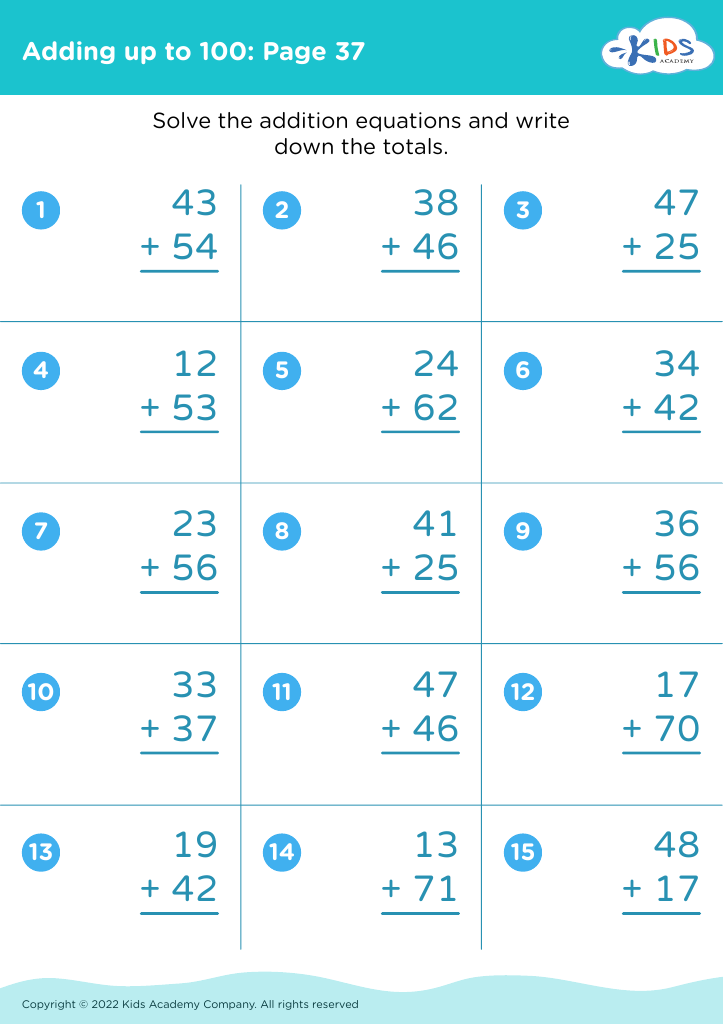
Adding up to 100: Page 37

Adding up to 100: Page 37

Adding up to 100: Page 37
Worksheet
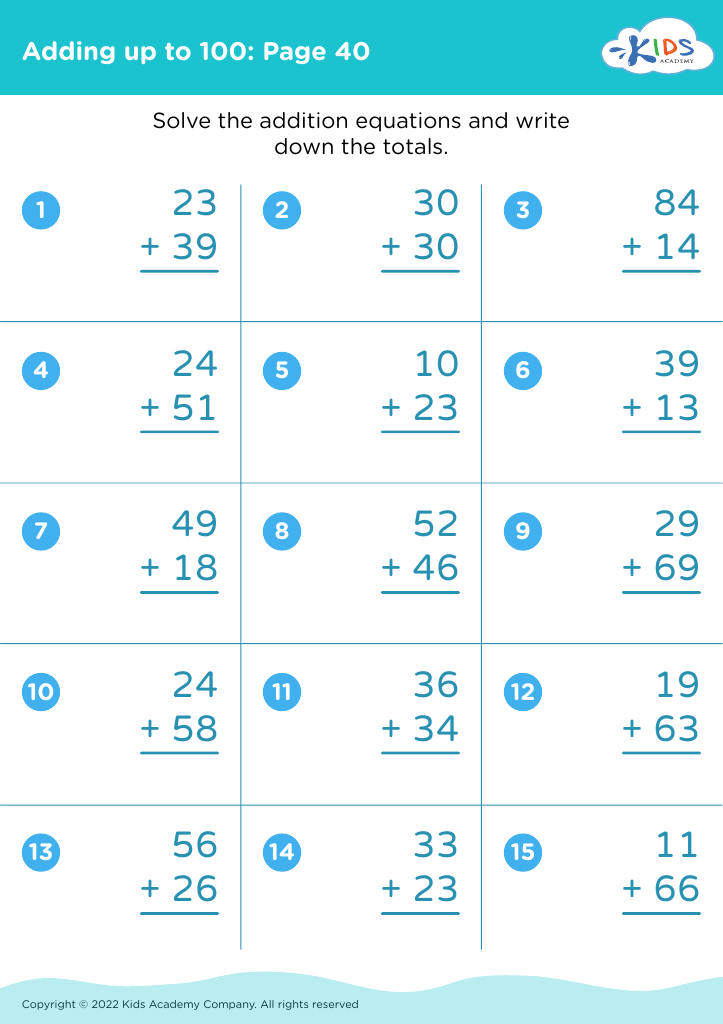
Adding up to 100: Page 40

Adding up to 100: Page 40

Adding up to 100: Page 40
Worksheet
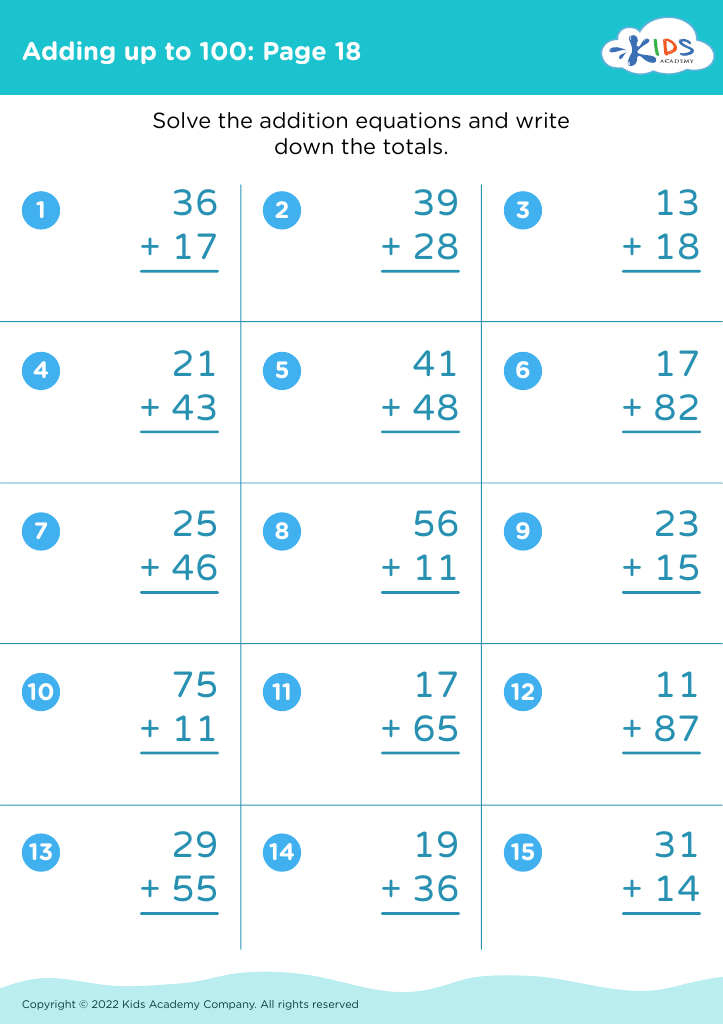
Adding up to 100: Page 18

Adding up to 100: Page 18

Adding up to 100: Page 18
Worksheet
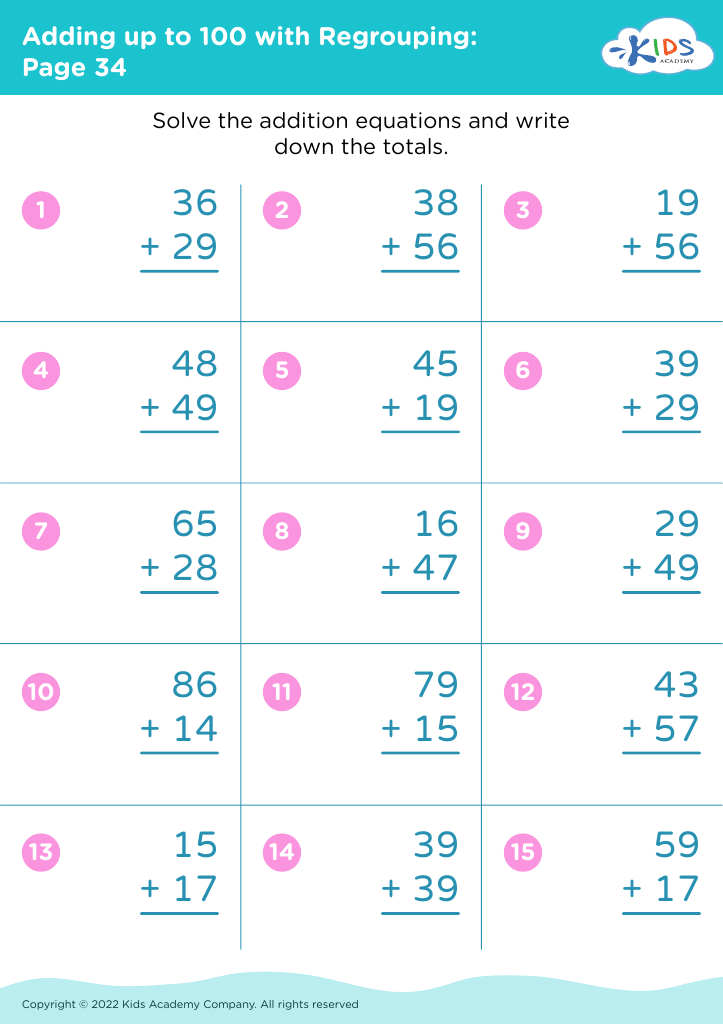
Adding up to 100 with Regrouping: Page 34
Worksheet
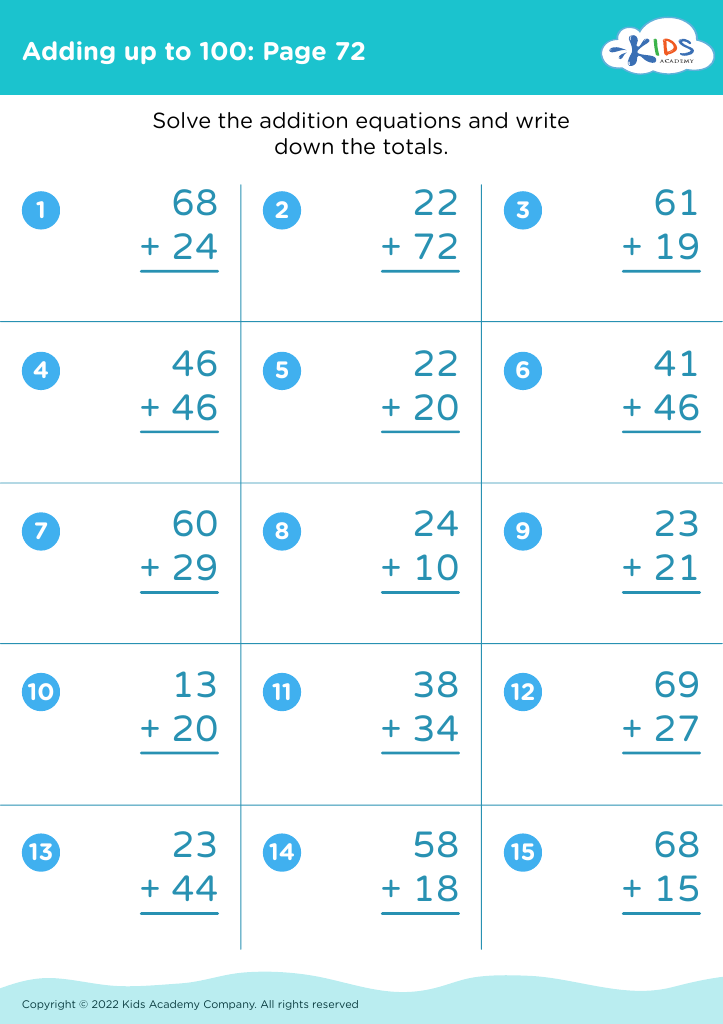
Adding up to 100: Page 72

Adding up to 100: Page 72

Adding up to 100: Page 72
Worksheet
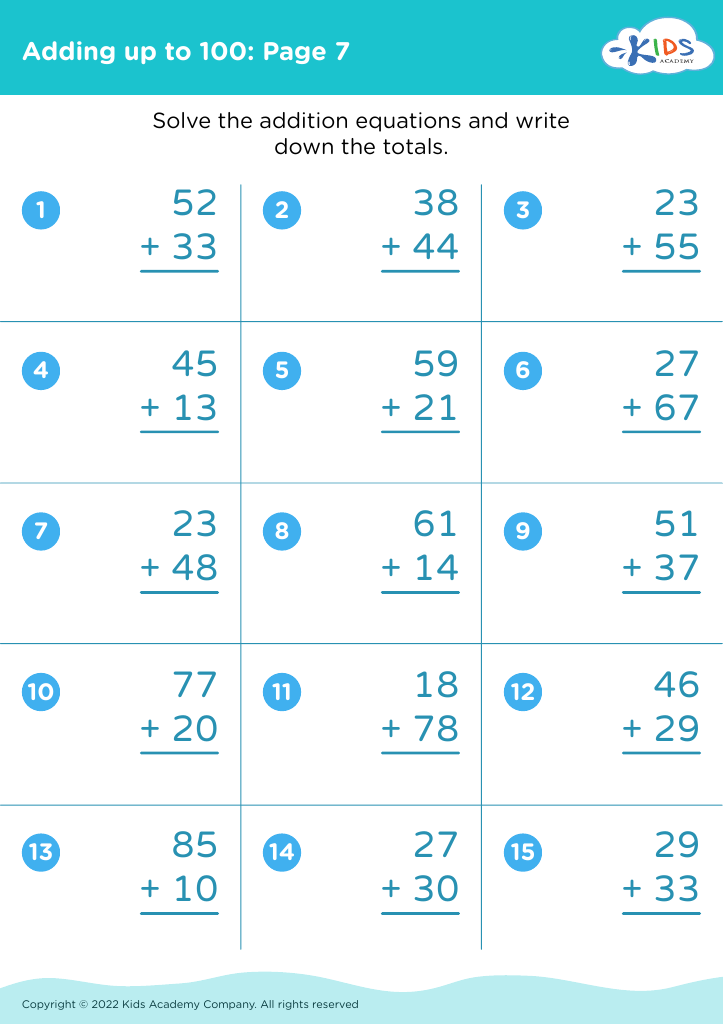
Adding up to 100: Page 7

Adding up to 100: Page 7

Adding up to 100: Page 7
Worksheet
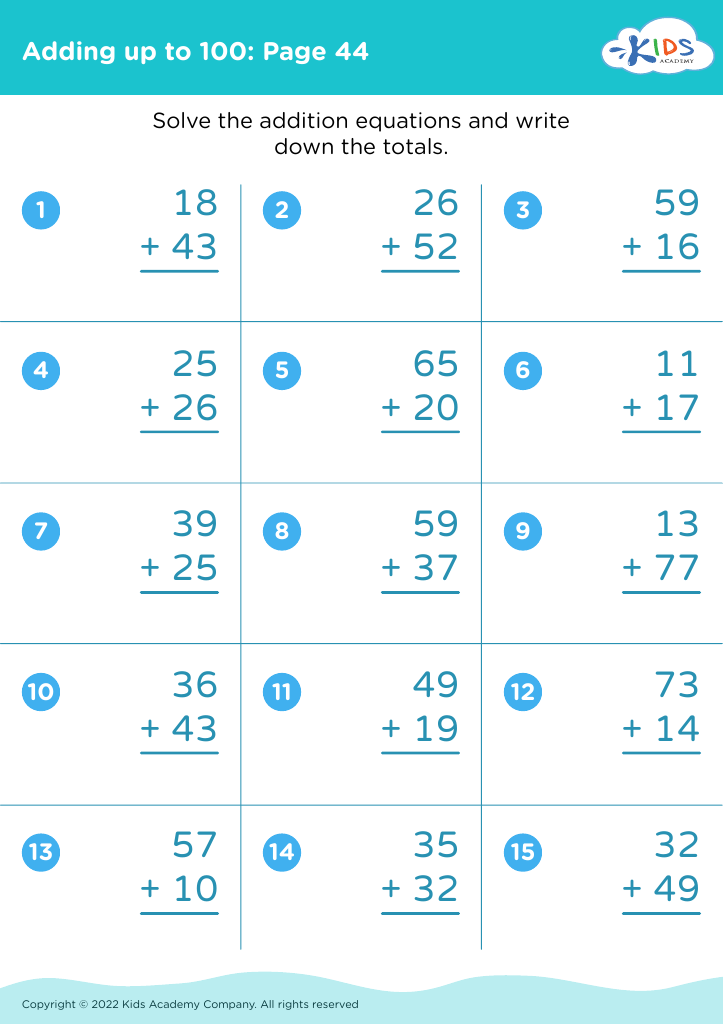
Adding up to 100: Page 44

Adding up to 100: Page 44

Adding up to 100: Page 44
Worksheet


Improving counting skills, particularly the ability to add up to 100, is essential for children aged 3-7 as it lays the foundation for their future mathematical understanding. At this age, children are developing critical cognitive and motor skills, and counting helps them recognize numbers and understand quantity. Mastering counting and addition not only fosters numerical literacy but also enhances problem-solving abilities and logical thinking.

For parents and teachers, nurturing these skills means engaging children in playful and interactive activities that make learning enjoyable. Early counting skills relate to daily scenarios, such as counting fruits during snack time or adding toys during play, making math relevant and accessible. Furthermore, children with strong counting abilities tend to perform better in school, bolstering their confidence and reducing math anxiety.

Fostering counting skills also supports social development, as group activities often incorporate counting, promoting collaboration and communication. Ultimately, investing time and resources to enhance counting skills in young children ensures they build a solid mathematical foundation vital for academic success and lifelong learning. Emphasizing these skills is an investment in their cognitive, emotional, and social growth.