Recognizing shapes Adding up to 100 Worksheets for Ages 3-7
8 filtered results
-
From - To
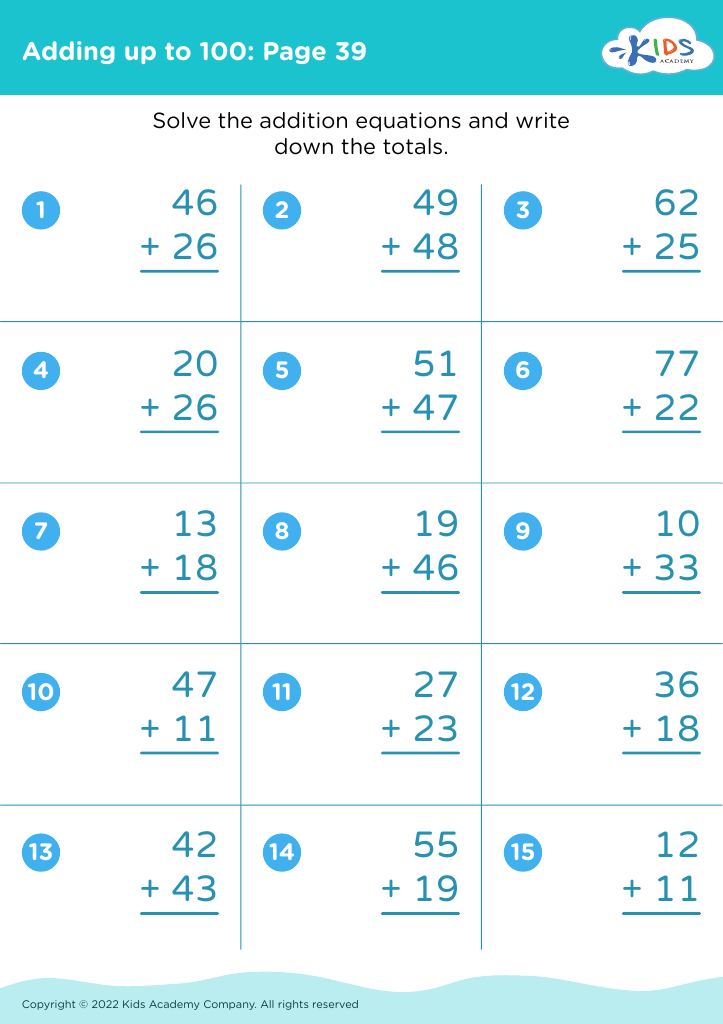
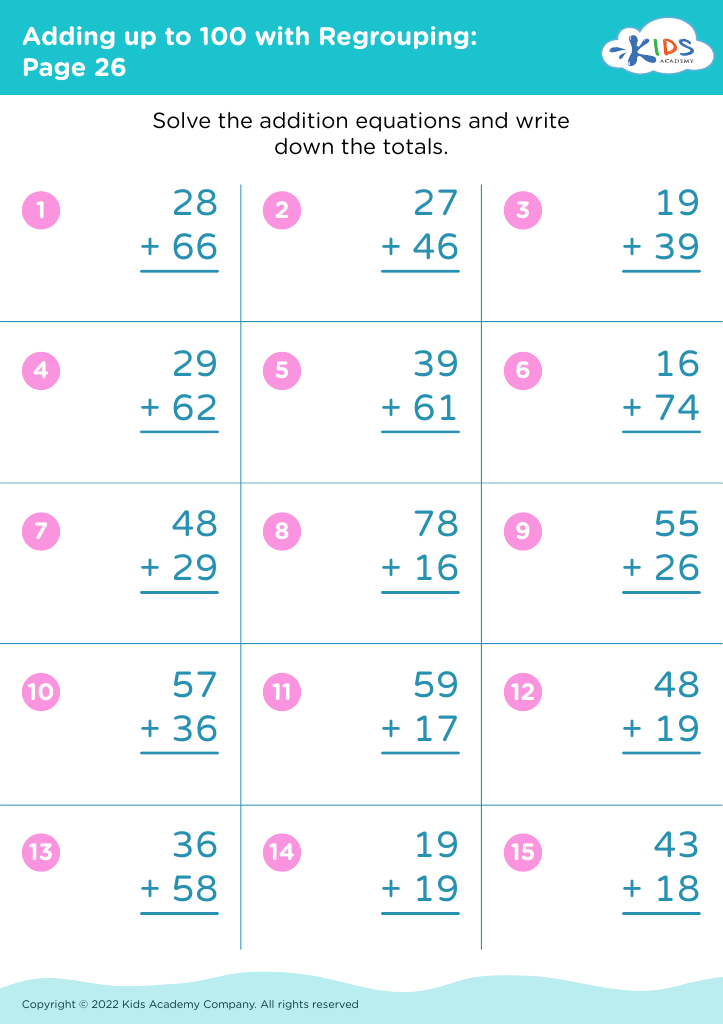
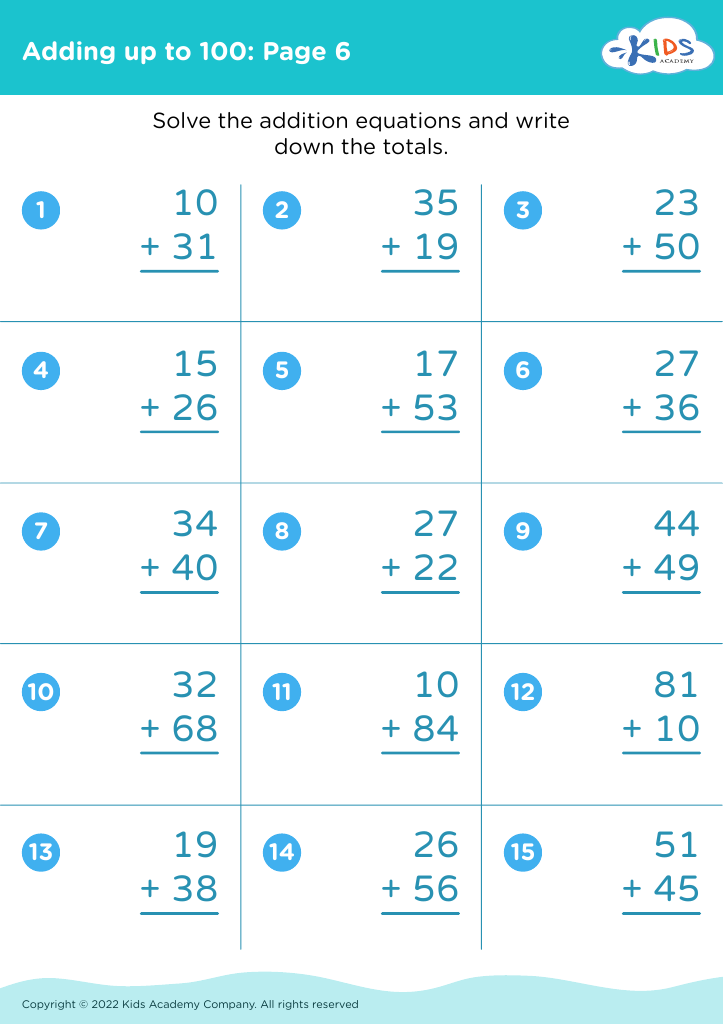
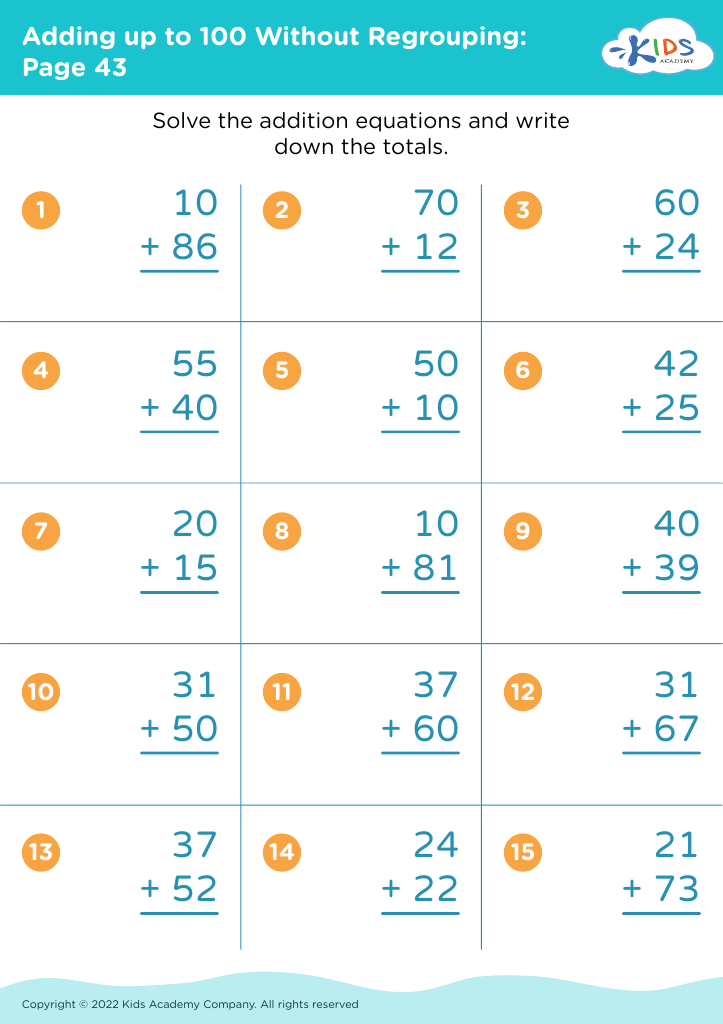
Explore our "Recognizing Shapes Adding up to 100 Worksheets" designed for children ages 3-7. These engaging activities combine foundational math skills and shape recognition to promote early learning. Our worksheets transform education into an enjoyable adventure, fostering the development of counting, addition up to 100, and identifying basic shapes. Perfect for preschool, kindergarten, and early elementary students, these resources support classroom learning or at-home practice. Our colorful and fun designs keep young learners motivated while reinforcing critical math concepts. Visit us to help your child develop essential skills with our expertly crafted worksheets focused on interactive, playful education!
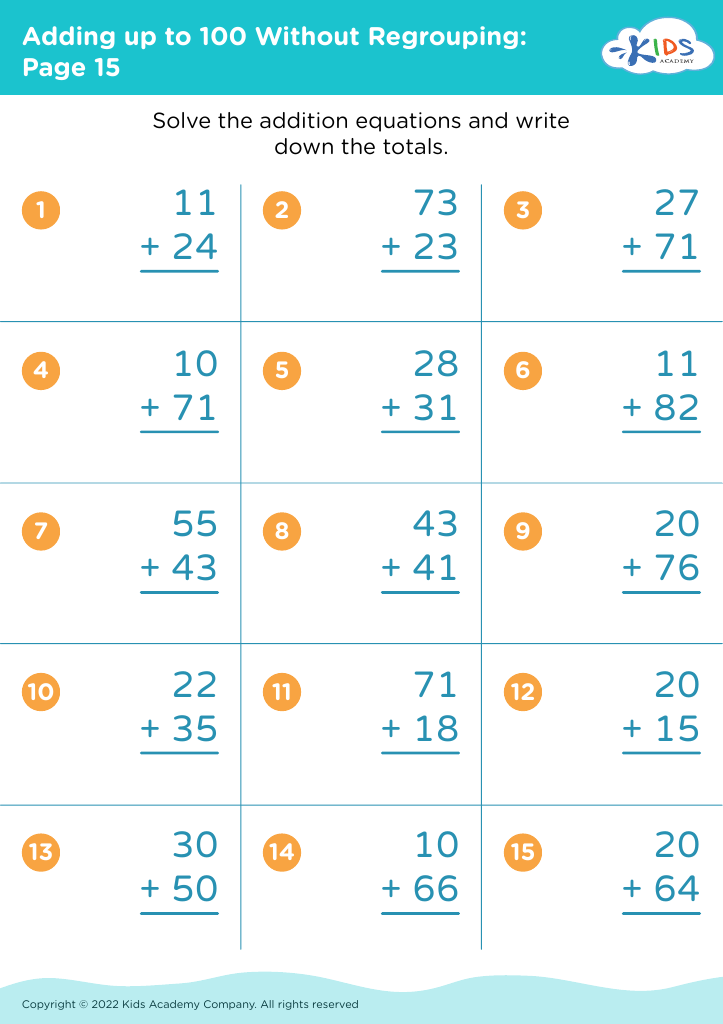
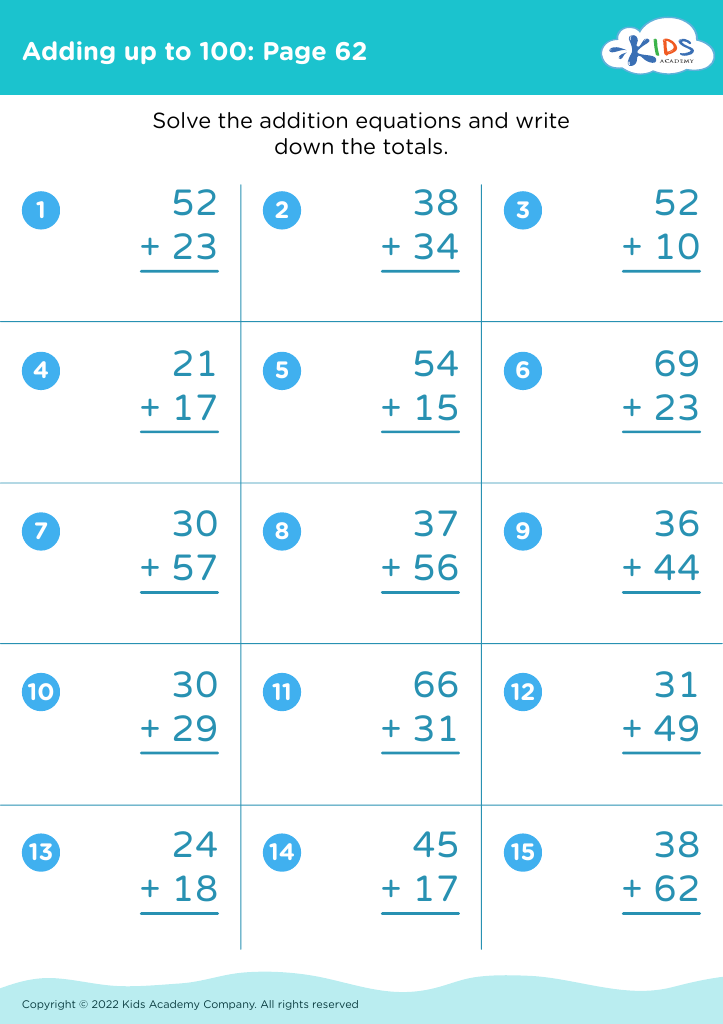
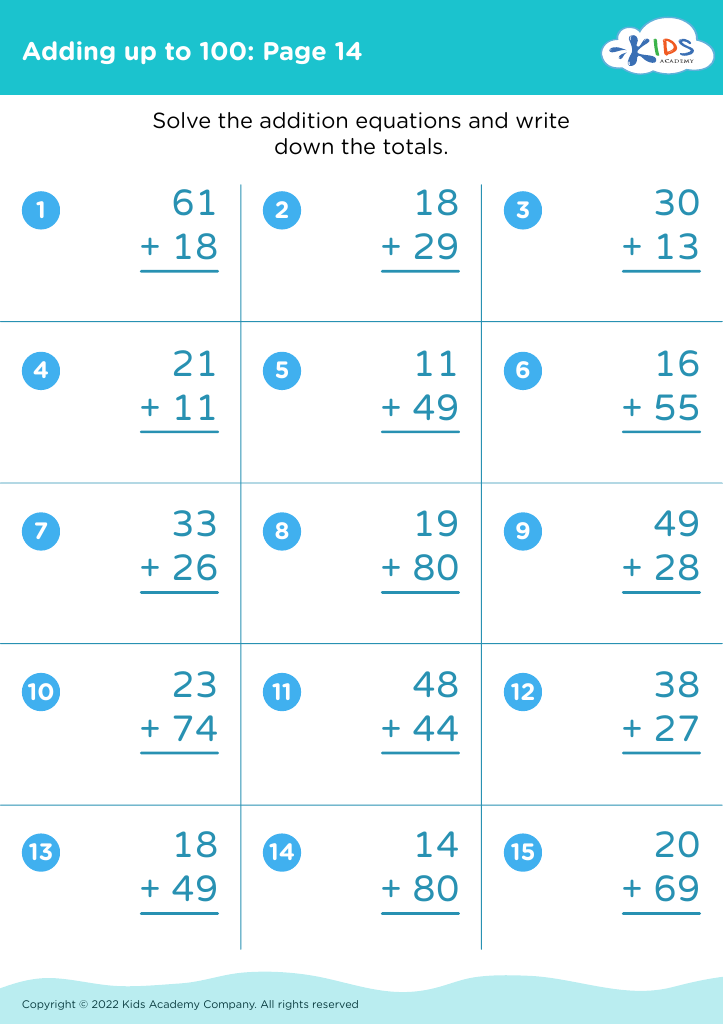
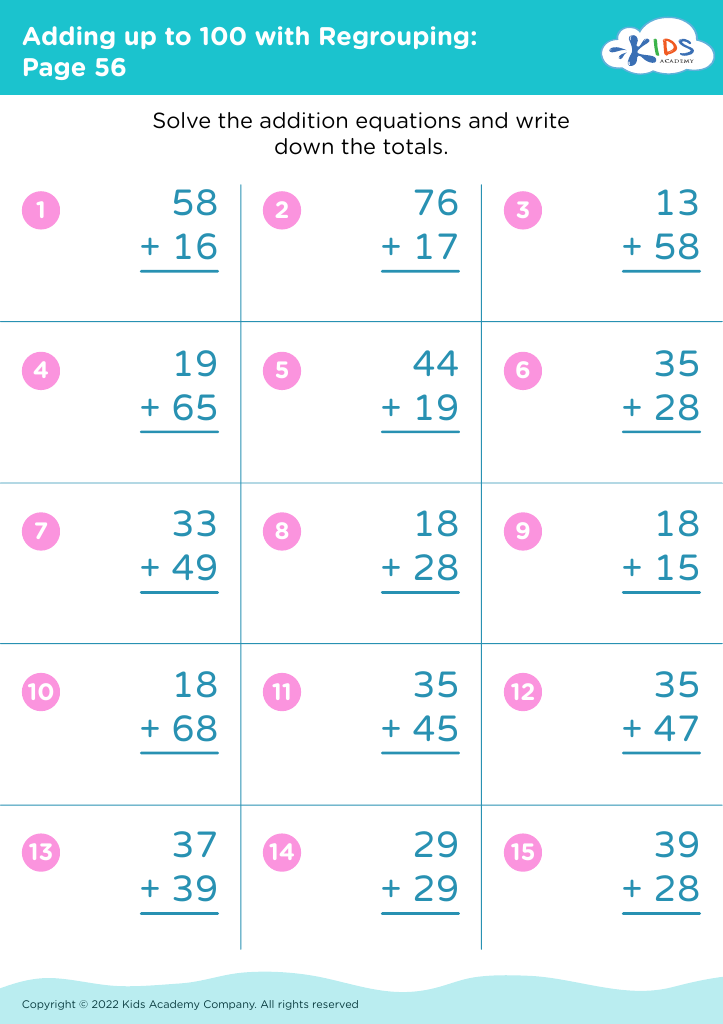






%20(1).jpg)
Recognizing shapes and simple arithmetic such as adding up to 100 play crucial roles in the developmental stages of young children, ages 3-7. First, learning to recognize shapes is fundamental for spatial awareness and cognitive development. Identifying and distinguishing between different shapes enhances a child's visual sensitivity, an ability that is critical not only for scientific and mathematical thinking but for everyday problem-solving. Early recognition of shapes also serves as a foundation for geometry, an important component of math most children will encounter in school.
Adding up to 100 at an early age sets the stage for numerical literacy, which is vital for more complex mathematical concepts later on. When children practice simple addition, particularly up to 100, they improve their number sense, including understanding quantities, number sequencing, and the relationships between numbers. This foundational knowledge is instrumental as they progress to more challenging tasks like subtraction, multiplication, and division.
Both of these skill sets extend beyond academics. Shape recognition supports language development through descriptive vocabulary involving size and position, while basic math fosters logical reasoning and decision-making skills. Cultivating these abilities early in life builds confidence and a positive disposition toward learning, benefiting children's overall development and success in all aspects of life.








