Counting skills Adding up to 50 Worksheets for Ages 3-7 - Page 2
34 filtered results
-
From - To
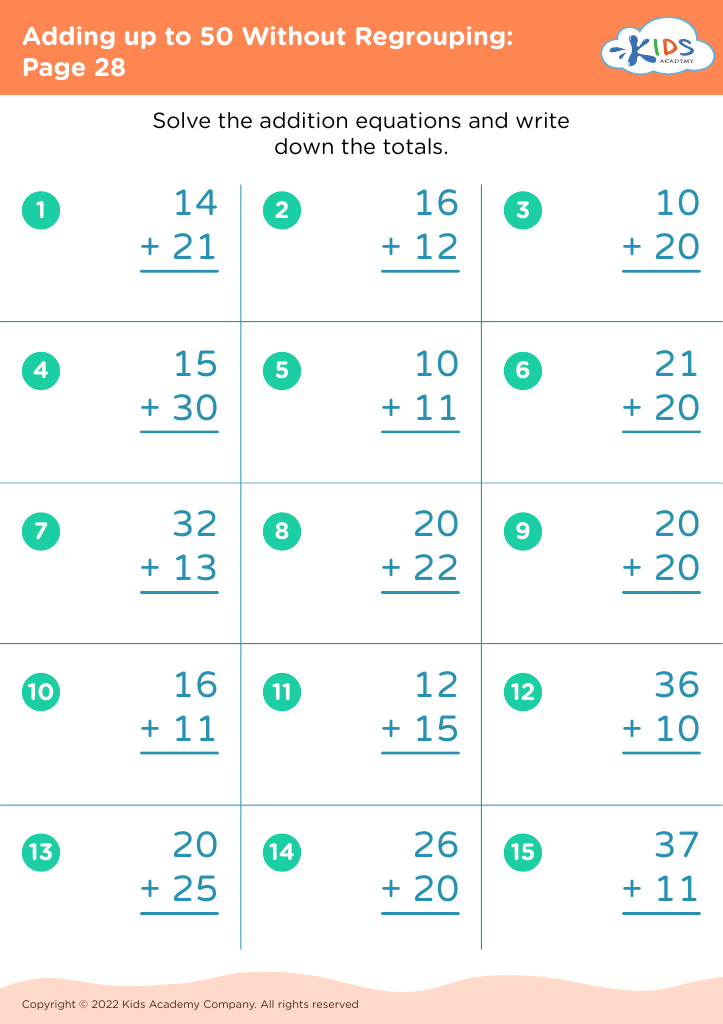
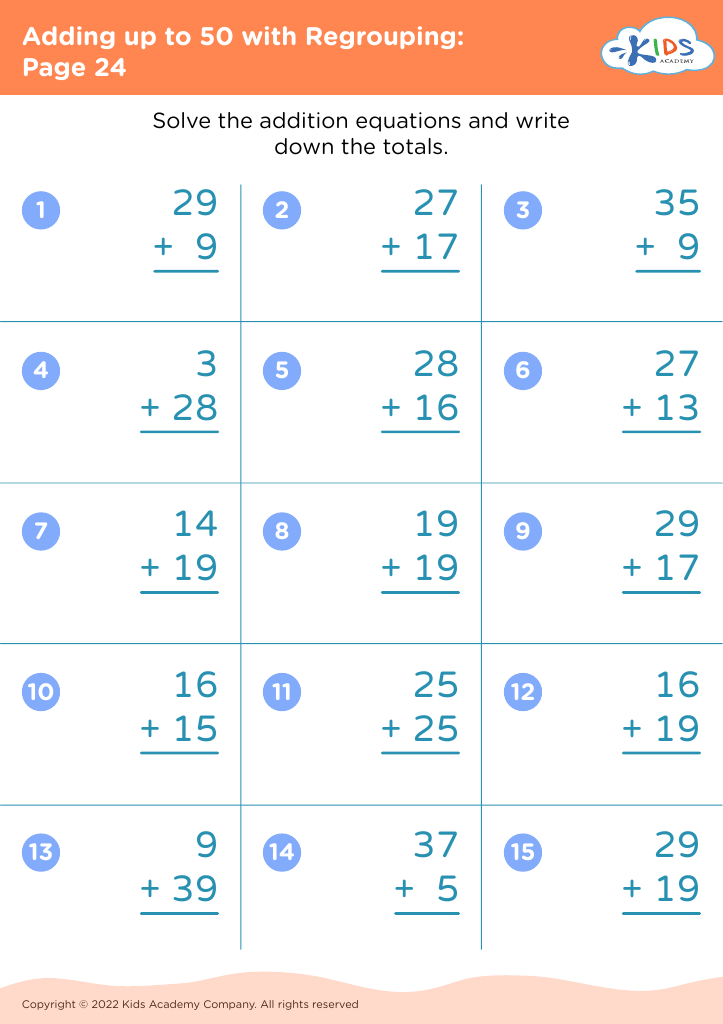
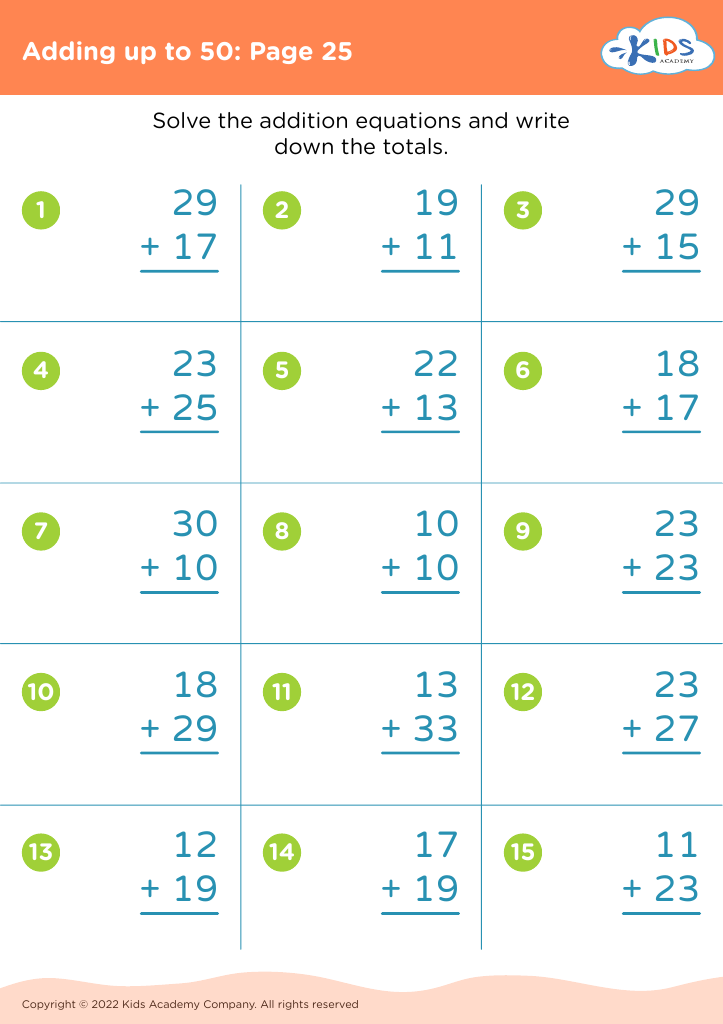
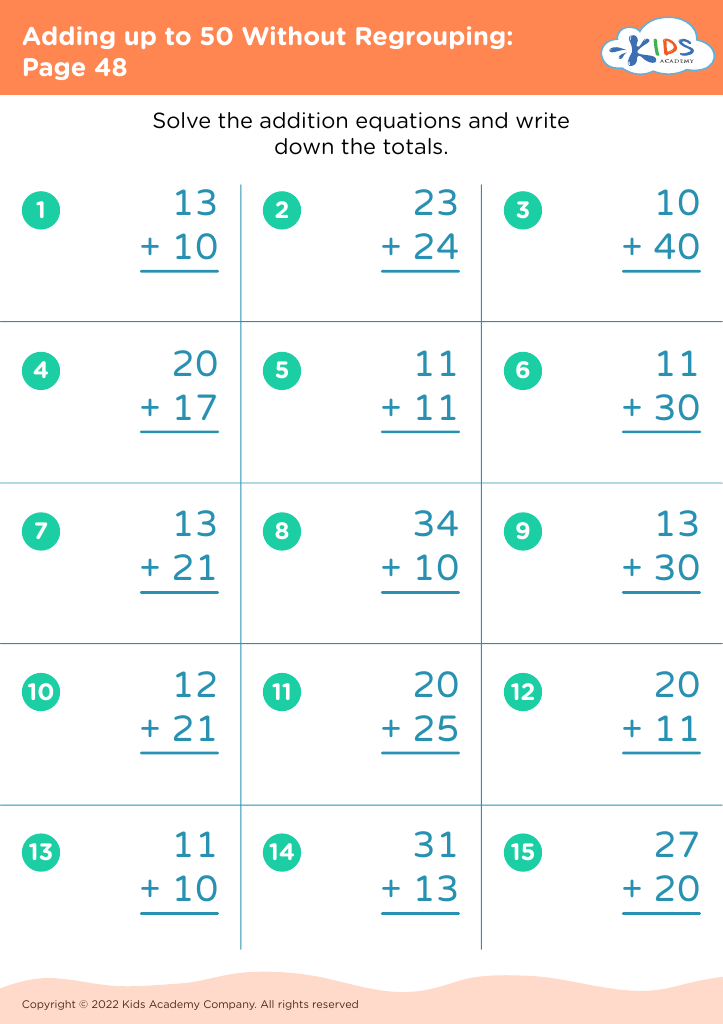
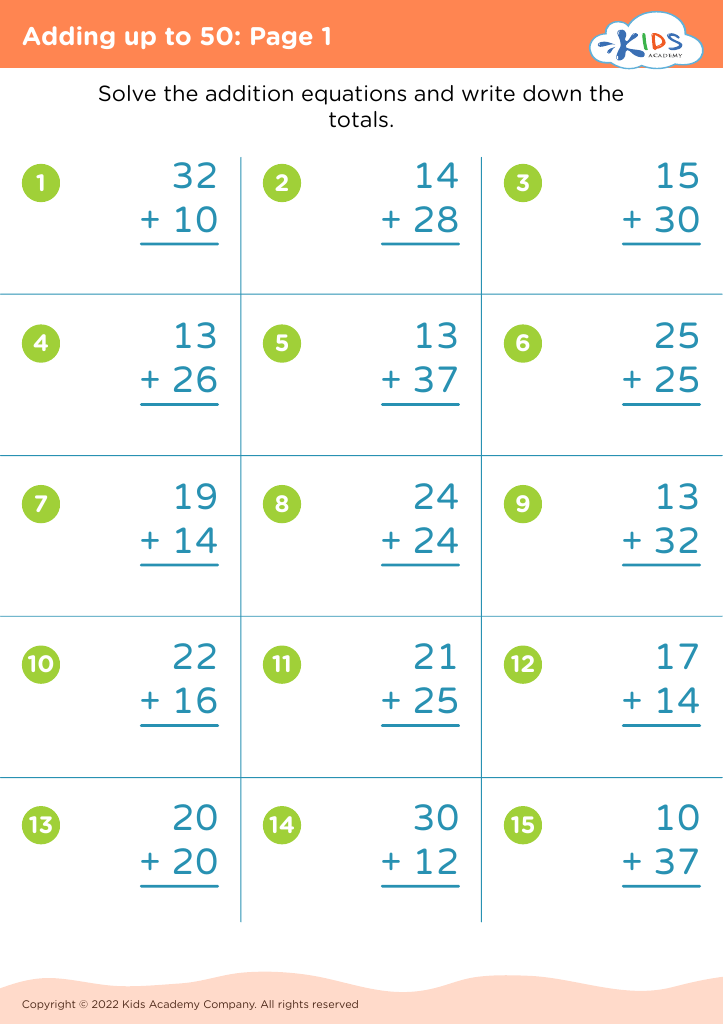
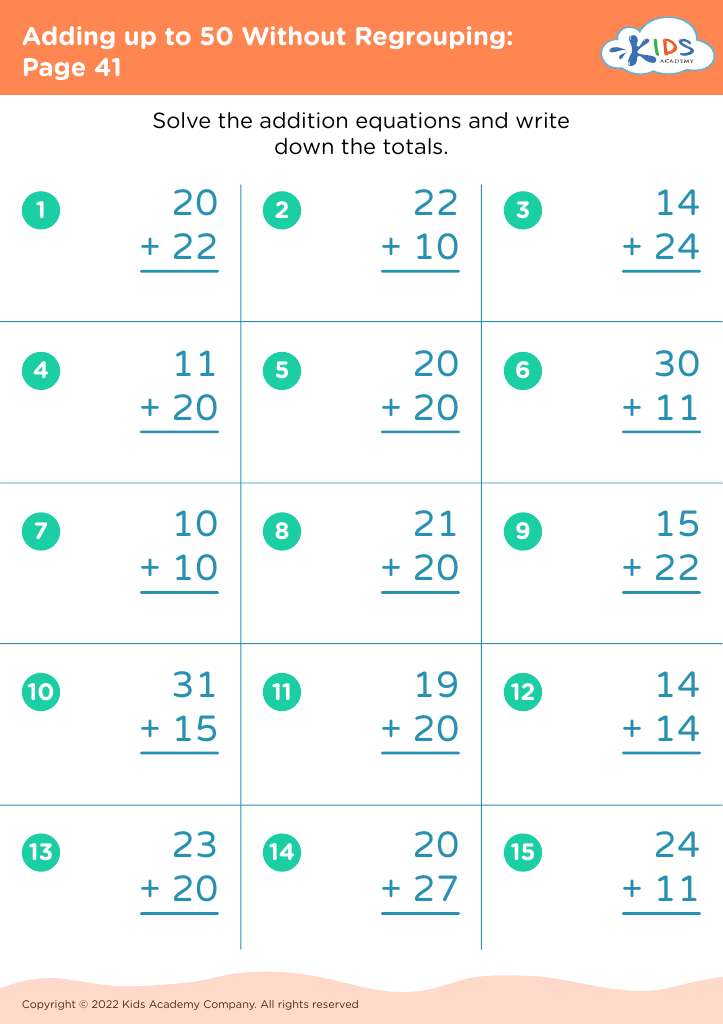
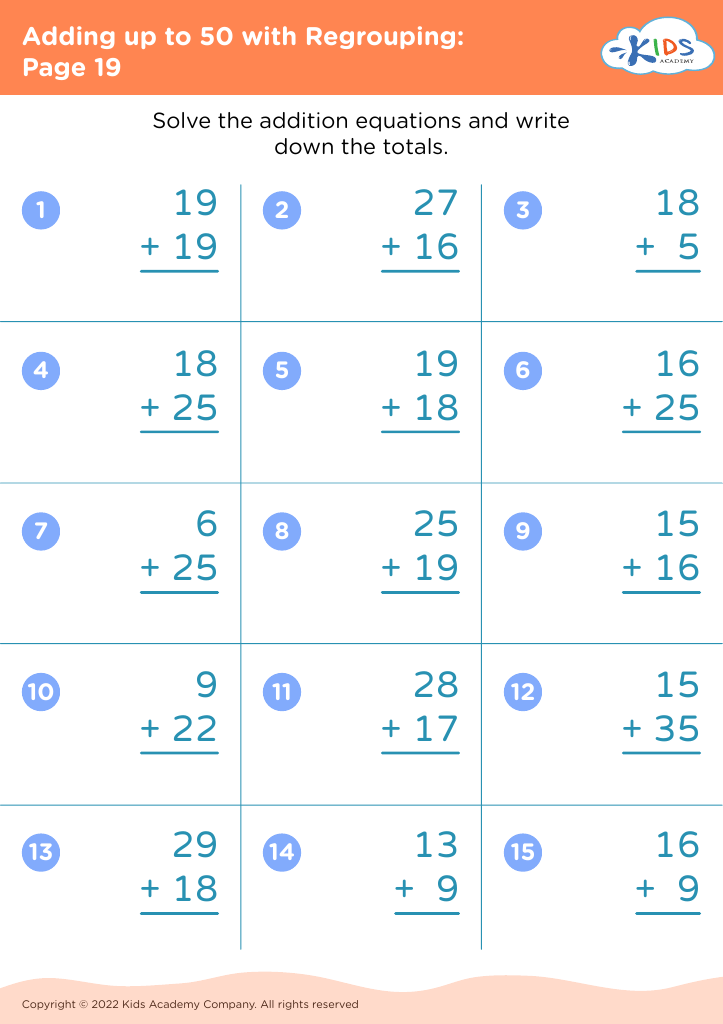
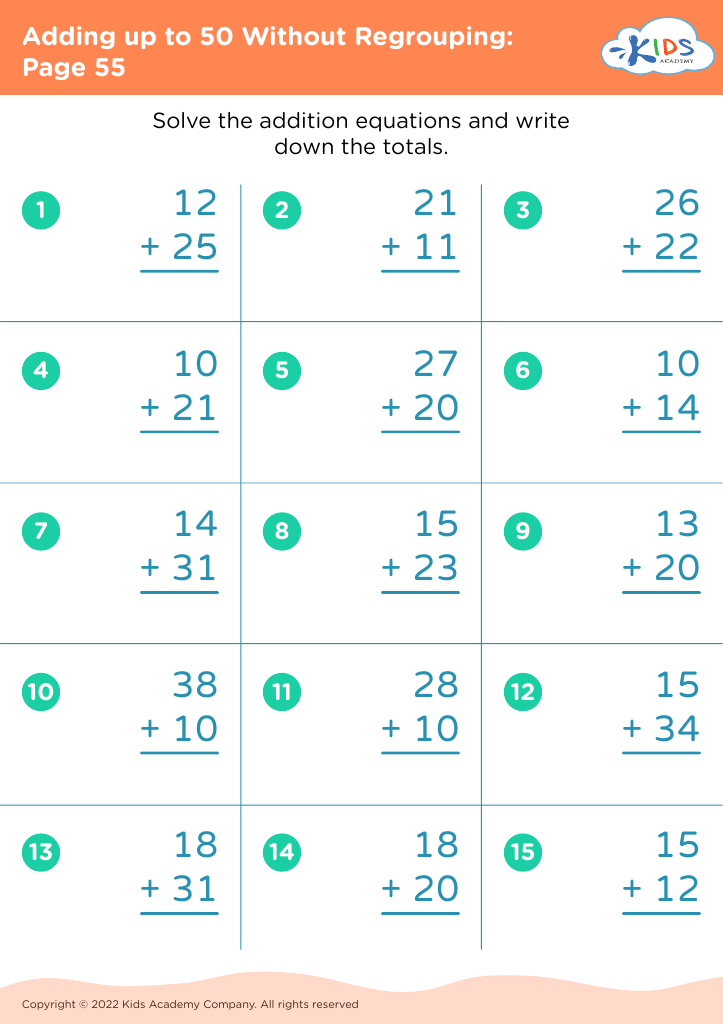
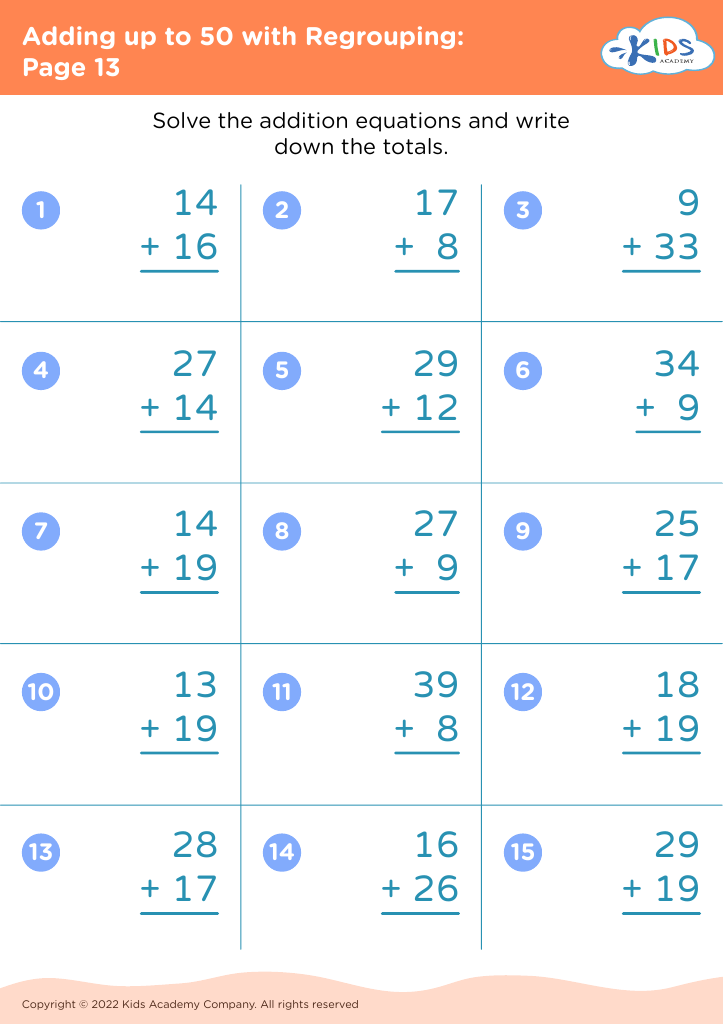
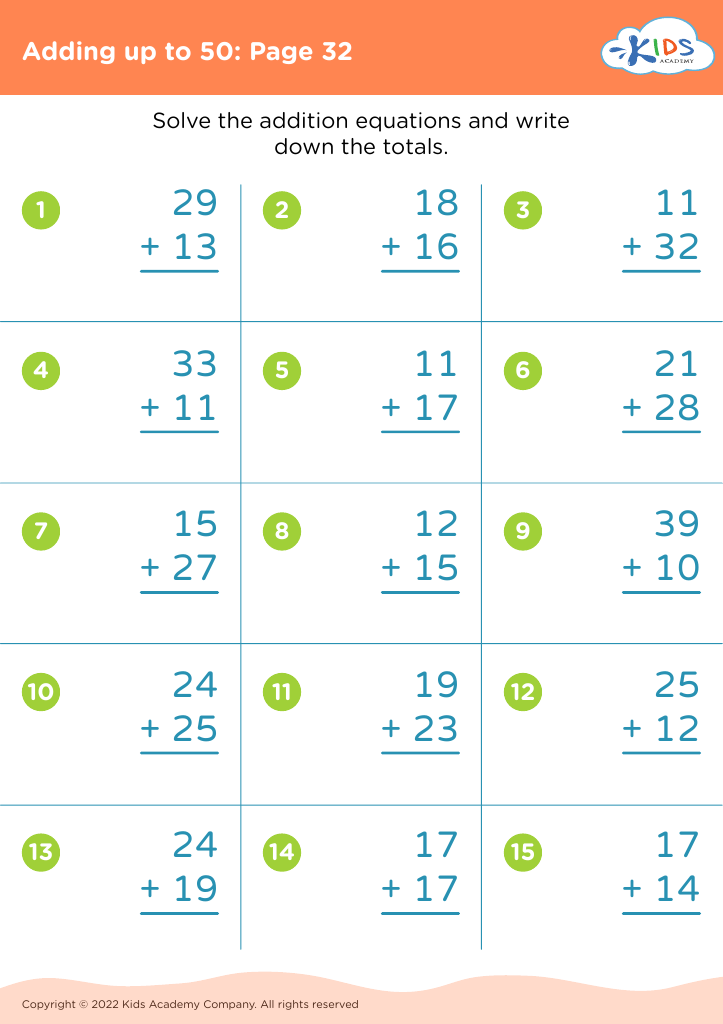




Counting and basic addition are foundational skills for young children, paving the way for their future mathematical understanding. For ages 3-7, mastering counting up to 50 and performing simple addition has multiple benefits.
Firstly, these early math skills are crucial for cognitive development. Counting enhances memory, pattern recognition, and logical thinking. It helps children understand the concept of numerical order, quantities, and the relationships between numbers, which are essential for more advanced mathematical concepts.
Secondly, proficiency in counting and basic addition builds confidence. When children grasp these skills, they feel a sense of achievement that boosts their self-esteem and motivates them to tackle more challenging tasks.
Moreover, math skills apply to everyday life. Counting helps children understand time (like days, months), money (simple transactions), and measurements (during cooking or playing). These practical applications make math relevant and engaging.
Additionally, early math skills are predictors of academic success. Children successful at understanding numbers early typically perform better in school. This readiness gives them an edge in not only more complex math but also in subjects requiring analytical thought.
In summary, mastering counting up to 50 and basic addition sets a solid foundation for cognitive development, practical life skills, academic achievement, and overall confidence in young learners.








