Subtraction skills Addition and Subtraction Word Problems Worksheets for Ages 3-7
6 filtered results
-
From - To
Our "Subtraction Skills: Addition and Subtraction Word Problems Worksheets" for ages 3-7 are designed to make learning engaging and enjoyable! These worksheets provide young learners with fun, story-based math problems that help develop essential subtraction skills. With colorful illustrations and relatable scenarios, children practice solving real-world problems, enhancing their comprehension while building confidence in their math abilities. Ideal for both classroom and home use, these worksheets encourage critical thinking and foster a love for learning. Help your child master subtraction concepts with our diverse range of interactive and educational activities tailored perfectly for early learners. Start their math journey today!
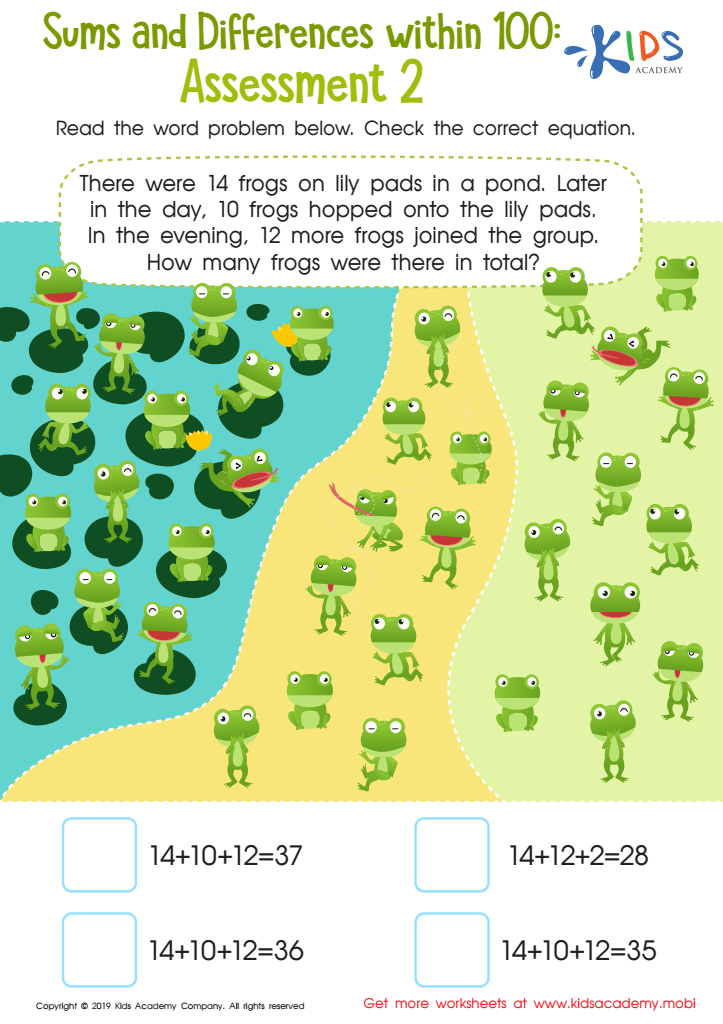
Sums and Differences Within 1 - Assessment 2 Worksheet
 Assign to My Students
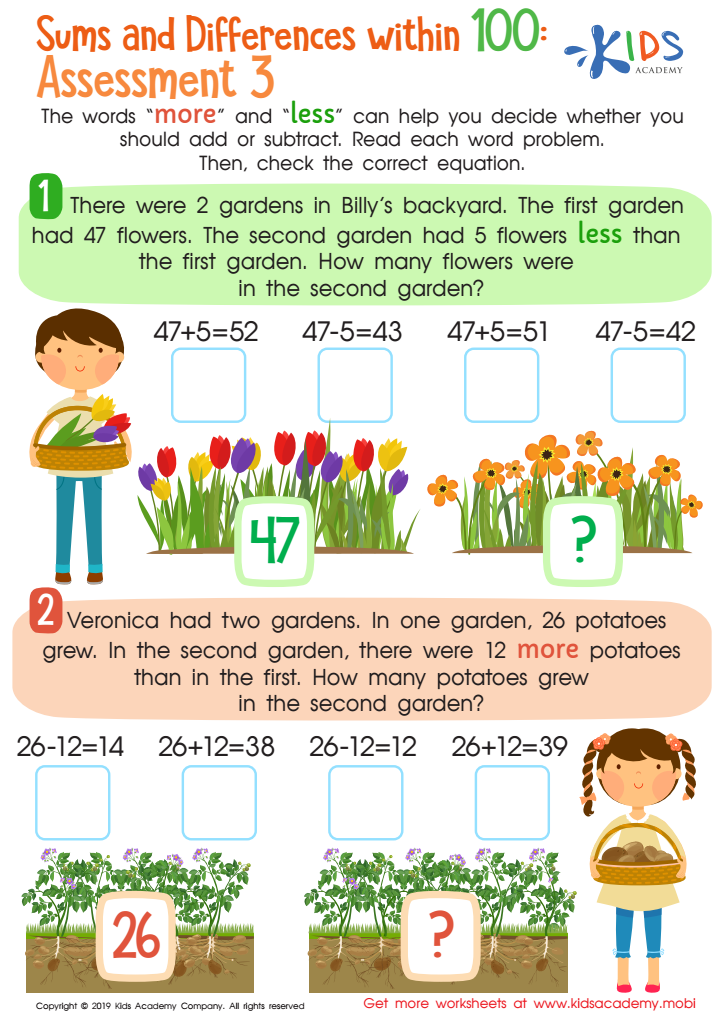
Sums and Differences Within 1 - Assessment 3 Worksheet
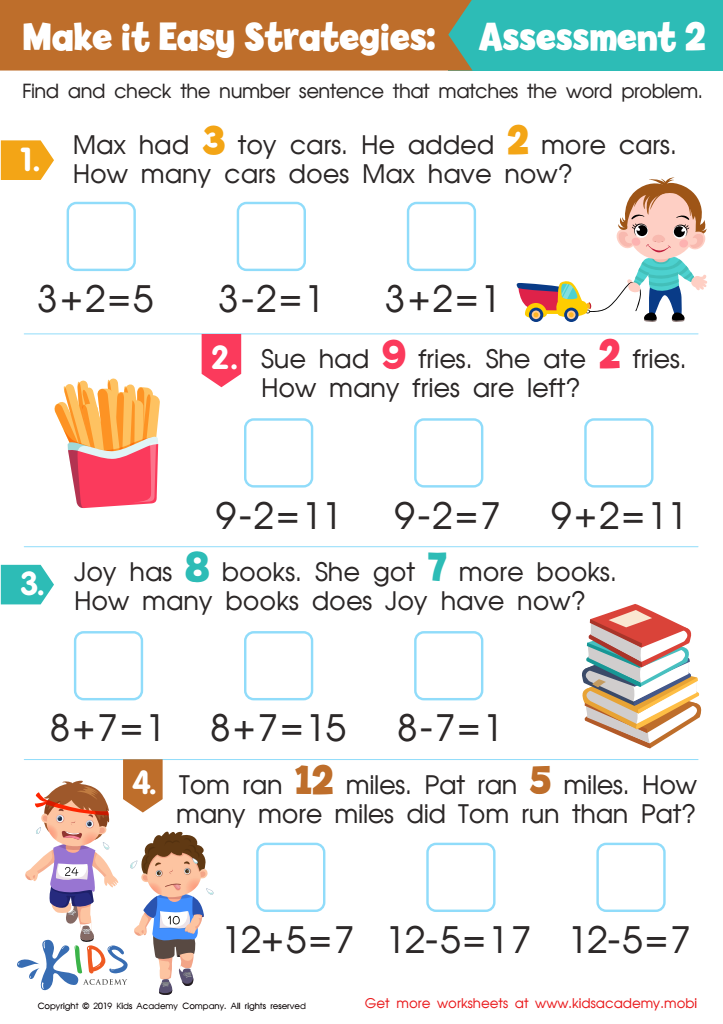
Make it Easy Strategies: Assessment 2 Worksheet
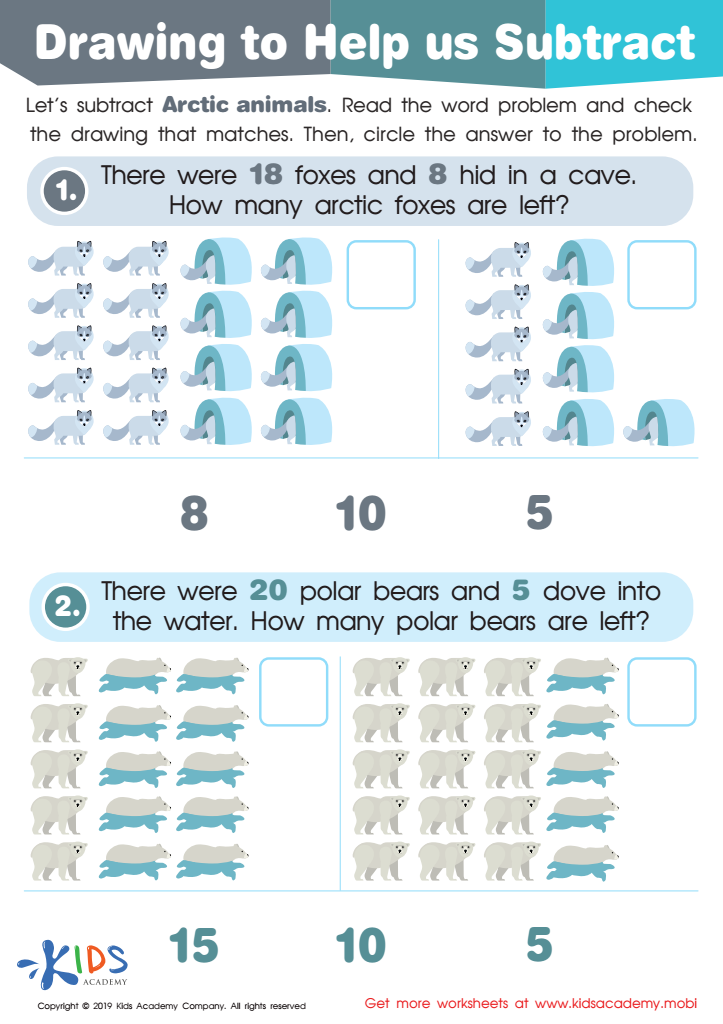
Drawing to Help Us Subtract Worksheet
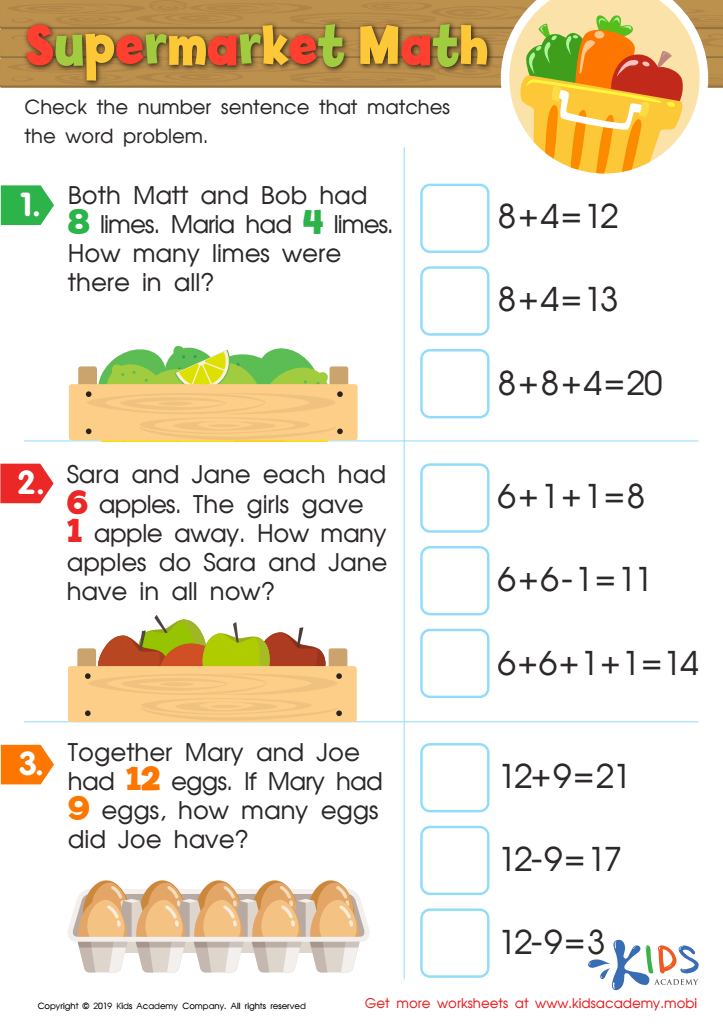
Supermarket Math Worksheet
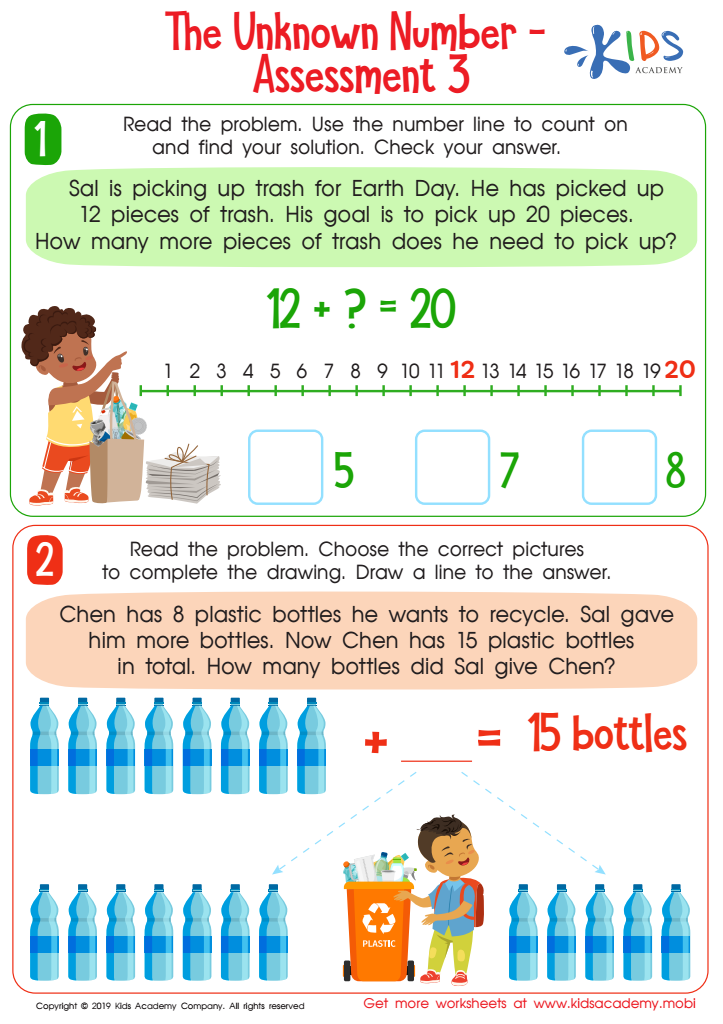
The Unknown Number - Assessment 3 Worksheet








Parent and teacher involvement in teaching subtraction skills, particularly through addition and subtraction word problems, is crucial for children aged 3-7 for several reasons. First, mastering these foundational math skills boosts a child's confidence in problem-solving, providing a solid groundwork for future learning in mathematics. Word problems, in particular, encourage critical thinking as children learn to decipher the context and translate real-life scenarios into mathematical equations.
Moreover, subtraction is integral to understanding addition, fostering a well-rounded comprehension of numbers. When children engage with word problems, they enhance their reading comprehension skills as they practice identifying key information and determining what calculations are necessary. This integration of math and literacy highlights the interdisciplinary nature of learning.
Additionally, interactive engagement from parents and teachers creates a positive learning environment, making math fun and relatable. Utilizing everyday situations for problems, such as sharing food or distributing toys, helps make abstract concepts tangible. As children grasp these skills, they enhance their ability to think logically, setting a solid foundation for more advanced math concepts later on. In nurturing these essential skills early, caregivers support children's overall cognitive development and pave the way for lifelong learning opportunities.