Filters

251 filtered results

Clear all filters
Favorites
With answer key
Interactive

251 filtered results

Difficulty Level

Grade


Check out this FREE Trial Lesson on Addition & Subtraction for age 3-7!

H

Favorites
With answer key
Interactive
  • 3-7
  • Counting skills
  • Addition & Subtraction
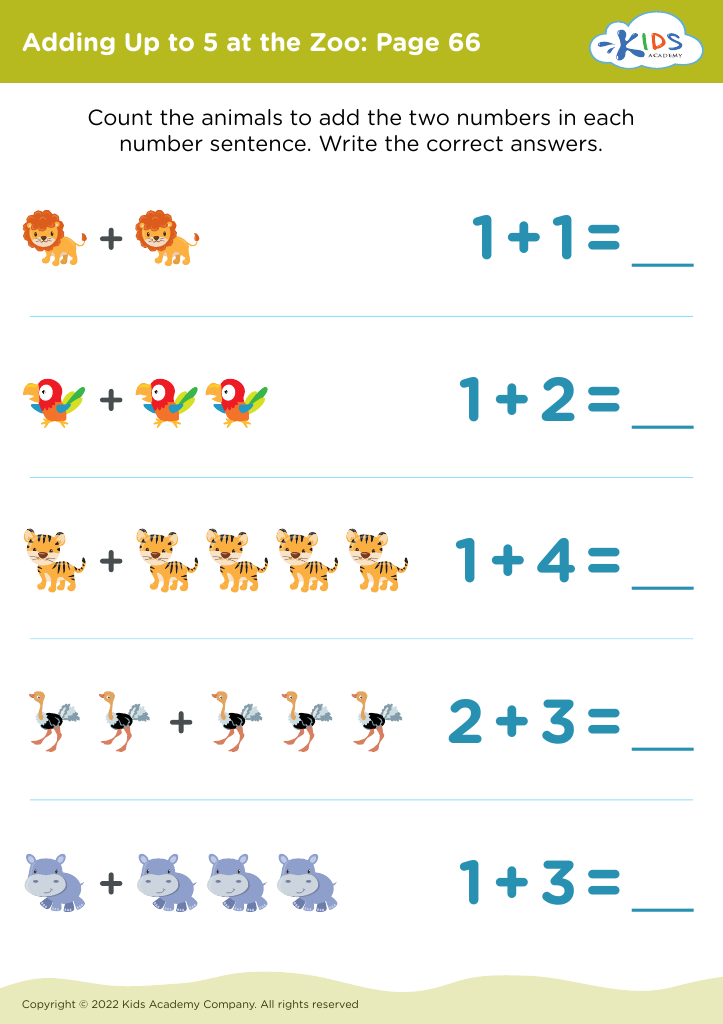
Adding Up to 5 at the Zoo: Page 66
Worksheet
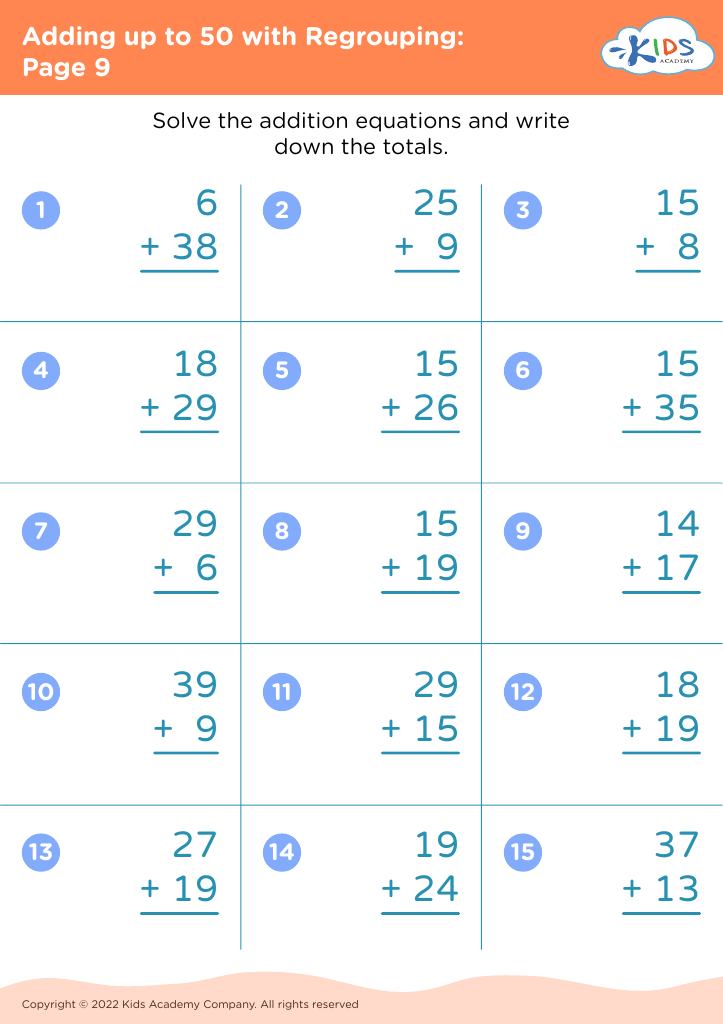
Adding up to 50 with Regrouping: Page 9
Worksheet
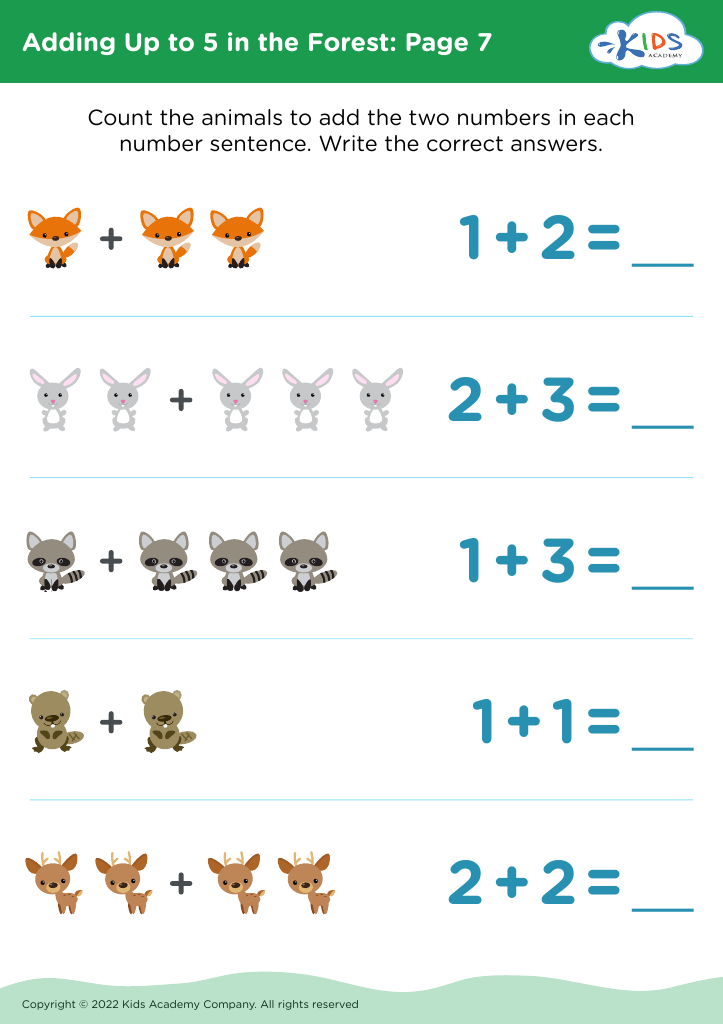
Adding Up to 5 in the Forest: Page 7
Worksheet
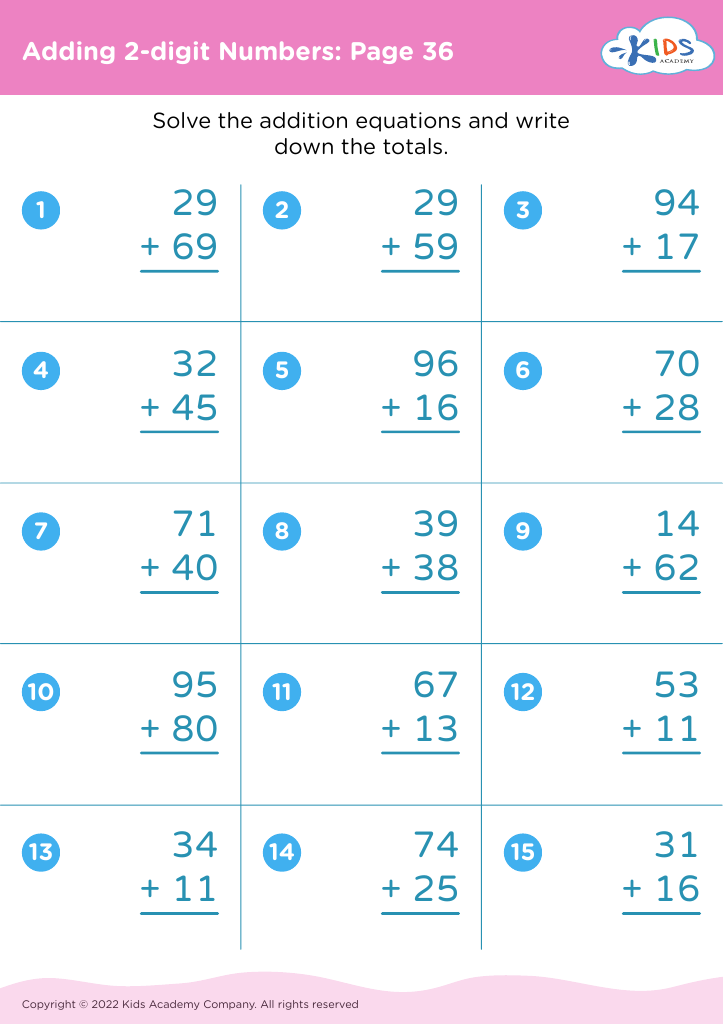
Adding 2-digit Numbers: Page 36

Adding 2-digit Numbers: Page 36

Adding 2-digit Numbers: Page 36
Worksheet
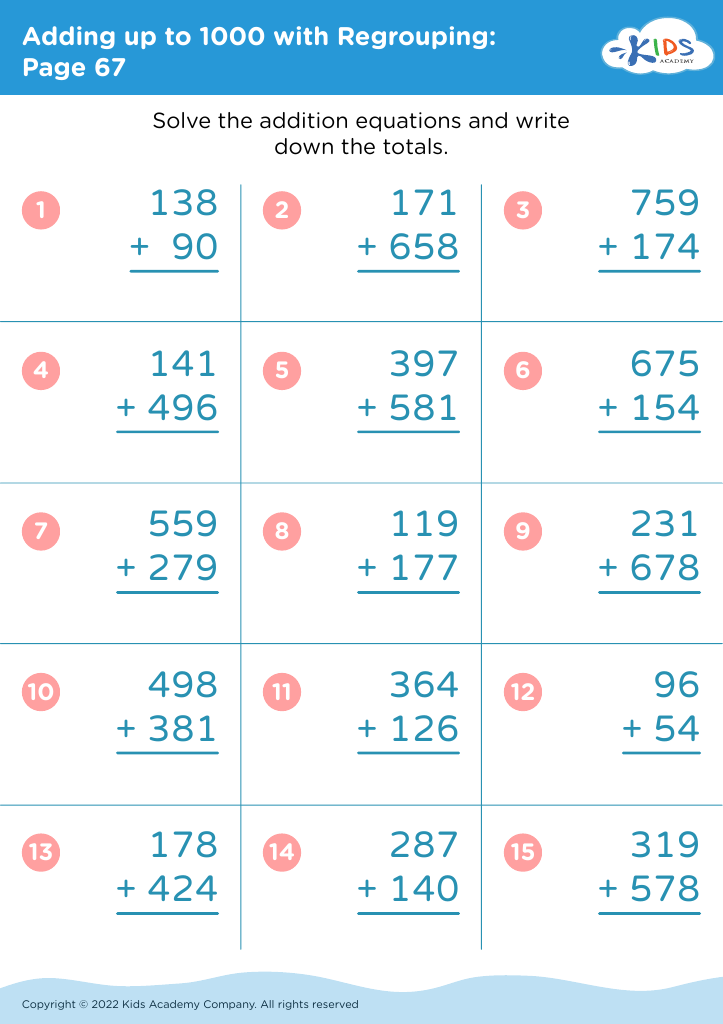
Adding up to 1000 with Regrouping: Page 67
Worksheet
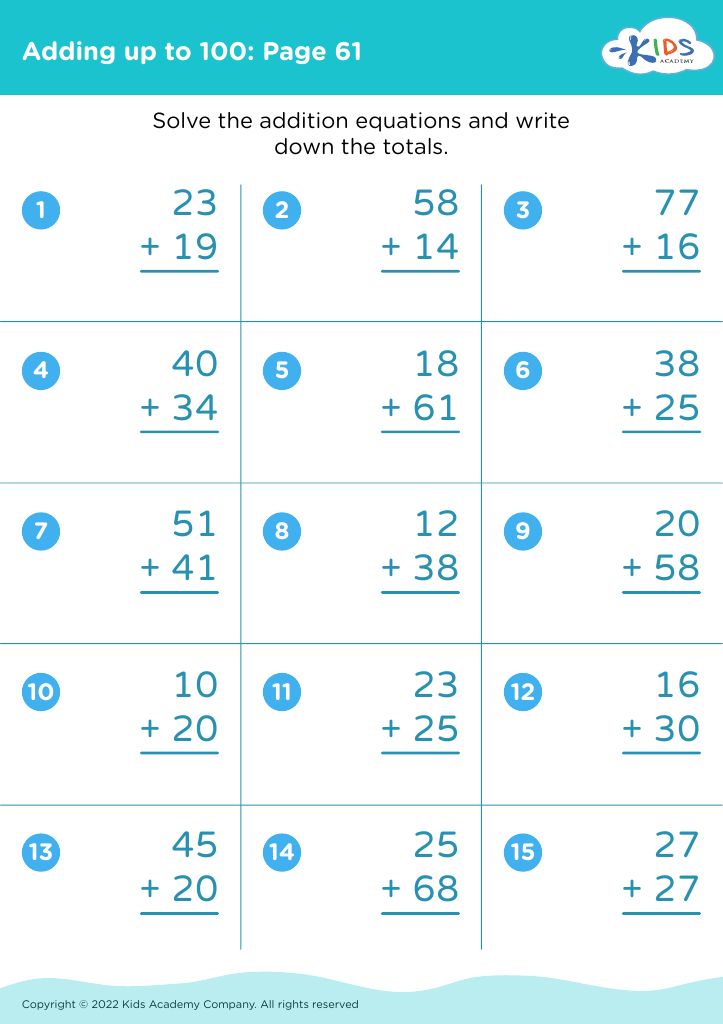
Adding up to 100: Page 61

Adding up to 100: Page 61

Adding up to 100: Page 61
Worksheet
Missing Numbers Worksheet

Missing Numbers Worksheet

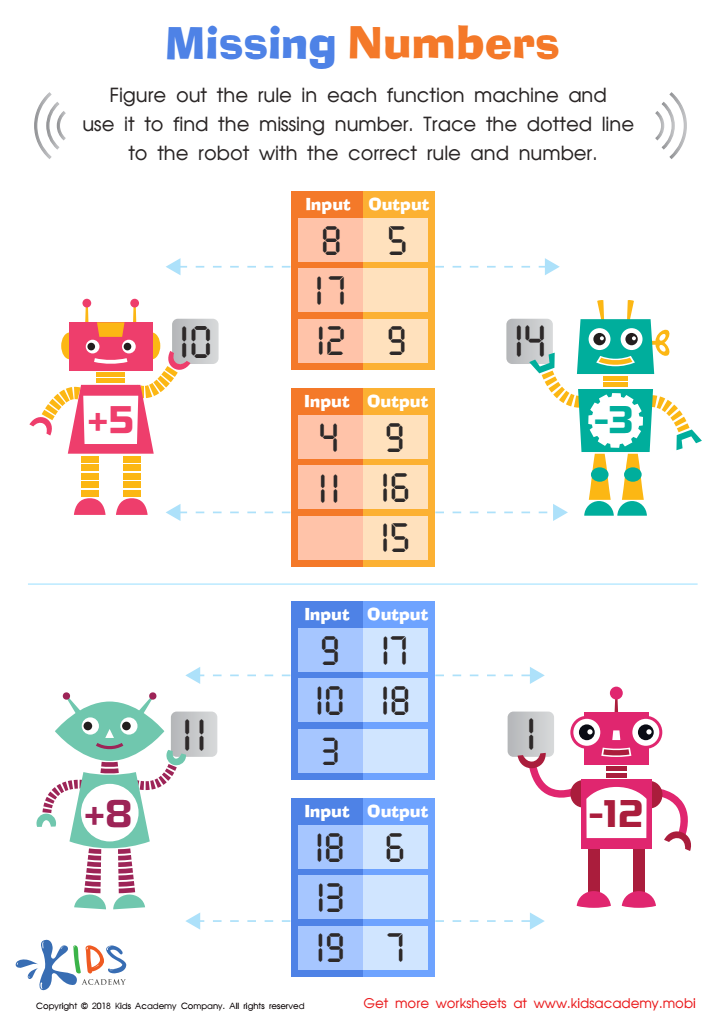
Elementary students can learn the important pre-algebra skill of solving for missing numbers! Our robots guide them along with number-filled bellies and missing answers in their hands. Kids can examine the other numbers in each graph, use the rule to solve the missing number, and check their work with the missing number to ensure correctness.
Missing Numbers Worksheet
Worksheet
Making 19 with Sports Worksheet

Making 19 with Sports Worksheet

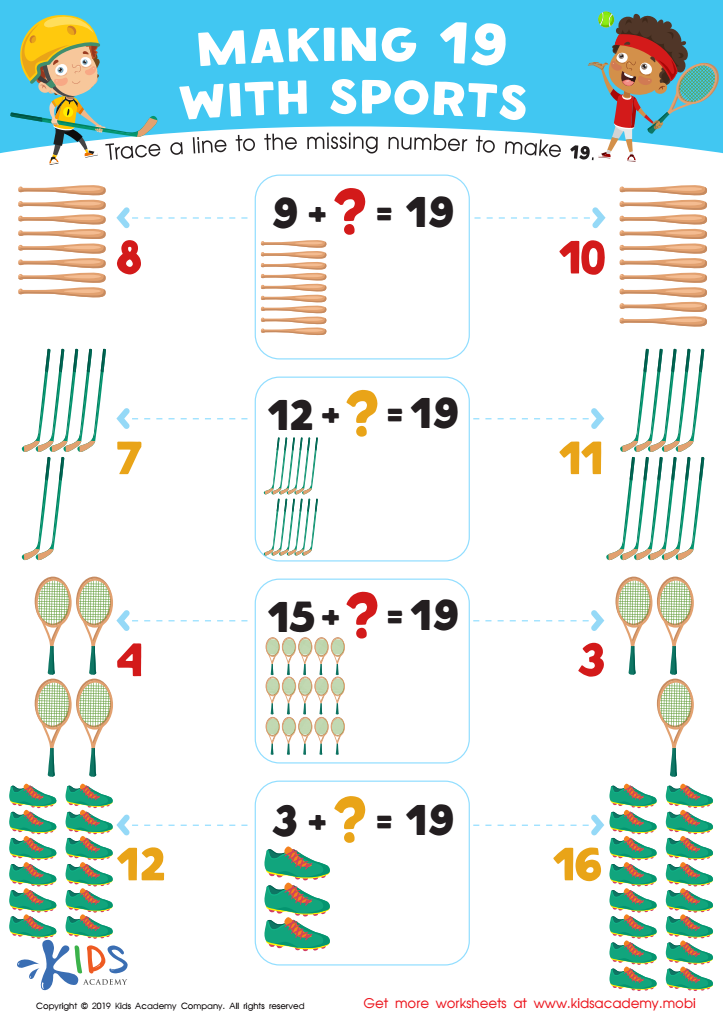
As kids grow, so does their learning. Help them master simple addition with four equations in the worksheet. By finding the missing numbers to make 19, and tracing a line to the answer, your kids will improve their math skills.
Making 19 with Sports Worksheet
Worksheet
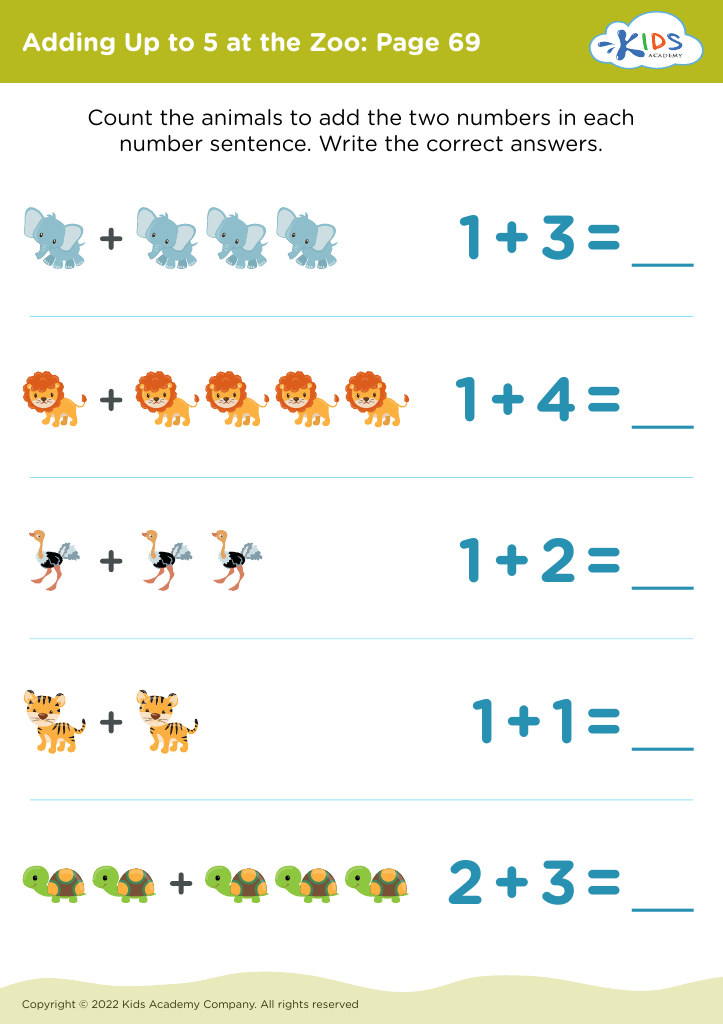
Adding Up to 5 at the Zoo: Page 69
Worksheet
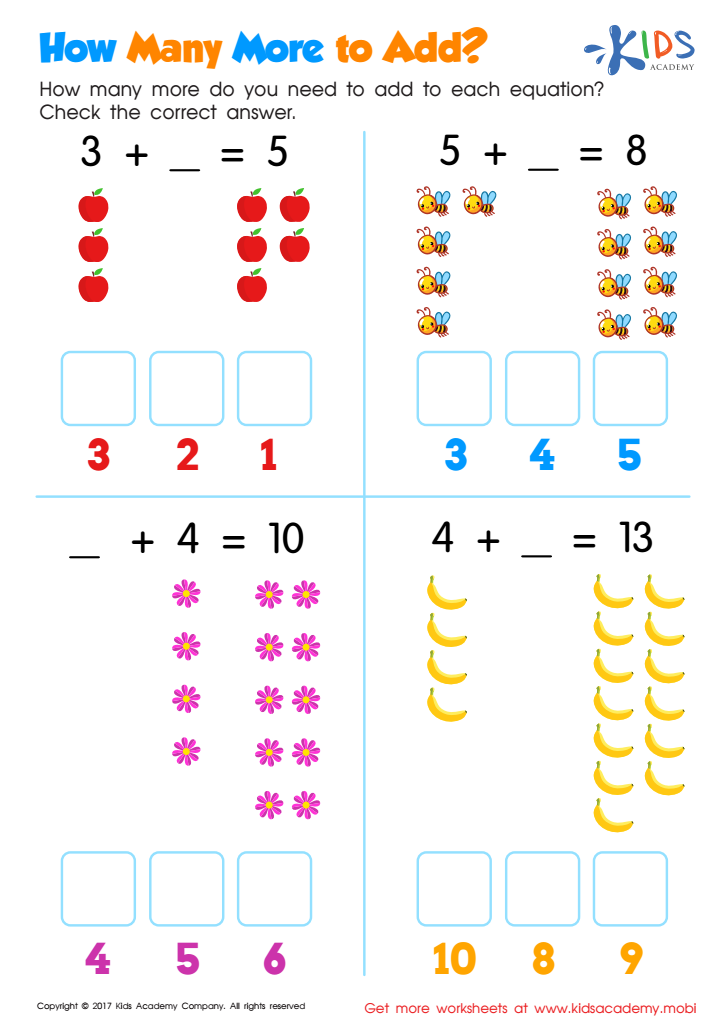
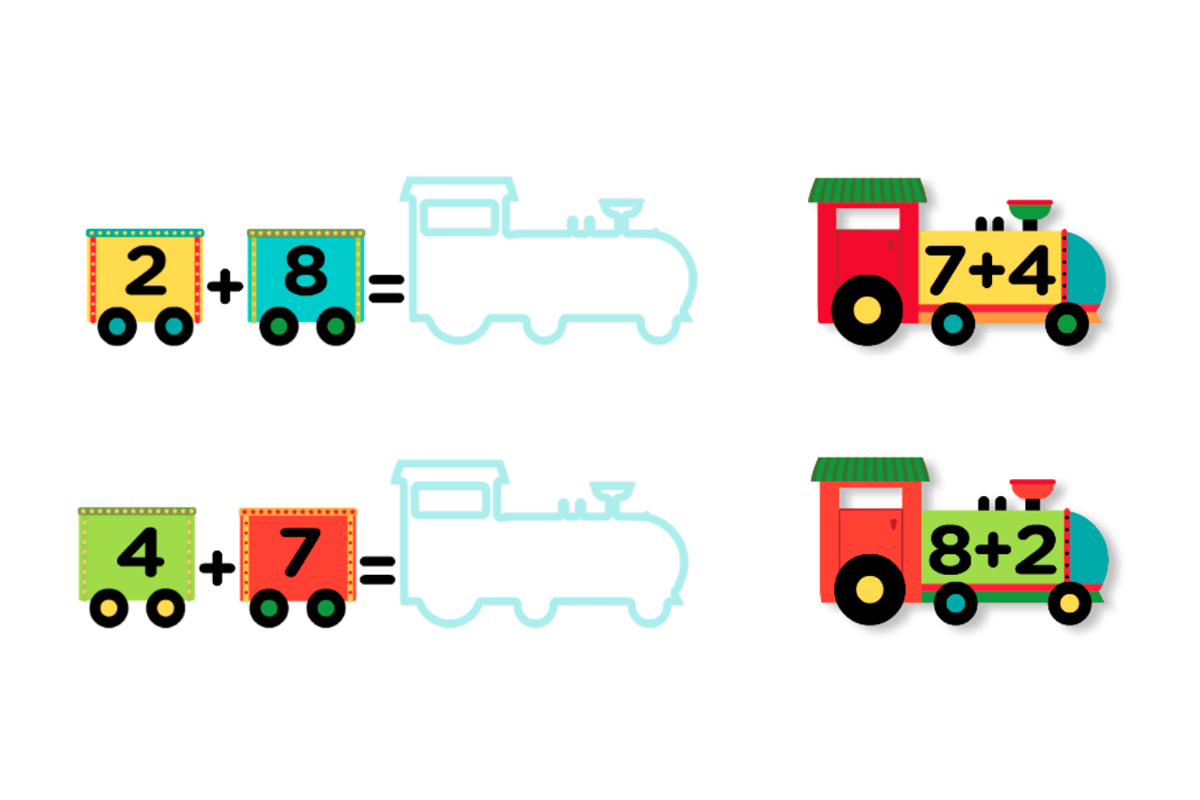
How Many More to Add Worksheet
How Many More to Add Worksheet
Sharpen your child's math skills with this pdf worksheet. Help them figure out how many apples, bees, flowers and bananas are needed to reach the answer given. The possible answers are provided at the bottom of the boxes. Have some fun doing some addition and subtraction magic together and get those math skills sharpened!
How Many More to Add Worksheet
Worksheet
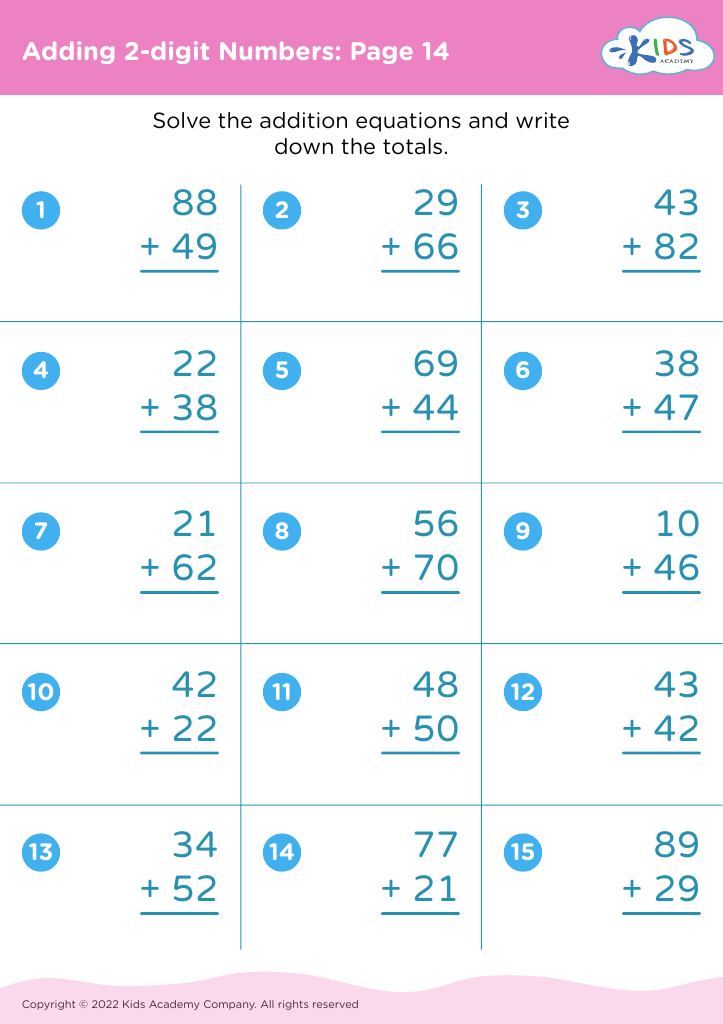
Adding 2-digit Numbers: Page 14

Adding 2-digit Numbers: Page 14

Adding 2-digit Numbers: Page 14
Worksheet
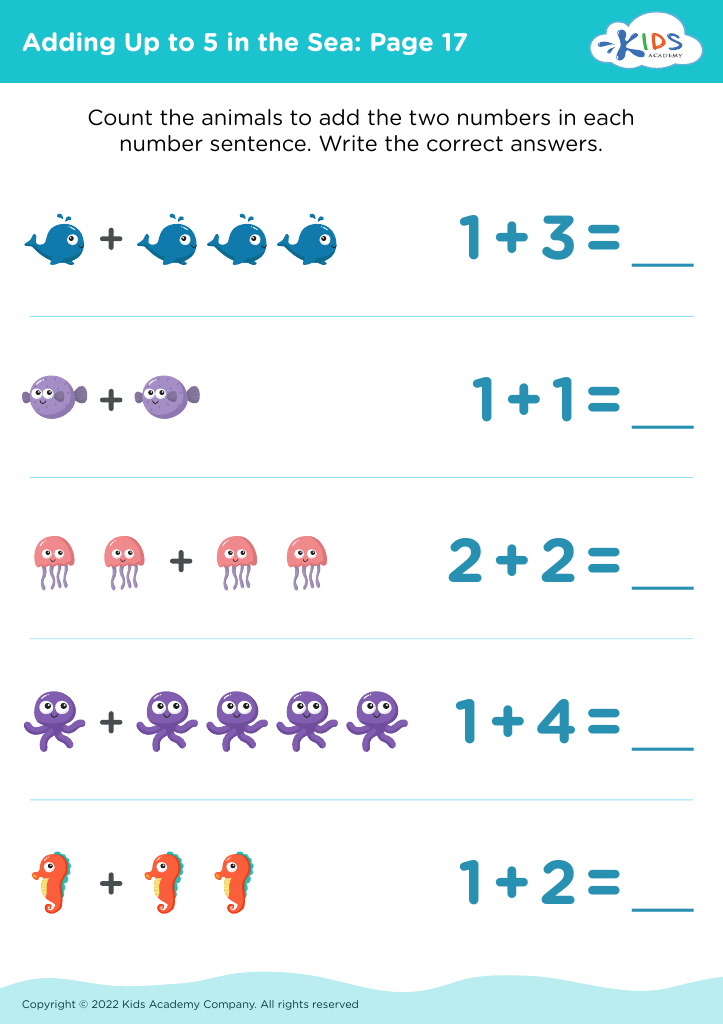
Adding Up to 5 in the Sea: Page 17
Worksheet
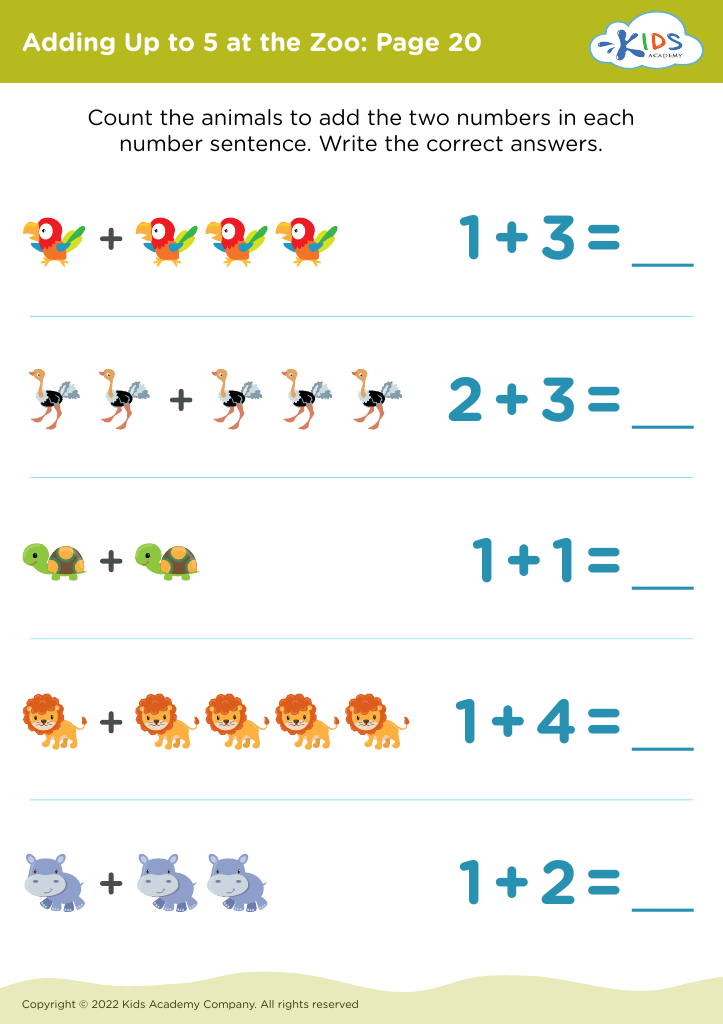
Adding Up to 5 at the Zoo: Page 20
Worksheet
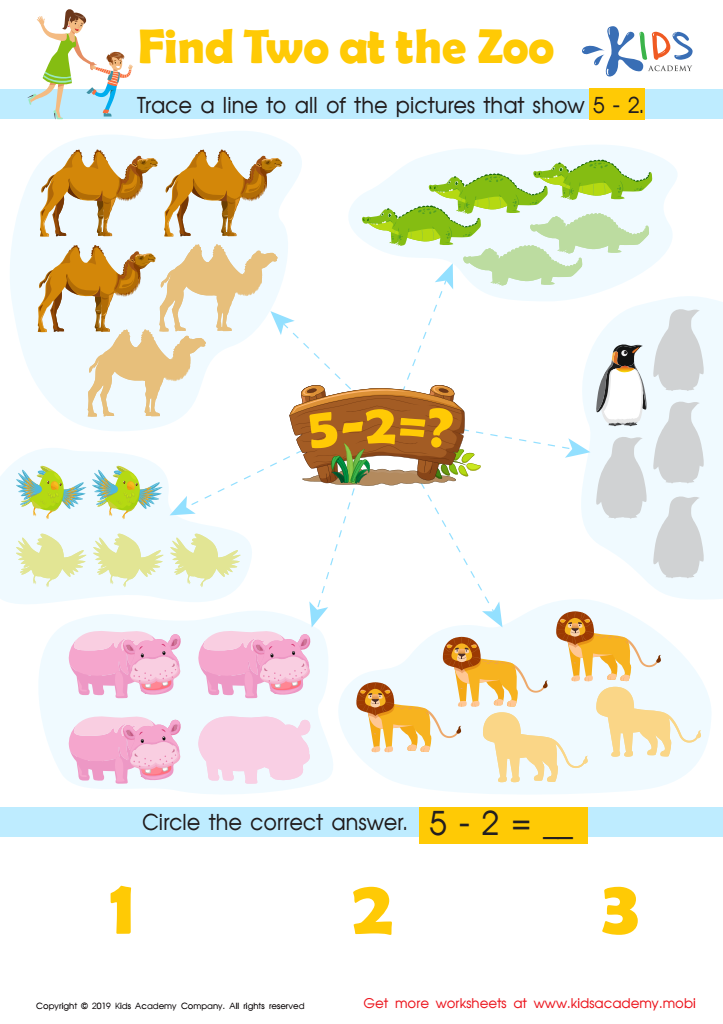
Find Two at the Zoo Worksheet
Find Two at the Zoo Worksheet
Help your kids overcome math fears and practice subtracting numbers with this traceable PDF. Ask them to identify the 6 groups of animals in the picture and count the animals in each group. Then, help them trace a line to all of the pictures that illustrate the equation 5-2.
Find Two at the Zoo Worksheet
Worksheet
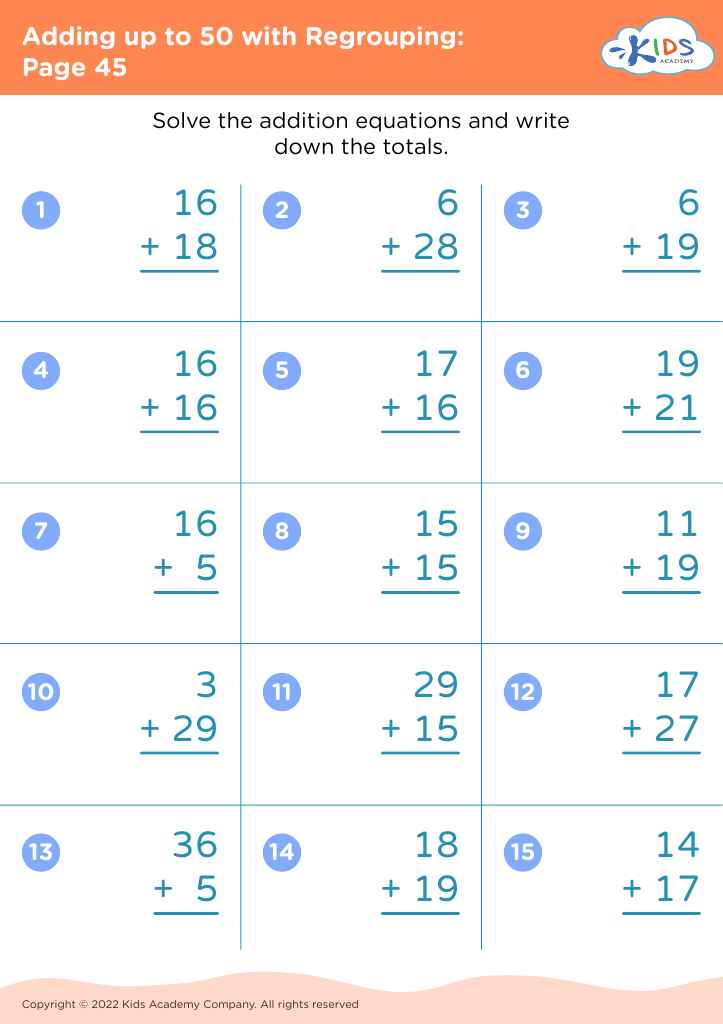
Adding up to 50 with Regrouping: Page 45
Worksheet
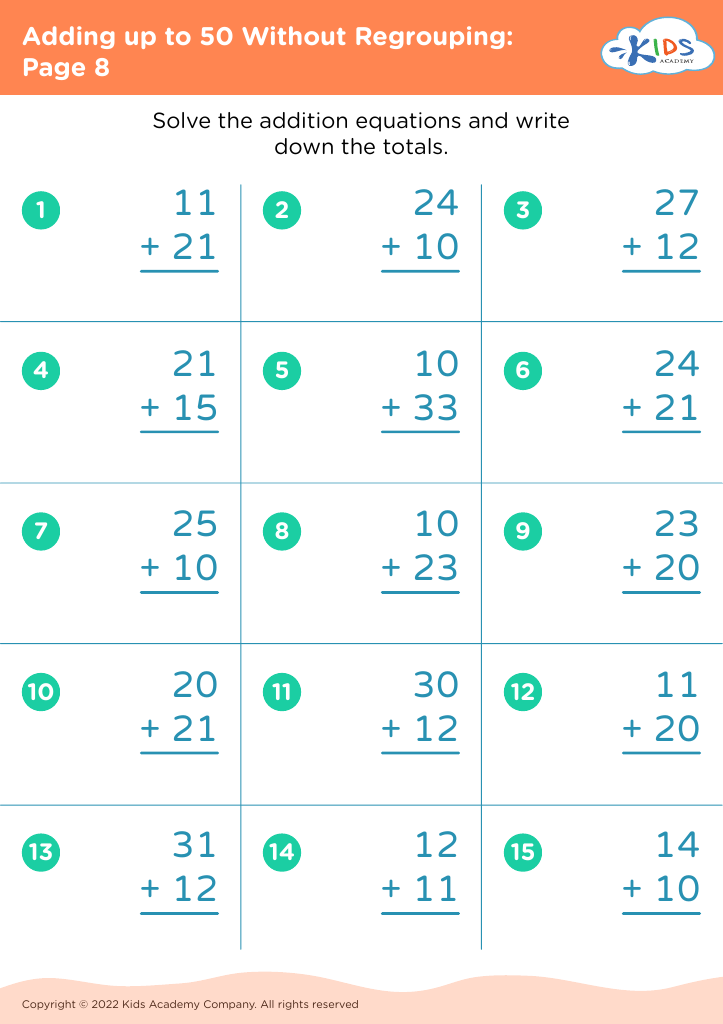
Adding up to 50 Without Regrouping: Page 8
Worksheet
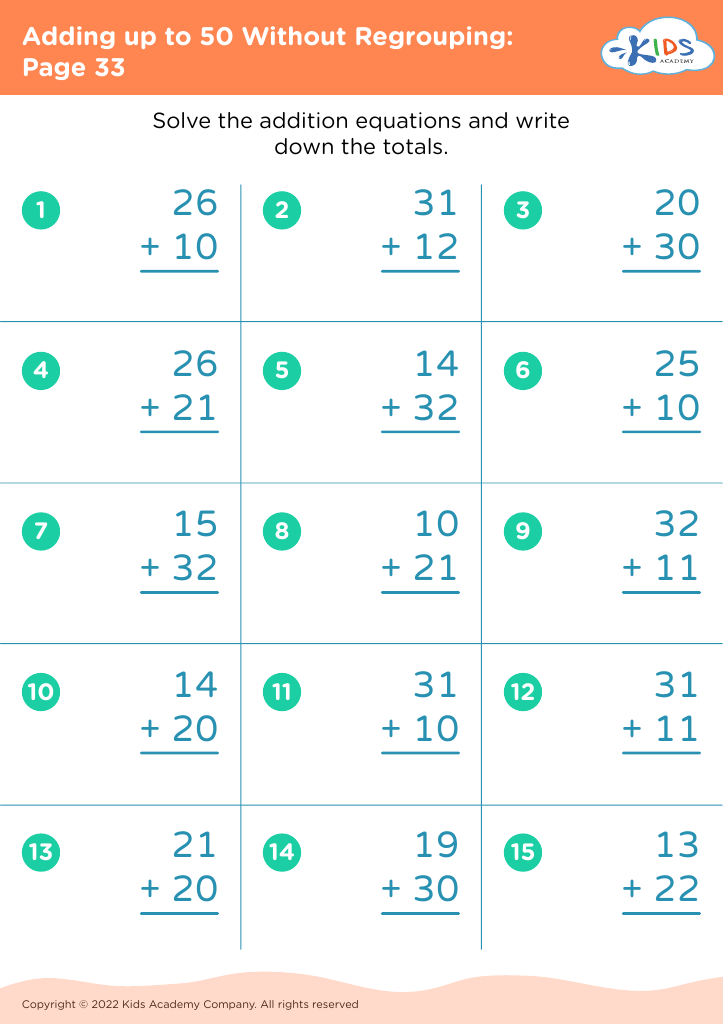
Adding up to 50 Without Regrouping: Page 33
Worksheet
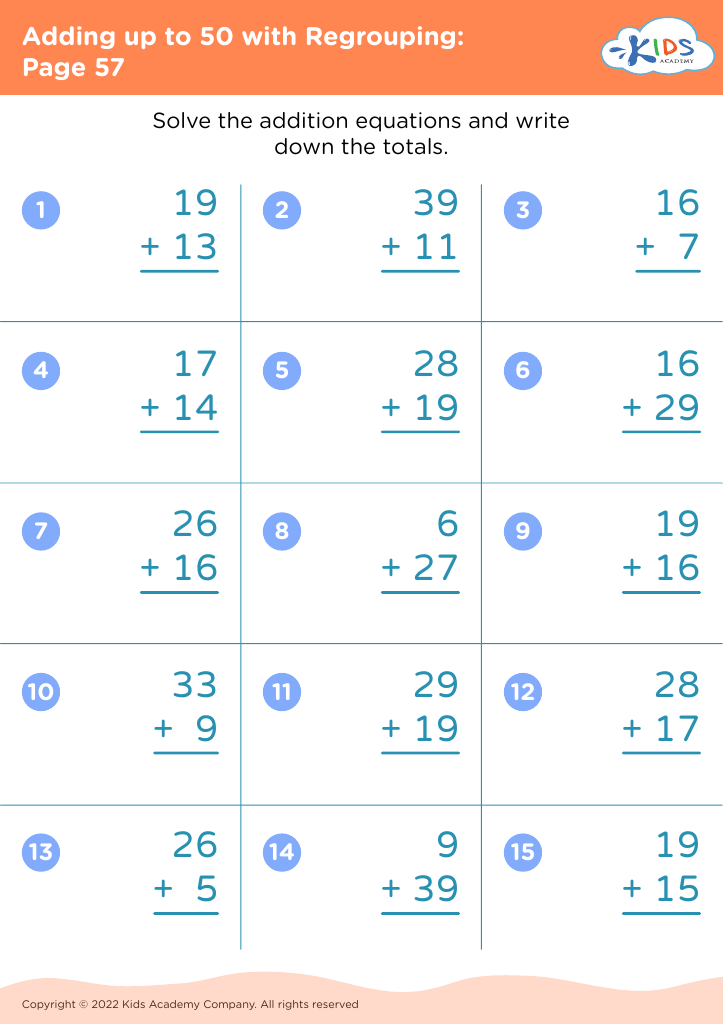
Adding up to 50 with Regrouping: Page 57
Worksheet
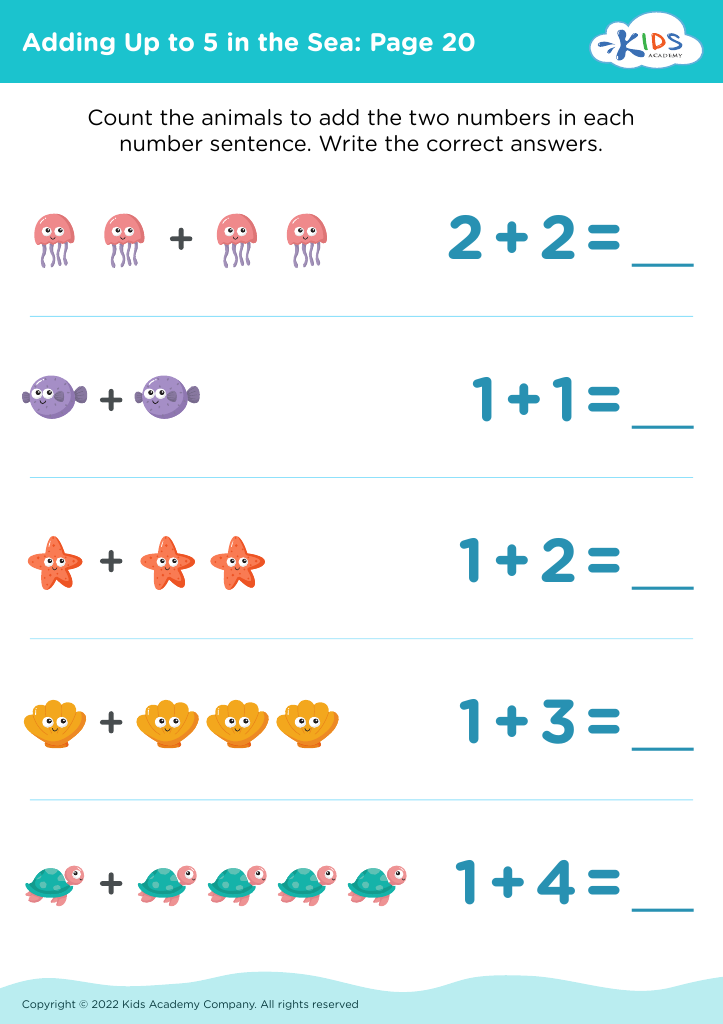
Adding Up to 5 in the Sea: Page 20
Worksheet
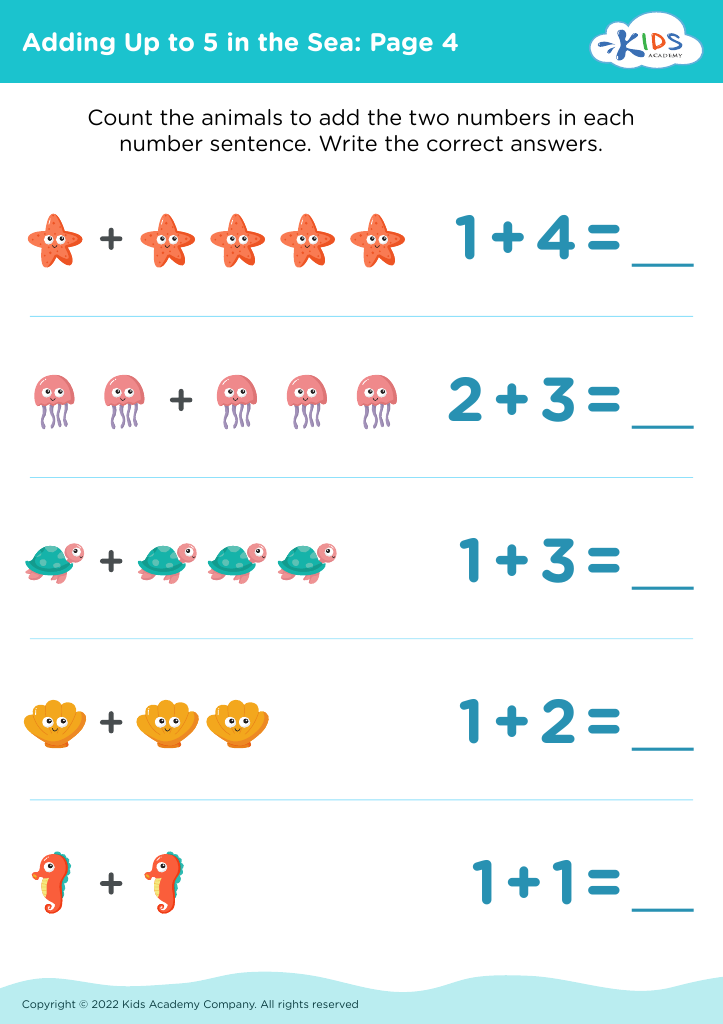
Adding Up to 5 in the Sea: Page 4

Adding Up to 5 in the Sea: Page 4

Adding Up to 5 in the Sea: Page 4
Worksheet
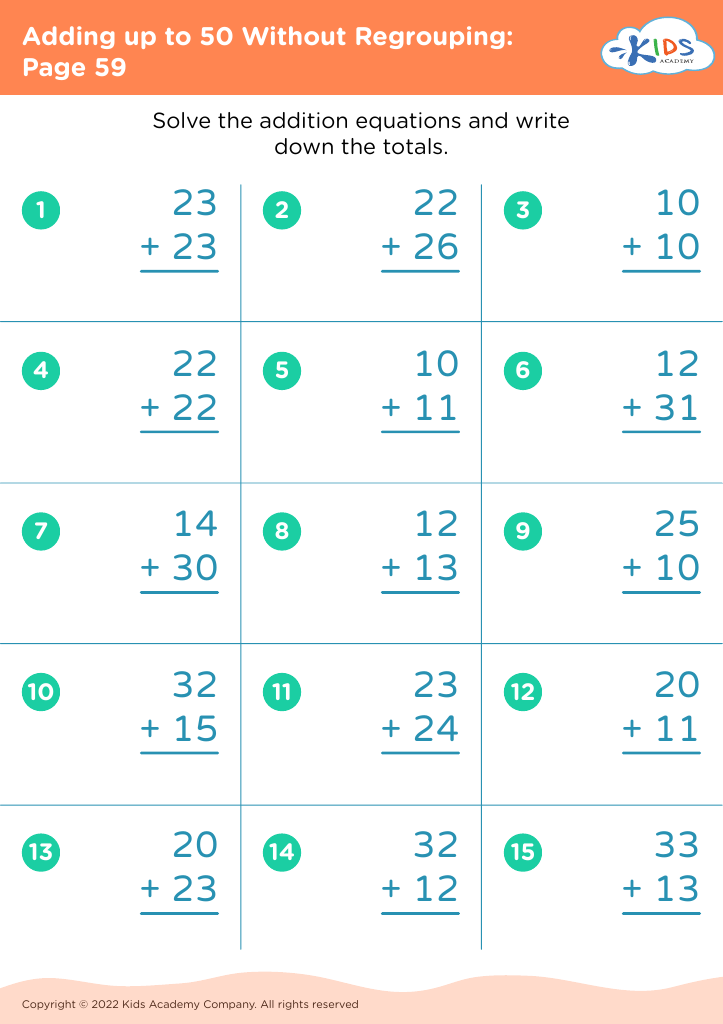
Adding up to 50 Without Regrouping: Page 59
Worksheet
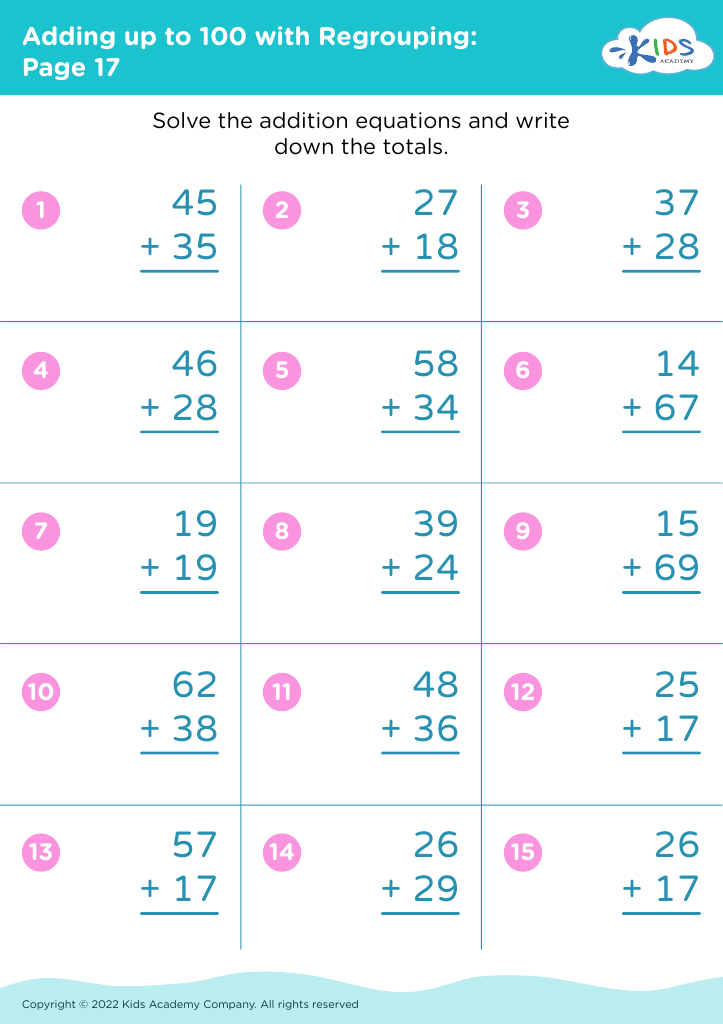
Adding up to 100 with Regrouping: Page 17
Worksheet
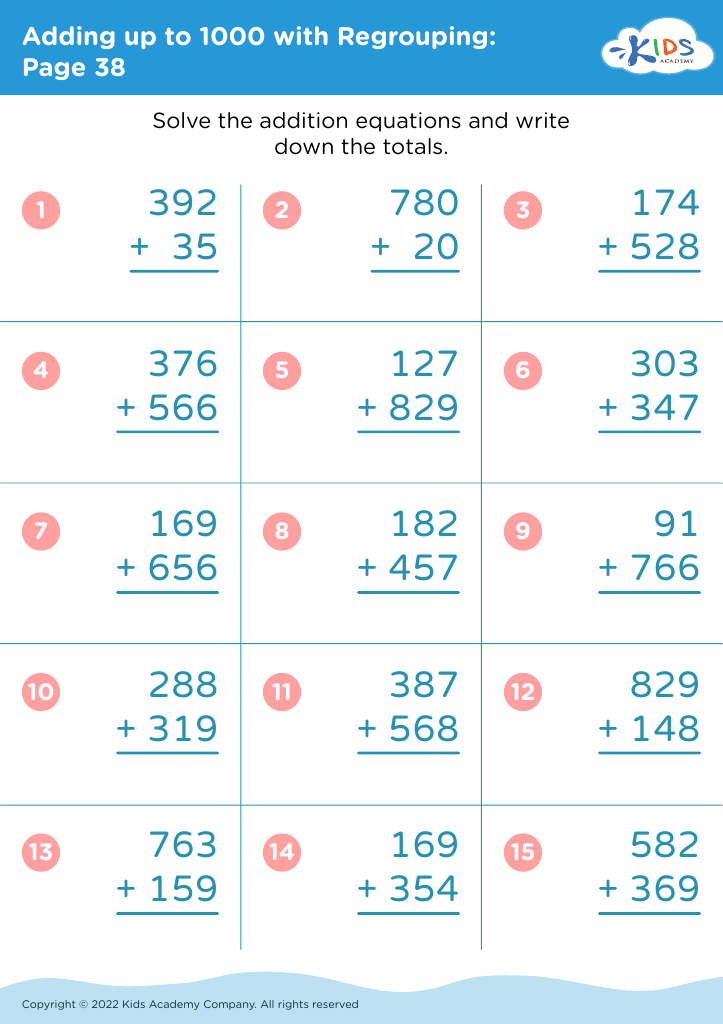
Adding up to 1000 with Regrouping: Page 38
Worksheet
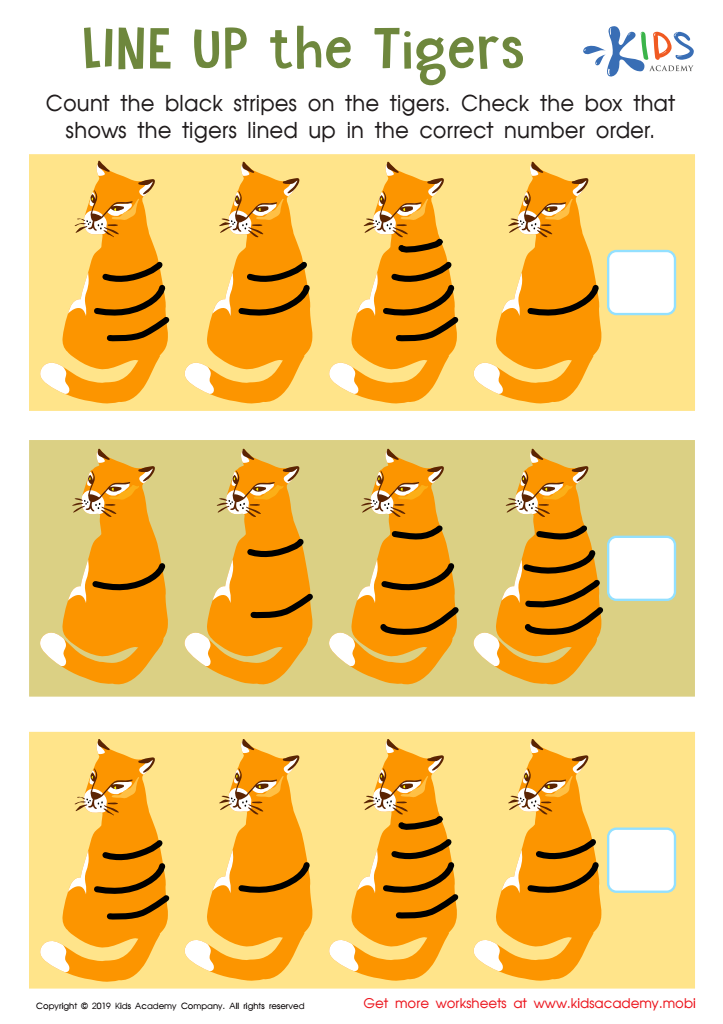
Line up the Tigers Worksheet


Line up the Tigers Worksheet

Give your preschoolers the right tools to succeed in math. Show them pictures of animals, then have them count the stripes and check the box that shows the tigers lined up in the right order. This will help them understand and make their journey easier.
Line up the Tigers Worksheet

Worksheet


Counting skills, addition, and subtraction form the foundation of mathematical understanding for young children aged 3-7. These early math skills are crucial as they foster cognitive development and reasoning abilities. Parents and teachers who prioritize and nurture these competencies help children build confidence in problem-solving and critical thinking.

Counting introduces children to the concepts of quantity and order. As they learn to count objects and numbers, children develop one-to-one correspondence—a fundamental principle in math that helps them understand that numbers represent specific quantities. This paves the way for addition and subtraction, which are essential in establishing a basis for more complex mathematical operations.

Mastering addition and subtraction at an early age brings tangible benefits. These skills are not only fundamental for academic success but also for daily life situations, such as managing time, measuring ingredients in recipes, or handling money. Furthermore, early proficiency in math has been linked to better performance in other subjects, like reading and science, reinforcing the value of comprehensive education.

Finally, working on these skills with children strengthens the parent-child or teacher-student relationship. It provides opportunities for interactive learning, fostering a supportive and encouraging environment that nurtures children’s curiosity and love for learning. Therefore, prioritizing counting, addition, and subtraction is essential for holistic child development and future academic achievement.