Hand-eye Coordination Addition & Subtraction Worksheets for Ages 3-7 - Page 2
29 filtered results
-
From - To
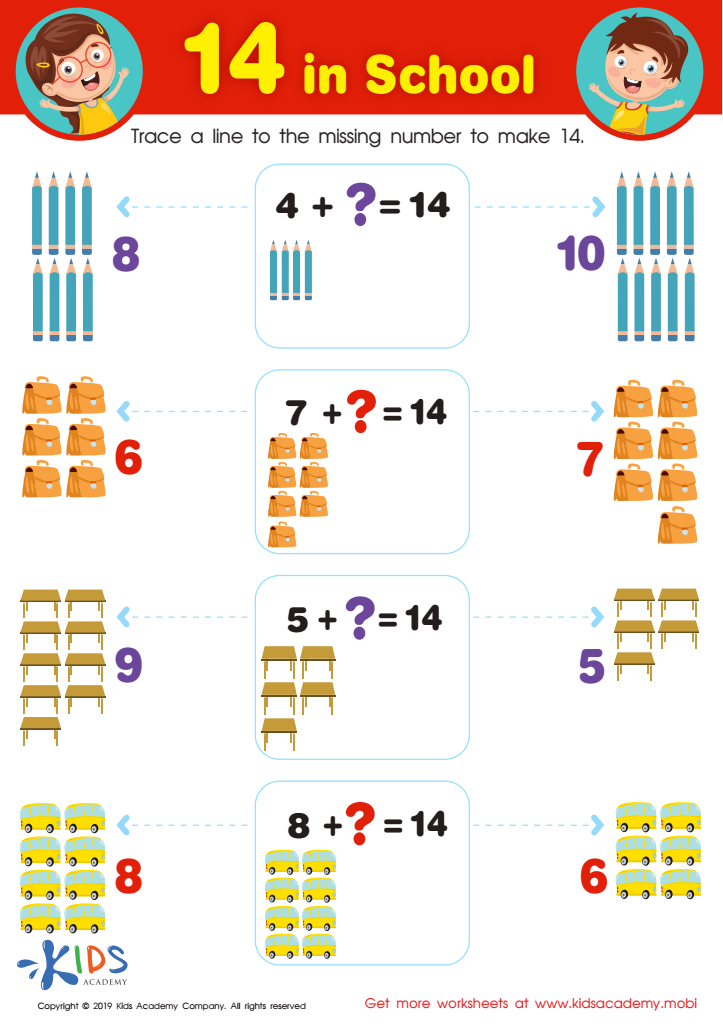
14 in School Worksheet
 Assign to My Students
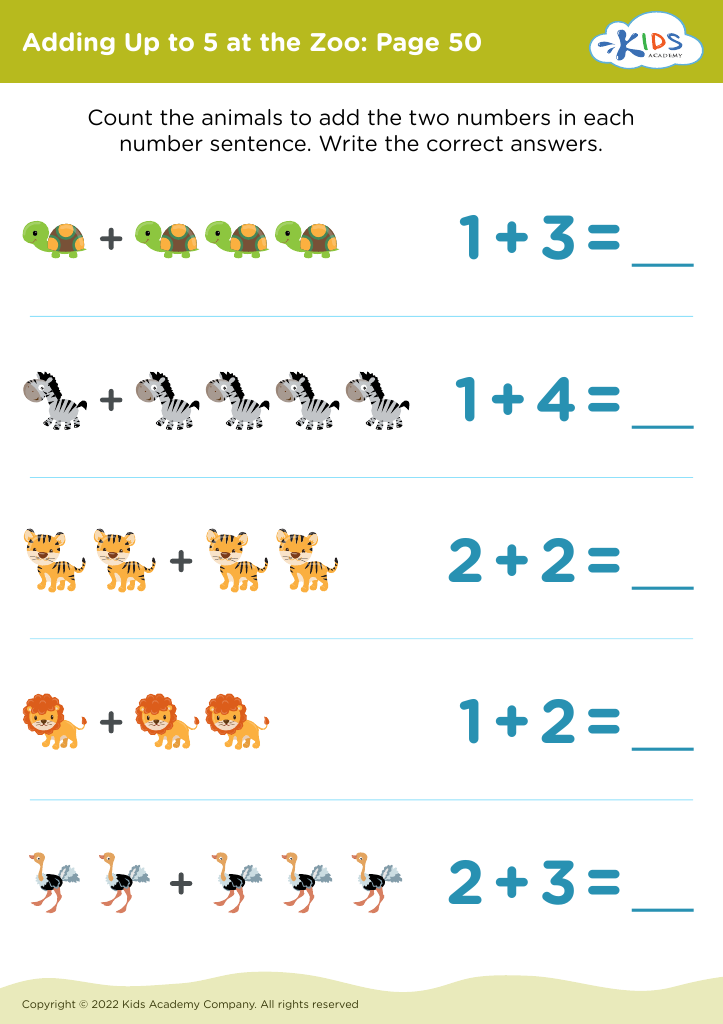








Hand-eye coordination is crucial for young children as it serves as a foundation for various cognitive and physical skills. For children aged 3-7, activities that promote hand-eye coordination, such as addition and subtraction exercises, play a significant role in their overall development. Engaging in mathematical concepts using hands-on tools, such as counters or manipulatives, helps them visualize and physically interact with numbers. This type of learning not only enhances their understanding of mathematics but also fine-tunes their motor skills.
Moreover, developing hand-eye coordination facilitates tasks like writing, drawing, and participating in sports, crucial for a child's social interaction and confidence. When parents and teachers emphasize the importance of these skills, children are better equipped to handle the challenges of more complex mathematics in later years. Activities that blend math with physical tasks make learning enjoyable and interactive, promoting engagement and retention.
Additionally, nurturing these skills fosters critical thinking, problem-solving, and perseverance, vital attributes for academic and life success. By prioritizing hand-eye coordination alongside addition and subtraction exercises, caregivers create a versatile and enriching learning environment that benefits children holistically. This investment likely leads to more positive attitudes toward learning and greater achievement in school and beyond.








