Logical thinking Addition & Subtraction Worksheets for Ages 3-7
9 filtered results
-
From - To
Enhance your child's logical thinking skills with our engaging addition and subtraction worksheets designed for ages 3 to 7. These printable resources help young learners develop critical problem-solving abilities while mastering basic math concepts. Our worksheets incorporate fun themes and colorful illustrations to keep children motivated and interested. Each activity is crafted to promote understanding of number relationships, encouraging kids to think logically as they solve problems. Perfect for use at home or in the classroom, these worksheets are a valuable tool for laying a strong mathematical foundation. Dive into our collection today and watch your child's confidence soar!
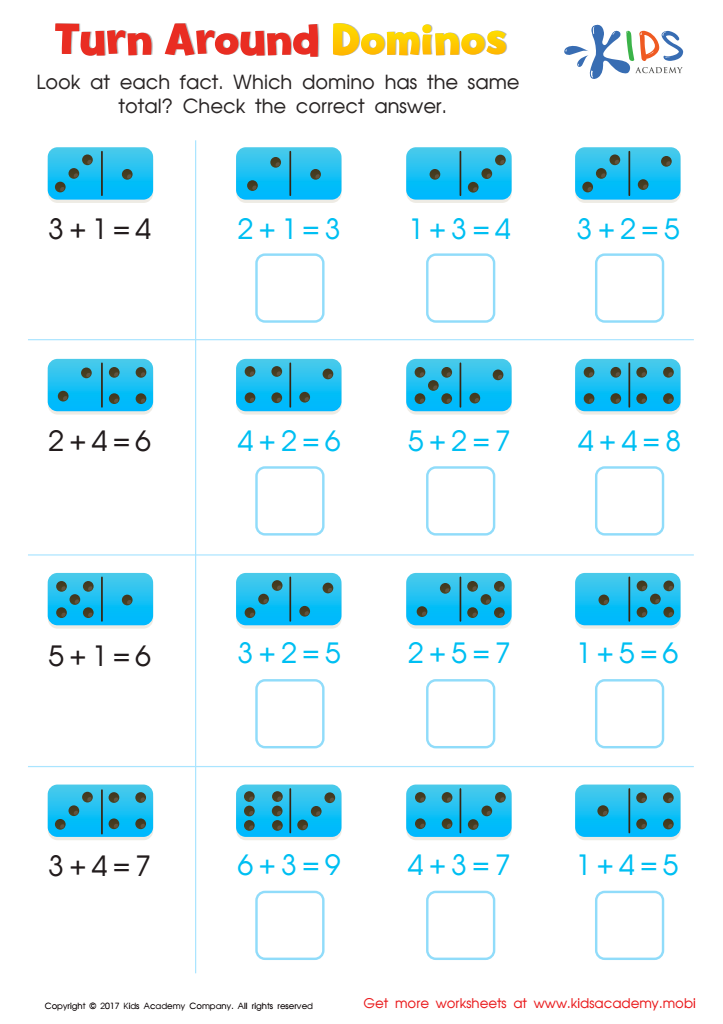
Turn Around Dominos Worksheet
 Assign to My Students
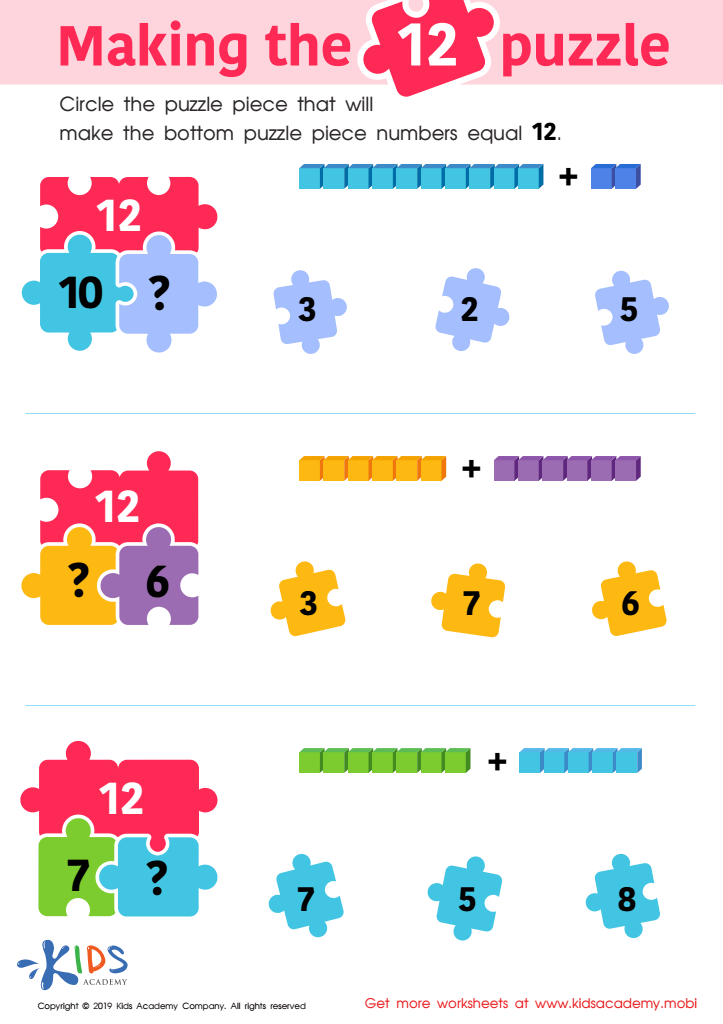
Making the 12 Puzzle Worksheet
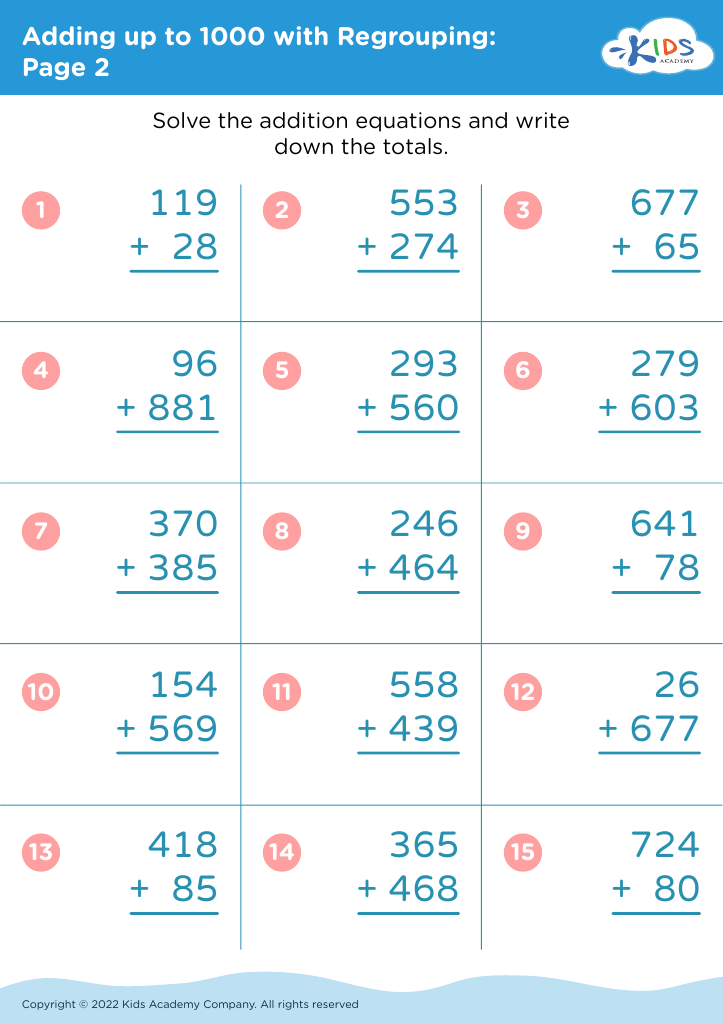








Logical thinking in addition and subtraction is essential for children aged 3 to 7 as it lays the foundation for their mathematical understanding and problem-solving skills. During these formative years, children develop cognitive abilities that help them categorize, analyze, and draw connections between concepts. Encouraging logical thinking in addition and subtraction enhances their ability to reason mathematically, allowing them to understand core concepts rather than just memorize facts.
When children grasp the logic behind addition and subtraction, they can apply these skills in real-life situations, fostering independence in day-to-day activities—like figuring out how many apples they have if they eat some, or determining how many toys they need to find in order to have a certain number. This not only strengthens their mathematical abilities but also promotes critical thinking and decision-making.
Moreover, when parents and teachers engage in activities that promote logical thinking through play and exploration, they build a positive attitude toward math early on. Children who experience fun and engaging mathematical interactions are more likely to develop confidence and a lasting interest in learning. Hence, nurturing logical thinking in early education is crucial for fostering lifelong skills and a healthy relationship with mathematics.








