Recognizing numbers Addition & Subtraction Worksheets for Ages 3-7
5 filtered results
-
From - To
Unlock your child's math potential with our "Recognizing Numbers Addition & Subtraction Worksheets for Ages 3-7." These carefully designed worksheets make learning numbers fun and engaging for young learners. Focusing on both addition and subtraction, they help children grasp fundamental concepts while recognizing and writing numbers effortlessly. Perfect for preschool to early elementary levels, our worksheets use vibrant visuals, interactive activities, and age-appropriate exercises to foster a love for math. Give your child a head start in mathematics with resources tailored to build a strong numerical foundation. Explore our collection online today!
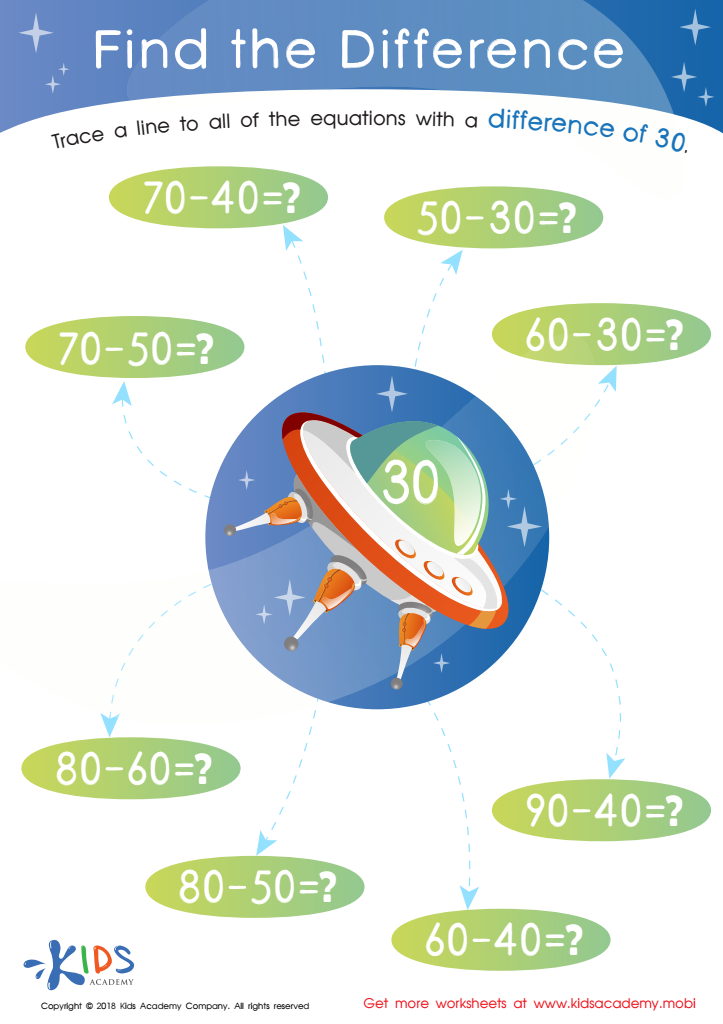
Find The Difference Worksheet
 Assign to My Students
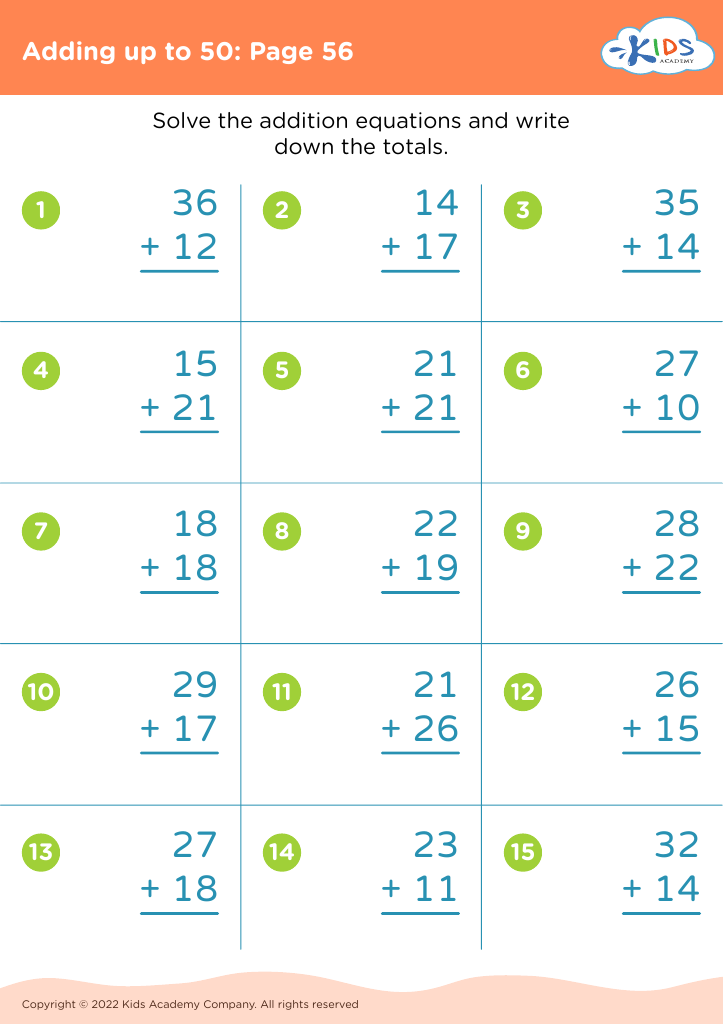
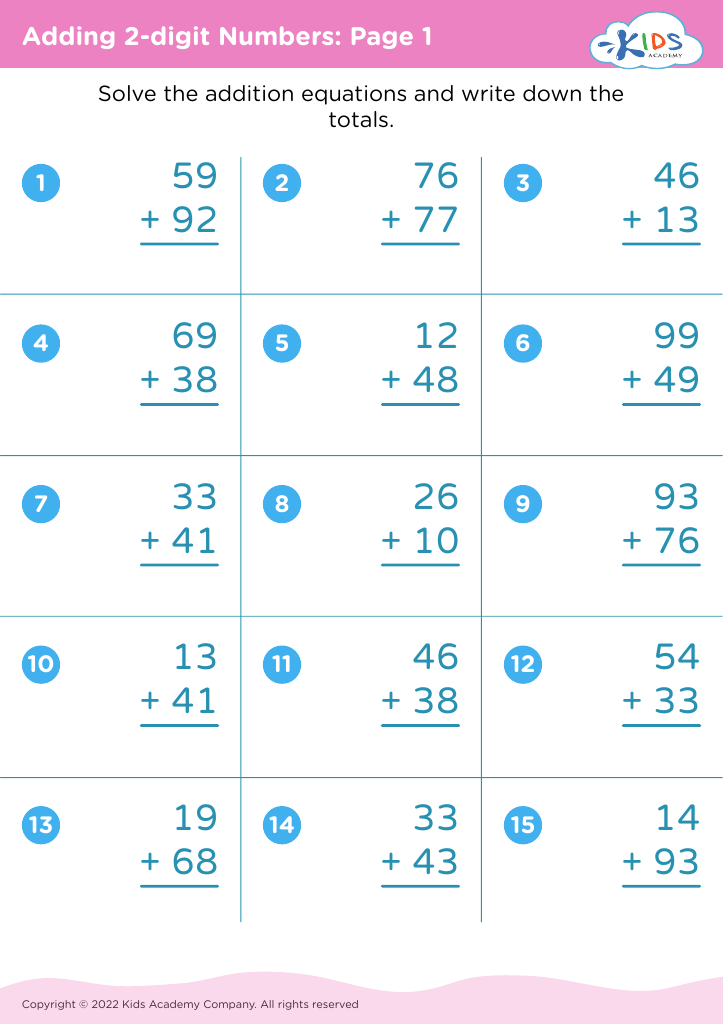
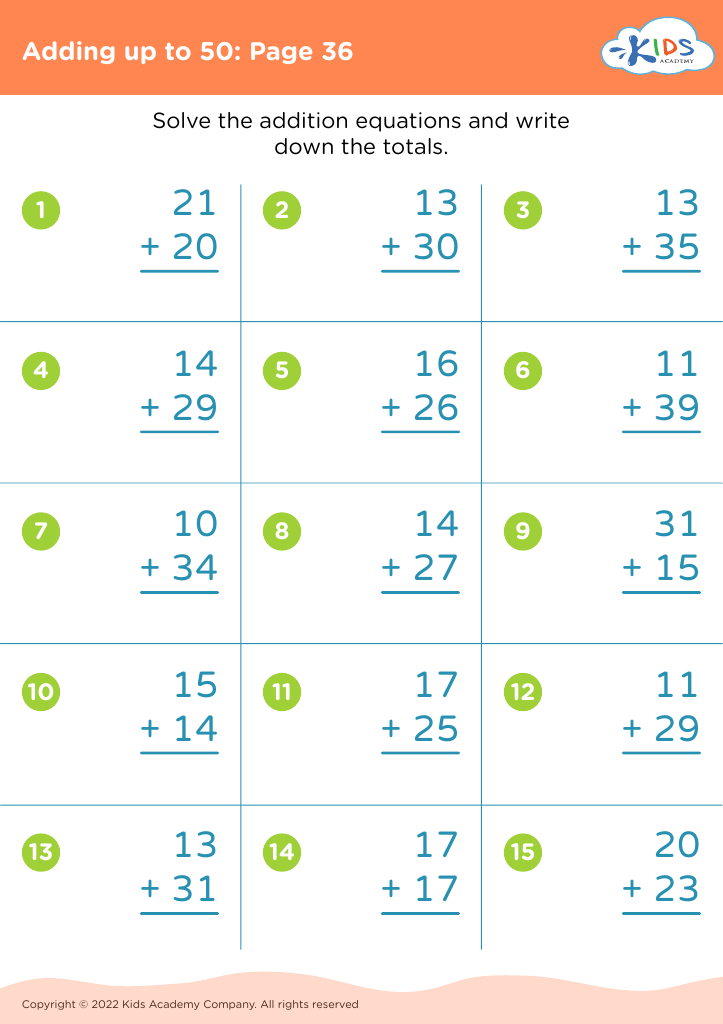
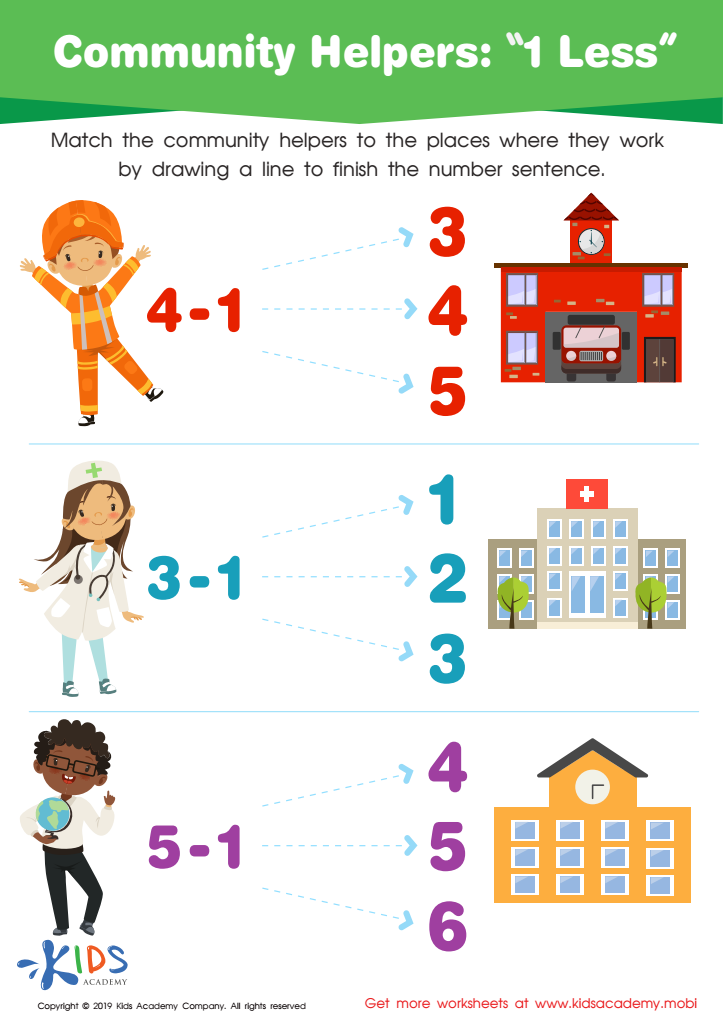
Community Helpers: 1 less Worksheet








Recognizing numbers, as well as understanding addition and subtraction, during the ages of 3-7 forms the cornerstone of a child’s mathematical education. At this formative stage, children’s brains are exceptionally receptive, soaking up new information rapidly. Learning to recognize numbers primes their numeracy skills, which will support more complex mathematical tasks later in life.
Mastering basic arithmetic—addition and subtraction—enhances problem-solving abilities and fosters logical thinking. These operations are not just math skills; they are essential life skills, applicable daily, from counting items in a basket to managing time. Early competence here boosts confidence and sets a positive relationship with mathematics, making future learning less daunting.
Moreover, these concepts help in cognitive development by improving memory, attention span, and the ability to recognize patterns. Early exposure ensures children don’t just memorize but understand the 'why' and 'how' of arithmetic, paving the way for critical thinking.
Parents and teachers not emphasizing this foundation may unintentionally hinder children’s progression in academics and practical scenarios. Thus, knowing, performing, and practicing number recognition and basic math in a supportive environment ensures preparedness for school and daily life, promoting lifelong learning and practical efficiency.








