Basic arithmetic practice Addition Worksheets for Ages 3-7
12 filtered results
-
From - To
Discover our engaging Basic Arithmetic Practice Addition Worksheets designed specifically for children aged 3-7. These interactive worksheets help young learners develop essential addition skills through fun and colorful activities. With various difficulty levels and vibrant illustrations, children will enjoy practicing their math abilities while building a strong foundation. Each worksheet encourages confidence and fosters a love for learning in early math concepts. Perfect for home or classroom use, our resources make it easy to track progress and reinforce knowledge. Start your child's mathematical journey today with our exciting addition worksheets aimed at nurturing creativity and problem-solving skills!
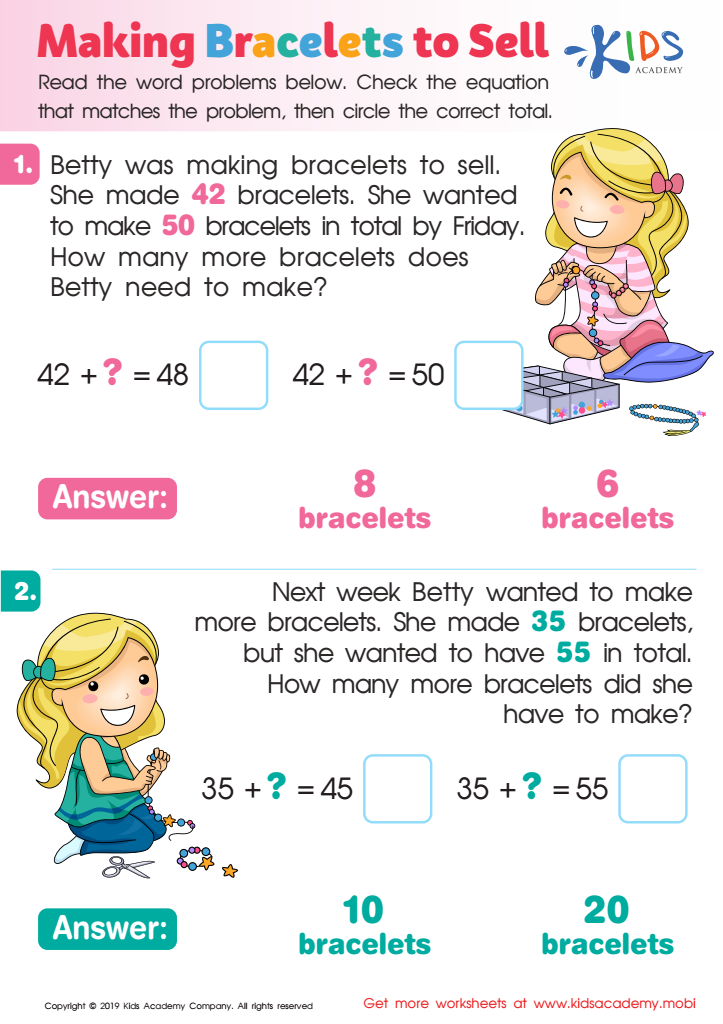
Making Bracelets to Sell Worksheet
 Assign to My Students
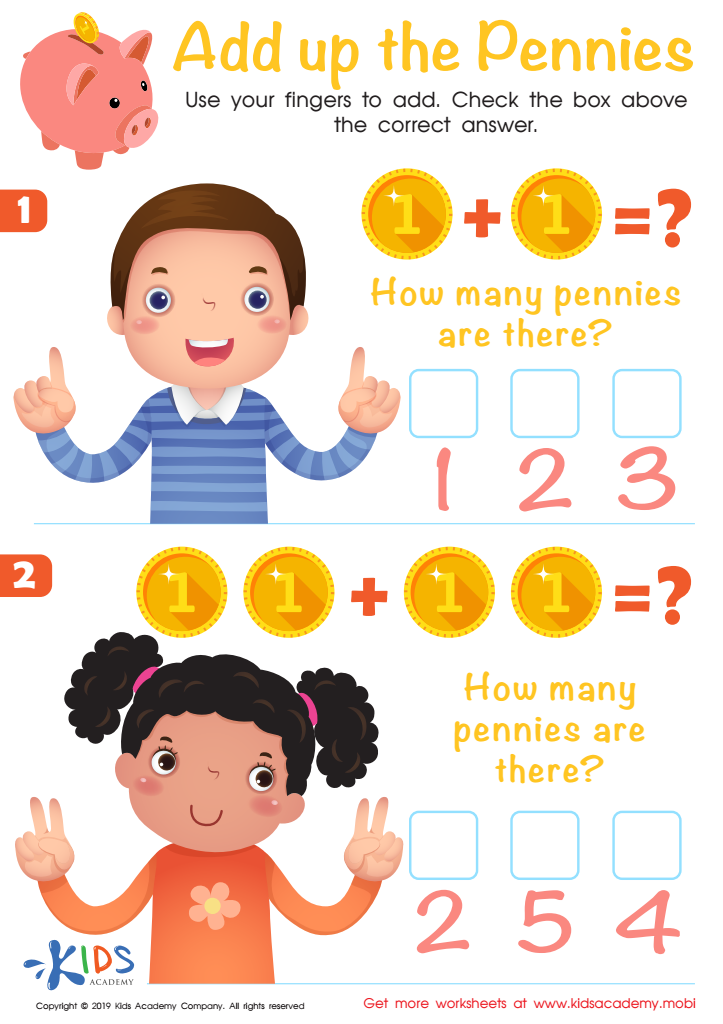
Add up the Pennies Worksheet
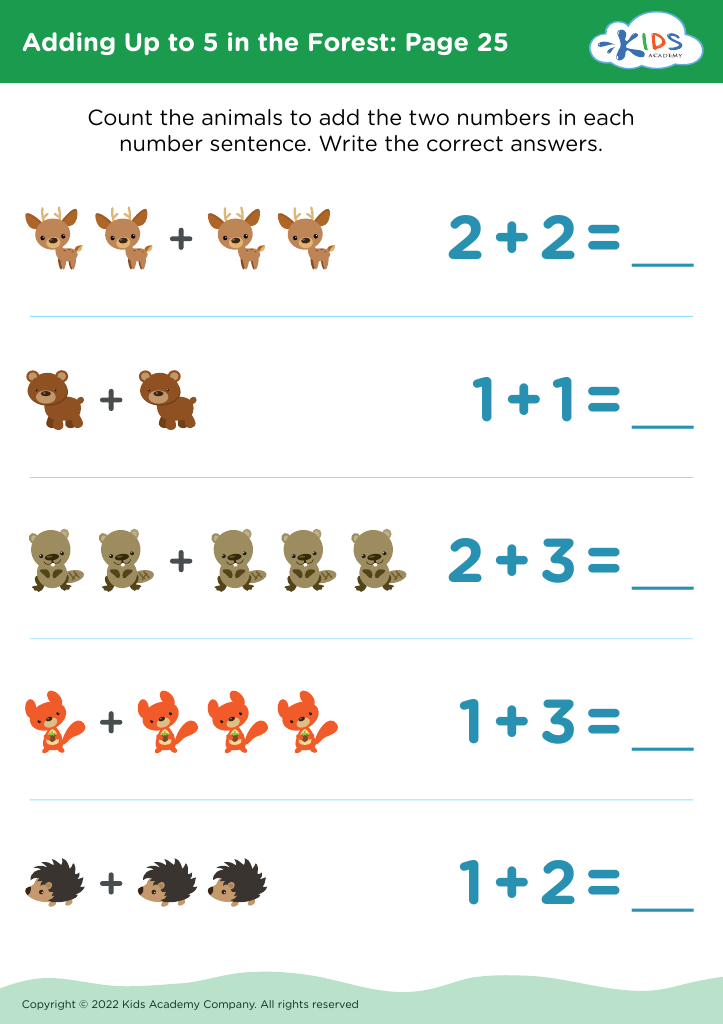
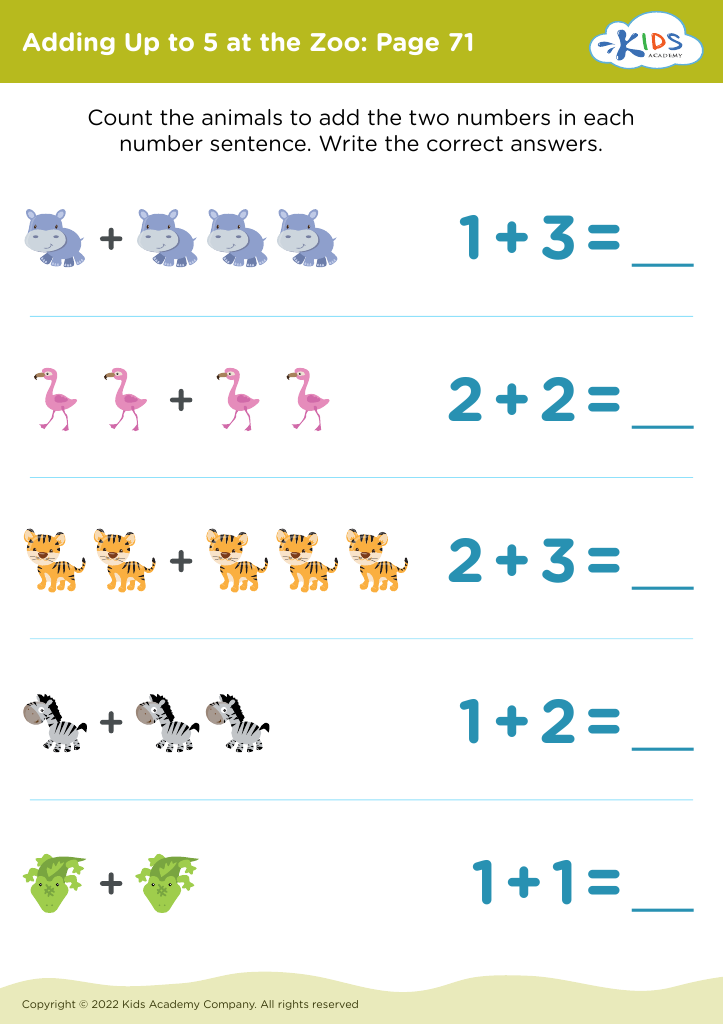
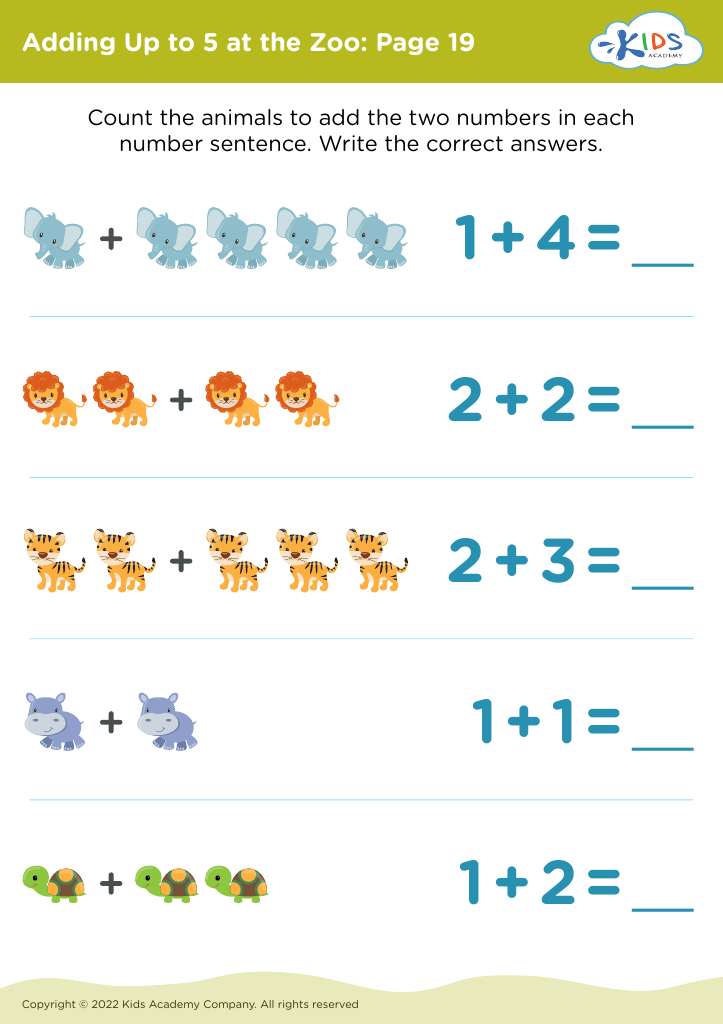
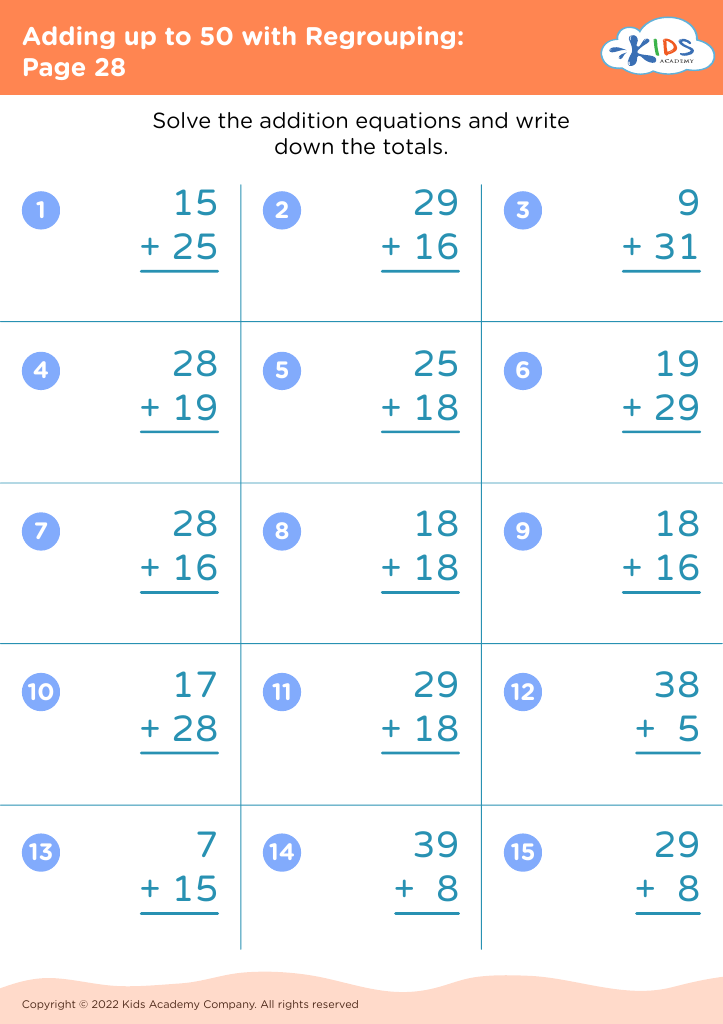
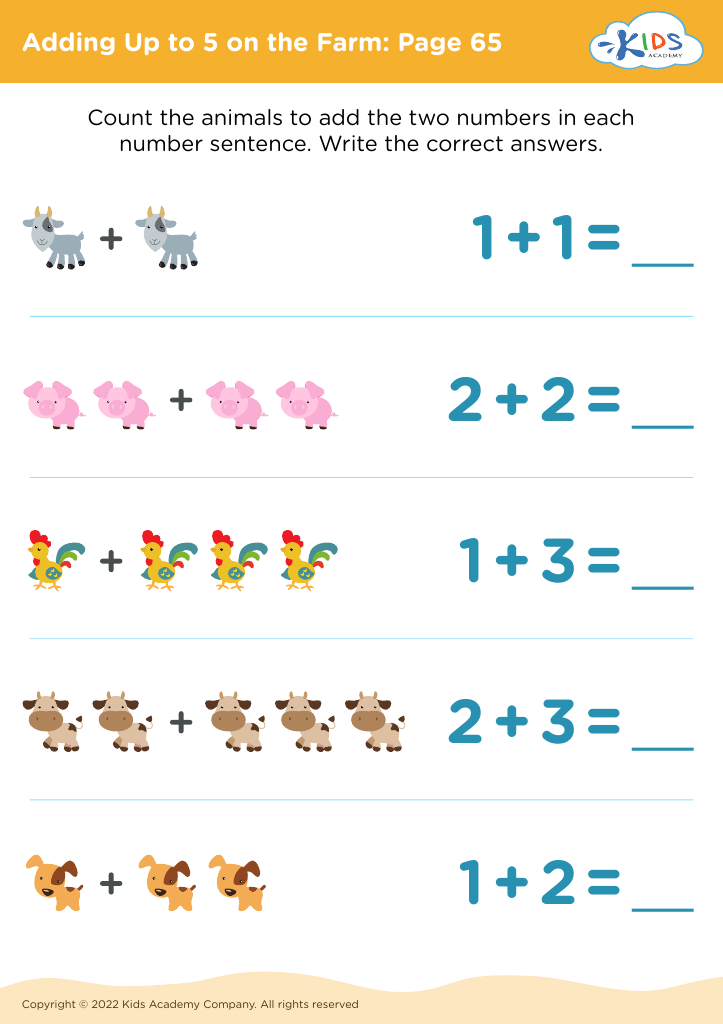
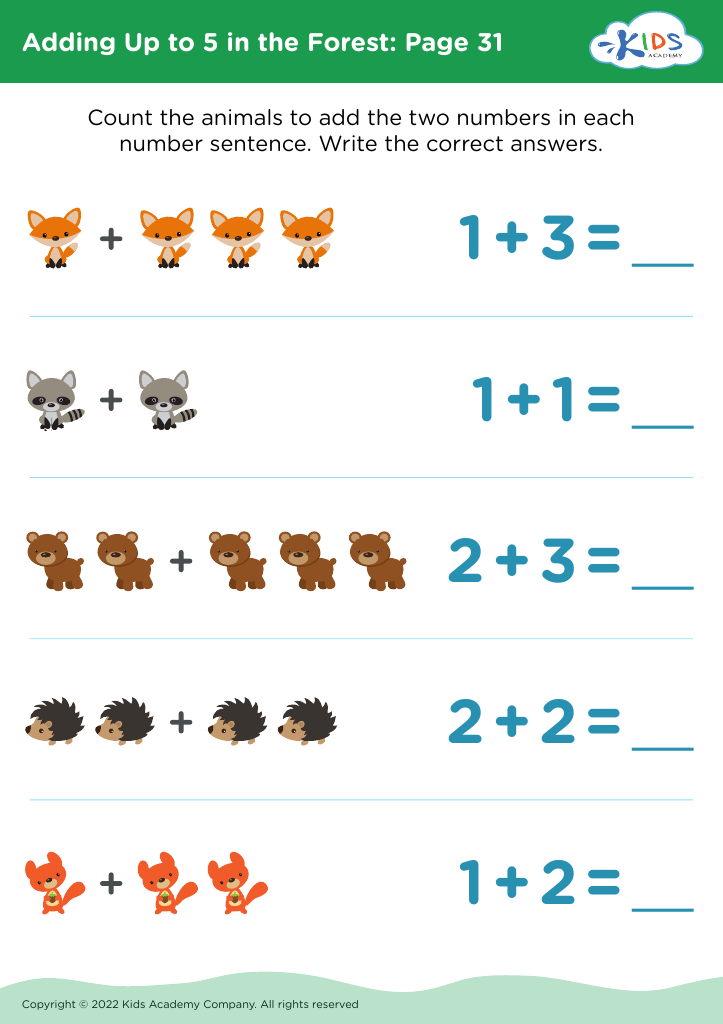
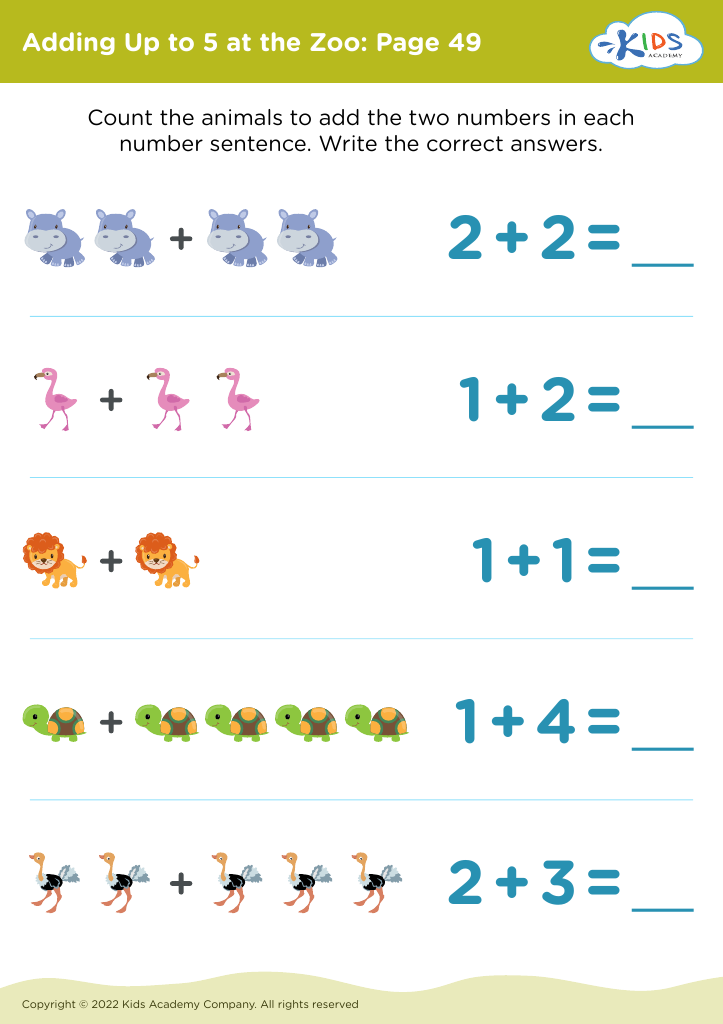
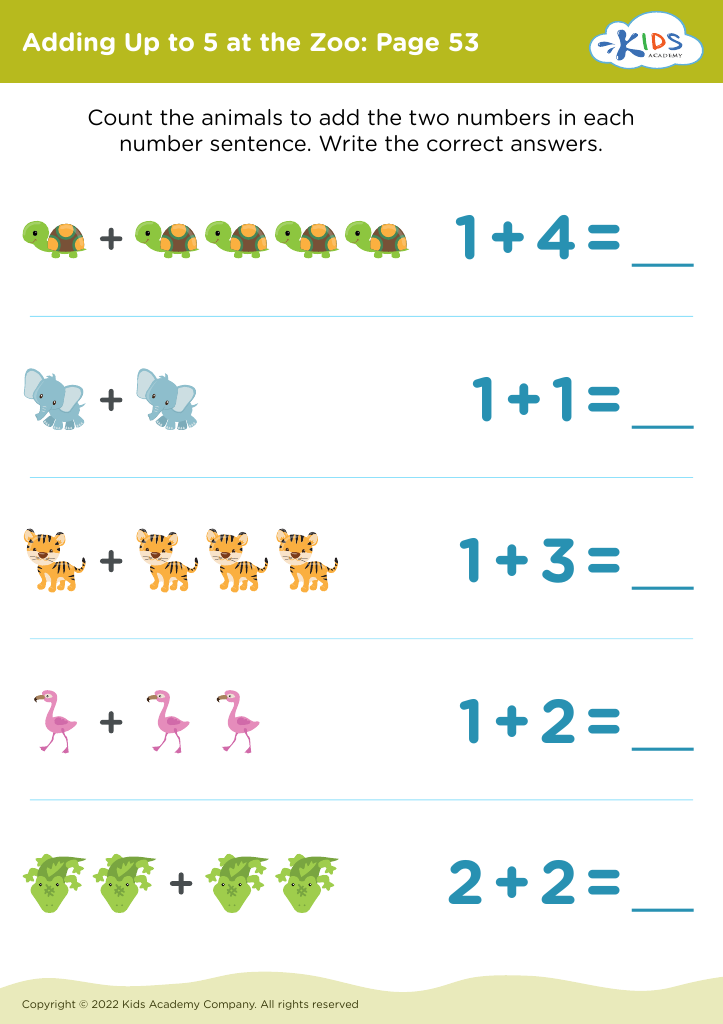








Basic arithmetic practice, especially addition, is vital for children ages 3-7 for several compelling reasons. First, mastering foundational numeracy skills in early childhood fosters confidence, promoting a positive attitude towards mathematics. At this age, children are naturally curious and eager to learn, making it an ideal time to introduce concepts like addition through playful activities.
Moreover, early math skills have been linked to later academic success. Children who grasp basic arithmetic are more likely to excel in math as they progress through school, which is crucial since math is a foundational subject that supports learning in various areas, including science and technology.
Additionally, grasping addition helps develop critical cognitive skills such as problem-solving and logical thinking. Engaging with numbers enhances their reasoning abilities, laying the groundwork for more complex mathematical concepts.
Socially, practicing addition can provide opportunities for interactive play, encouraging collaboration and communication with peers. Integrating math into daily life through games, counting items, or using storytelling helps cultivate an appreciation for learning.
In summary, ensuring that children ages 3-7 receive proper arithmetic practice in addition fosters confidence, academic success, cognitive development, and social skills, setting the stage for lifelong learning and achievement.








