Filters

83 filtered results

Clear all filters
Favorites
With answer key
Interactive

83 filtered results

Difficulty Level

Grade


Check out this FREE Trial Lesson on Addition for age 3-7!

Exactly the Same, or Not

Favorites
With answer key
Interactive
  • 3-7
  • Comparing Fractions
  • Addition
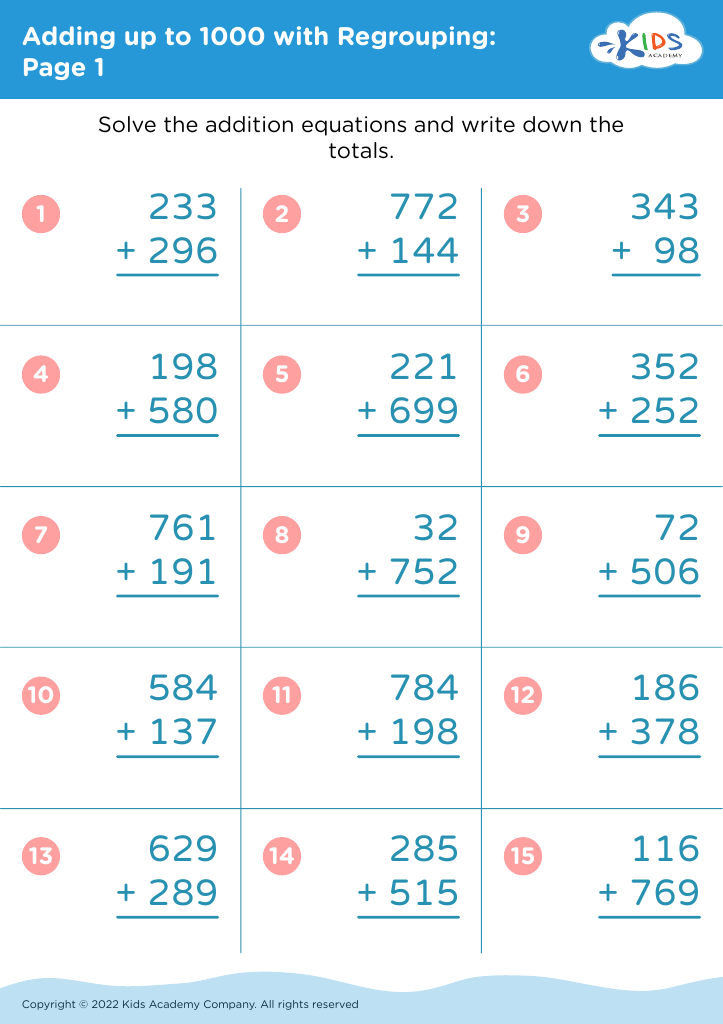
Adding up to 1000 with Regrouping: Page 1
Worksheet
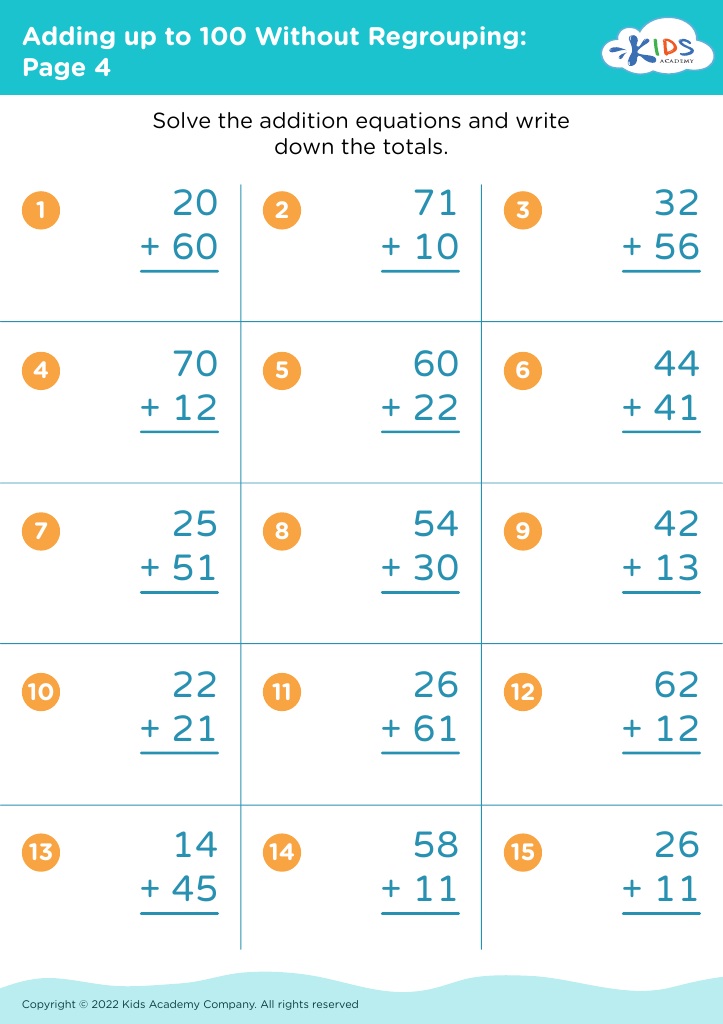
Adding up to 100 Without Regrouping: Page 4
Worksheet
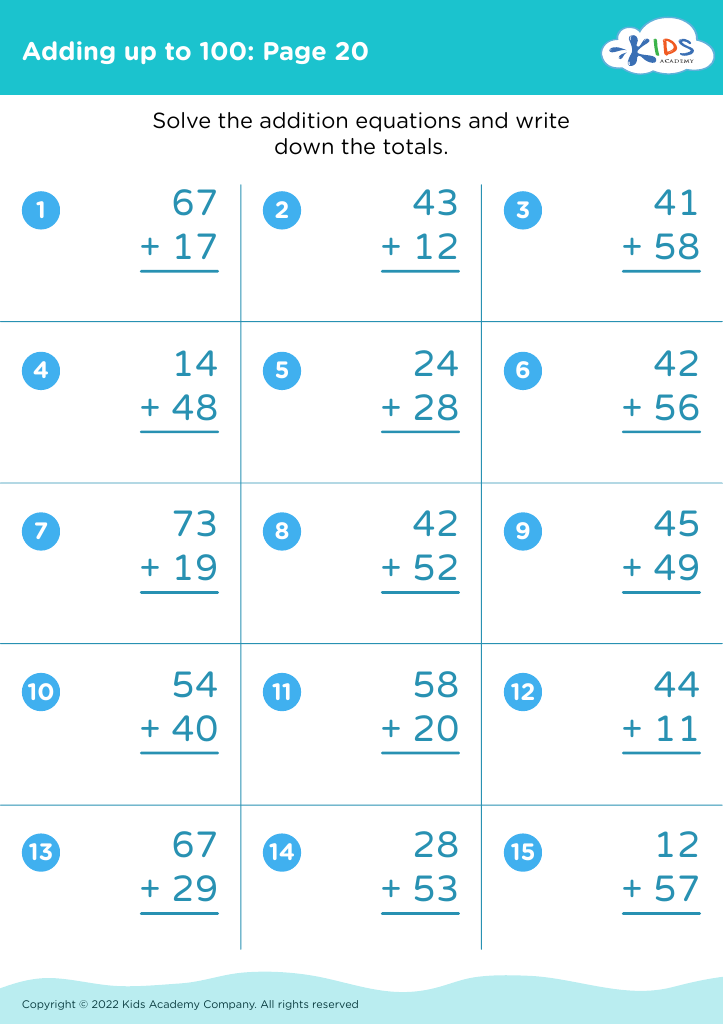
Adding up to 100: Page 20

Adding up to 100: Page 20

Adding up to 100: Page 20
Worksheet
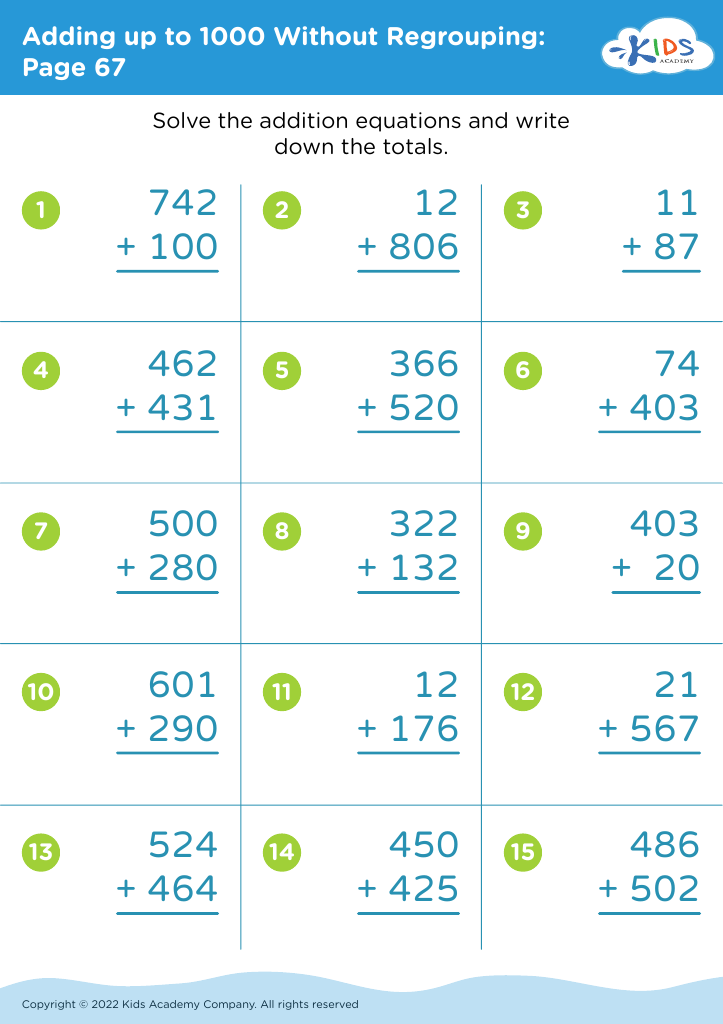
Adding up to 1000 Without Regrouping: Page 67
Worksheet
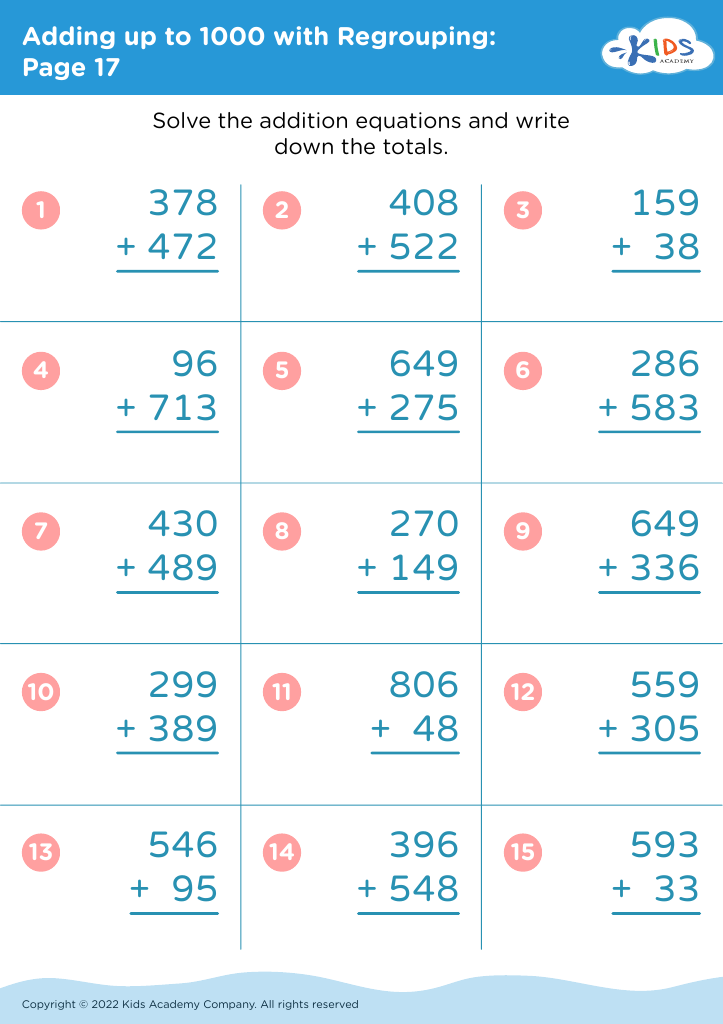
Adding up to 1000 with Regrouping: Page 17
Worksheet
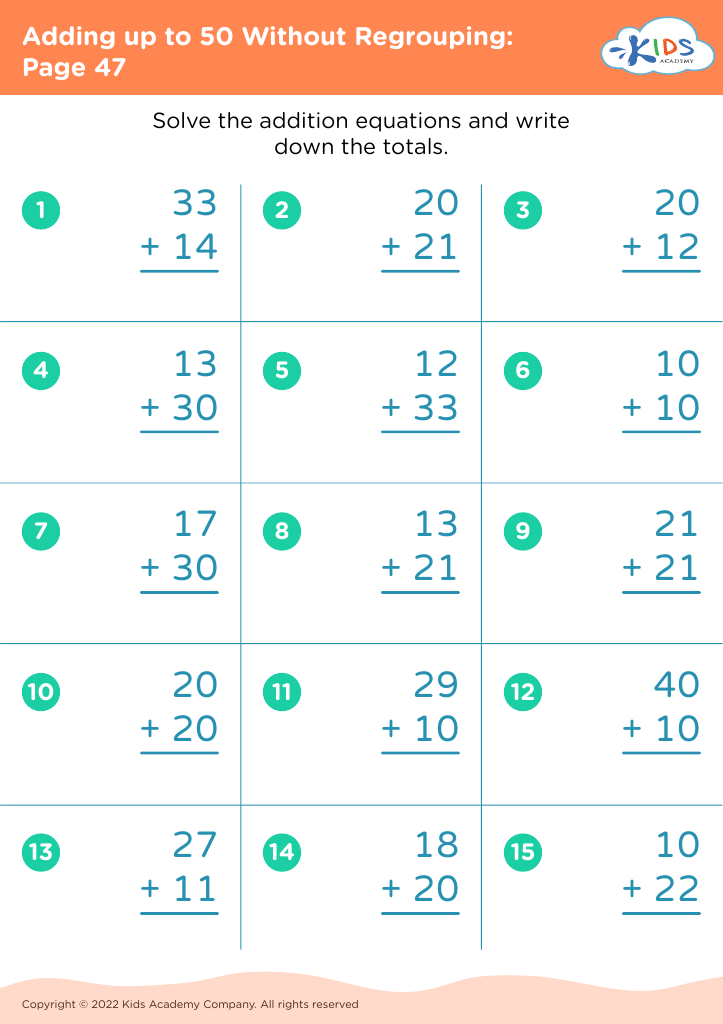
Adding up to 50 Without Regrouping: Page 47
Worksheet
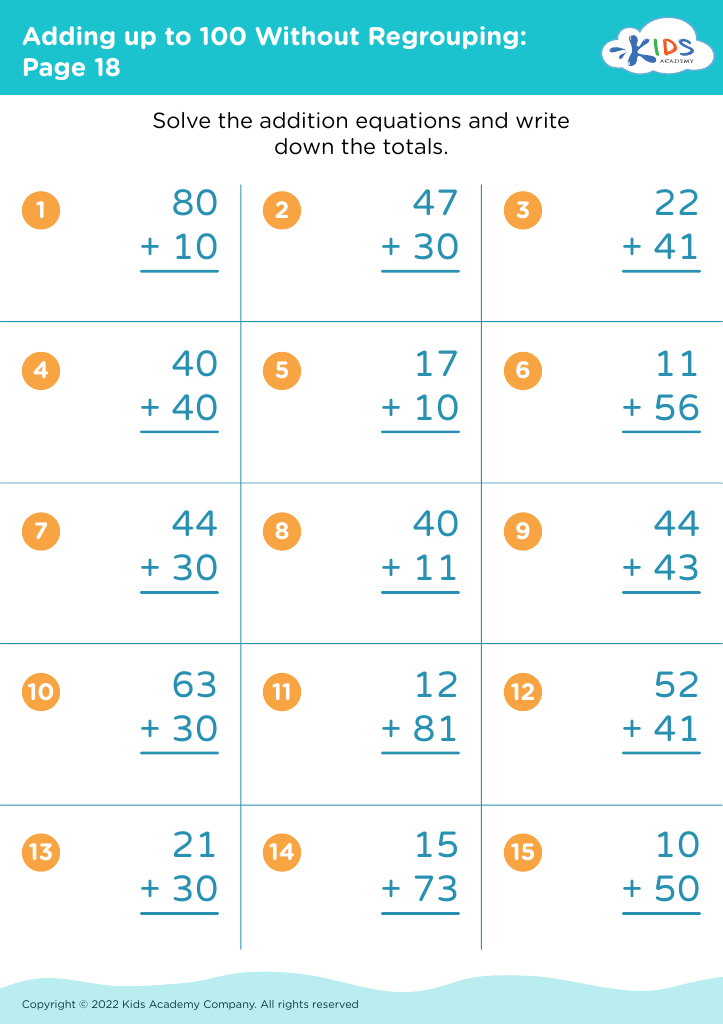
Adding up to 100 Without Regrouping: Page 18
Worksheet
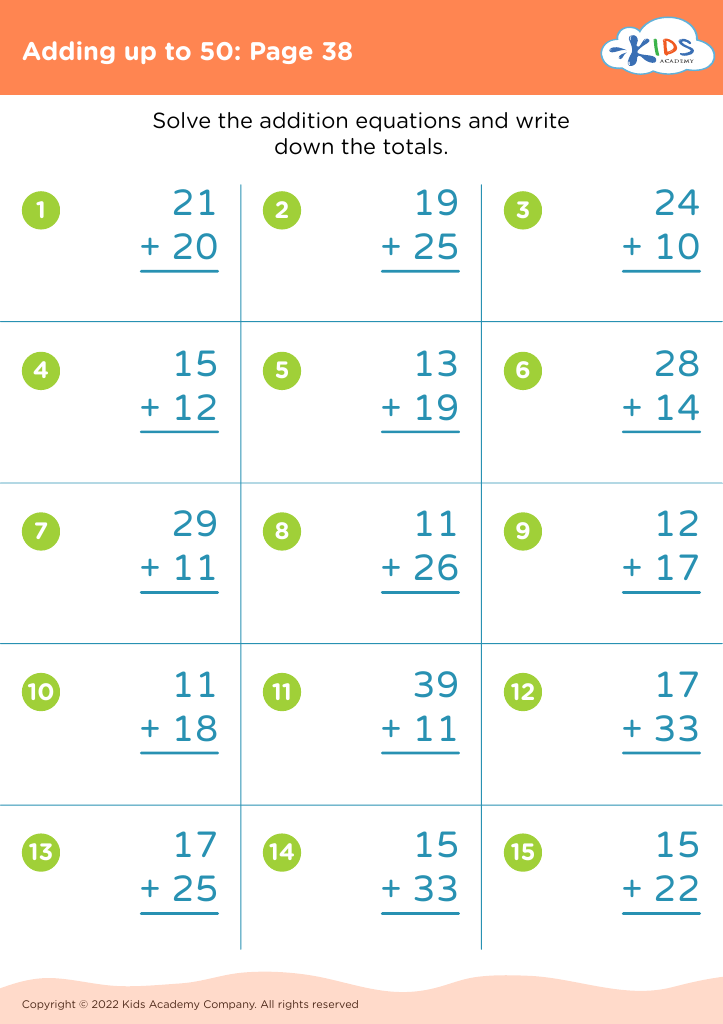
Adding up to 50: Page 38

Adding up to 50: Page 38

Adding up to 50: Page 38
Worksheet
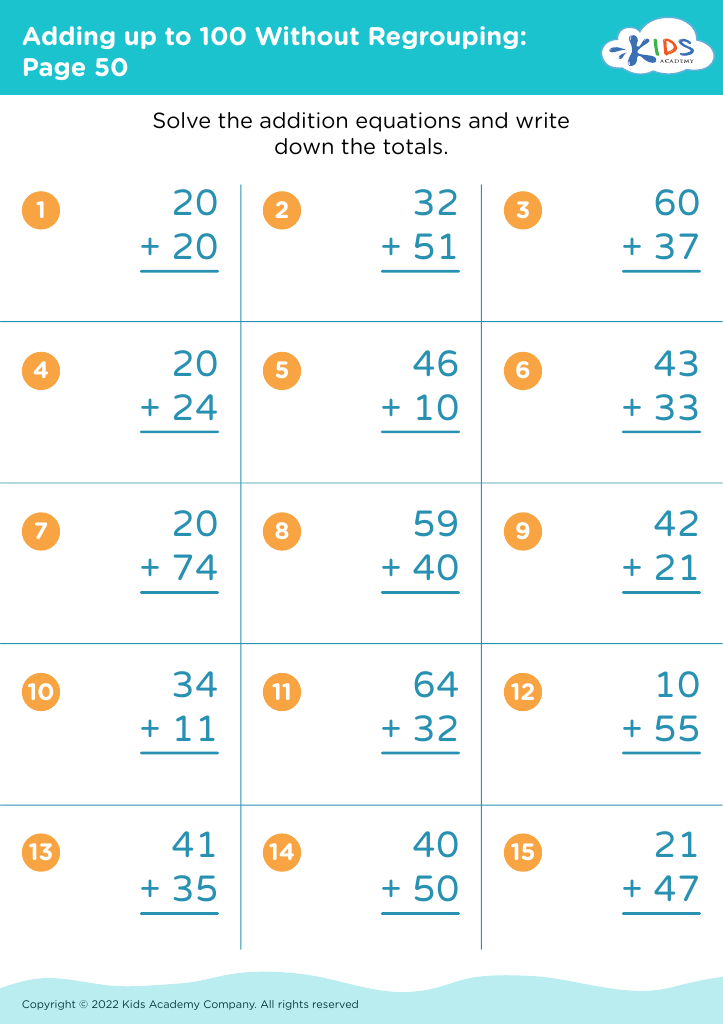
Adding up to 100 Without Regrouping: Page 50
Worksheet
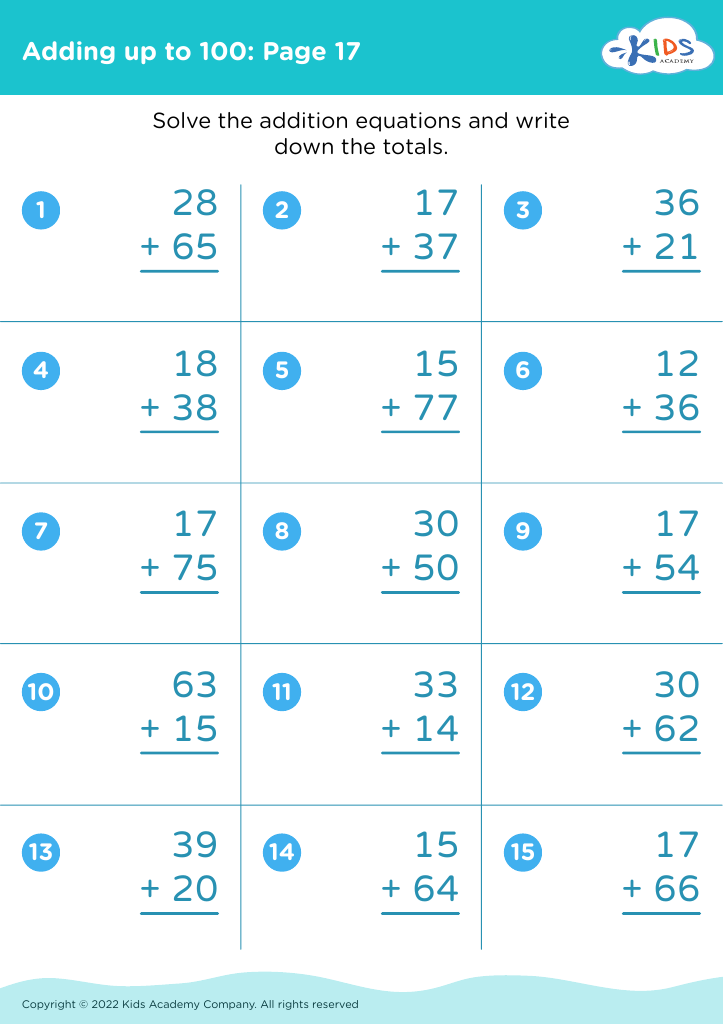
Adding up to 100: Page 17

Adding up to 100: Page 17

Adding up to 100: Page 17
Worksheet
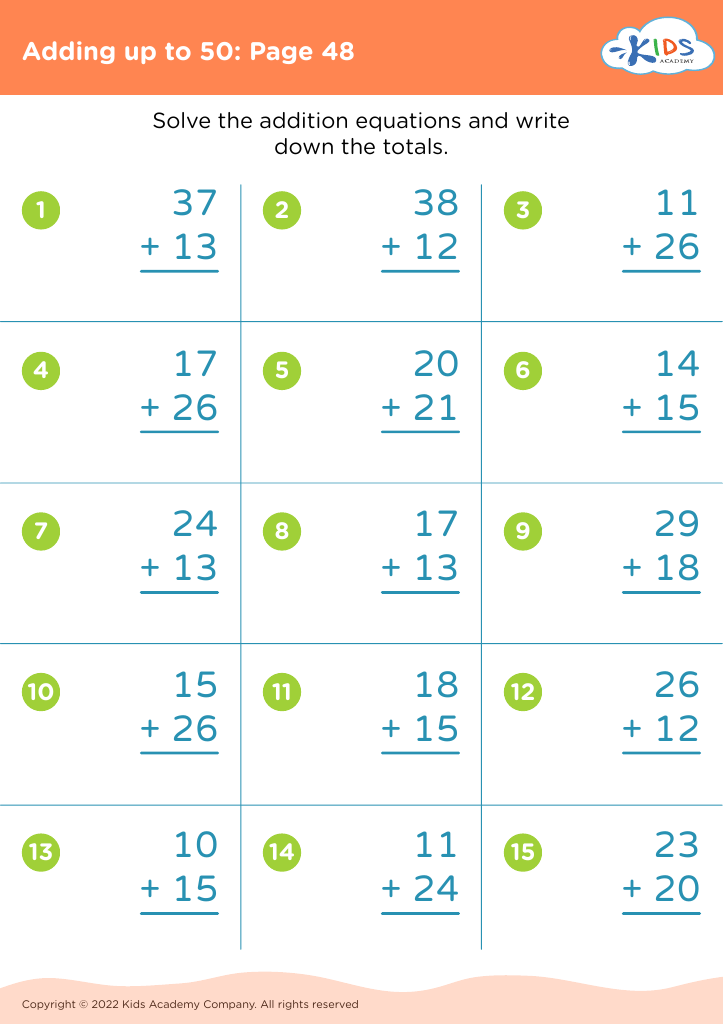
Adding up to 50: Page 48

Adding up to 50: Page 48

Adding up to 50: Page 48
Worksheet
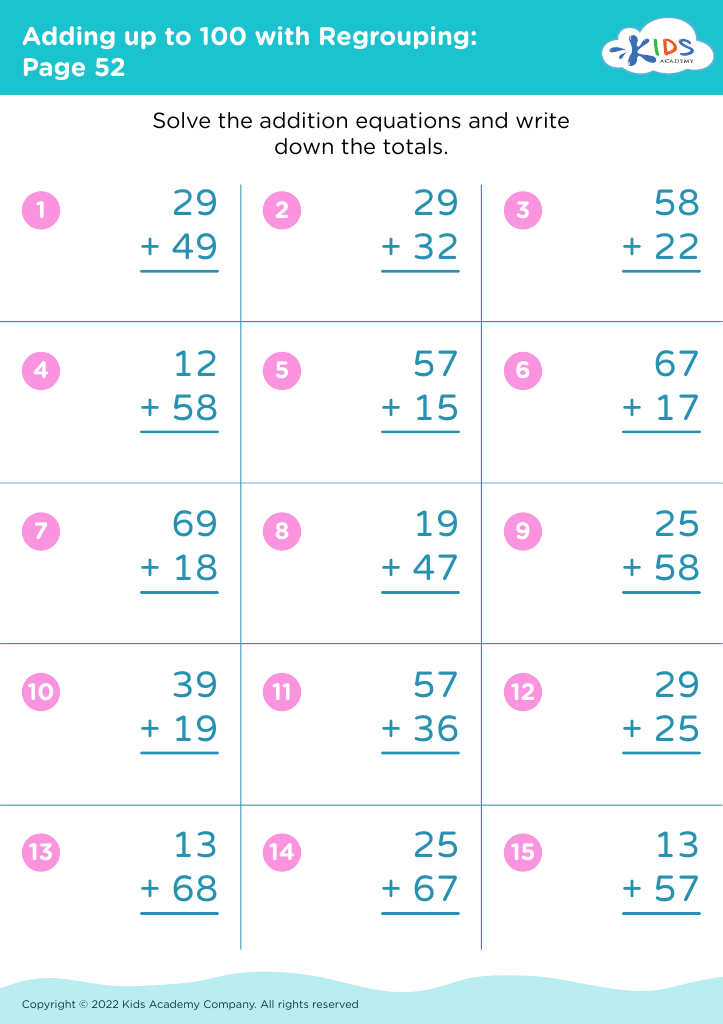
Adding up to 100 with Regrouping: Page 52
Worksheet
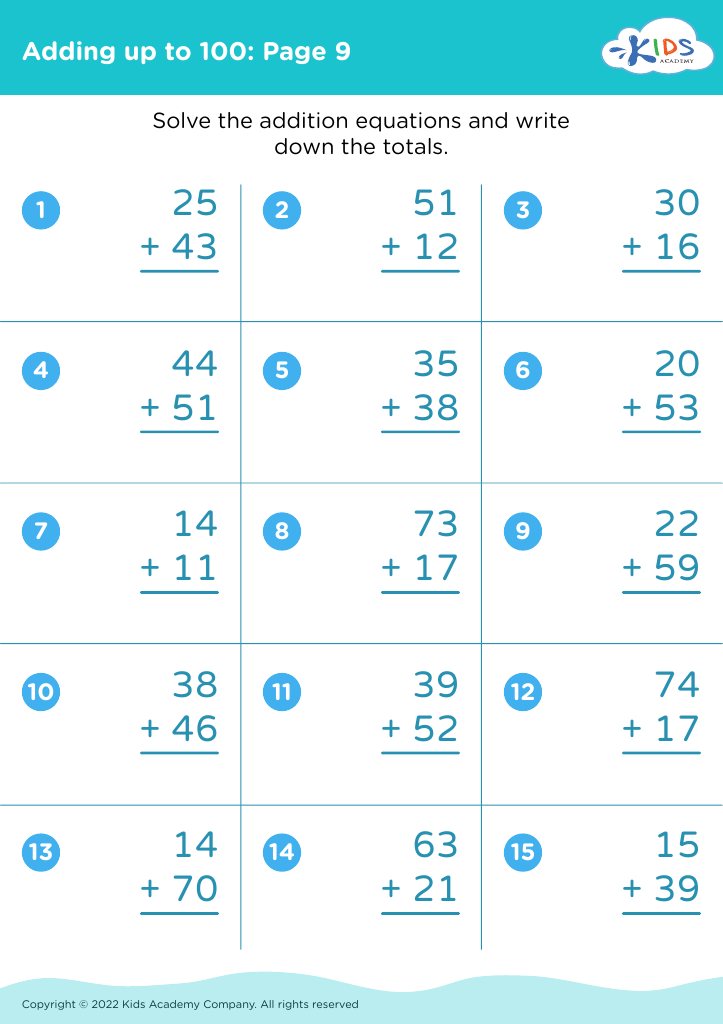
Adding up to 100: Page 9

Adding up to 100: Page 9

Adding up to 100: Page 9
Worksheet
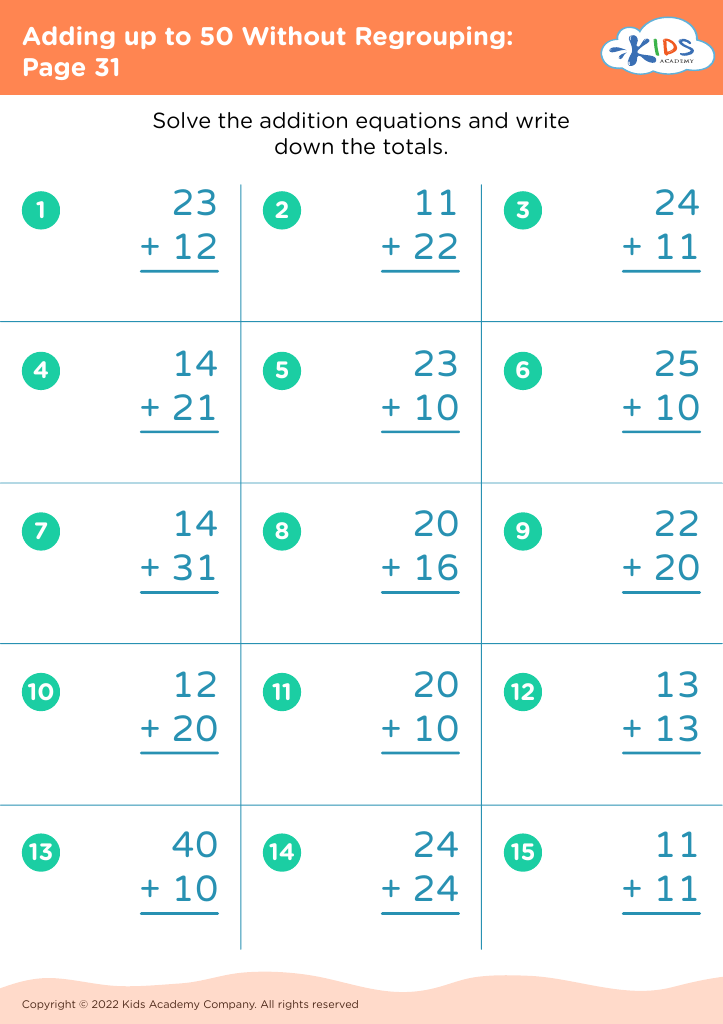
Adding up to 50 Without Regrouping: Page 31
Worksheet
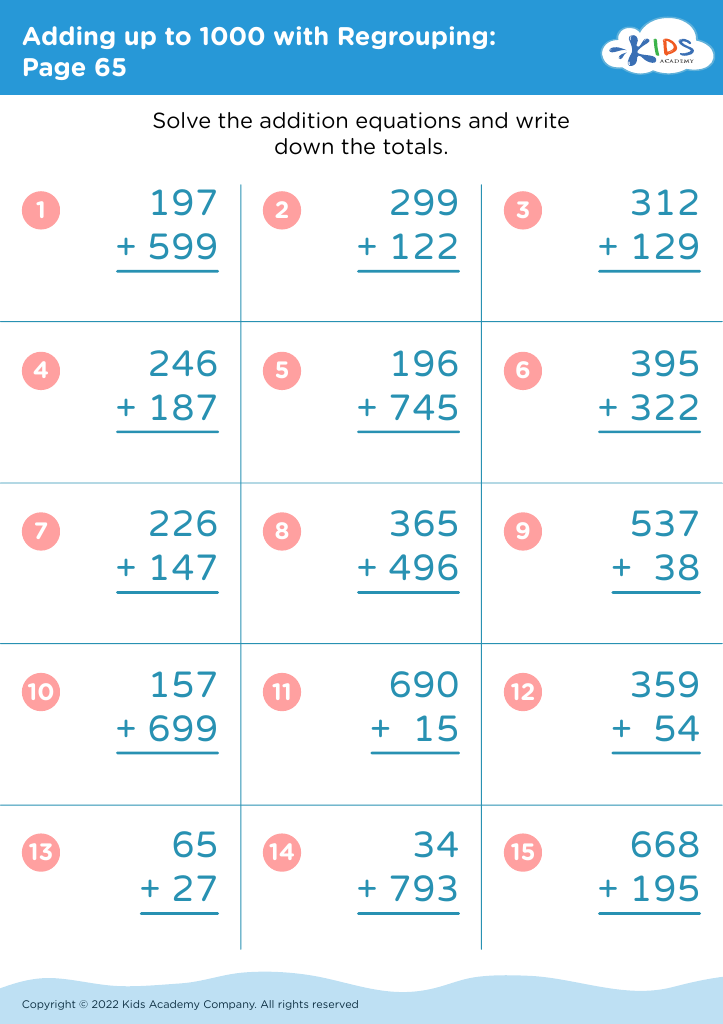
Adding up to 1000 with Regrouping: Page 65
Worksheet
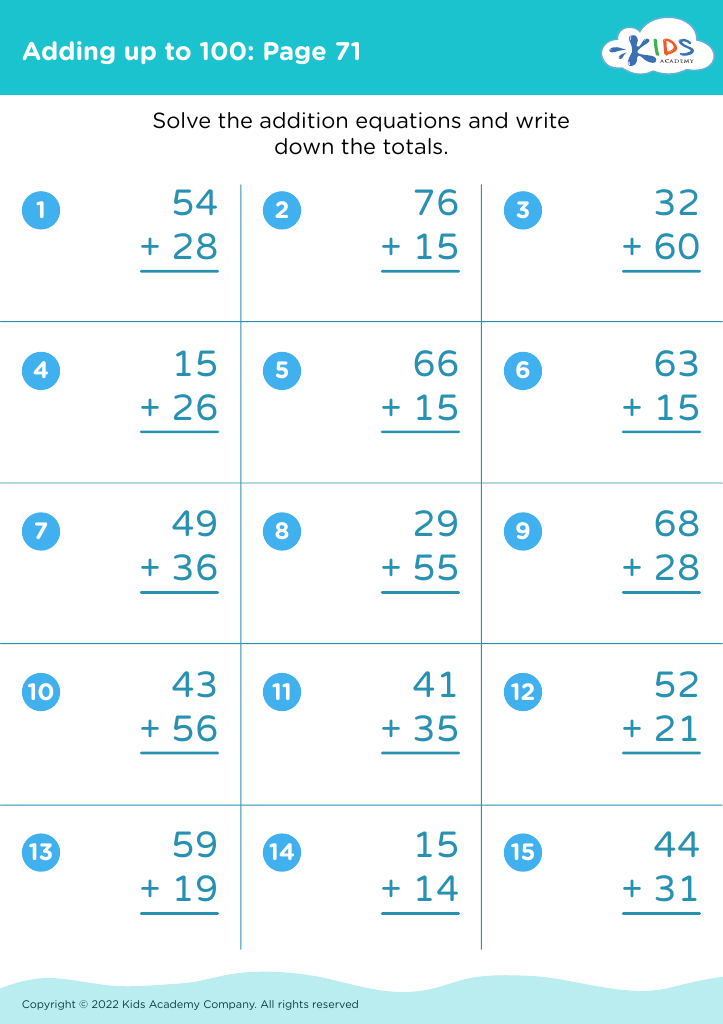
Adding up to 100: Page 71

Adding up to 100: Page 71

Adding up to 100: Page 71
Worksheet
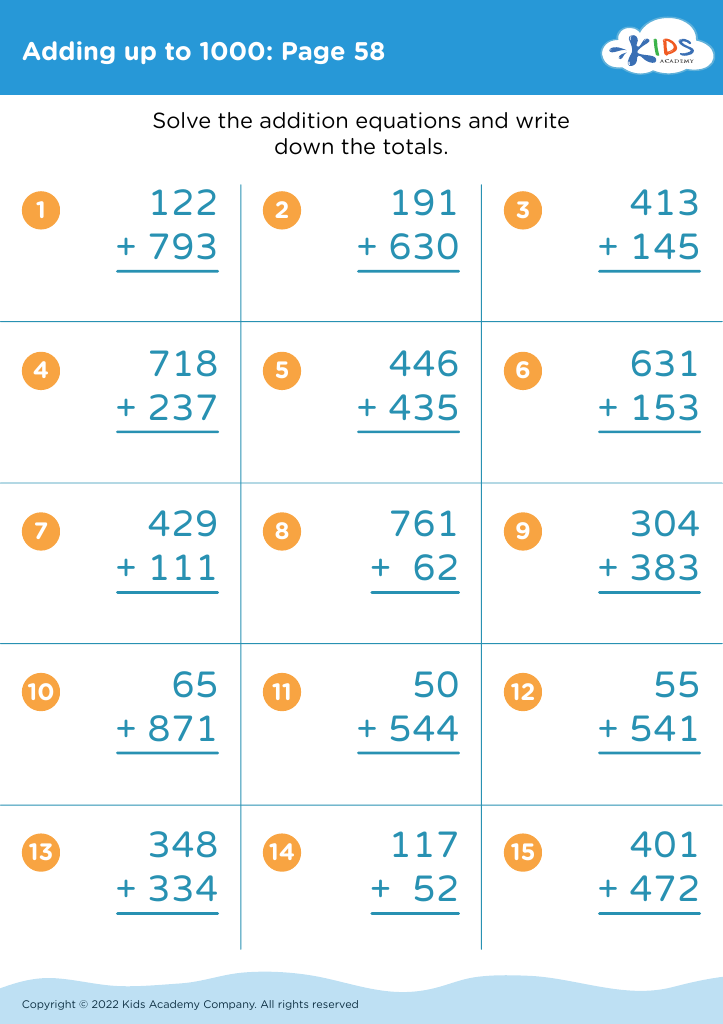
Adding up to 1000: Page 58

Adding up to 1000: Page 58

Adding up to 1000: Page 58
Worksheet
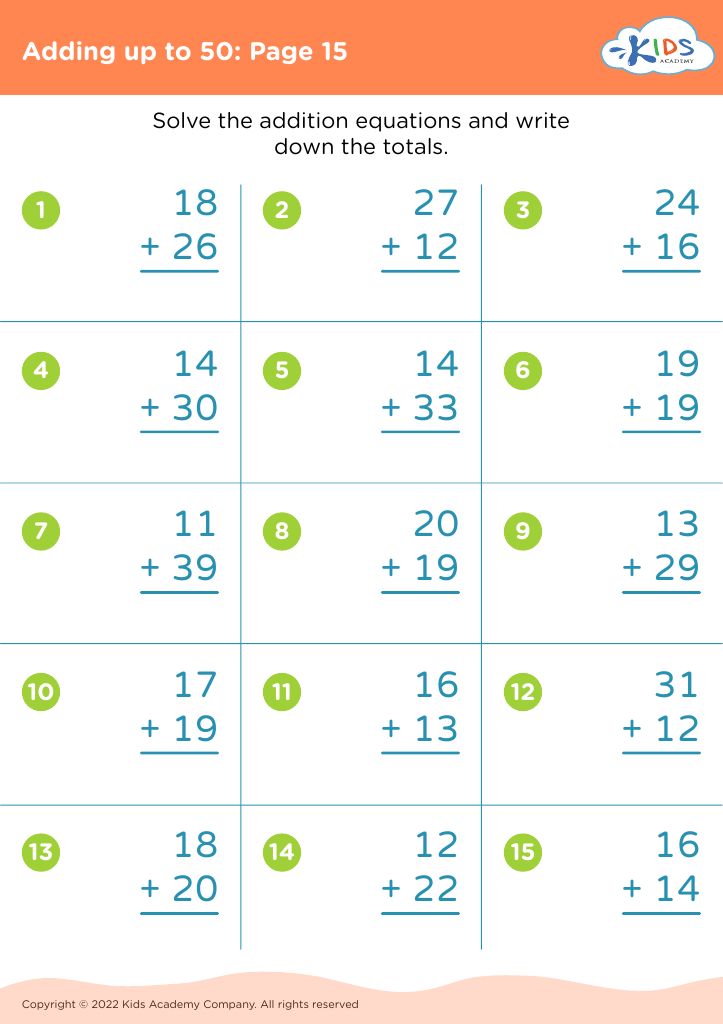
Adding up to 50: Page 15

Adding up to 50: Page 15

Adding up to 50: Page 15
Worksheet
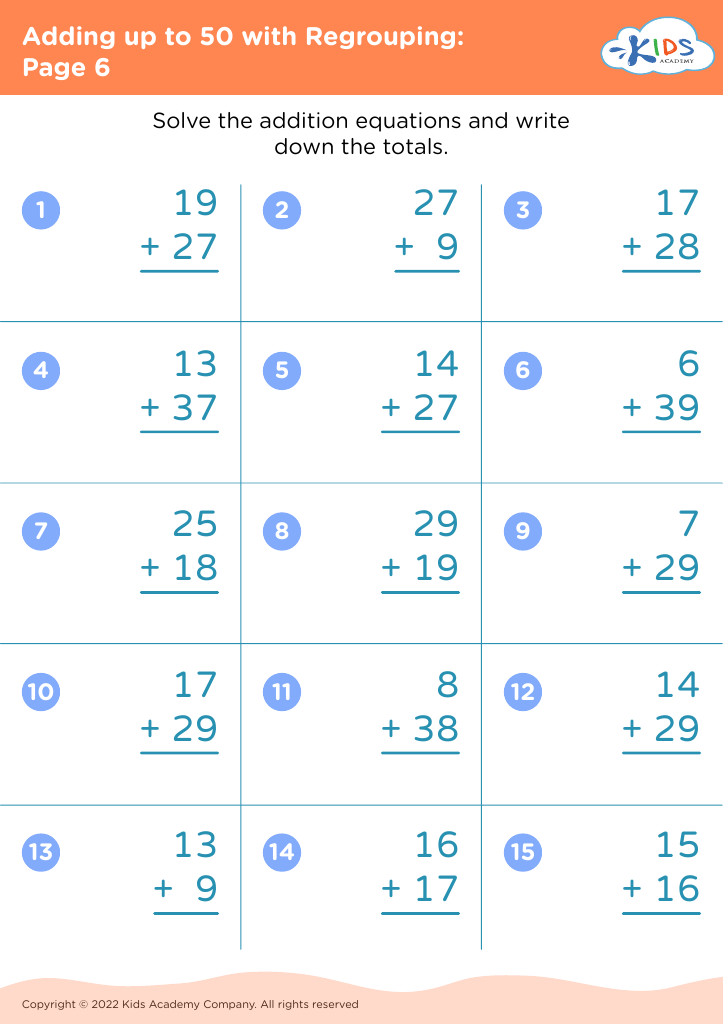
Adding up to 50 with Regrouping: Page 6
Worksheet
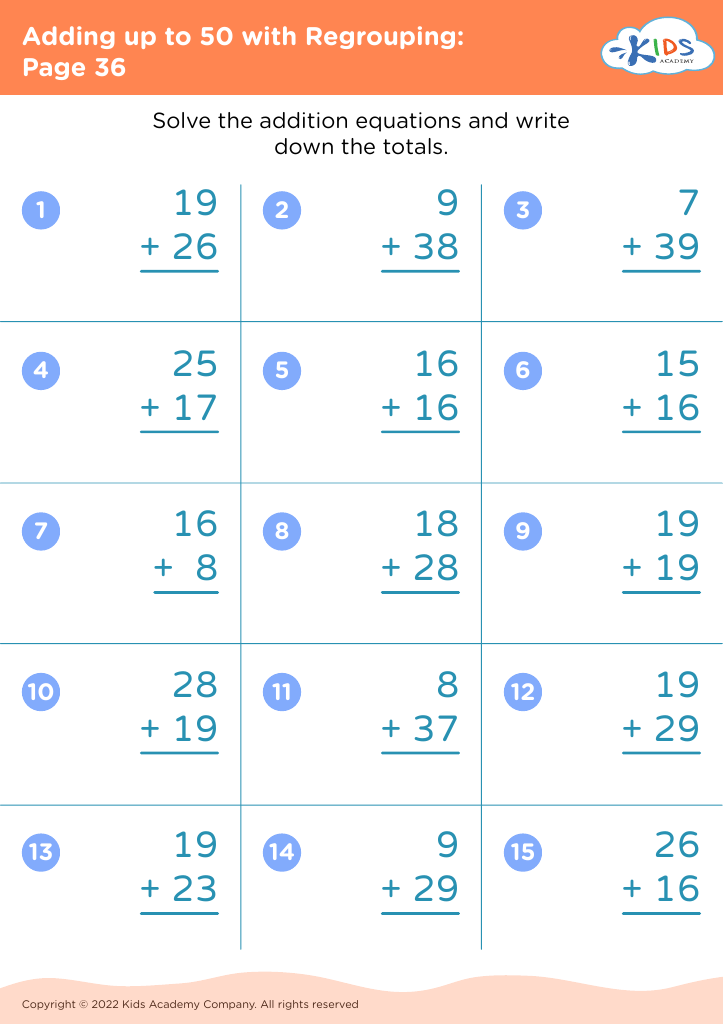
Adding up to 50 with Regrouping: Page 36
Worksheet
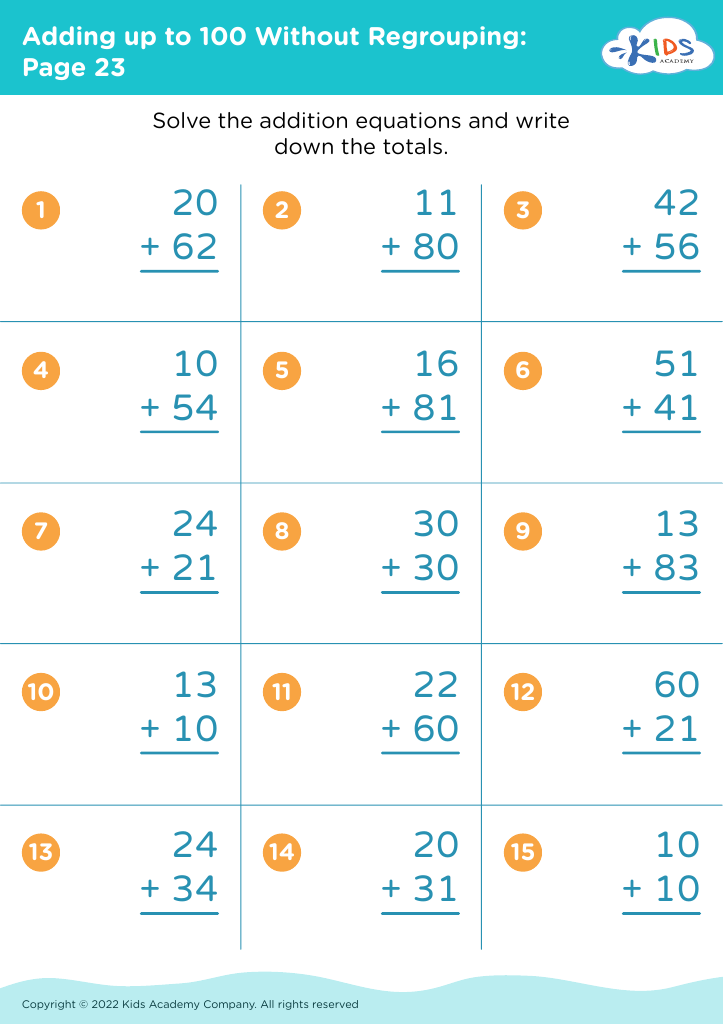
Adding up to 100 Without Regrouping: Page 23
Worksheet
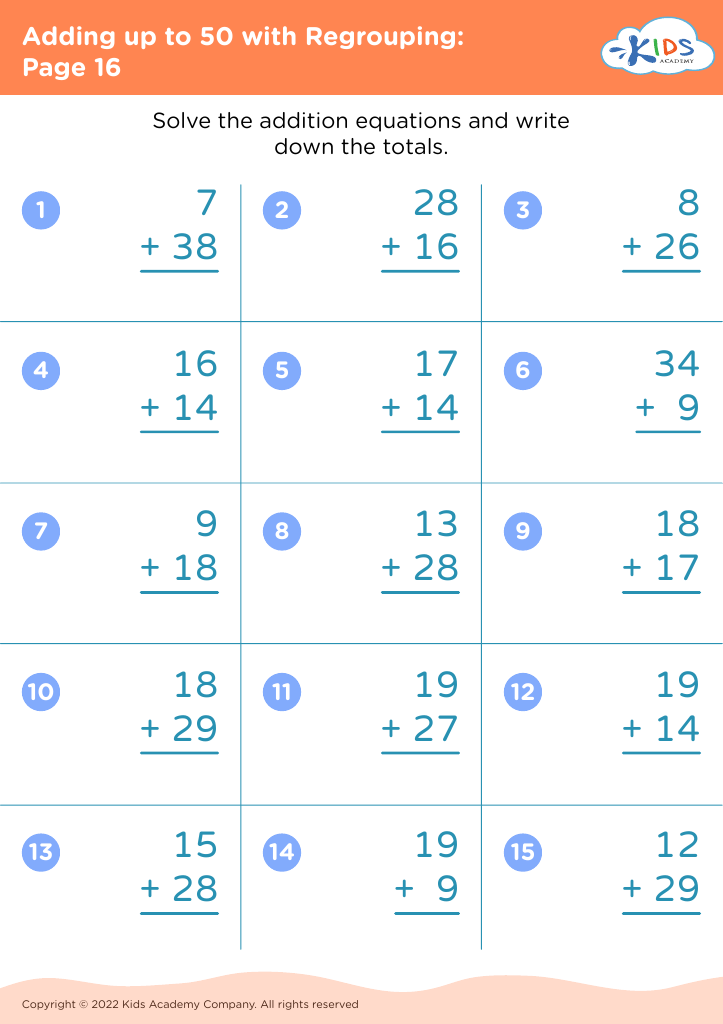
Adding up to 50 with Regrouping: Page 16
Worksheet
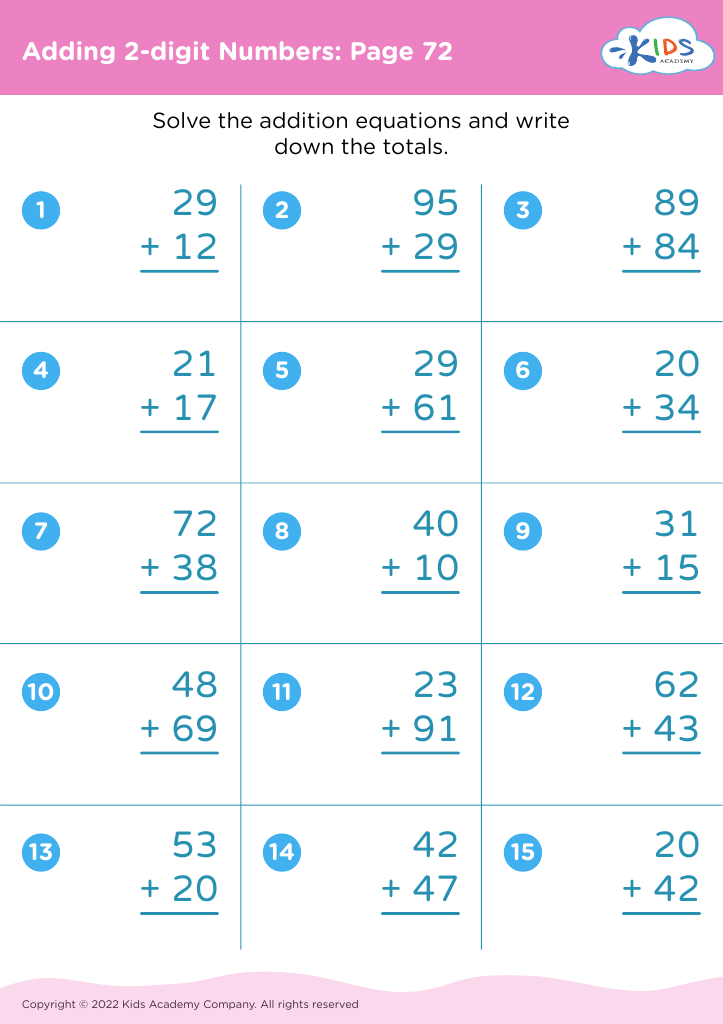
Adding 2-digit Numbers: Page 72

Adding 2-digit Numbers: Page 72

Adding 2-digit Numbers: Page 72
Worksheet
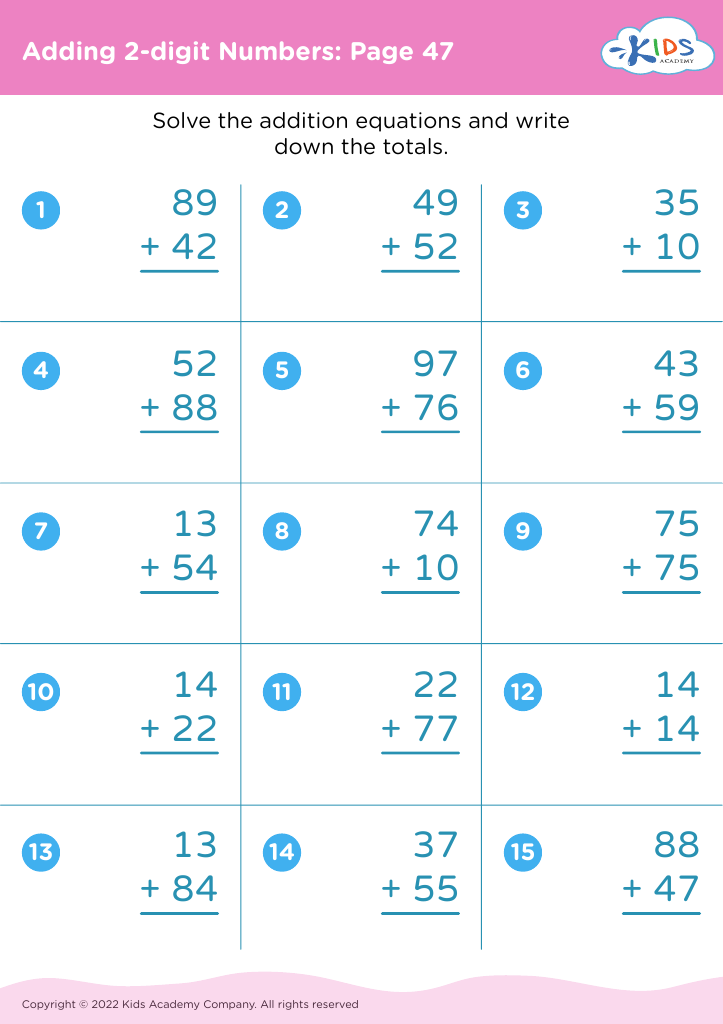
Adding 2-digit Numbers: Page 47

Adding 2-digit Numbers: Page 47

Adding 2-digit Numbers: Page 47
Worksheet


Understanding how to compare and add fractions is a foundational mathematical skill that can significantly impact a child's overall mathematical development. For children ages 3-7, learning about fractions helps them grasp concepts of part-to-whole relationships; this foundational principle appears throughout mathematics and in daily life.

First, comparative skills foster critical thinking. When children learn to compare fractions, they develop the ability to evaluate quantities relative to each other, enhancing their logical reasoning. Engaging in fraction activities encourages exploration and experimentation, laying the groundwork for problem-solving skills.

Secondly, comprehension of fractions and their addition promotes number sense. Familiarity with these concepts helps young learners understand ratios, proportions, and even measurement. By age 7, students are often introduced to more complex arithmetic; hence, a firm grasp of fraction concepts will prepare them to tackle advanced mathematical topics.

Additionally, teaching these concepts can incorporate play-based learning, making math enjoyable and less intimidating. This nurturing approach can cultivate a positive attitude toward math from an early age, ensuring children build confidence in their abilities. Ultimately, a strong foundation in fractions not only supports academic success but also equips children with essential life skills, enriching their overall educational journey.