Filters

225 filtered results

Clear all filters
Favorites
With answer key
Interactive

225 filtered results

Difficulty Level

Grade


Subject

Check out this FREE Trial Lesson on Addition for age 3-7!

Making 12

Favorites
With answer key
Interactive
  • 3-7
  • Counting skills
  • Addition
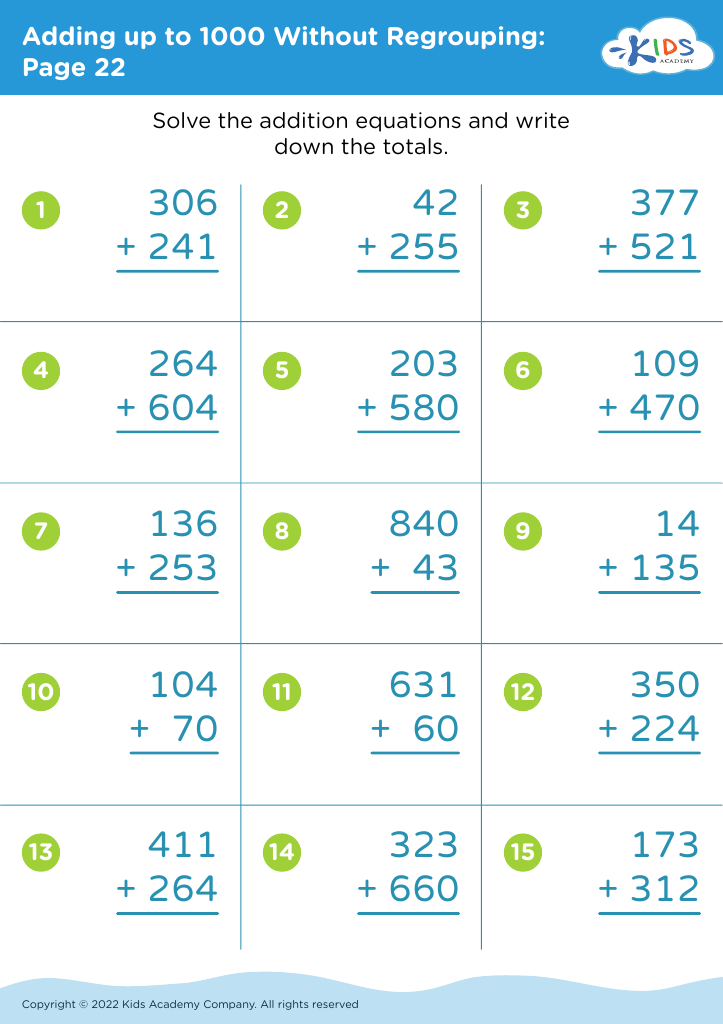
Adding up to 1000 Without Regrouping: Page 22
Worksheet
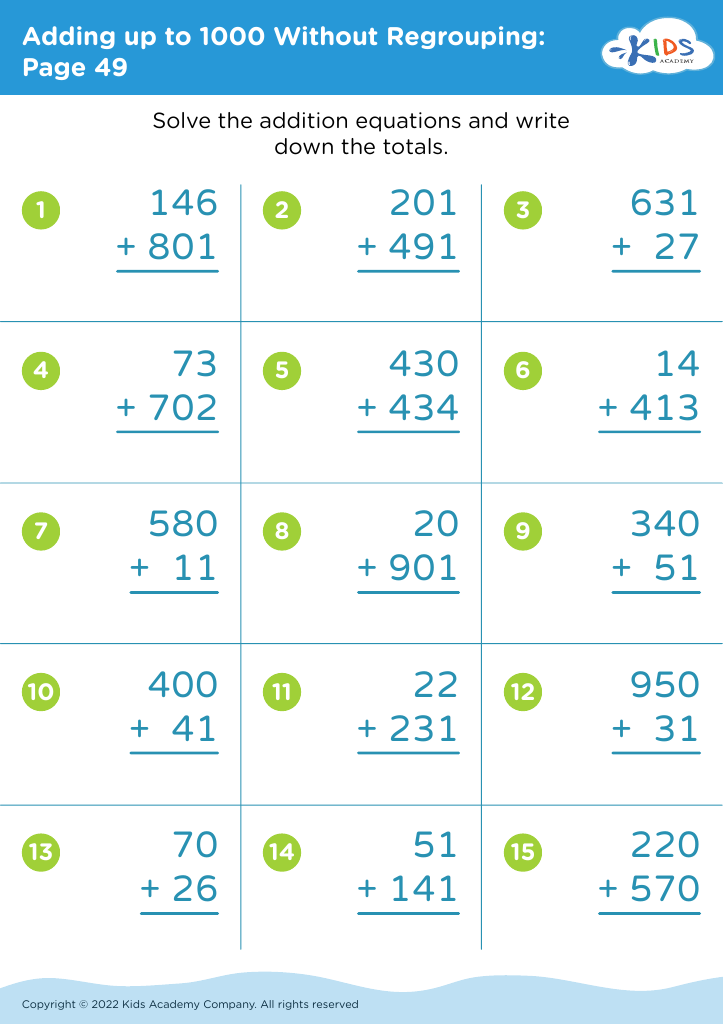
Adding up to 1000 Without Regrouping: Page 49
Worksheet
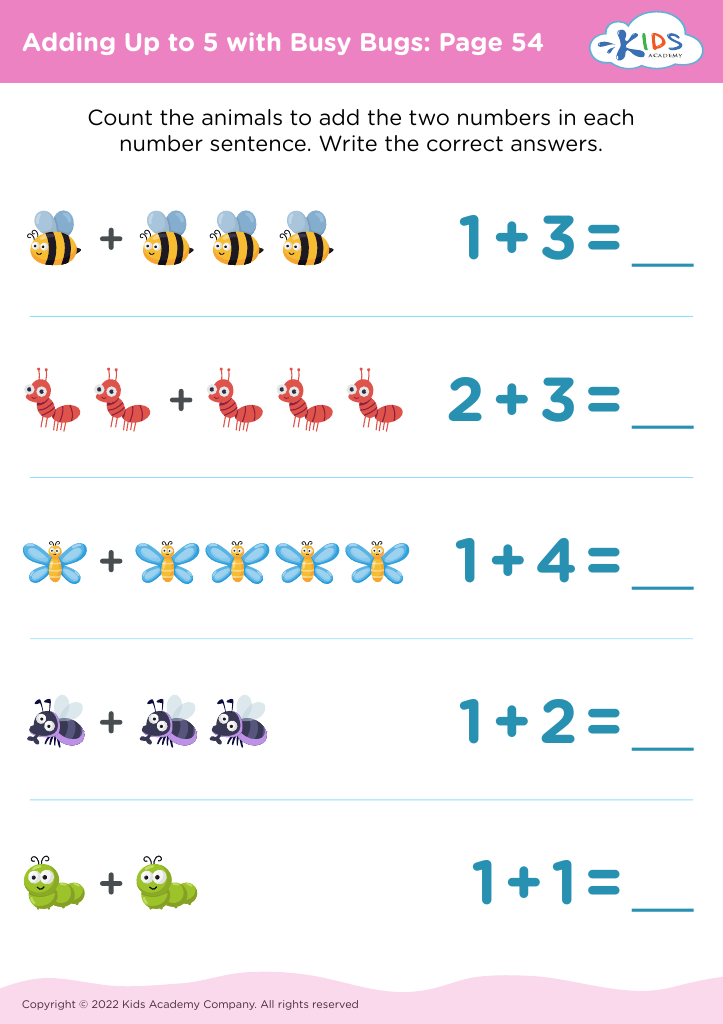
Adding Up to 5 with Busy Bugs: Page 54
Worksheet
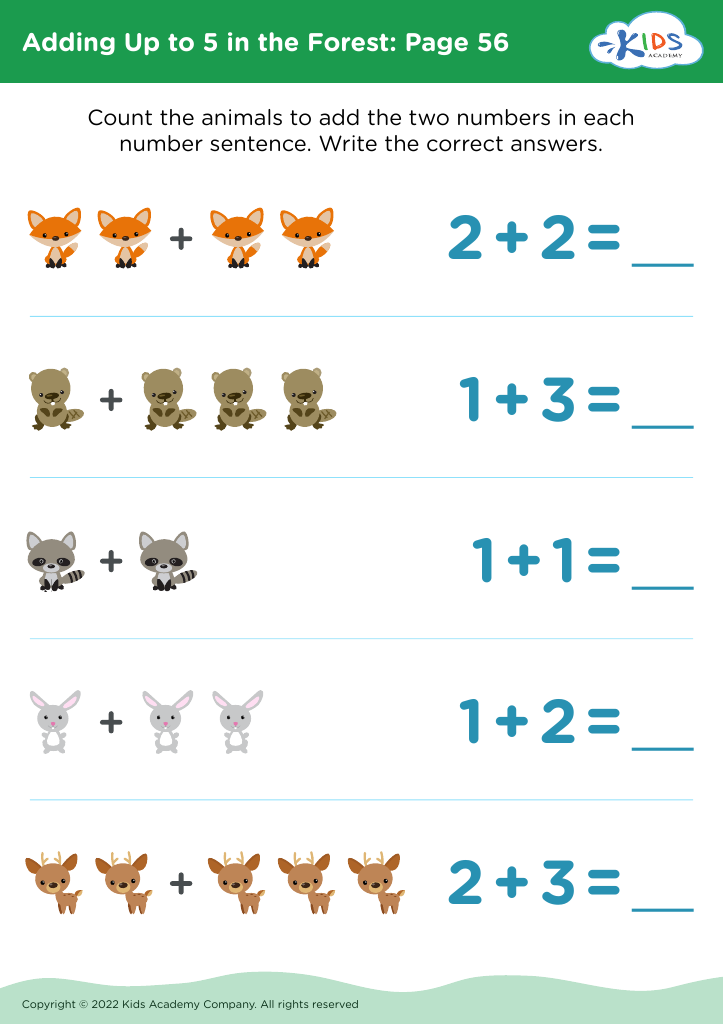
Adding Up to 5 in the Forest: Page 56
Worksheet
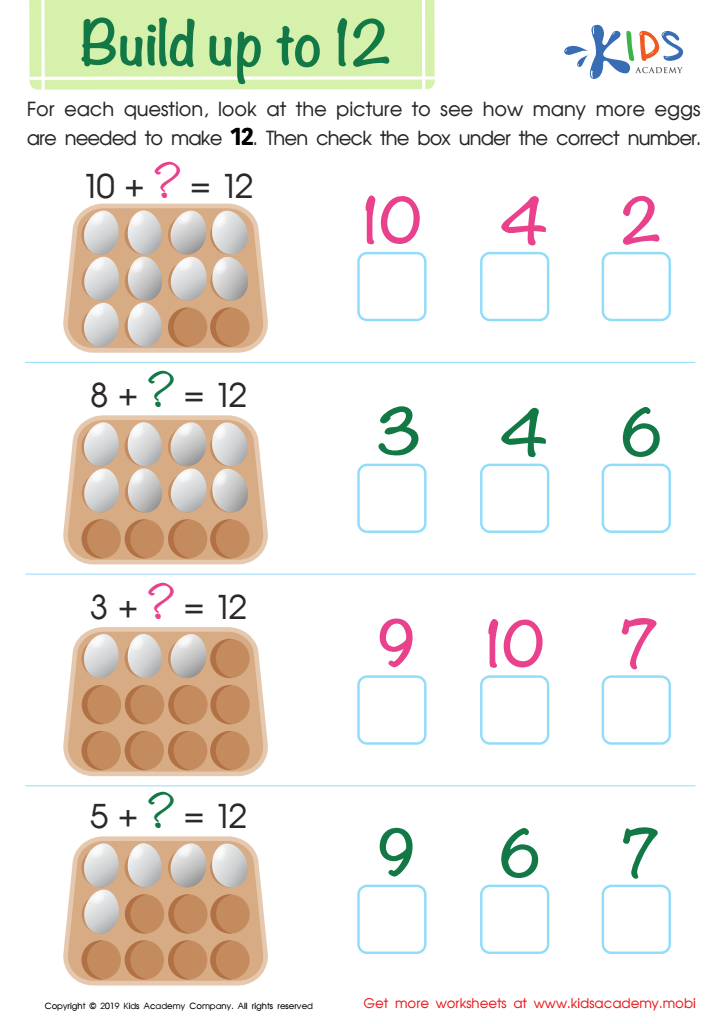
Build up to 12 Worksheet

Build up to 12 Worksheet

Love eggs? Kids can identify them in the picture in this worksheet. We need to add numbers to make 12. Look at the picture and see how many eggs are needed. Check the correct number box. Breakfast or baking, eggs are essential!
Build up to 12 Worksheet
Worksheet
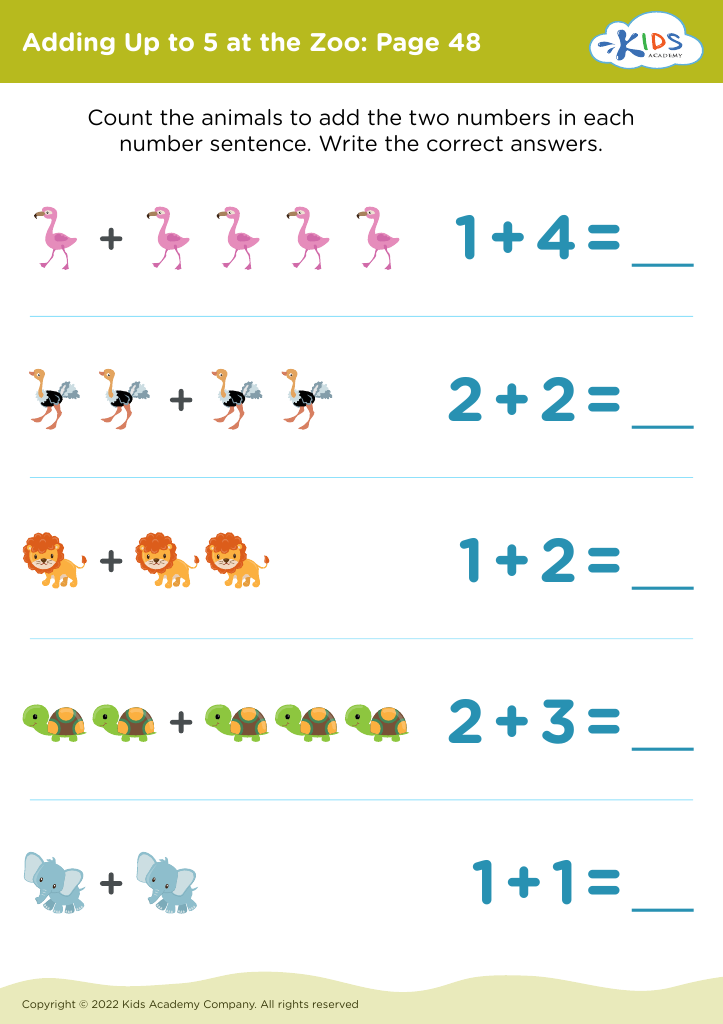
Adding Up to 5 at the Zoo: Page 48
Worksheet
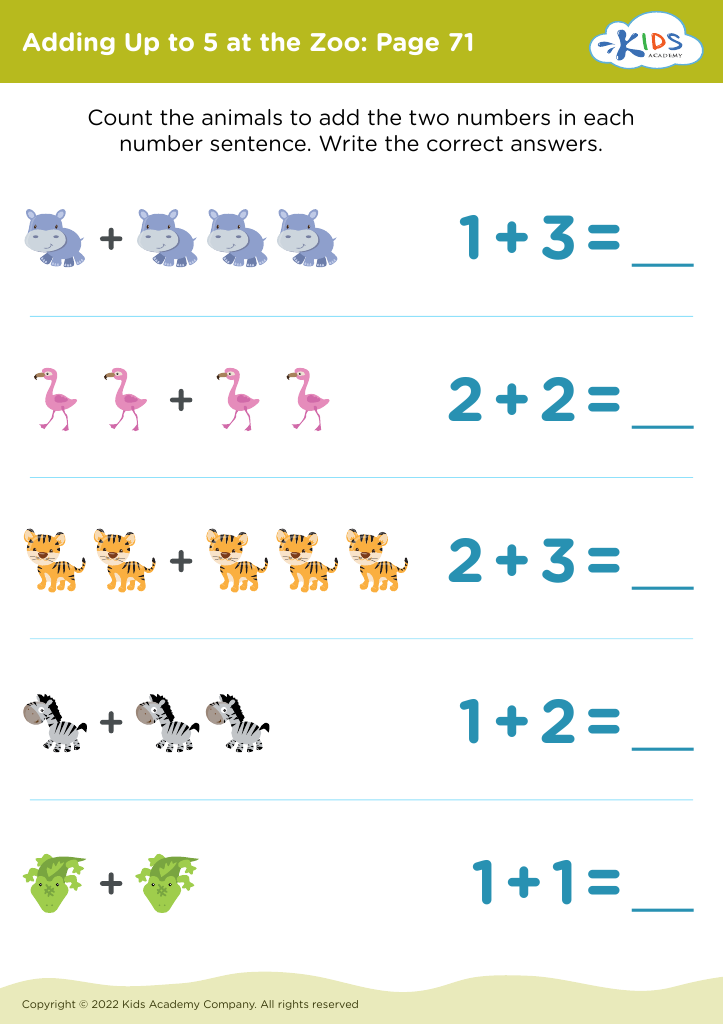
Adding Up to 5 at the Zoo: Page 71
Worksheet
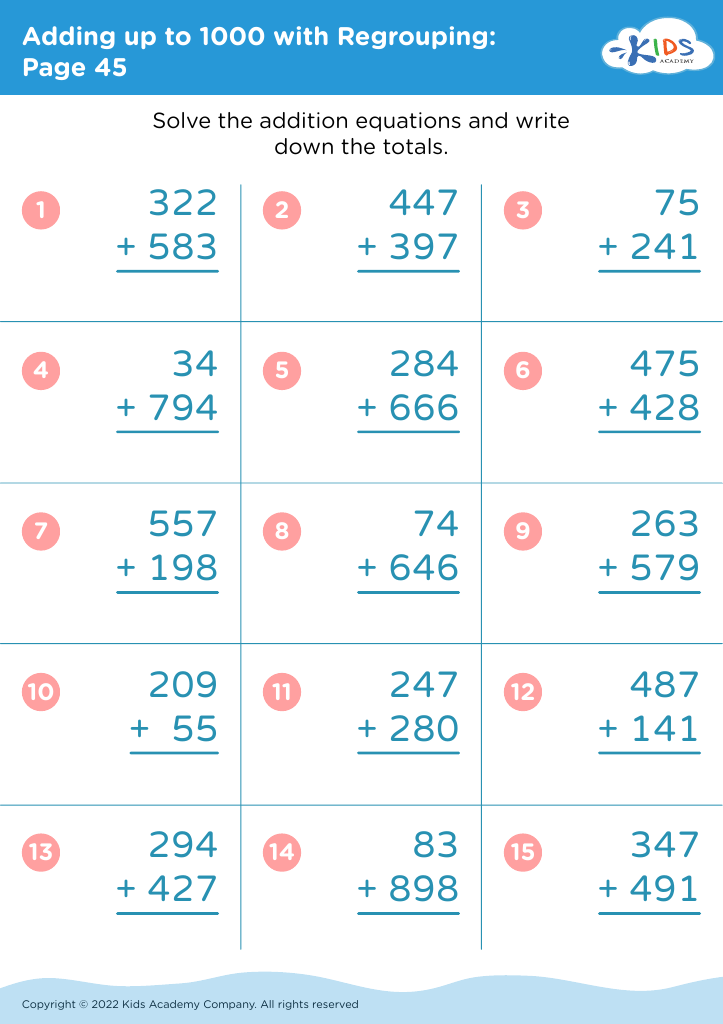
Adding up to 1000 with Regrouping: Page 45
Worksheet
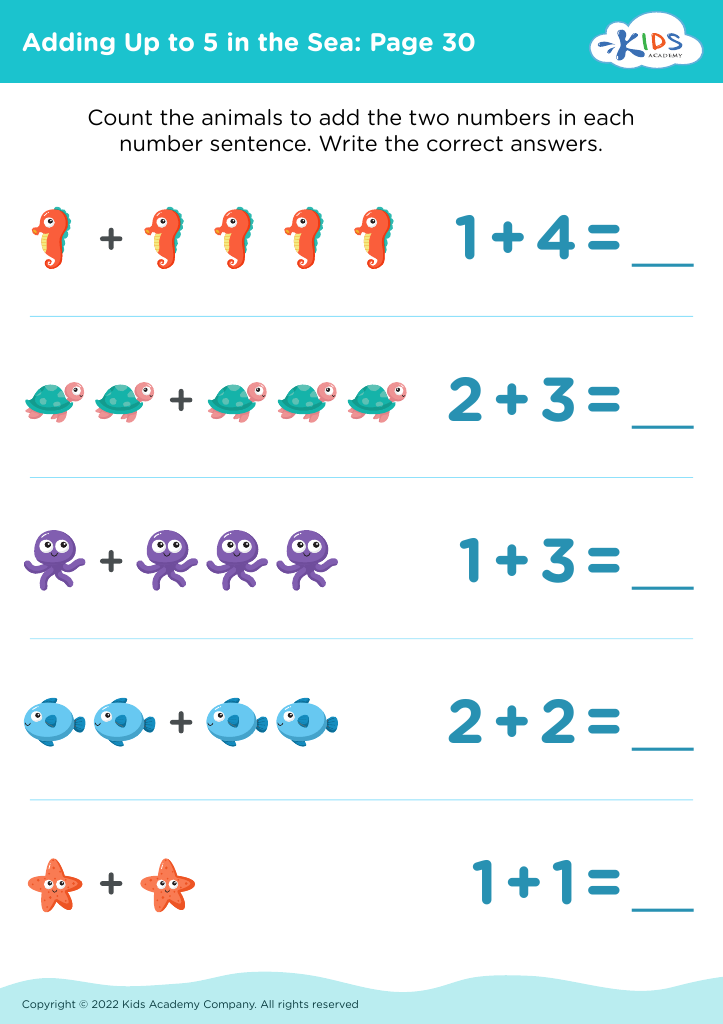
Adding Up to 5 in the Sea: Page 30
Worksheet
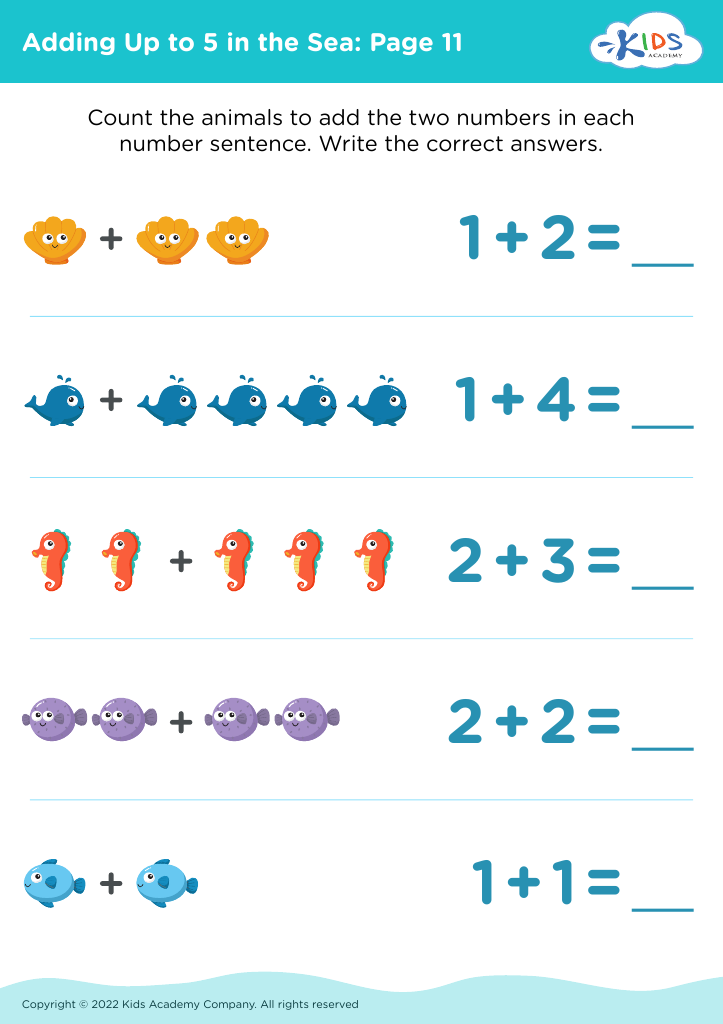
Adding Up to 5 in the Sea: Page 11
Worksheet
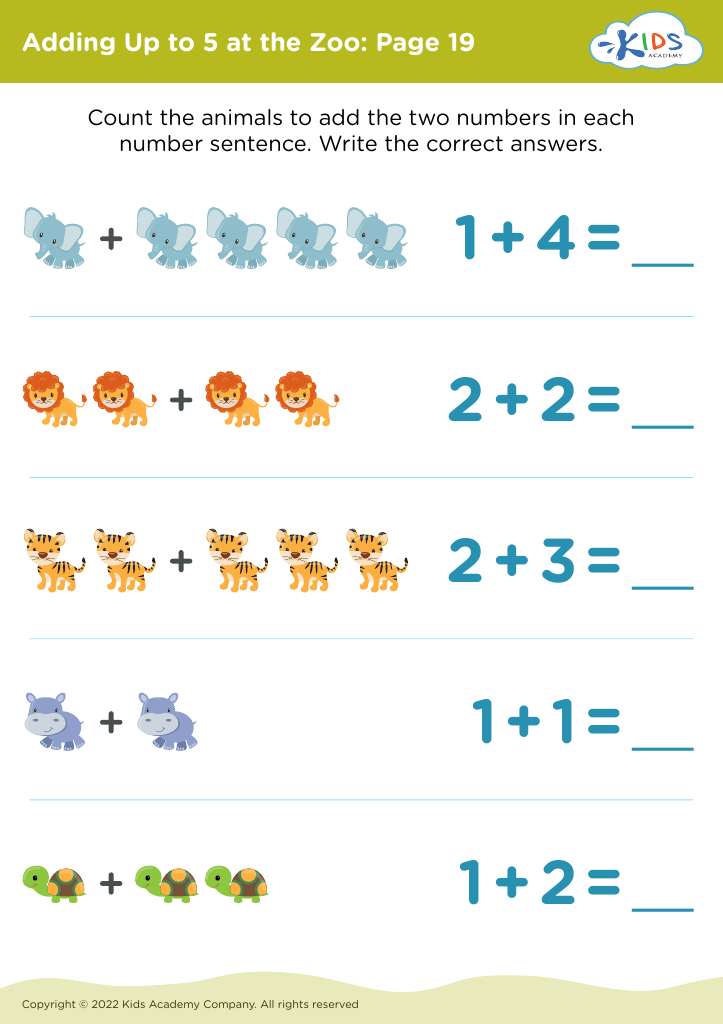
Adding Up to 5 at the Zoo: Page 19
Worksheet
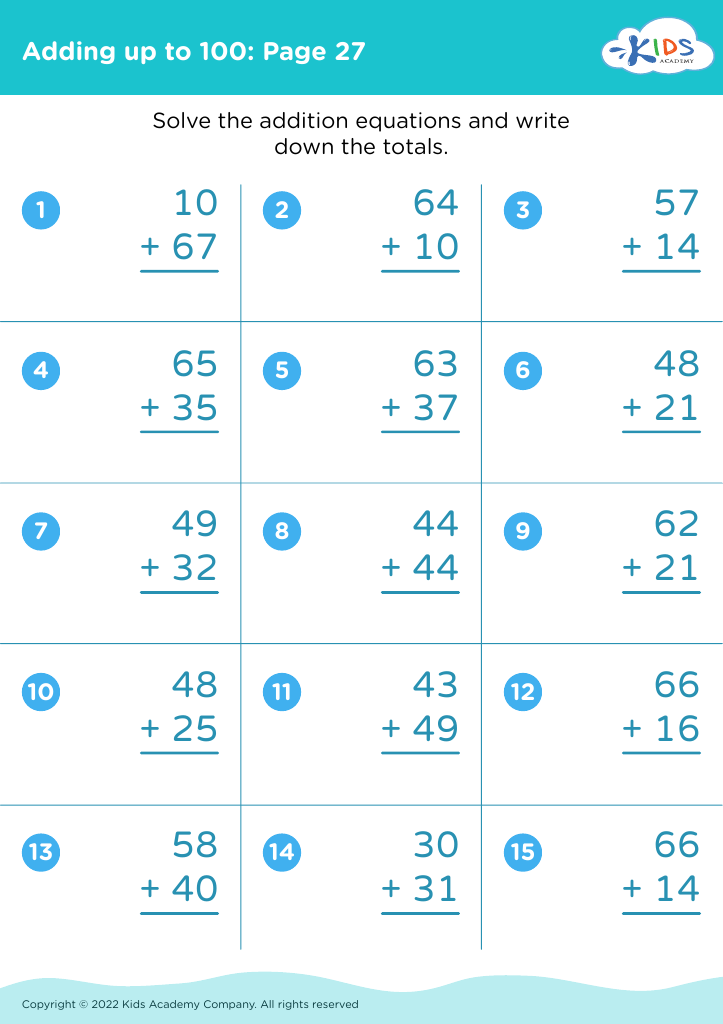
Adding up to 100: Page 27

Adding up to 100: Page 27

Adding up to 100: Page 27
Worksheet
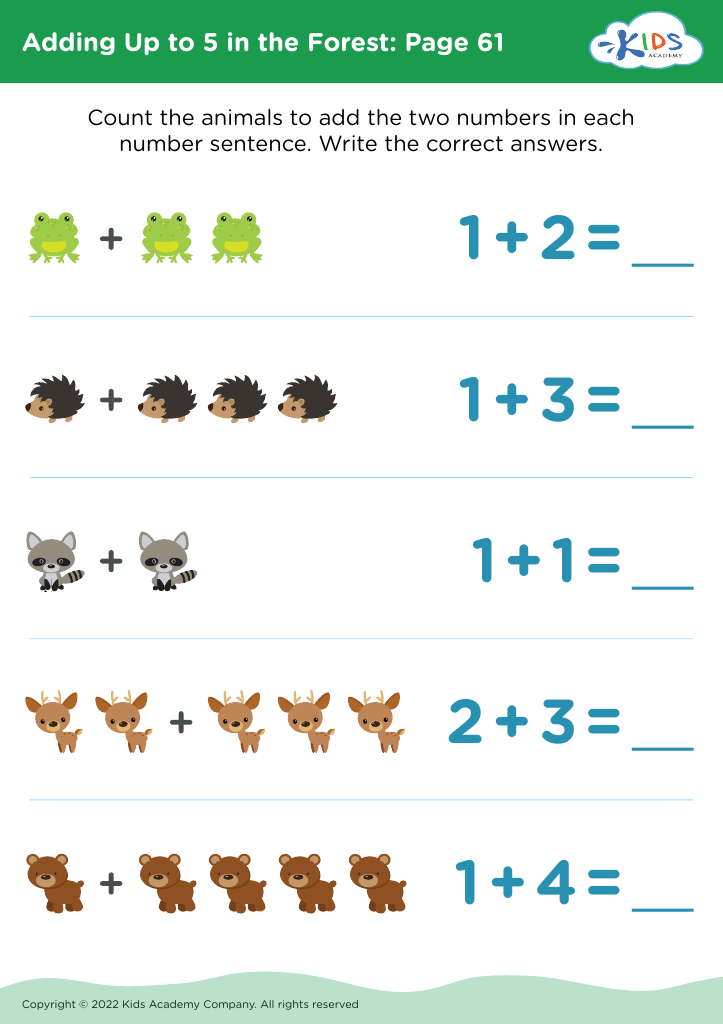
Adding Up to 5 in the Forest: Page 61
Worksheet
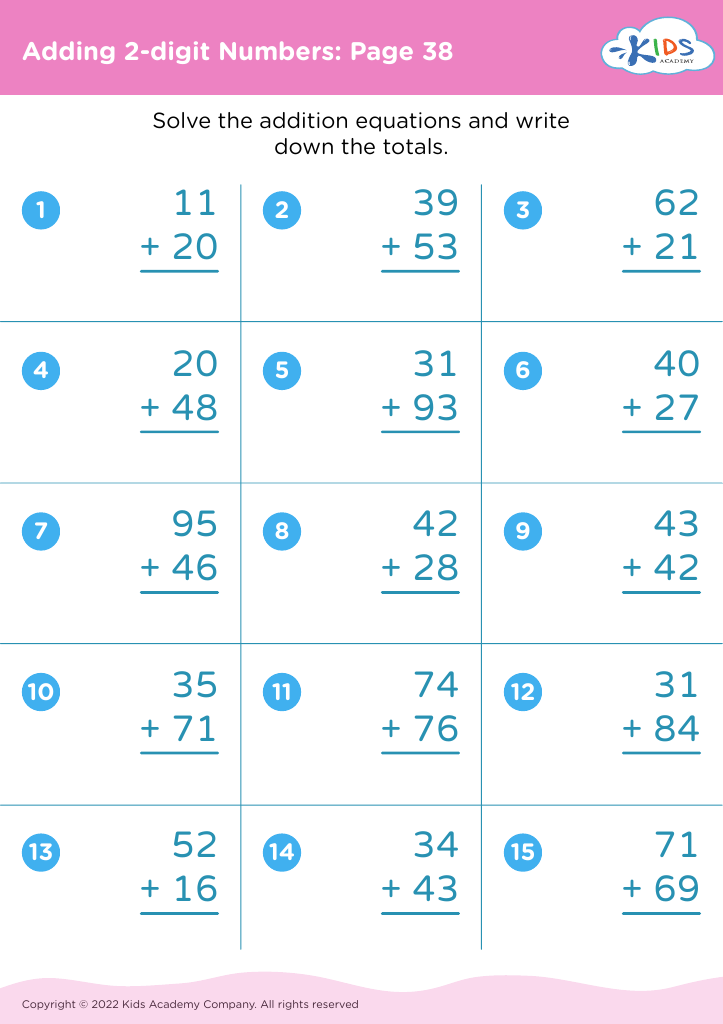
Adding 2-digit Numbers: Page 38

Adding 2-digit Numbers: Page 38

Adding 2-digit Numbers: Page 38
Worksheet
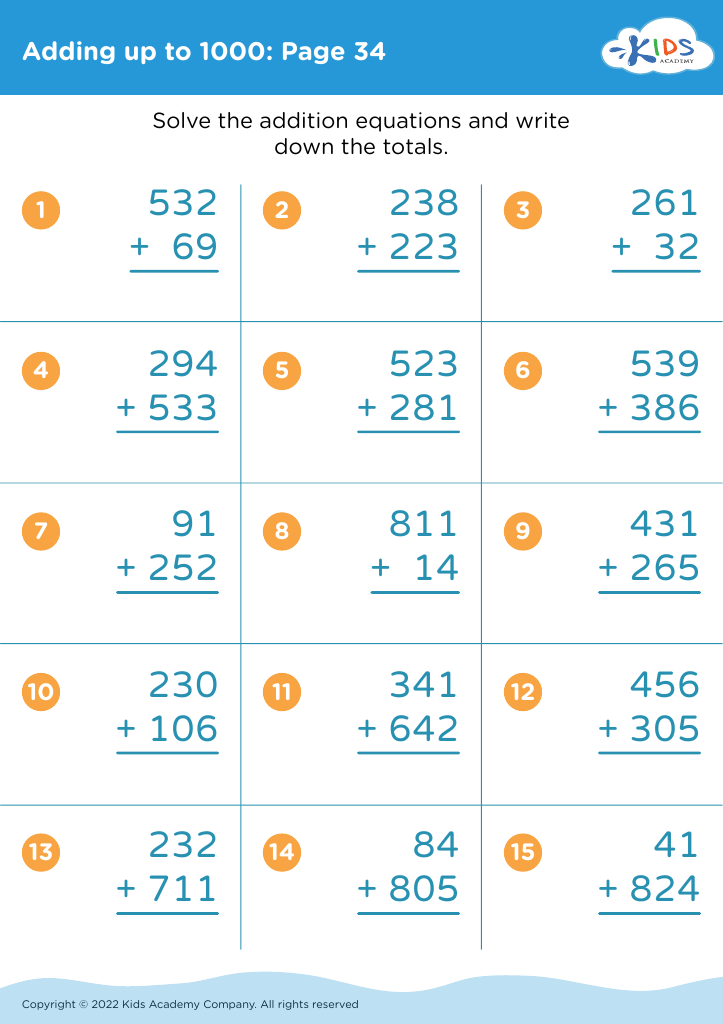
Adding up to 1000: Page 34

Adding up to 1000: Page 34

Adding up to 1000: Page 34
Worksheet
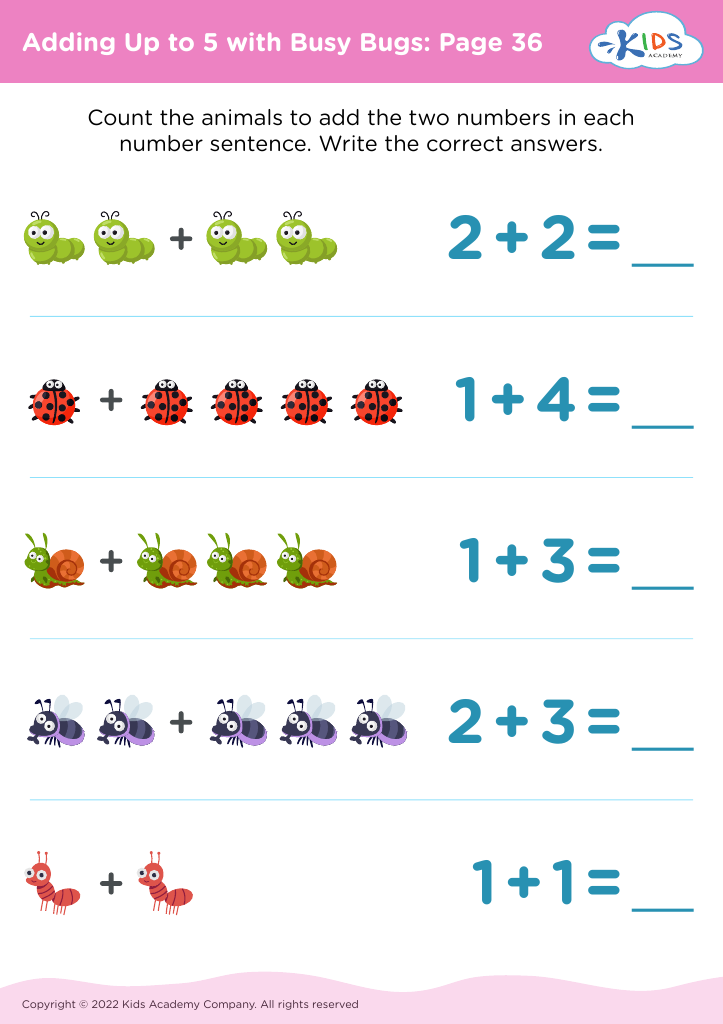
Adding Up to 5 with Busy Bugs: Page 36
Worksheet
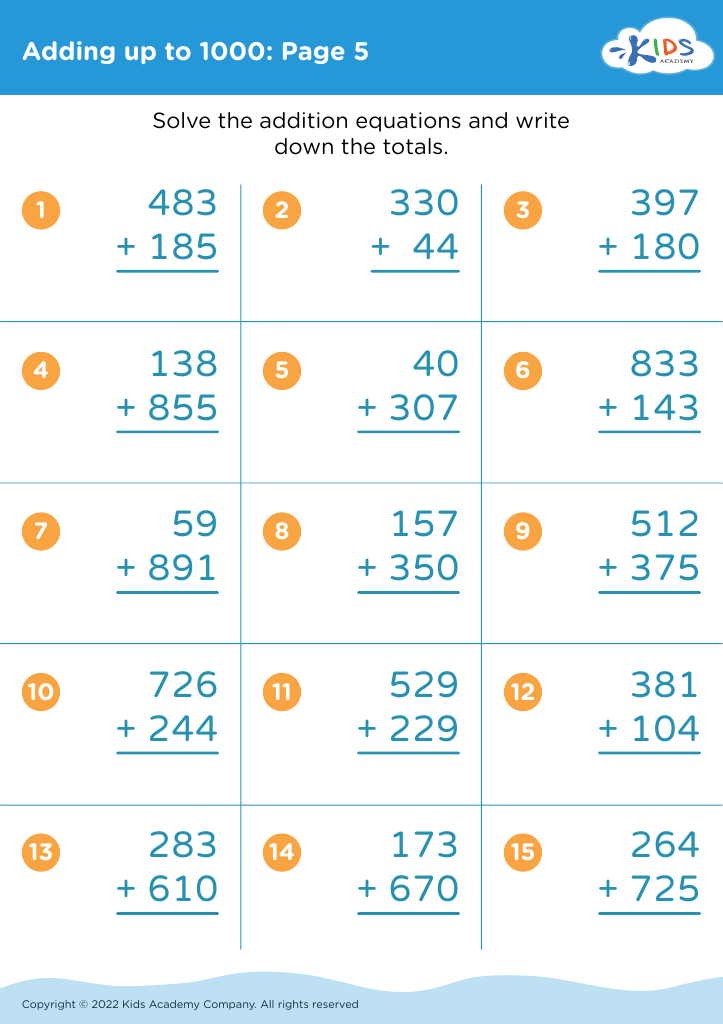
Adding up to 1000: Page 5

Adding up to 1000: Page 5

Adding up to 1000: Page 5
Worksheet
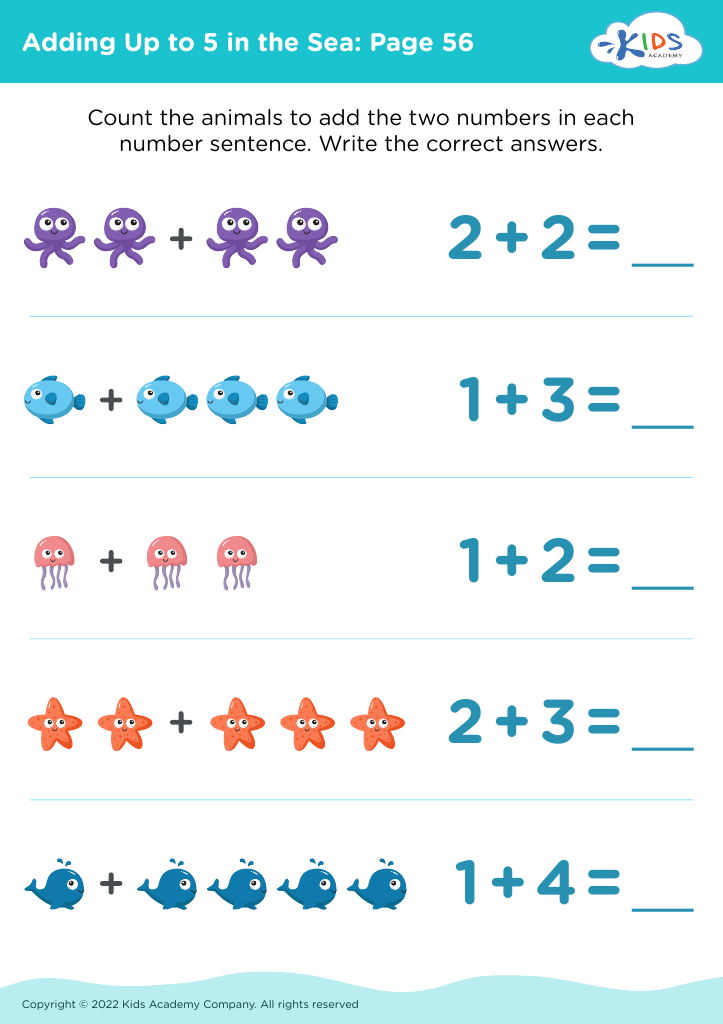
Adding Up to 5 in the Sea: Page 56
Worksheet
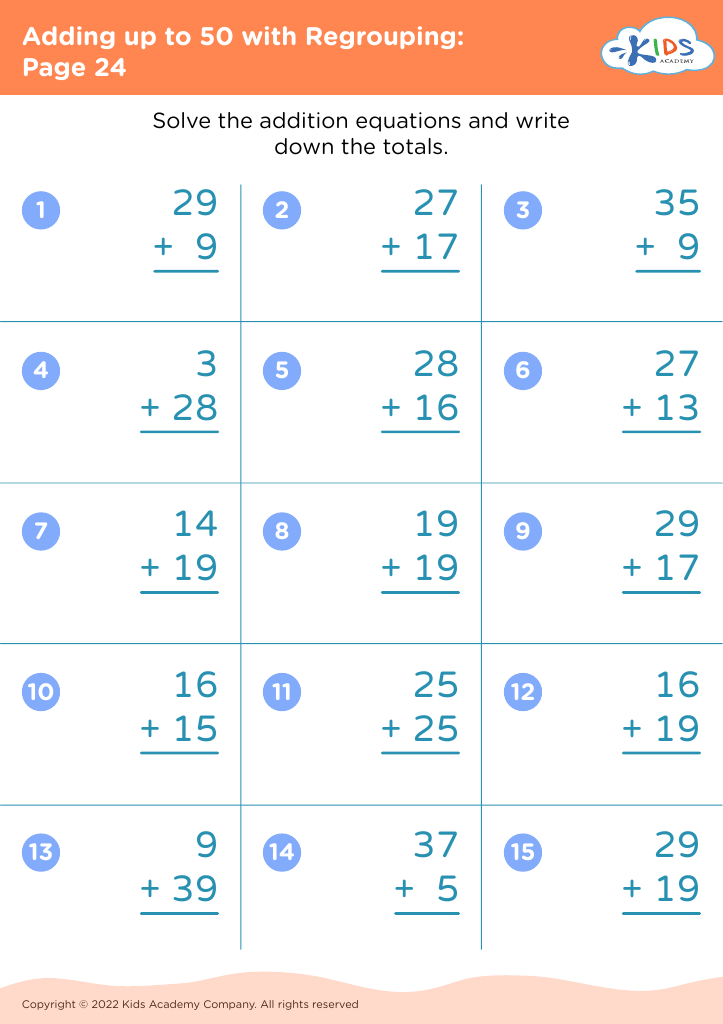
Adding up to 50 with Regrouping: Page 24
Worksheet
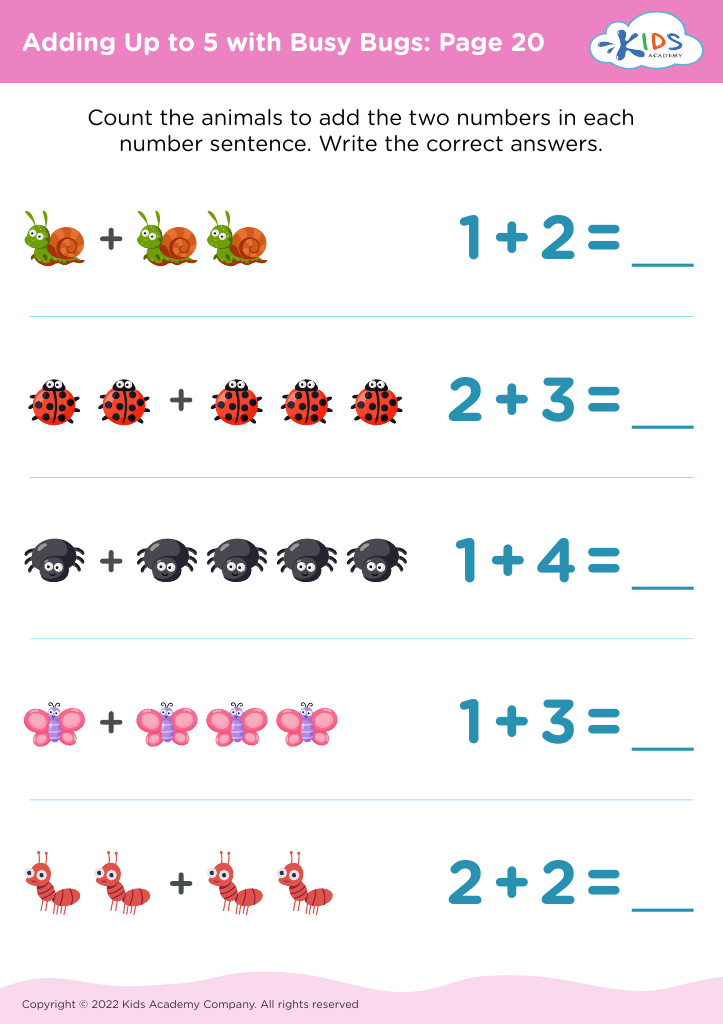
Adding Up to 5 with Busy Bugs: Page 20
Worksheet
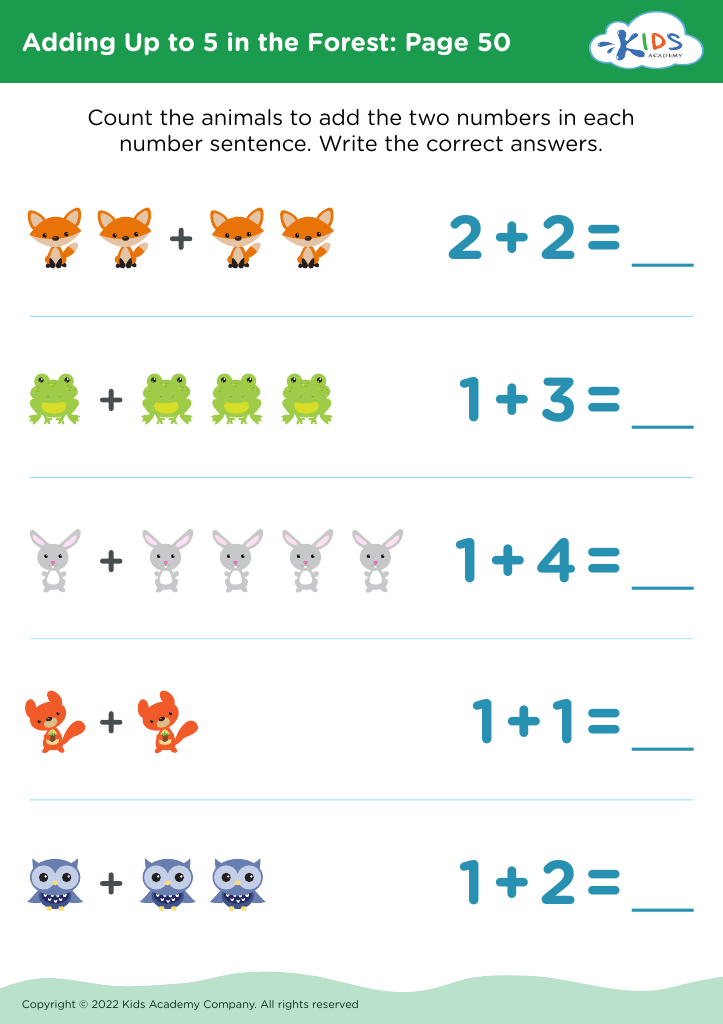
Adding Up to 5 in the Forest: Page 50
Worksheet
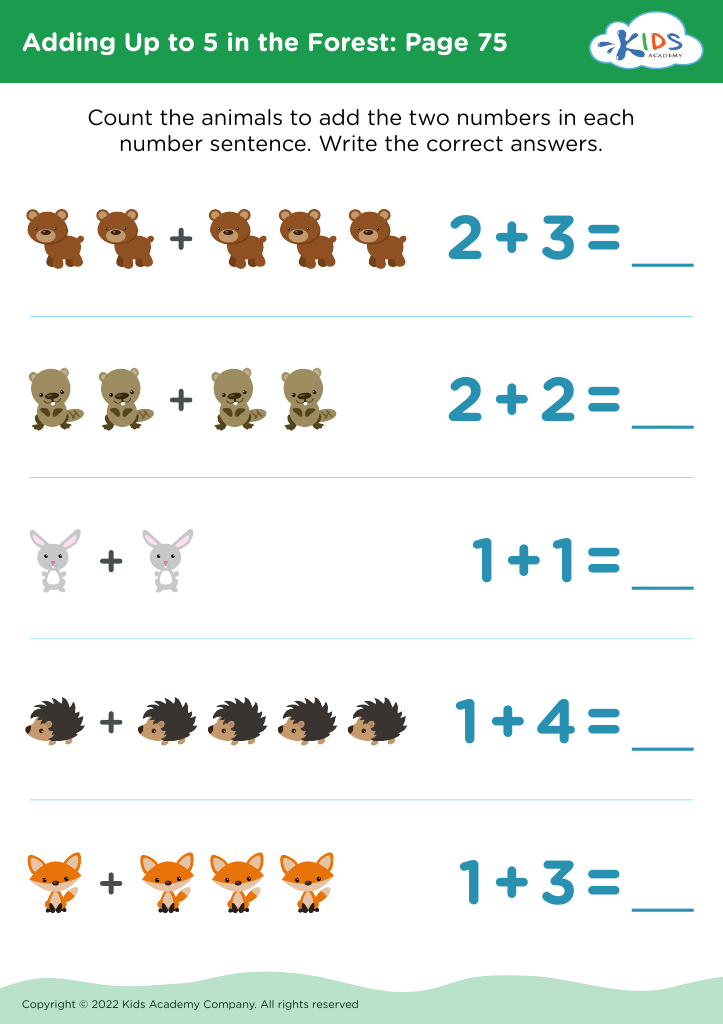
Adding Up to 5 in the Forest: Page 75
Worksheet
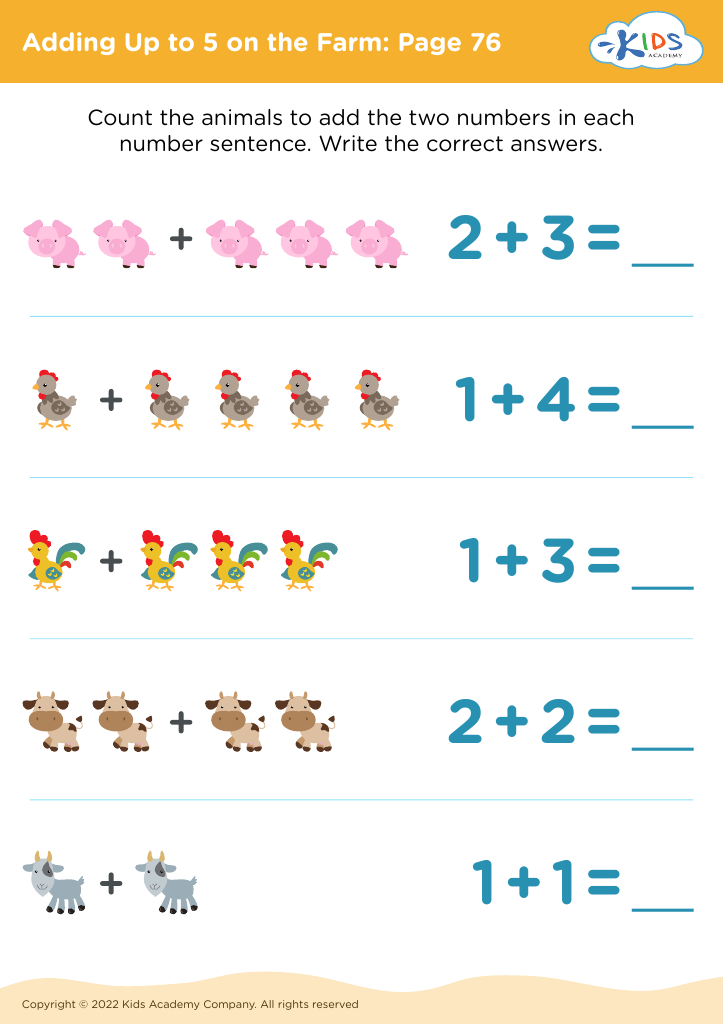
Adding Up to 5 on the Farm: Page 76
Worksheet
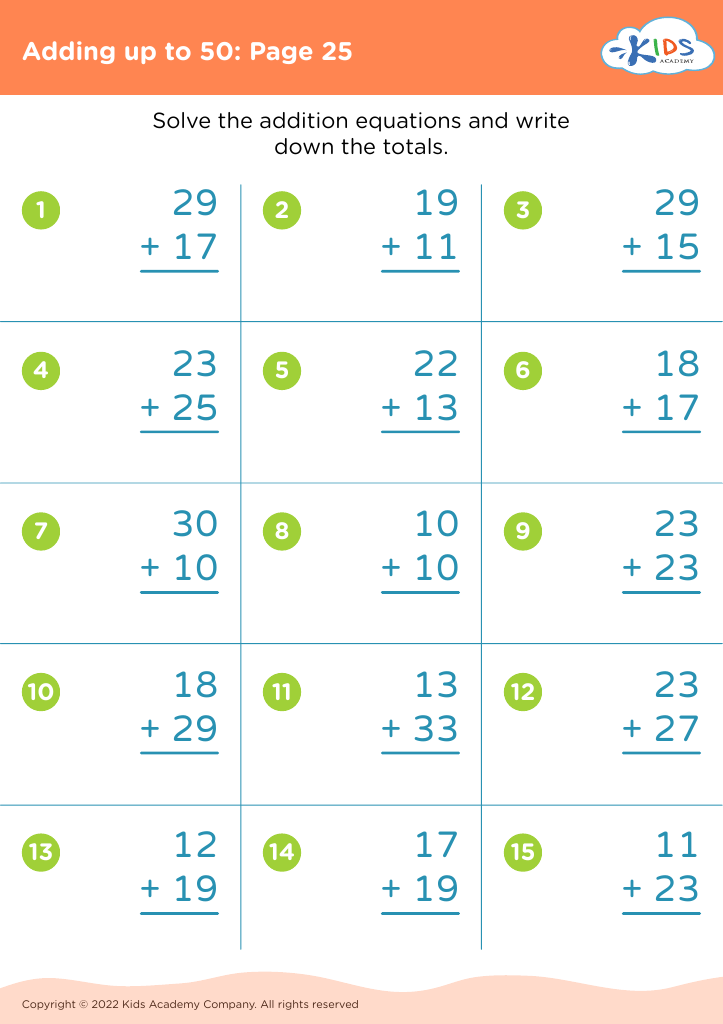
Adding up to 50: Page 25

Adding up to 50: Page 25

Adding up to 50: Page 25
Worksheet


Counting skills and basic addition are fundamental milestones in a child’s early education, forming the foundation for future mathematical learning and overall cognitive development. For children aged 3-7, these skills are critical because they lay the groundwork for more complex mathematical concepts.

Counting is not merely a rote exercise; it reinforces number recognition, order, and provides a tangible understanding of quantity. It introduces children to the concept of numbers as representations of real-world quantities. Early proficiency in counting allows children to grasp the idea of 'more than' and 'less than,' which are essential for everyday decisions.

Addition, on the other hand, helps children understand relationships between numbers. It enhances problem-solving abilities and logical thinking. When children practice simple addition, they begin recognizing patterns and sequences, which build their ability to think critically.

By ensuring children develop strong counting and addition skills, parents and teachers prepare them for future academic challenges. These skills improve learners' confidence, enabling them to tackle more sophisticated mathematics. Moreover, early math skills are linked to better performance in other academic areas, including science and reading.

In summary, counting skills and basic addition are vital for young children's intellectual growth, setting the stage for future academic success and daily problem-solving abilities. Their importance cannot be overstated in early childhood education.