Welcome to our "Simplifying Fractions Addition Worksheets" designed specifically for children aged 3-7! These engaging worksheets provide young learners with a fun and interactive way to grasp the basics of adding fractions. With colorful visuals and age-appropriate exercises, kids will explore fraction concepts, build their math skills, and gain confidence in their abilities. Our resources are perfect for teachers and parents looking to support early mathematics development. Each worksheet includes clear instructions, making it easy for children to follow along and practice. Help your little ones discover the joys of math with our expertly crafted addition worksheets today!
Check out this FREE Trial Lesson on Addition for age 3-7!

L

Favorites
With answer key
Interactive
  • 3-7
  • Simplifying Fractions
  • Addition
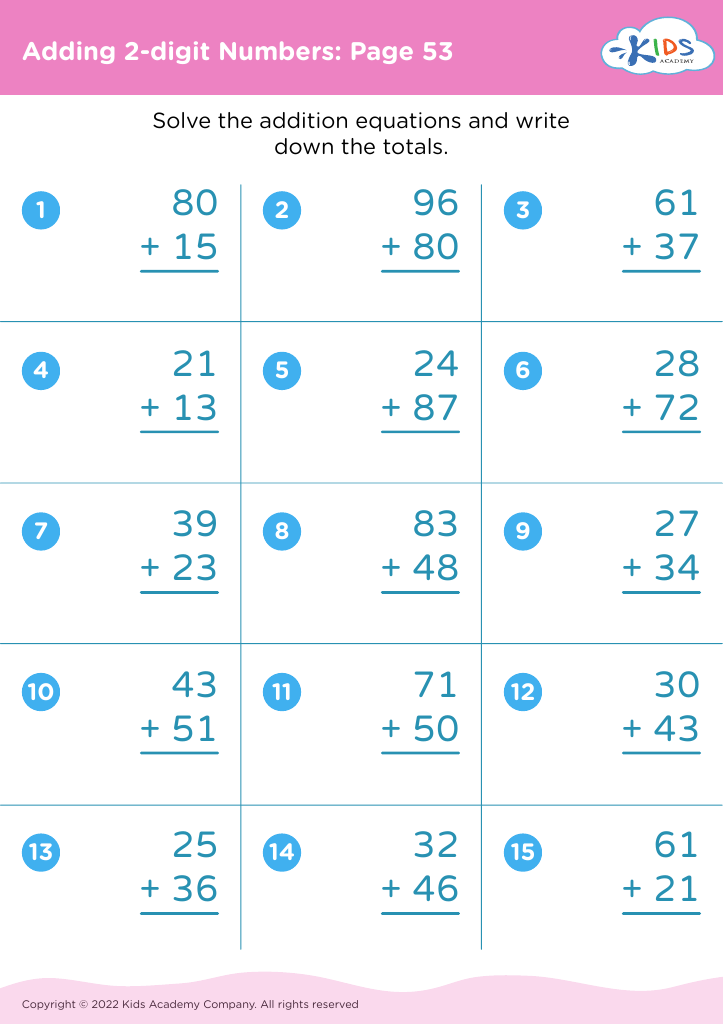
Adding 2-digit Numbers: Page 53

Adding 2-digit Numbers: Page 53

Adding 2-digit Numbers: Page 53
Worksheet
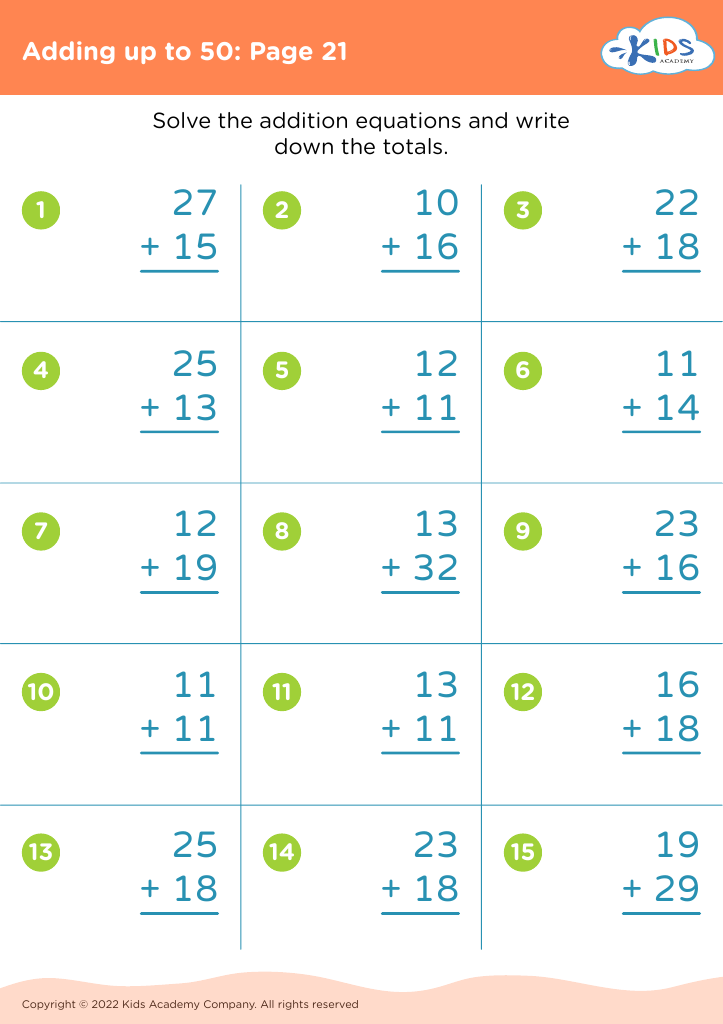
Adding up to 50: Page 21

Adding up to 50: Page 21

Adding up to 50: Page 21
Worksheet
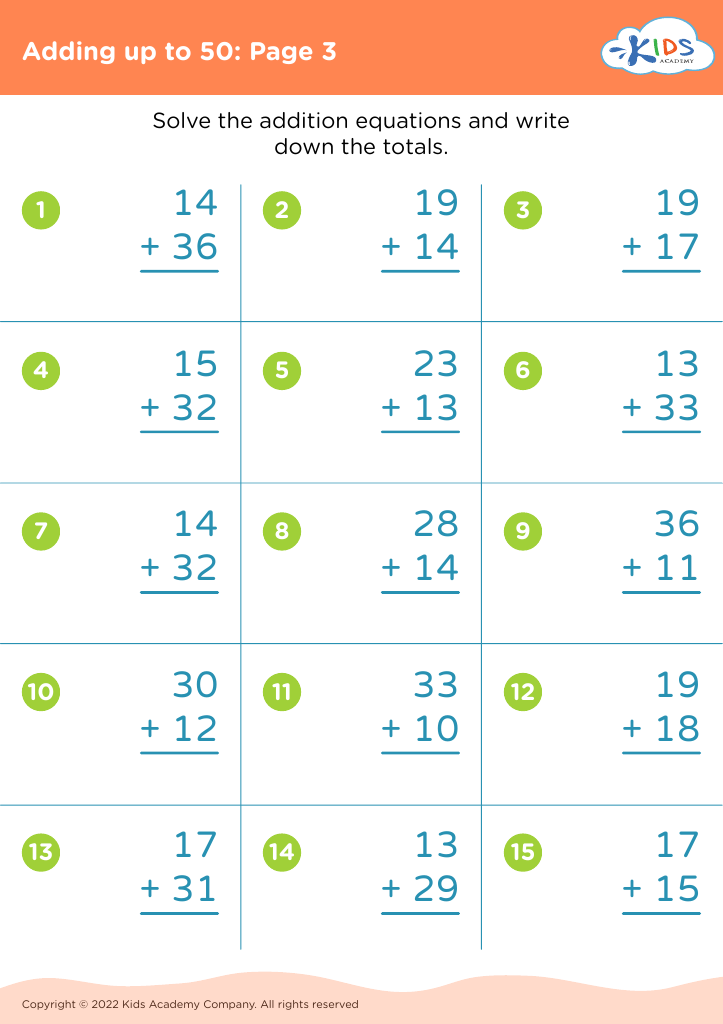
Adding up to 50: Page 3

Adding up to 50: Page 3

Adding up to 50: Page 3
Worksheet
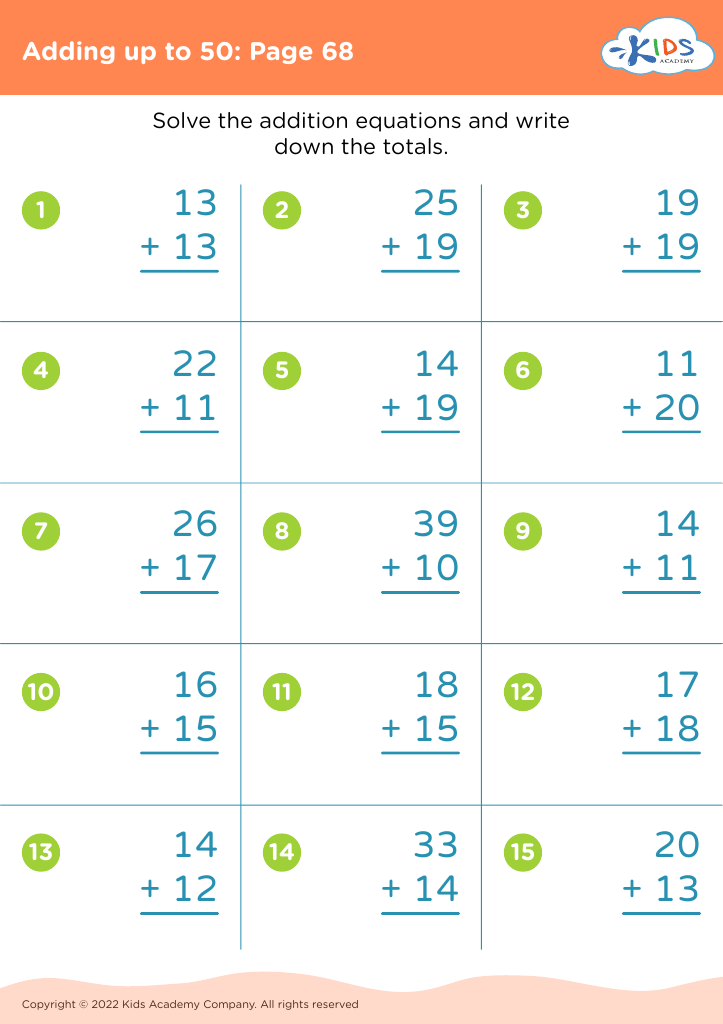
Adding up to 50: Page 68

Adding up to 50: Page 68

Adding up to 50: Page 68
Worksheet
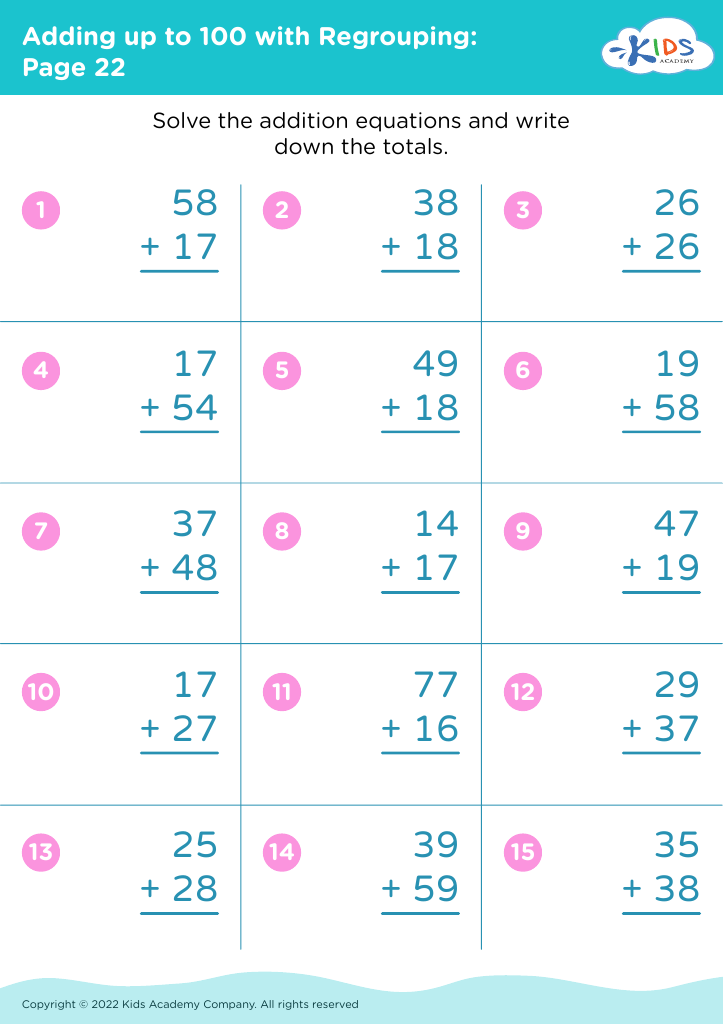
Adding up to 100 with Regrouping: Page 22
Worksheet
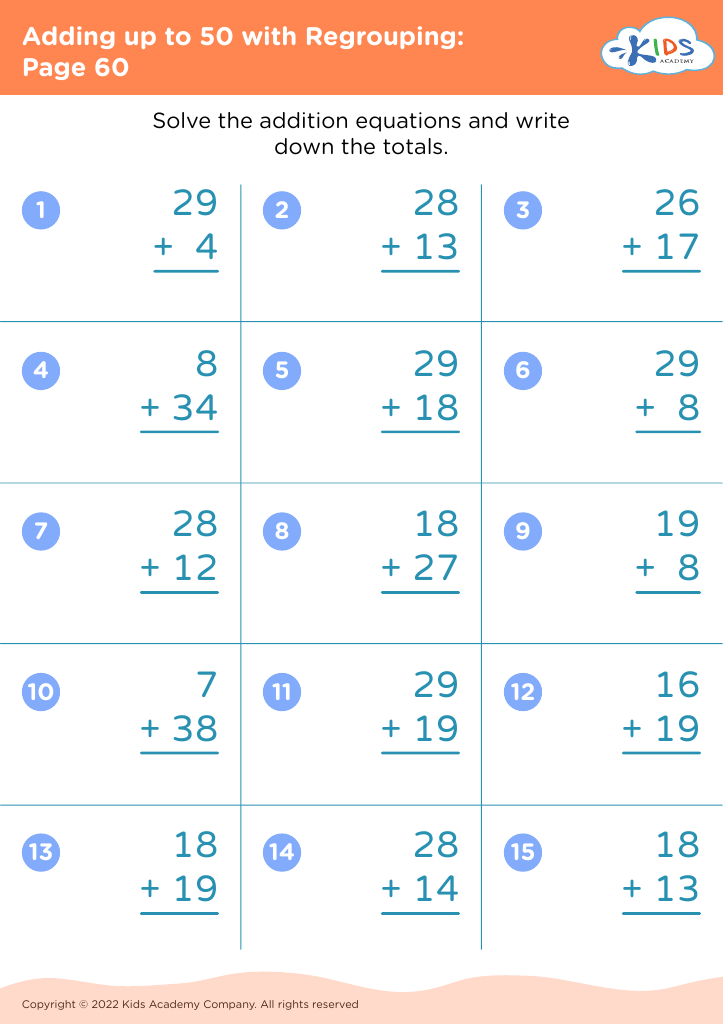
Adding up to 50 with Regrouping: Page 60
Worksheet
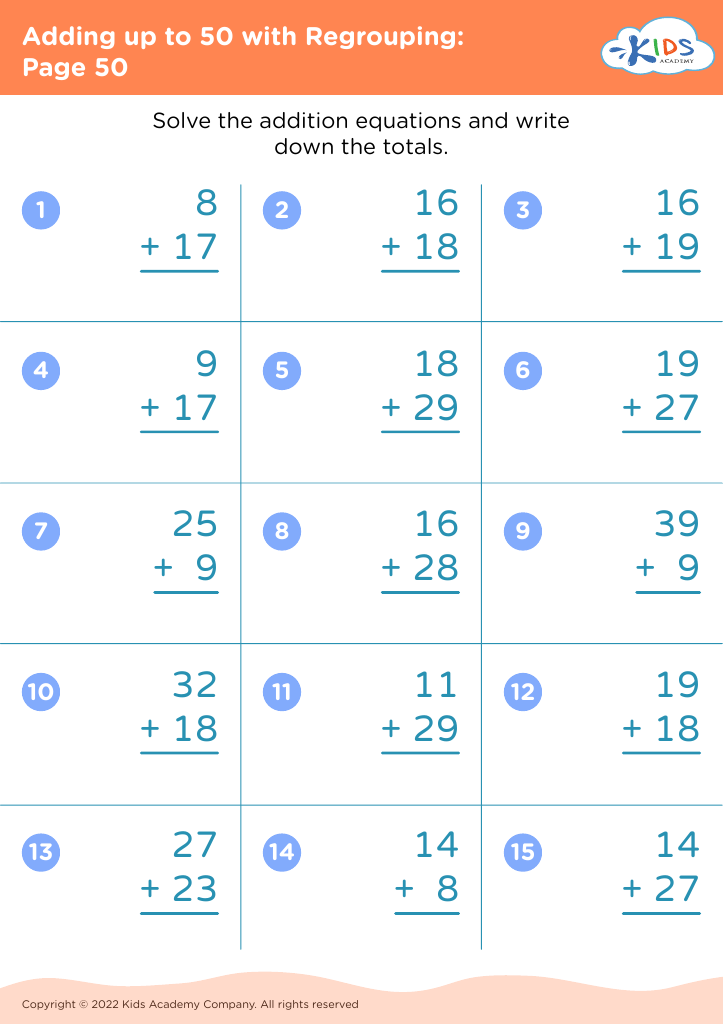
Adding up to 50 with Regrouping: Page 50
Worksheet
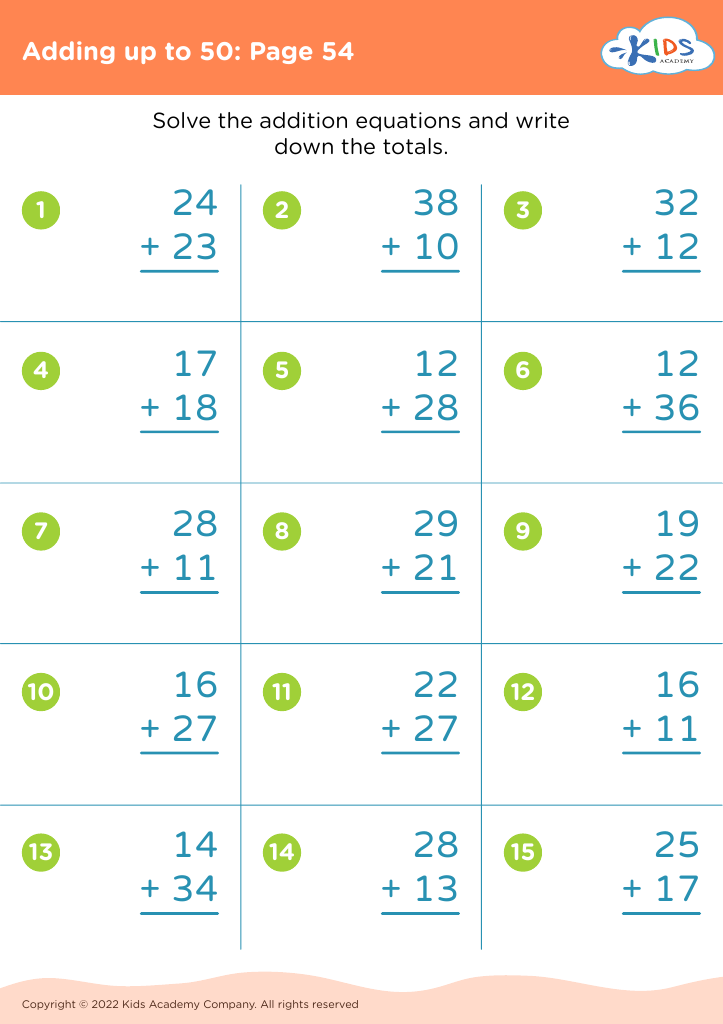
Adding up to 50: Page 54

Adding up to 50: Page 54

Adding up to 50: Page 54
Worksheet
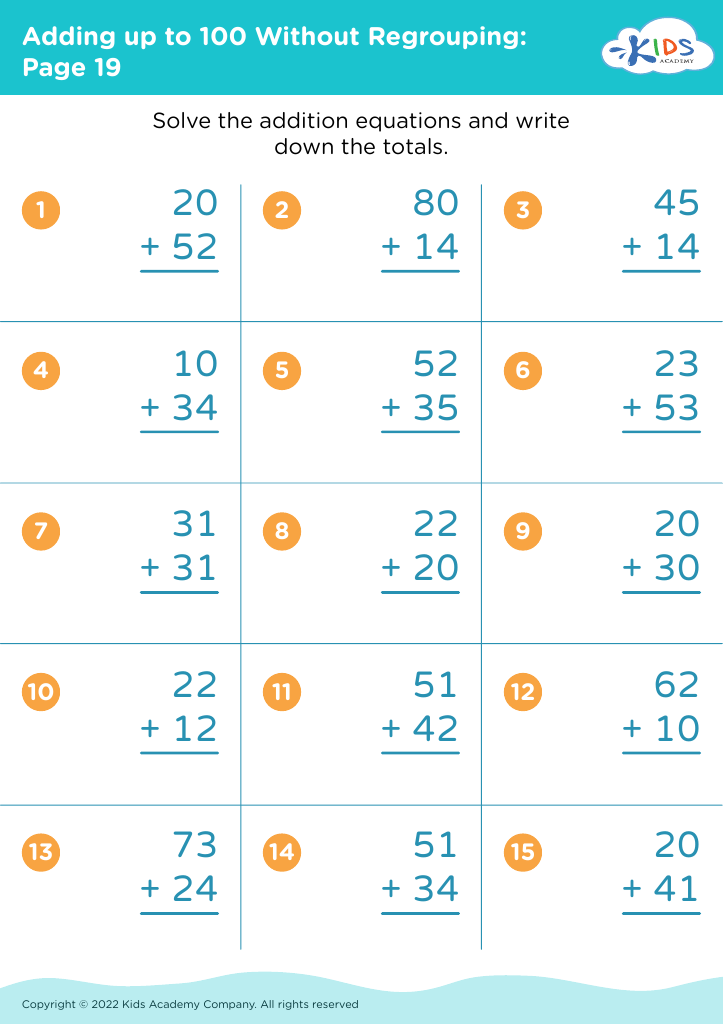
Adding up to 100 Without Regrouping: Page 19
Worksheet
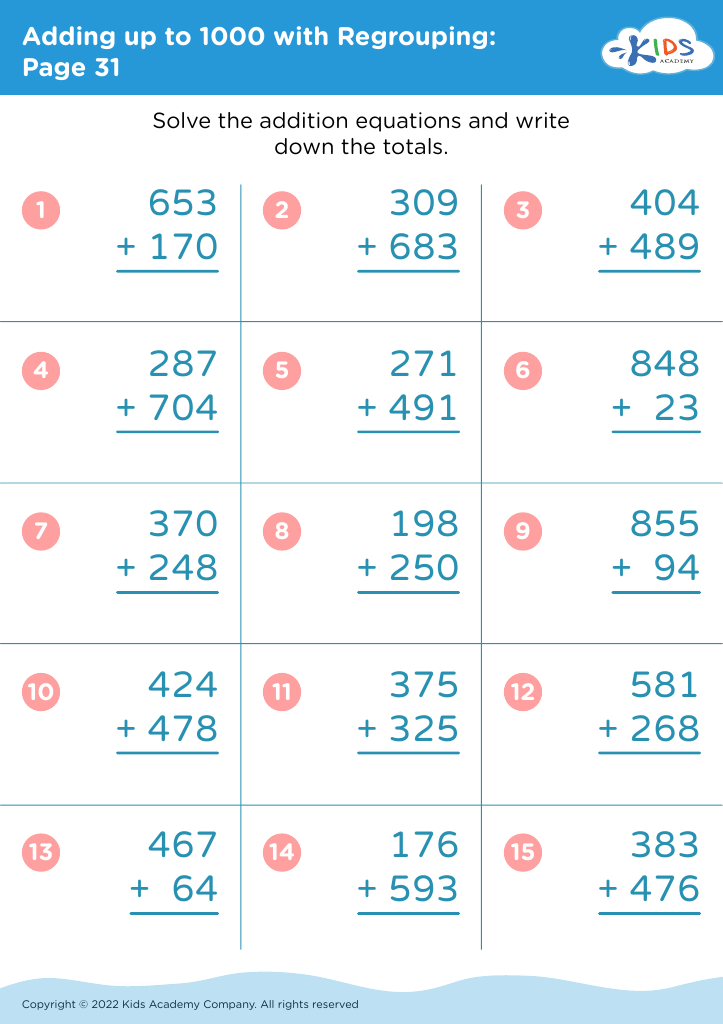
Adding up to 1000 with Regrouping: Page 31
Worksheet
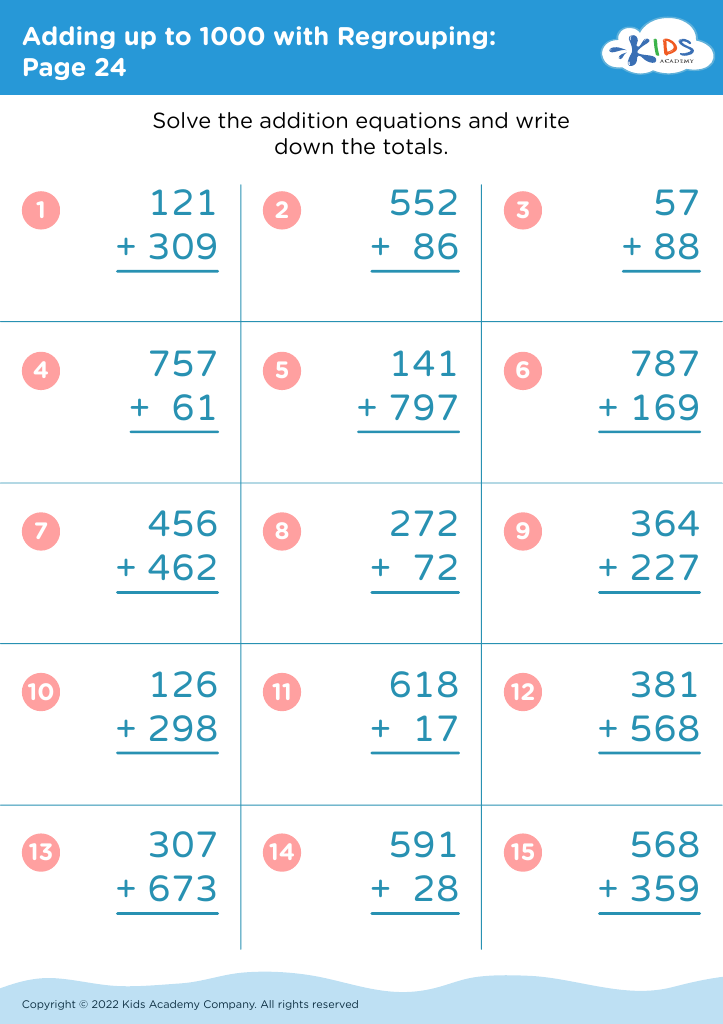
Adding up to 1000 with Regrouping: Page 24
Worksheet
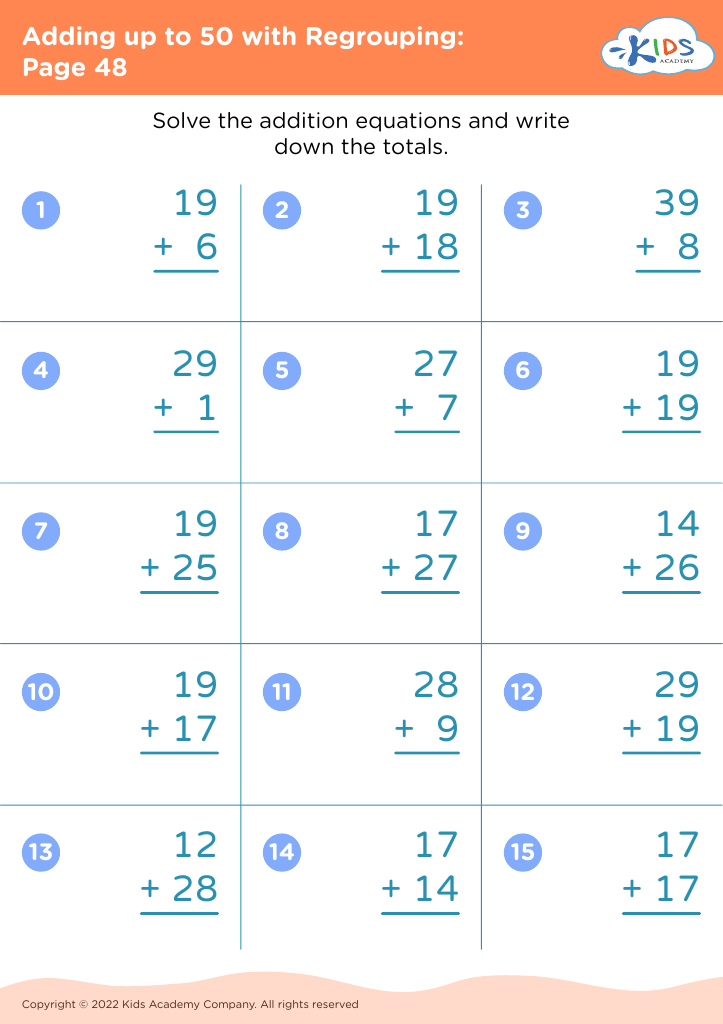
Adding up to 50 with Regrouping: Page 48
Worksheet
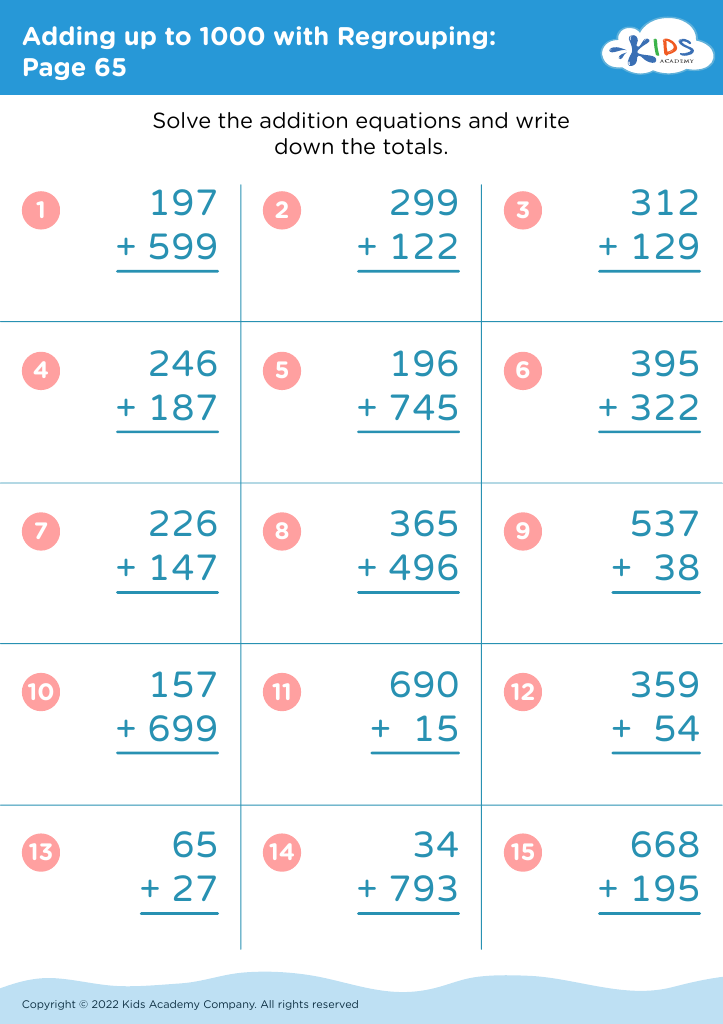
Adding up to 1000 with Regrouping: Page 65
Worksheet
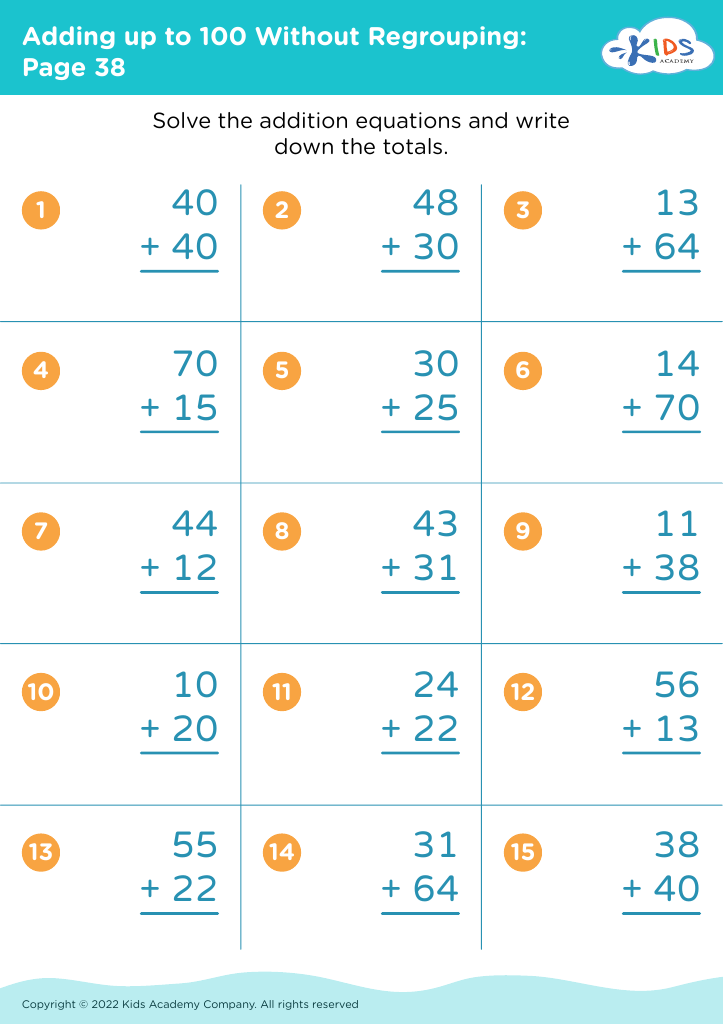
Adding up to 100 Without Regrouping: Page 38
Worksheet
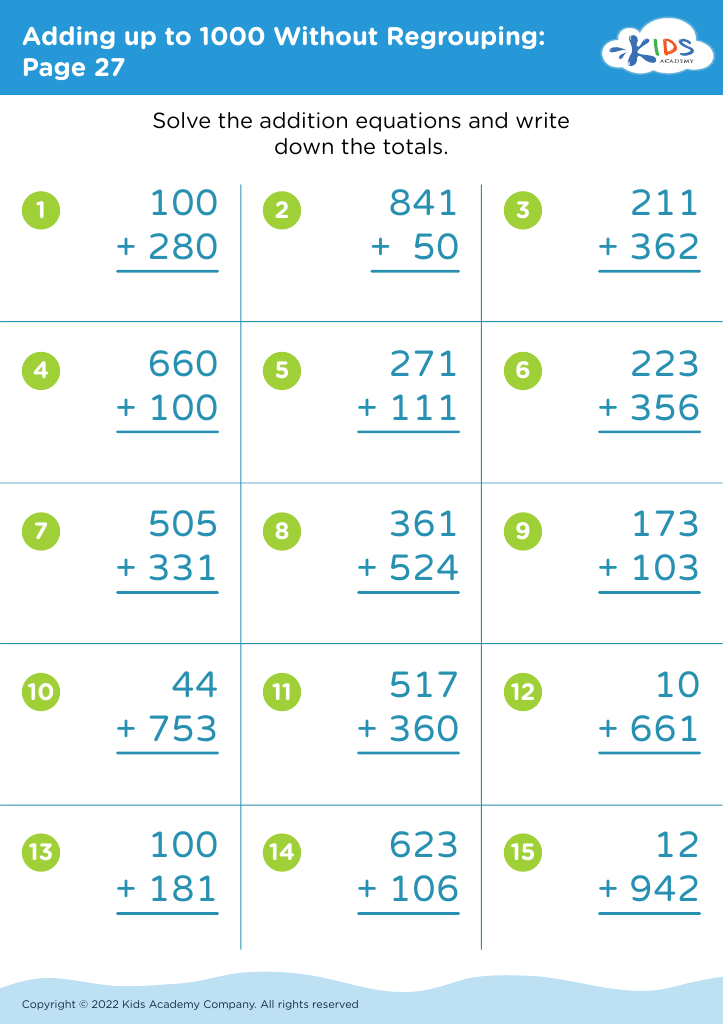
Adding up to 1000 Without Regrouping: Page 27
Worksheet
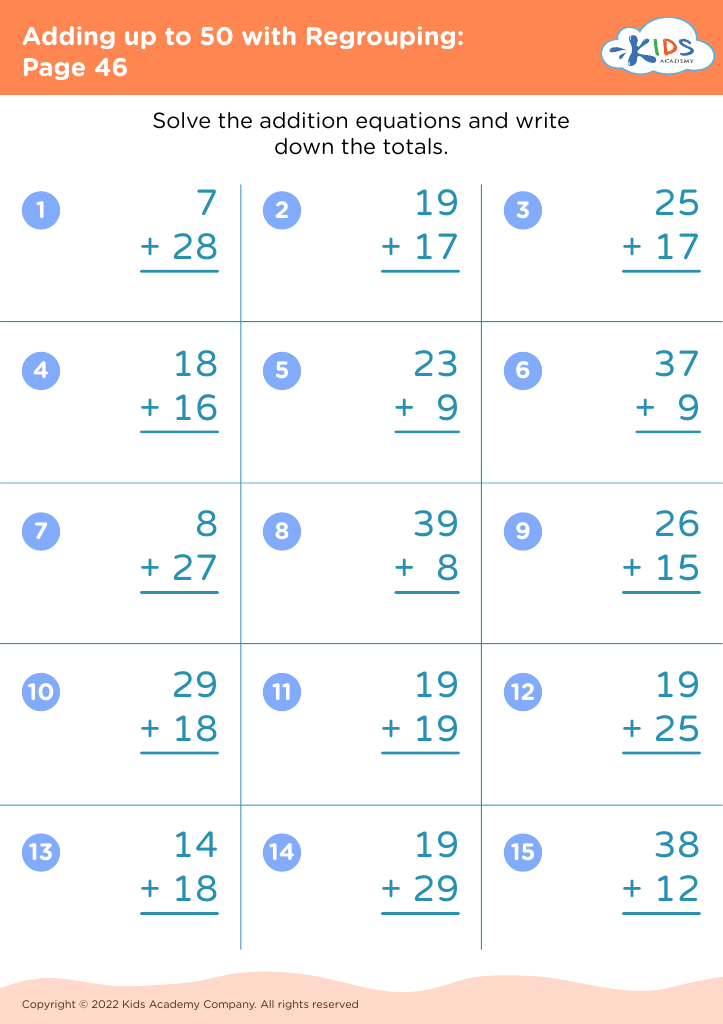
Adding up to 50 with Regrouping: Page 46
Worksheet
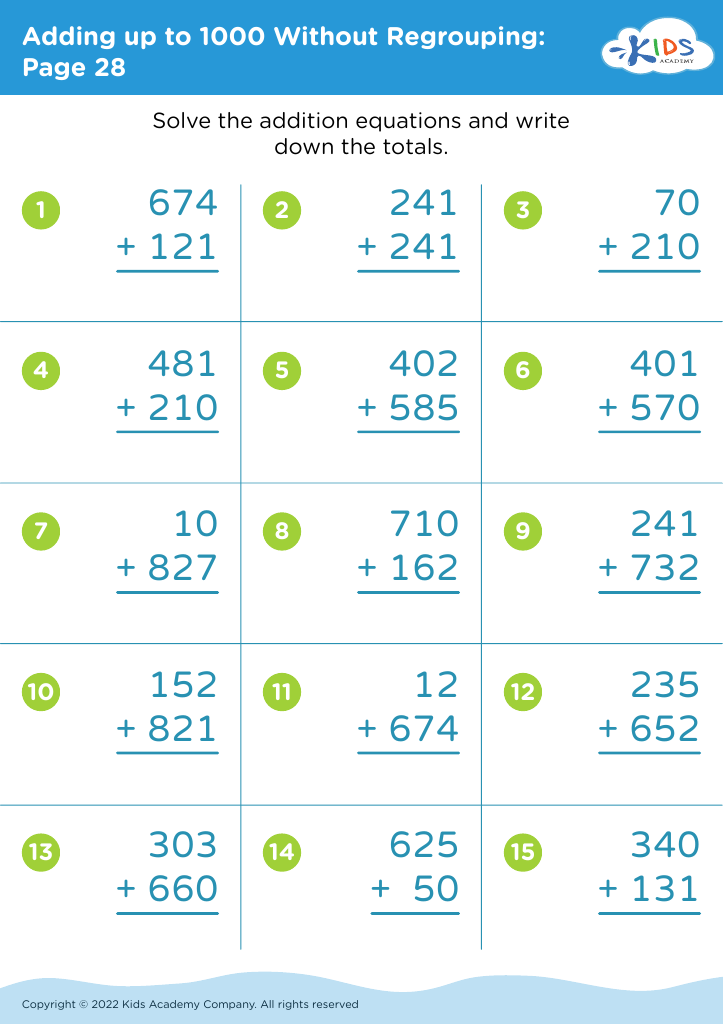
Adding up to 1000 Without Regrouping: Page 28
Worksheet
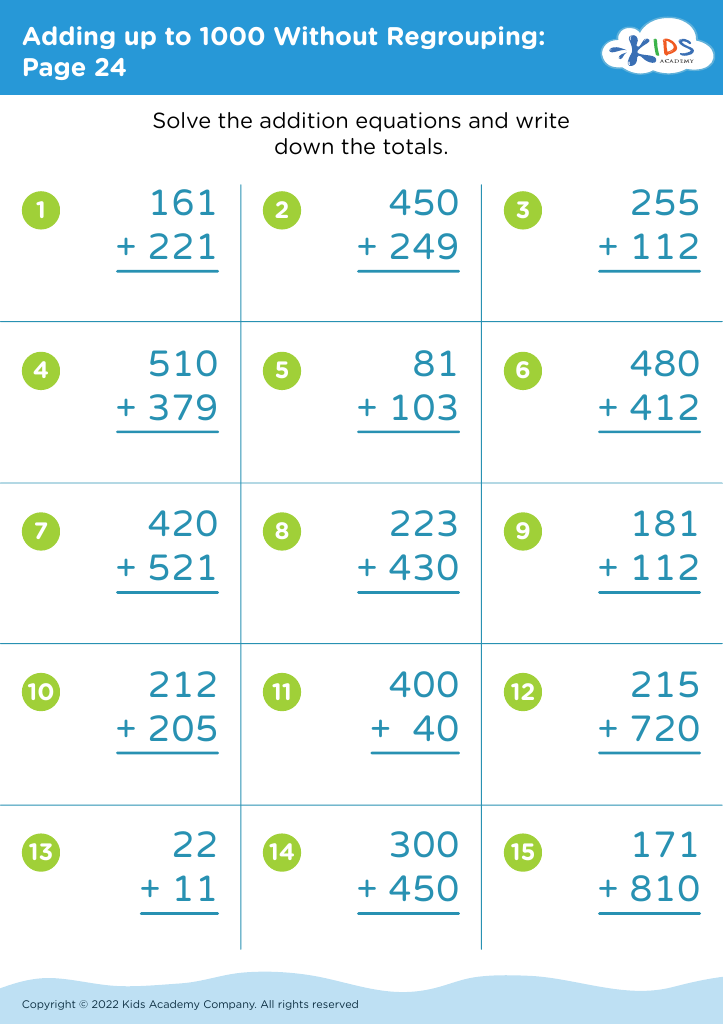
Adding up to 1000 Without Regrouping: Page 24
Worksheet


Simplifying Fractions Addition is crucial for children aged 3-7 because it lays the foundation for essential mathematical skills. At this stage, children are developing number sense and an understanding of relationships between quantities. Introducing fraction concepts early helps them grasp more complex mathematics in later years.

Incorporating hands-on activities, such as using visuals with shapes or food, makes learning engaging and relatable. This age group thrives on interactive learning, enabling them to comprehend the concept of parts of a whole. As they learn to add fractions, they also enhance critical thinking and problem-solving abilities.

Furthermore, mastering these foundational skills boosts confidence and promotes a positive attitude towards math. Parents and teachers can play a pivotal role by incorporating playful strategies, such as games and storytelling, to simplify complex ideas into enjoyable experiences.

Fostering these skills early ensures that children are well-prepared for more advanced topics, promoting lifelong mathematical proficiency. Ultimately, it cultivates a love for learning, reinforcing that math is not only essential but also fun and relevant to everyday life. By investing time in Simplifying Fractions Addition, parents and teachers create a supportive environment that encourages children to explore the world of numbers with enthusiasm.