Visual representation comprehension Addition Worksheets for Ages 3-7
5 filtered results
-
From - To
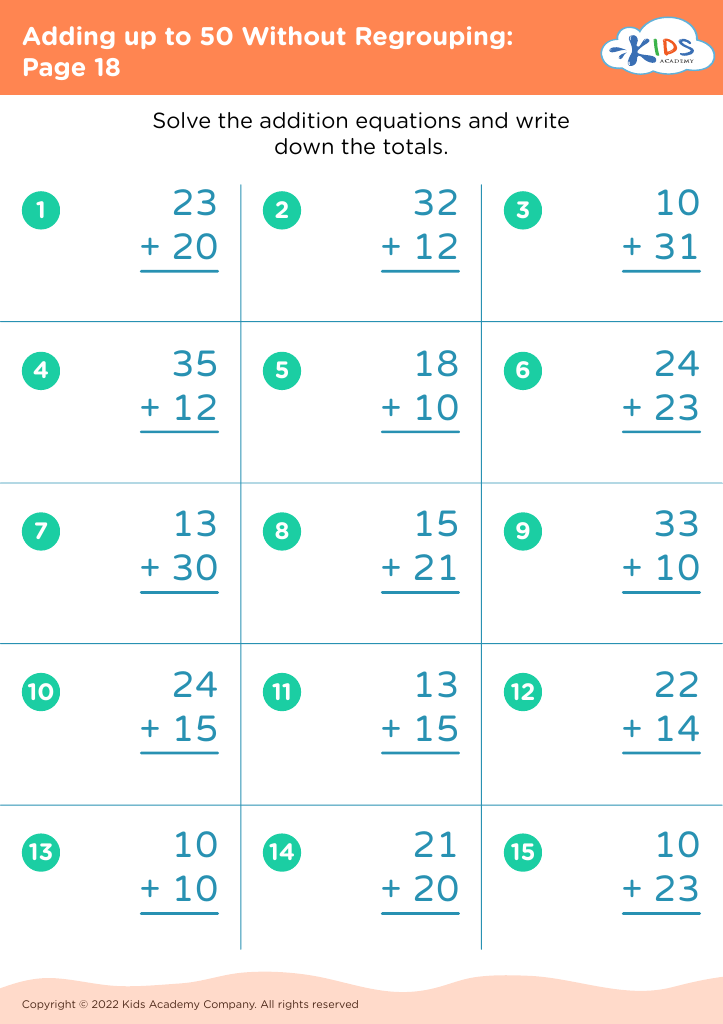
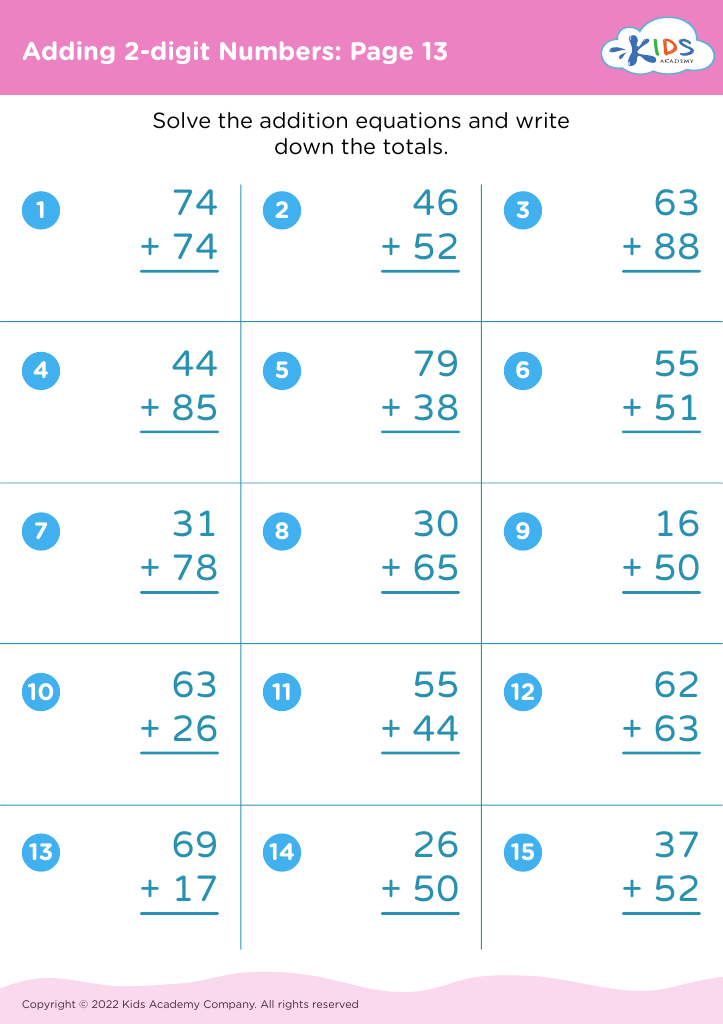
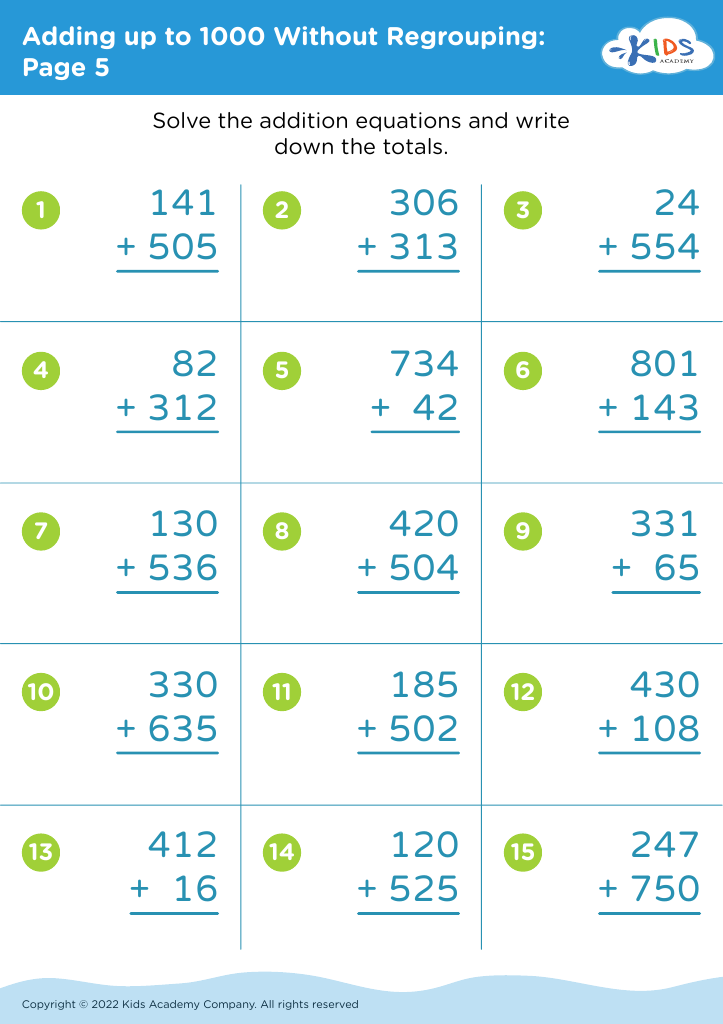
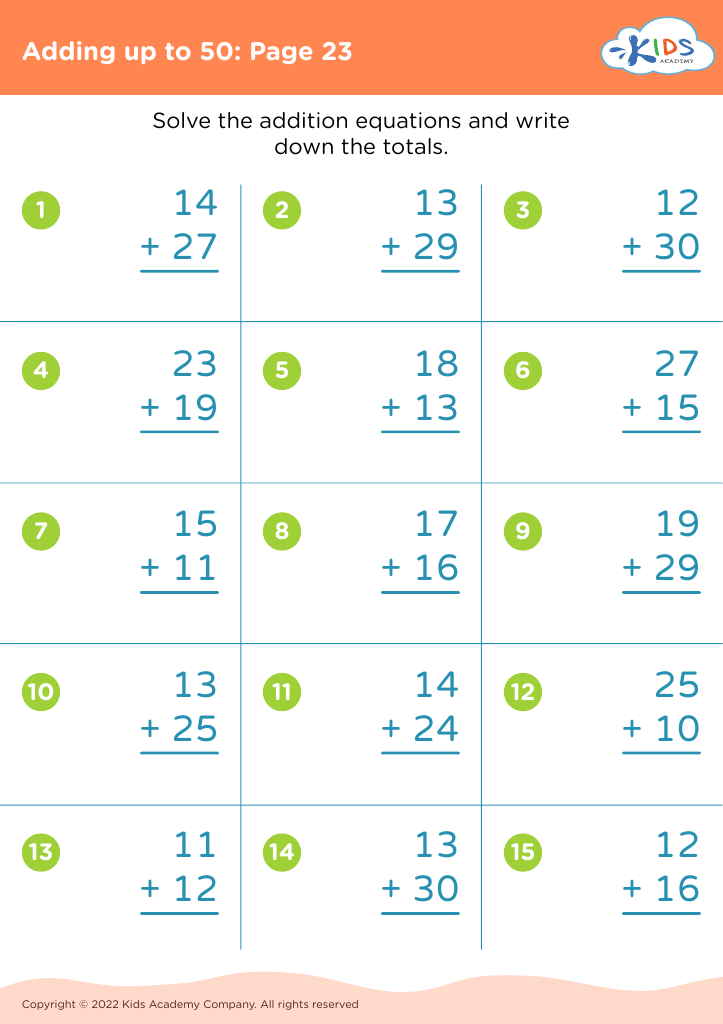
Discover engaging "Visual Representation Comprehension Addition Worksheets" for ages 3-7 designed to make learning math fun and effective. These colorful, visual worksheets help young children grasp the concept of addition through pictures and illustrations. Perfectly tailored for early learners, they promote critical thinking and problem-solving skills. Each worksheet progressively builds on previous lessons, ensuring a solid mathematical foundation. Ideal for both classroom and at-home learning, parents and teachers will find these resources invaluable in fostering a love for math. Enhance your child's addition skills with our unique visual representation materials today!
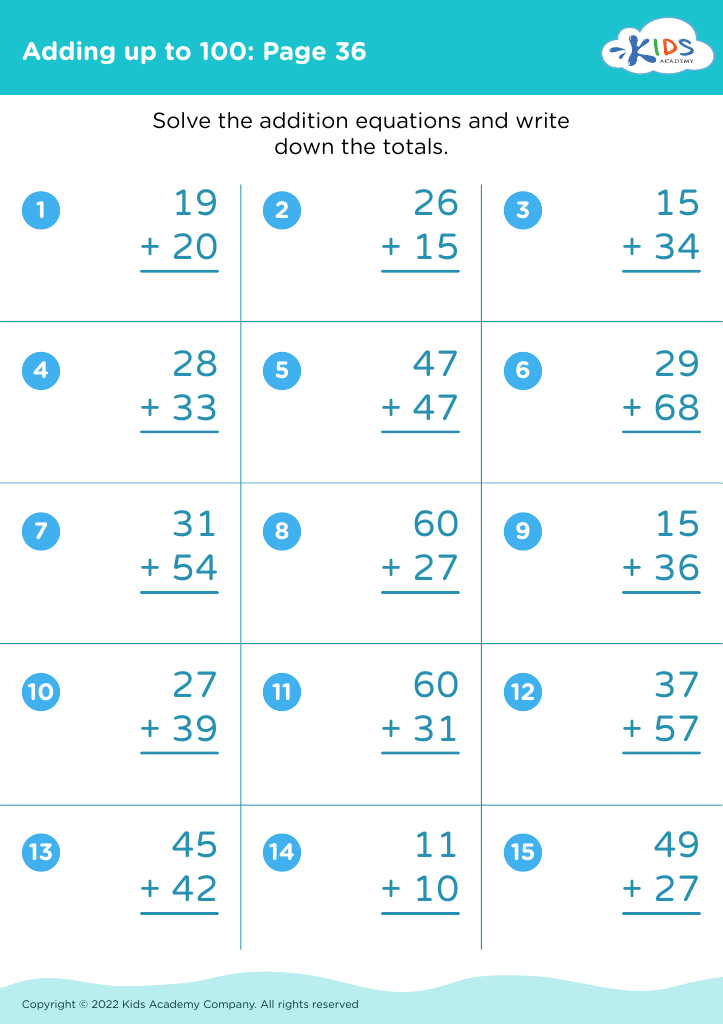








Visual representation comprehension in addition is crucial for young children, ages 3-7, as it lays the foundation for advanced mathematical understanding and overall cognitive development. At this early stage, children are concrete thinkers who grasp concepts better through visual aids rather than abstract numbers. Using objects, pictograms, or drawings to illustrate addition helps them see math as a tangible process rather than mere symbols on a page.
First, visual aids facilitate active learning, capturing a child’s interest and making lessons more engaging. For instance, counting blocks or drawing apples makes the addition relatable and fun. Second, visual representation scaffolds the transition from concrete to abstract thinking. As children physically manipulate objects or see the visual process step-by-step, their brain forms mental images, aiding their comprehension of abstract numbers later.
Furthermore, this method addresses diverse learners, including visual and kinesthetic learners, by catering to their innate learning styles. It also builds problem-solving and critical thinking skills as children learn to decode and interpret visual information.
Lastly, mastering addition via visual aids boosts confidence. Understanding the "why" and "how" behind mathematical processes promotes self-assurance in their abilities, which is vital for academic growth. Consequently, parents and teachers who focus on visual representation in addition support a child’s broader educational journey and long-term intellectual growth.








