Vocabulary Building Addition Worksheets for Ages 3-7
5 filtered results
-
From - To
Enhance your child's vocabulary and math skills with our Vocabulary Building Addition Worksheets, perfect for ages 3-7! These fun and educational activities incorporate simple addition problems with engaging vocabulary exercises, fostering both language development and math proficiency. Each worksheet features colorful illustrations and easy-to-understand instructions, making learning enjoyable for young minds. Our expertly designed resources are crafted to support early learners in expanding their word knowledge while mastering basic arithmetic. Ideal for both classroom use and at-home practice, these worksheets provide a balanced approach to developing essential skills in an engaging way. Start building a strong foundation today with Kids Academy!
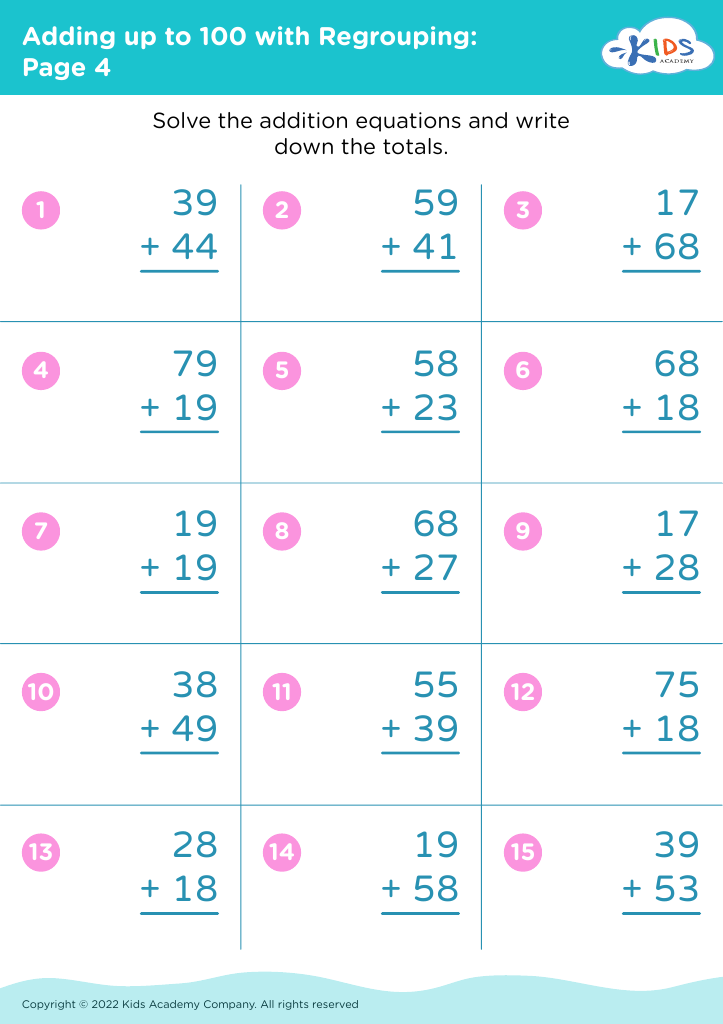
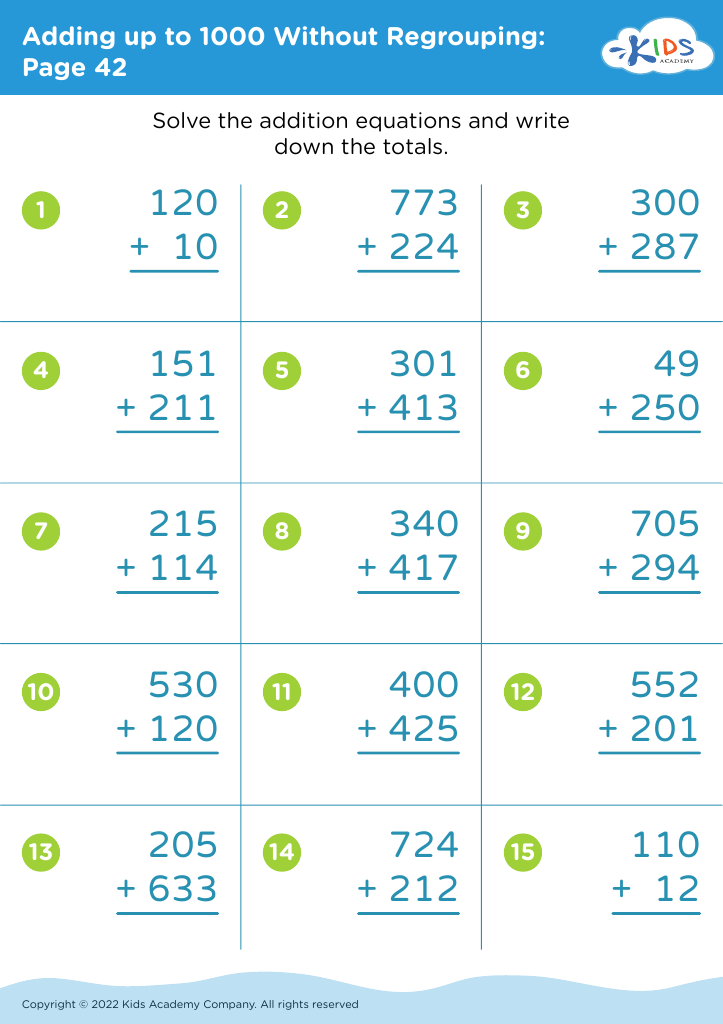
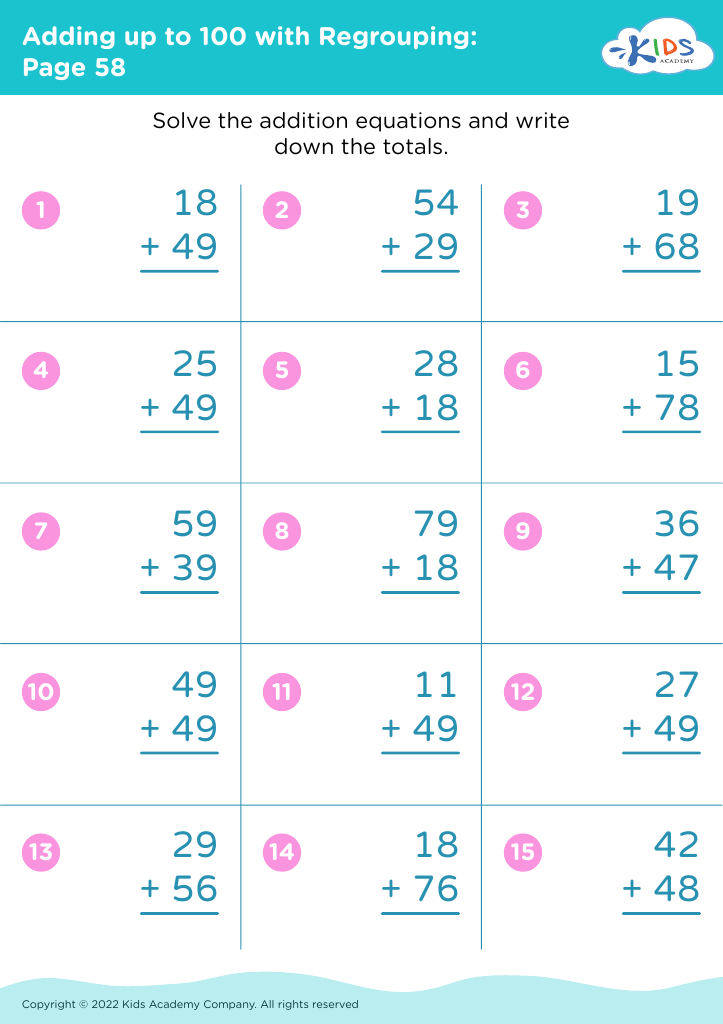
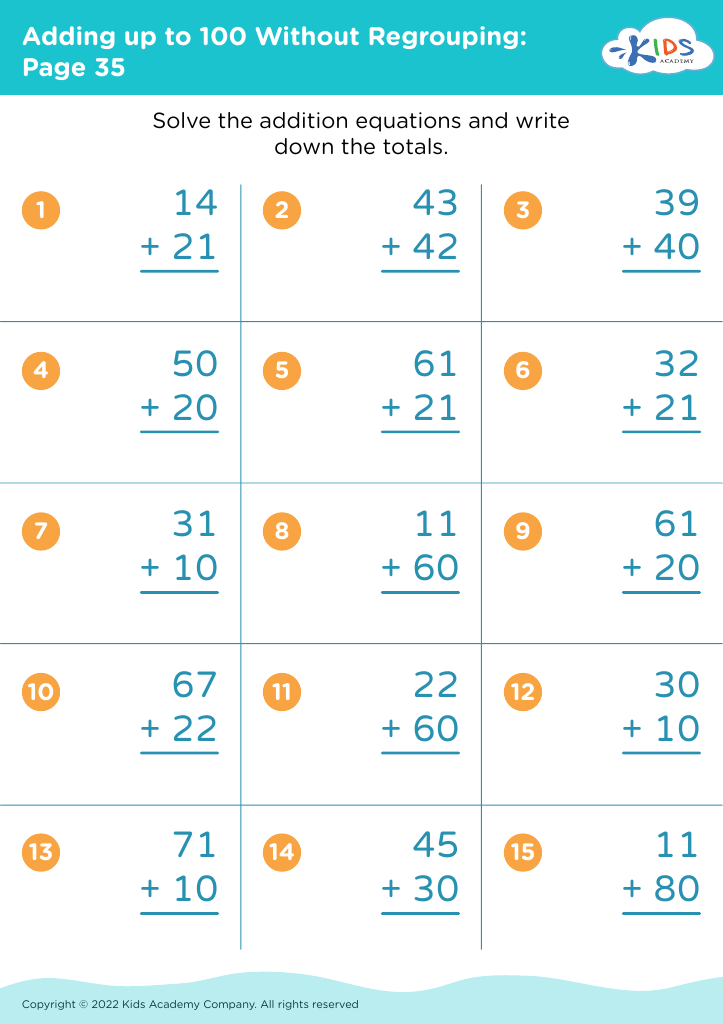








Vocabulary building is a crucial aspect of early childhood development for children ages 3-7. At this stage, kids are in their formative years, where their brains are exceptionally receptive to new information. Introducing a rich vocabulary helps set the foundation for effective communication skills, which are essential for both academic success and social interactions.
First, a strong vocabulary enhances reading comprehension. When children understand the words they read or hear, they can better grasp the meaning of stories and instructions, making learning more enjoyable and effective. This leads to improved literacy skills and greater academic achievement in the long run.
Second, robust vocabulary acquisition is integral for cognitive development. Learning new words enhances children’s ability to think and reason, fostering critical thinking skills such as categorization and problem-solving.
Moreover, a rich vocabulary supports emotional expression. Children with an extensive vocabulary can more accurately express their feelings and understand those of others, which is crucial for emotional development and social relationships.
Involving parents and teachers in vocabulary building provides a supportive environment for children. Whether through reading books, engaging in conversations, or interactive games, these activities form a solid foundational base. Ultimately, prioritizing vocabulary building during these pivotal years equips children with valuable skills, setting them up for lifelong learning and success.








