Basic Math Skills Comparison Worksheets for Ages 3-7
3 filtered results
-
From - To
Enhance your child's foundational math skills with our "Basic Math Skills Comparison Worksheets" designed for ages 3-7. These engaging worksheets introduce young learners to essential concepts such as more vs. less, equal amounts, and comparison techniques through fun and interactive activities. Tailored to cultivate critical thinking, these resources make math approachable and enjoyable. Parents and educators can easily access printable worksheets to support early numeracy development at home or in the classroom. Foster confidence in your child's abilities while nurturing a love for math with stimulating exercises that reinforce basic comparison skills. Start building a strong math foundation today!
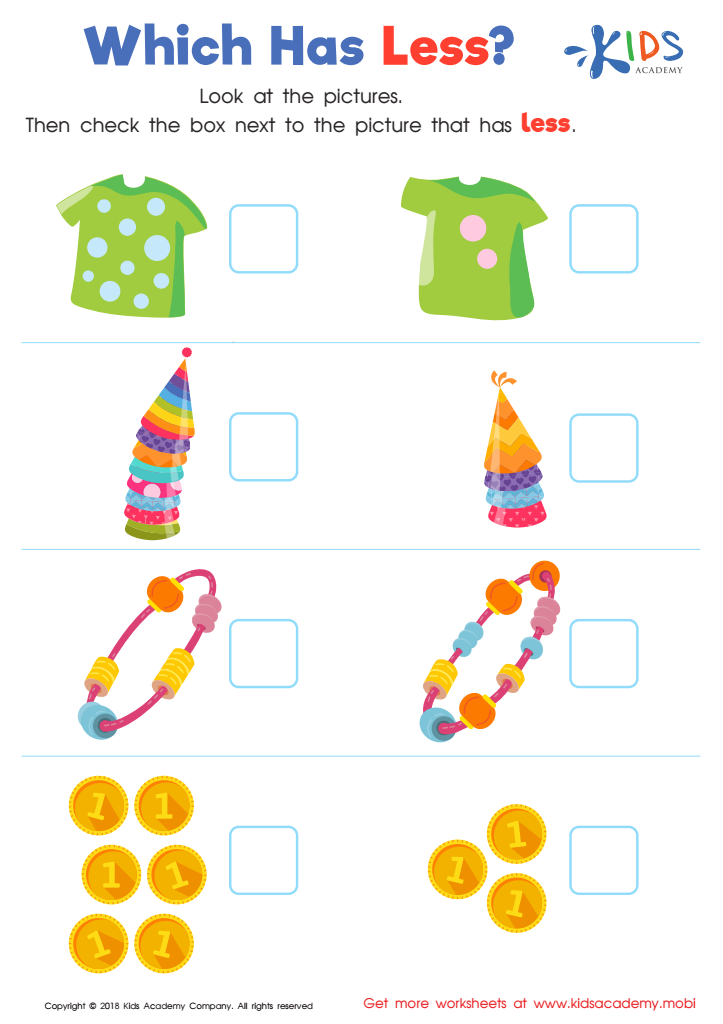
Which Has Less? Worksheet
 Assign to My Students
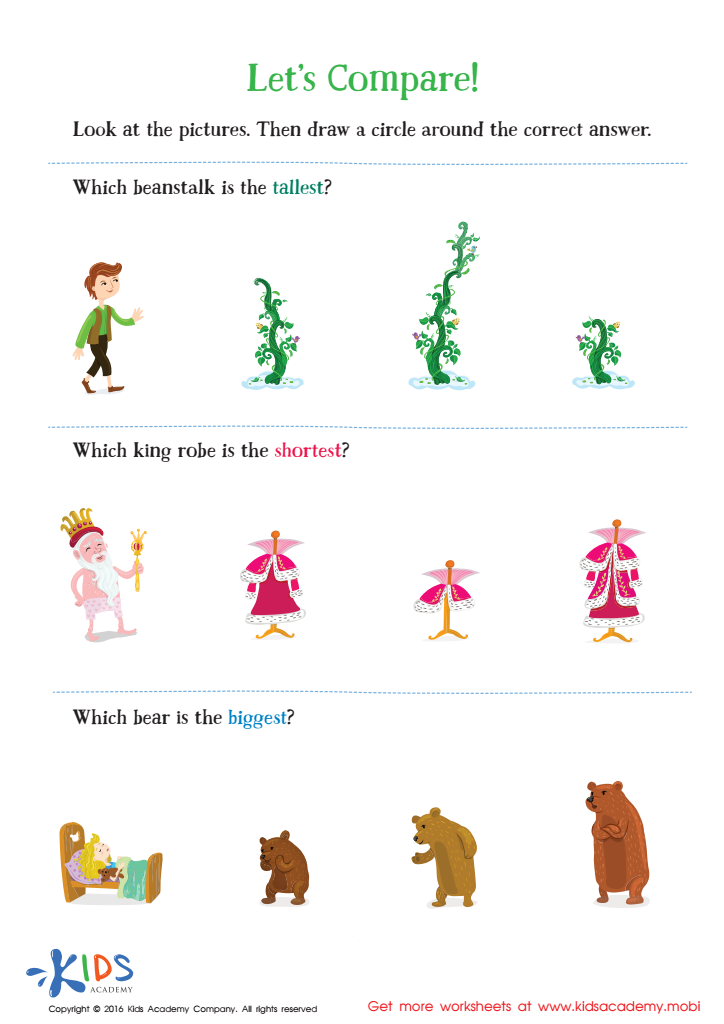
Fairy Tale Worksheet: Let's Compare
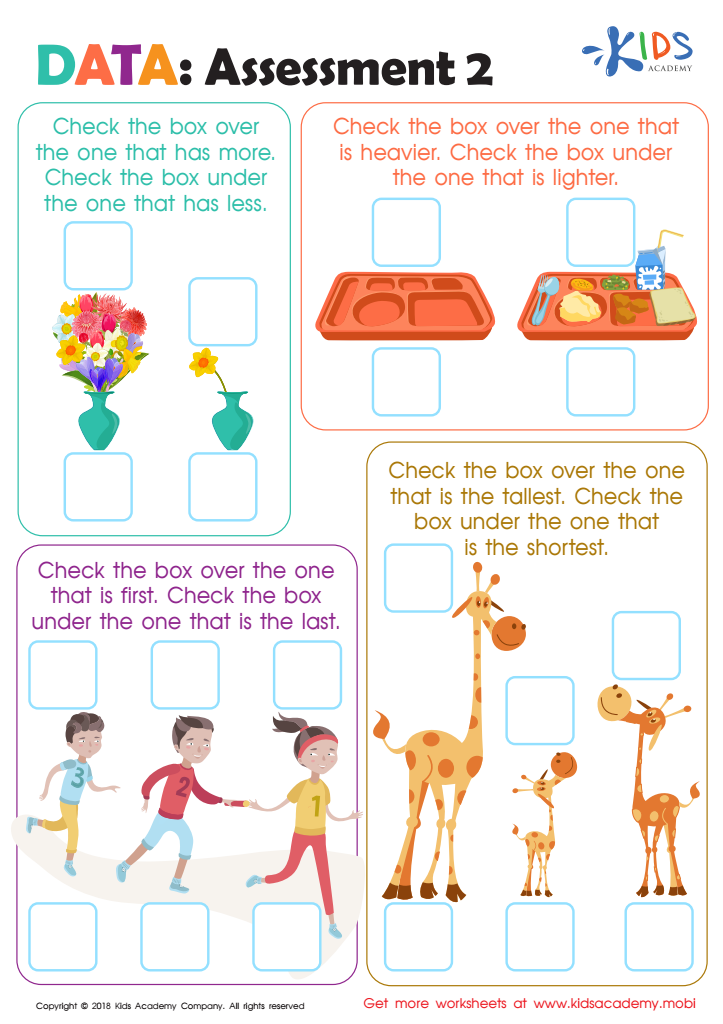
Data: Assessment 2 Worksheet



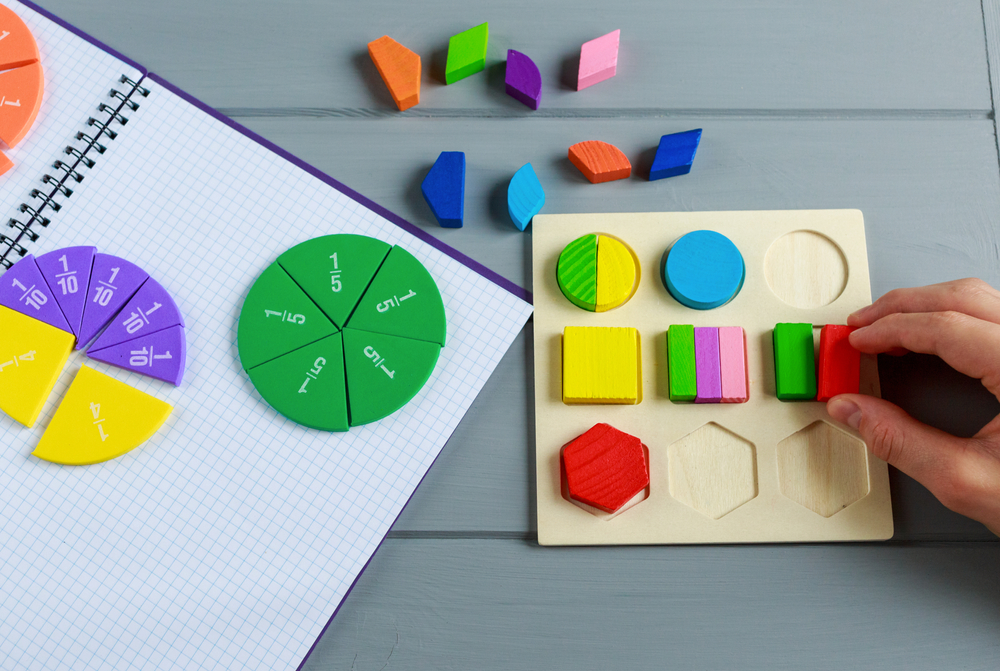




Understanding and nurturing basic math skills in children aged 3-7 is crucial for several reasons. During these formative years, children develop foundational cognitive abilities that influence their future academic achievements. Learning basic math skills—such as counting, recognizing numbers, and understanding simple addition and subtraction—sets the stage for more complex mathematical concepts later on.
Parents and teachers play a vital role in early math education. Engaging children in math-related activities provides not only essential skills but also encourages critical thinking, problem-solving, and logical reasoning. These skills can boost a child's confidence and foster a positive attitude towards learning.
Moreover, consistent early math exposure can help identify children who may need extra support. By comparing skill levels at this age, educators and parents can tailor their teaching strategies to meet individual needs, ensuring that every child has the opportunity to succeed.
In a broader context, strong math skills are linked to better performance in science and technology fields, which are increasingly important in today's job market. Therefore, focusing on basic math skills in early childhood education becomes a vital investment in a child's future, equipping them with the tools they need for lifelong learning and successful careers.








