Shape Recognition Comparison Worksheets for Ages 3-7
3 filtered results
-
From - To
Welcome to our engaging Shape Recognition Comparison Worksheets for ages 3-7! Designed to enhance children's understanding of shapes and their relationships, these fun worksheets provide an interactive way to learn about similarities and differences. Through colorful illustrations and playful activities, young learners will develop essential skills in shape identification and comparison. These printable resources promote cognitive development and help strengthen fine motor skills as children trace, color, and compare various shapes. Perfect for preschool and early elementary education, our worksheets create an enjoyable learning experience that encourages curiosity and creativity. Start your child's journey into the world of shapes today!
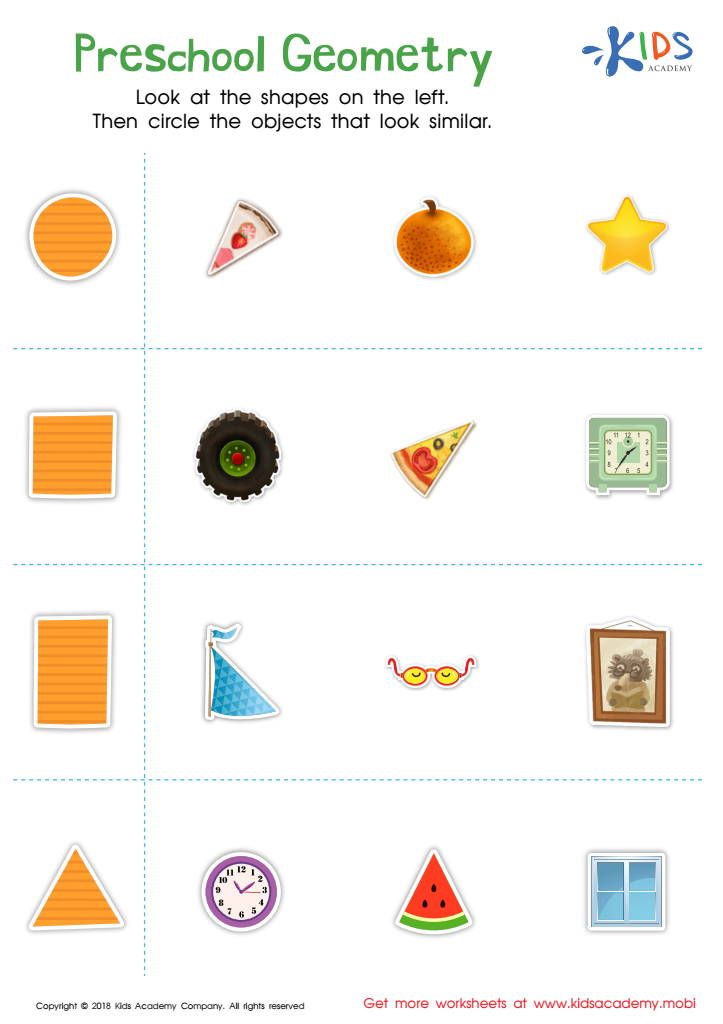
Preschool Geometry Worksheet
 Assign to My Students
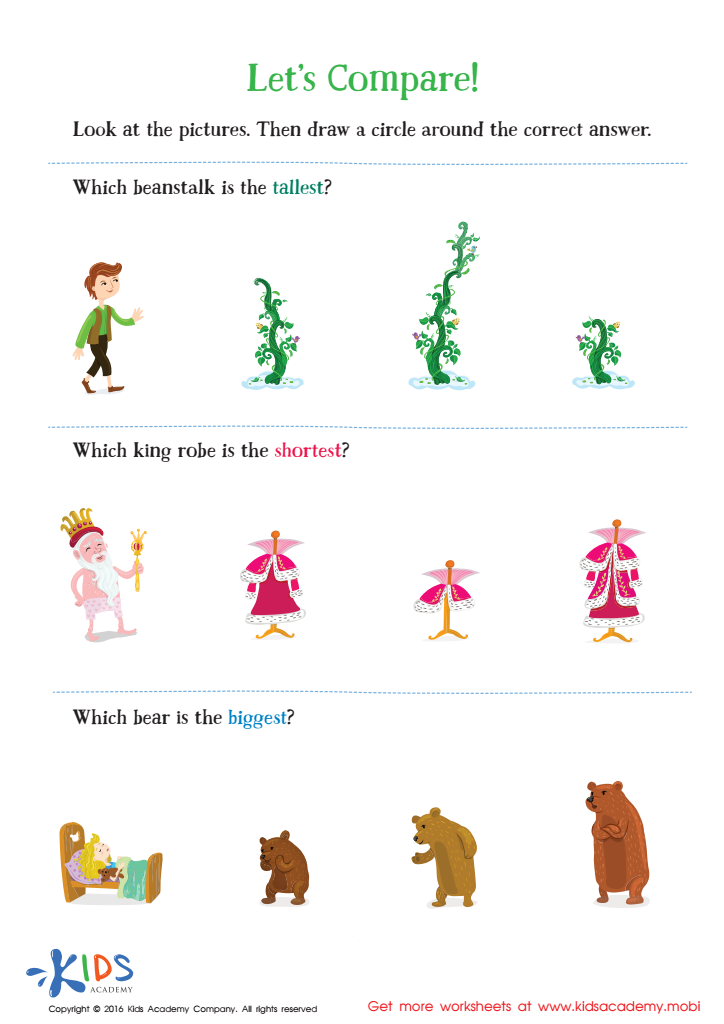
Fairy Tale Worksheet: Let's Compare
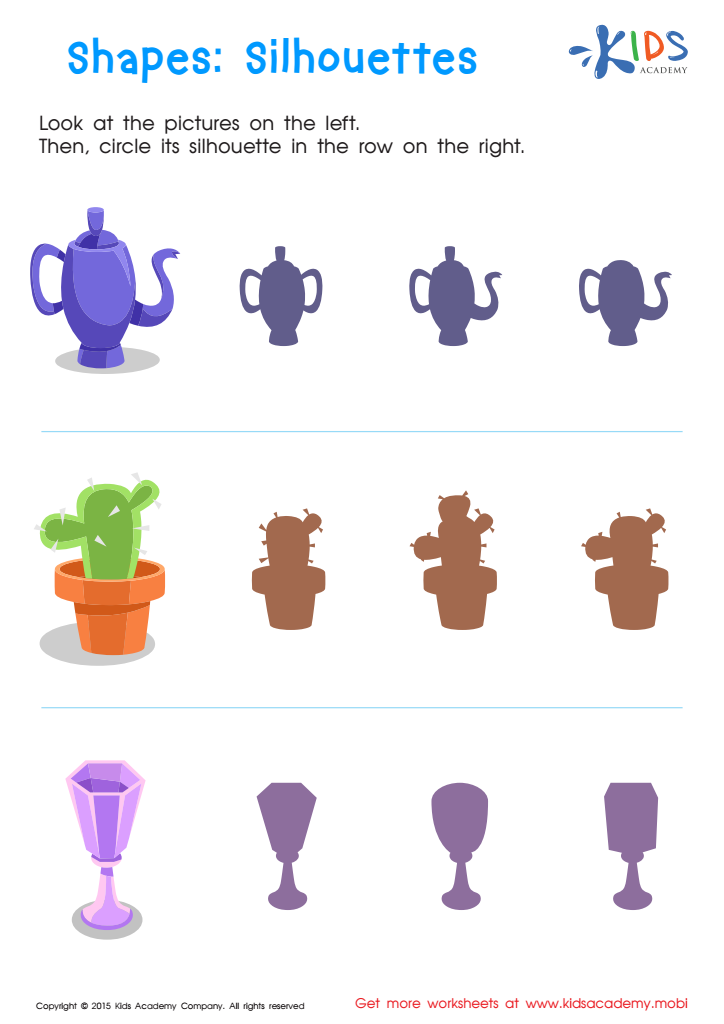
Silhouettes – Shapes Worksheet







Shape recognition is pivotal for children aged 3-7 as it lays the foundation for crucial cognitive and motor skills. Understanding and identifying shapes fosters spatial awareness, which is essential for a variety of activities, from simple navigation to complex problem-solving later on in life. Awareness of shapes also enhances children's ability to categorize objects, helping them make sense of the world around them.
Moreover, shape comparison facilitates mathematical learning. By recognizing similarities and differences in shapes—such as size, angles, and symmetry—children develop essential mathematical concepts that are precursors to addition, subtraction, and geometry. These skills not only prepare them for academic success but also promote logical reasoning.
Additionally, engaging in shape recognition activities, such as sorting and matching, enhances fine motor skills and encourages collaboration during playtime, promoting social-emotional development. Incorporating shape recognition in games, crafts, and daily routines makes learning enjoyable and relatable for young learners.
Therefore, parents and teachers should prioritize shape recognition as it is intertwined with various aspects of a child’s development—cognitive, motor, and social. This crucial skill set enables children to navigate their environment with confidence, setting the stage for lifelong learning.








