Color Identification Geometry Worksheets for Ages 3-7
5 filtered results
-
From - To
Unlock your child's creativity and cognitive skills with our Color Identification Geometry Worksheets designed specifically for children aged 3-7. These engaging worksheets blend colorful shapes and essential geometric concepts, promoting early learning in a fun and interactive way. As young learners navigate through varied activities, they will enhance their color recognition, shape identification, and basic counting skills while developing fine motor abilities. Ideal for homeschooling or classroom settings, our worksheets encourage children’s curiosity and visual understanding of the world around them. Perfect for sparking an interest in math and art, these resources are a delightful way to introduce geometry and color concepts concurrently!
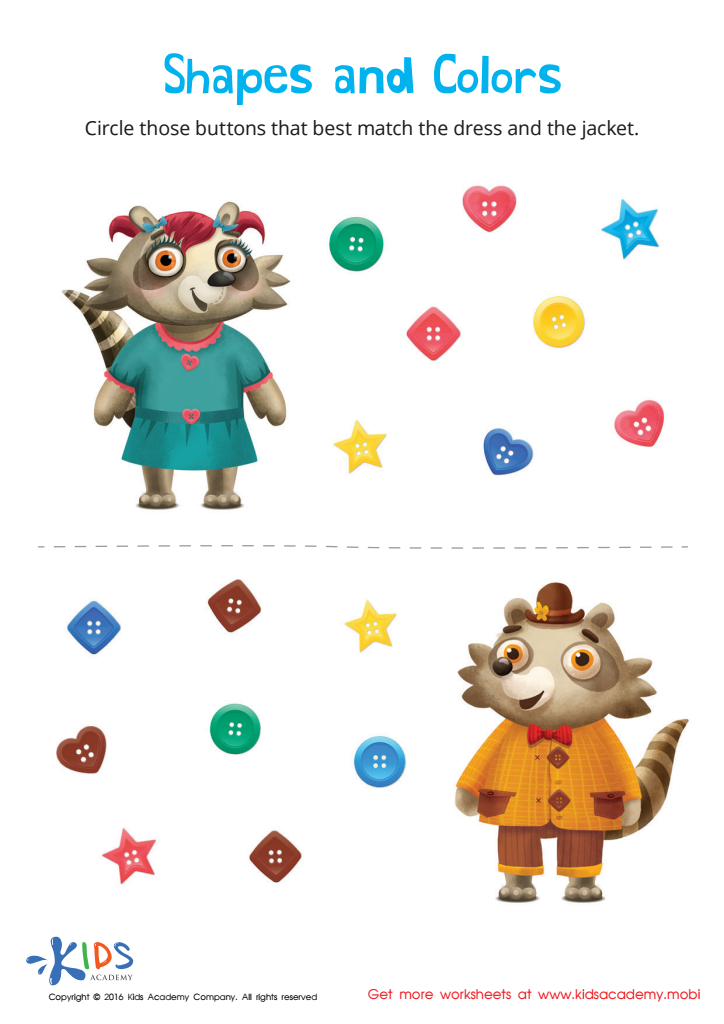
Matching: Shapes and Colors Worksheet











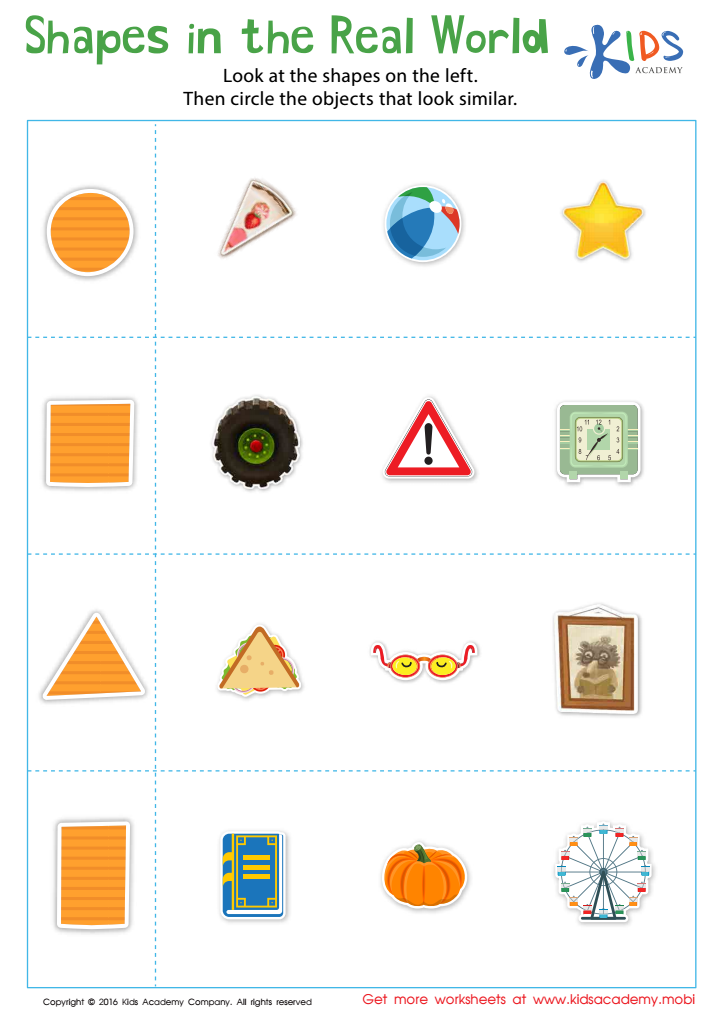
Shapes in the Real World Worksheet
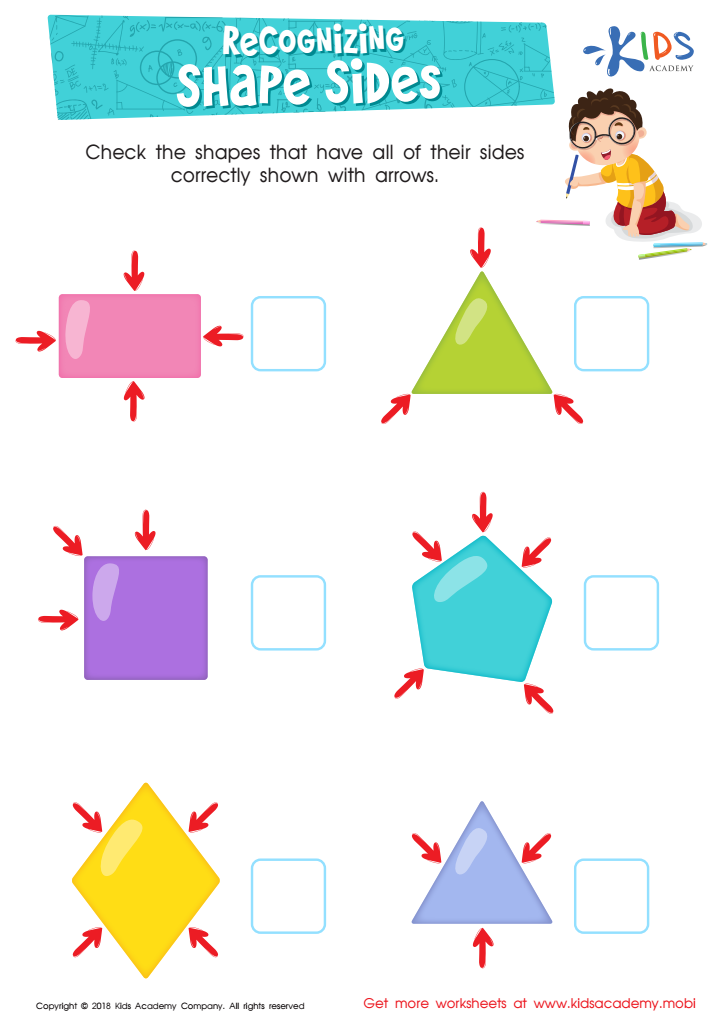
Recognizing Shape Sides Worksheet
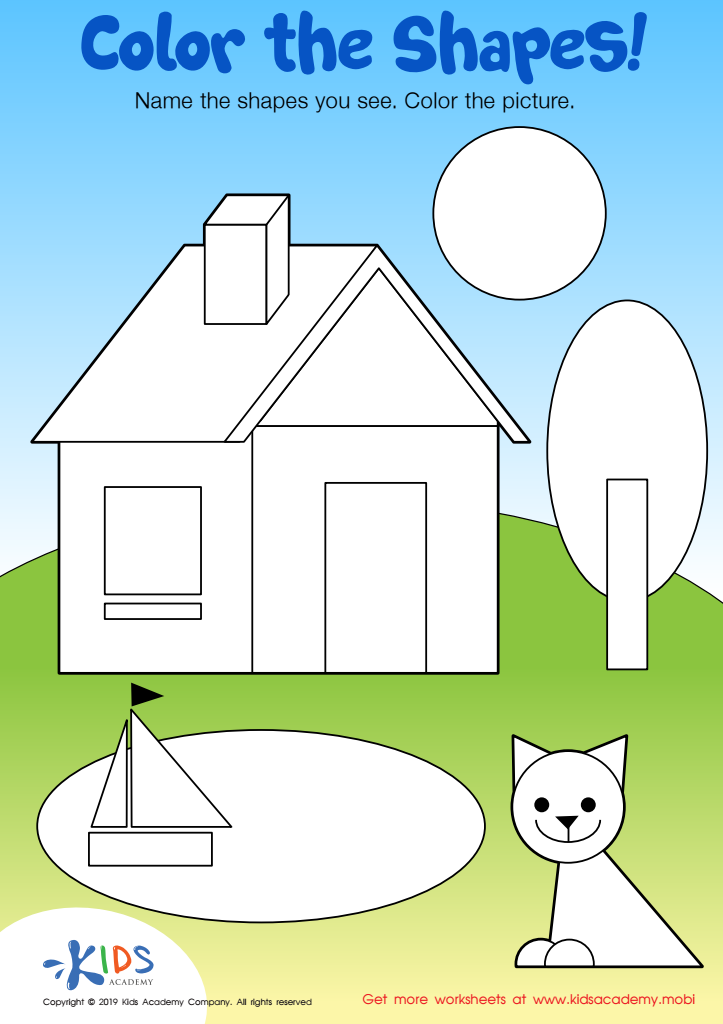
Color the Shapes Worksheet
 Assign to My Students
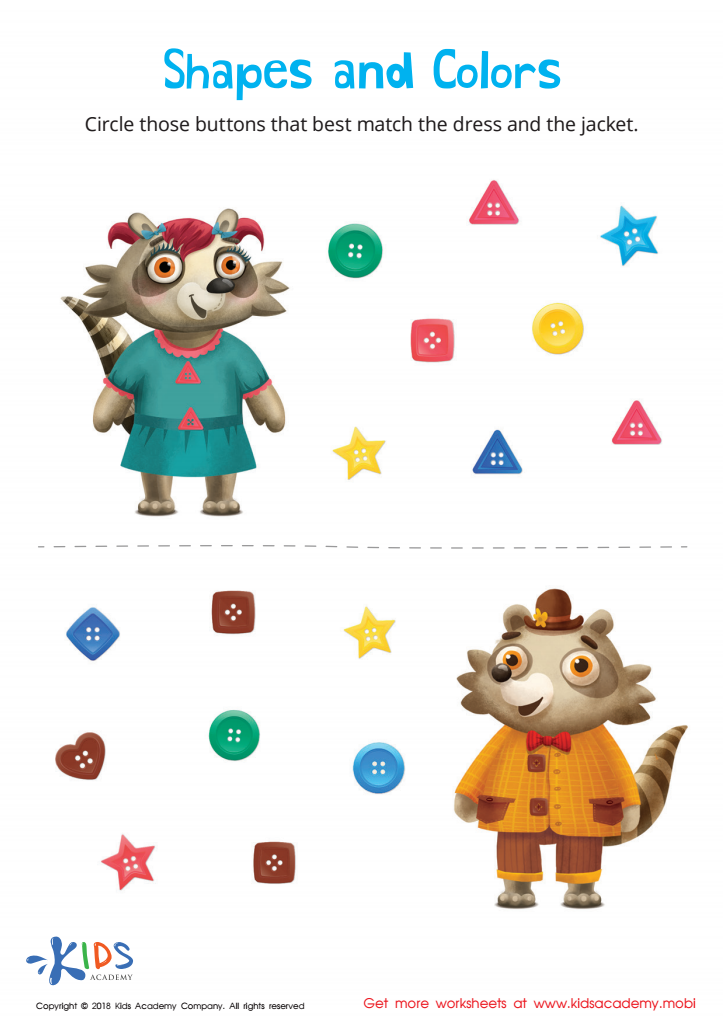
Shapes and Colors Worksheet








Color identification and basic geometry skills are foundational elements in early childhood education for children aged 3 to 7. These concepts are critical not only for cognitive development but also for social and emotional growth.
Understanding colors enhances children's ability to categorize and differentiate objects, which strengthens their observation skills and lays a groundwork for more complex problem-solving tasks. Familiarity with geometric shapes fosters spatial awareness, enabling children to comprehend their environment better, a skill relevant in areas such as mathematics, art, and science.
Moreover, integrating color and geometry education into play-based learning activities makes the learning process engaging and enjoyable, maintaining children's interest and encouraging exploration. When parents and teachers emphasize these concepts, they empower children to express creativity while simultaneously enhancing their analytical skills.
Additionally, color identification and geometry serve as tools for communication. Children often use colors and shapes to describe their world and engage with others, promoting social interactions and language development. By prioritizing these subjects, parents and educators create a supportive learning environment that nurtures early learners, preparing them for future academic success while building their confidence in learning. Overall, investing in these skills is a vital step in holistic early childhood education.








