Comparing Fractions Geometry Worksheets for Ages 3-7
5 filtered results
-
From - To
Explore our engaging Comparing Fractions Geometry Worksheets designed specifically for young learners aged 3-7! These interactive resources help children grasp the concept of fractions through colorful visuals and fun activities. By incorporating real-life examples and playful exercises, students will develop essential skills in comparing and identifying fractions, fostering early mathematical understanding. Each worksheet is tailored to different developmental stages, ensuring that every child can learn at their own pace. Parents and educators can easily access and download these resources to support classroom learning or at-home practice. Unlock your child's mathematical potential with our captivating and educational geometry worksheets today!
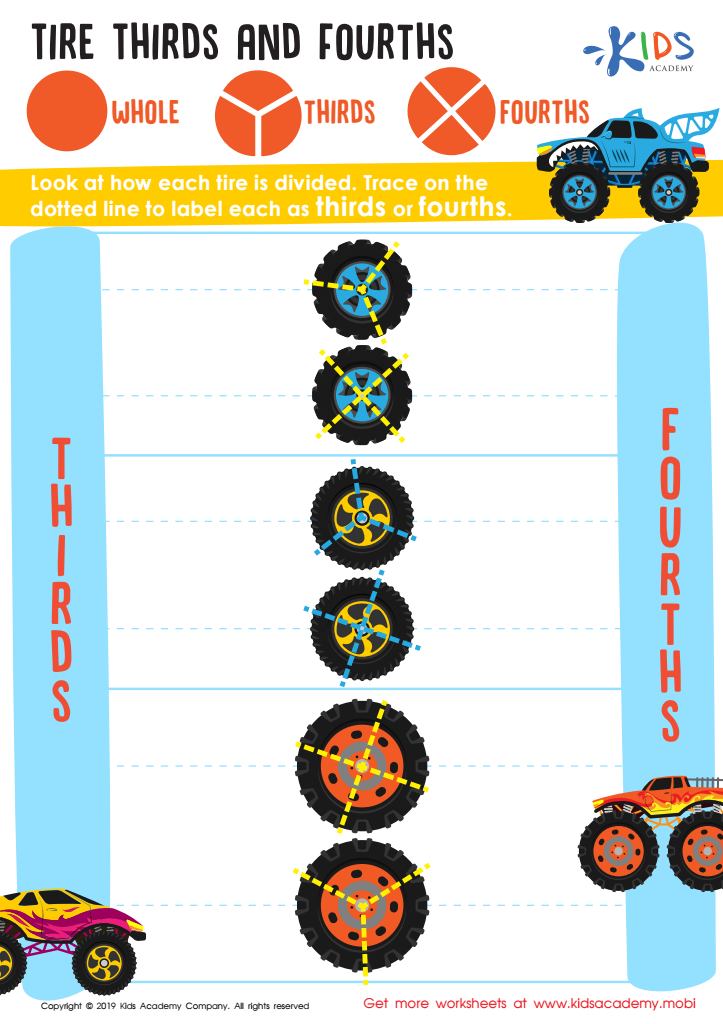
Tire Thirds and Fourths Worksheet
 Assign to My Students











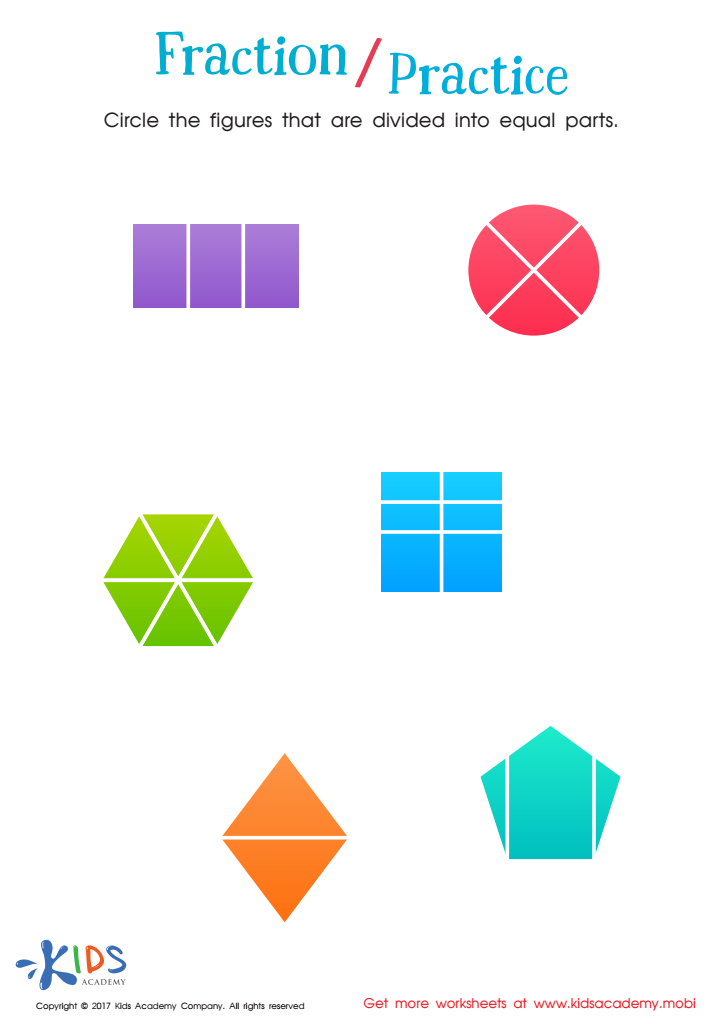
Fractions: Shapes Worksheet
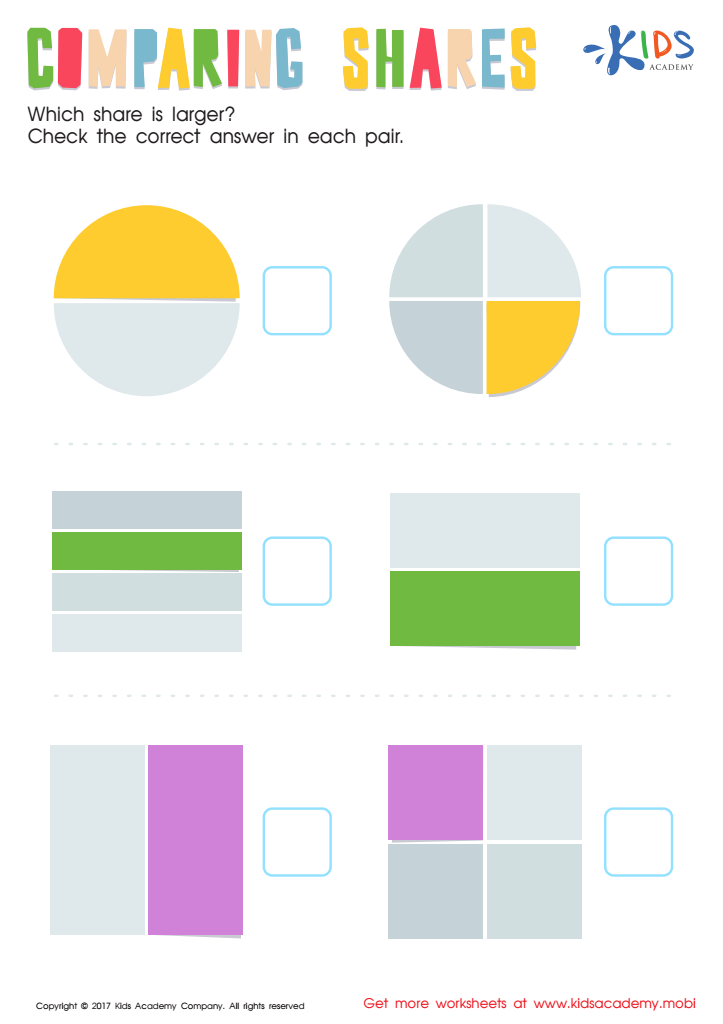
Comparing Shares Worksheet
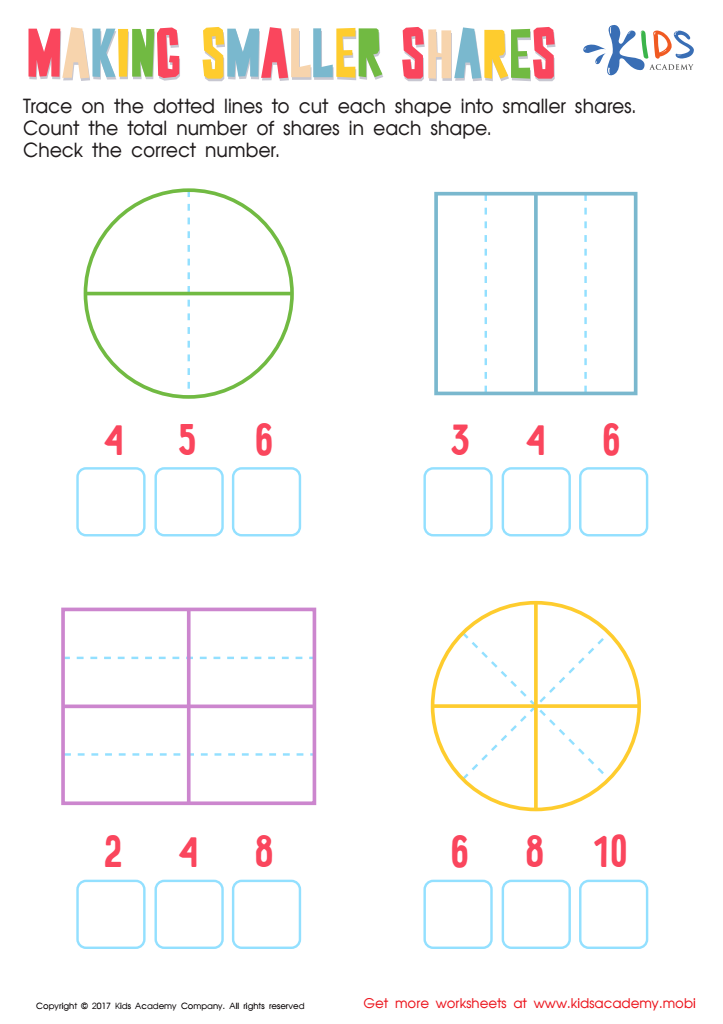
Making Smaller Shares Worksheet
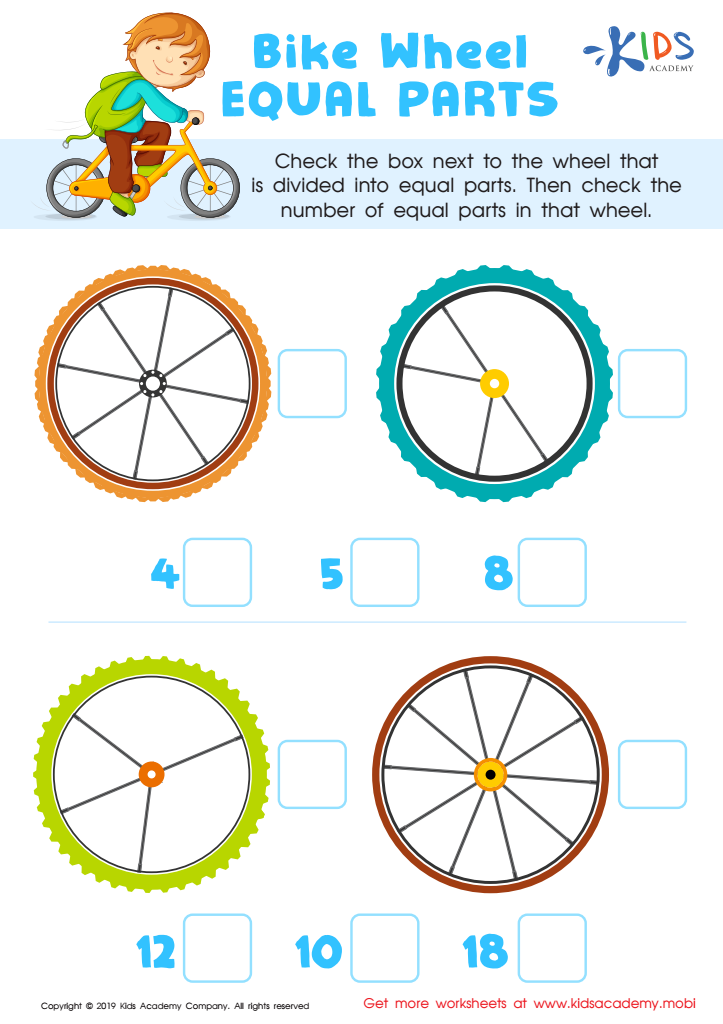
Bike Wheel Equal Parts Worksheet








Understanding and comparing fractions is fundamental for children ages 3-7, as it lays the groundwork for essential mathematical skills. For parents and teachers, fostering this understanding early on is crucial for several reasons.
Firstly, comparing fractions enhances critical thinking. It encourages children to analyze and evaluate information quantitatively, skills that extend beyond mathematics into daily problem-solving. Engaging with concepts like "half" and "quarter" using tangible items, like slices of fruit or toys, makes abstract ideas more relatable, promoting cognitive development.
Secondly, recognizing fractions helps develop a child's spatial awareness, a key aspect of geometry. Learning to visualize and manipulate shapes prepares young learners for more complex mathematical concepts they’ll encounter in later grades. Activities involving comparing sizes of various parts cultivates an appreciation for proportions in their environment.
Additionally, mastering these concepts early boosts confidence in young learners. When children feel competent in foundational skills, they are more likely to embrace future challenges in math. For parents and teachers, promoting a positive attitude towards math through engaging fraction activities fosters a lifelong love for learning, ensuring children not only succeed academically but also in their everyday lives. Supporting children in comparing fractions thus serves as a strategic investment in their future education.








