Reading comprehension Geometry Worksheets for Ages 3-7
7 filtered results
-
From - To
Unlock your child’s potential with our Reading Comprehension Geometry Worksheets for Ages 3-7! Designed to enhance both their reading and geometric skills, these engaging worksheets blend fun stories with shape recognition, spatial understanding, and problem-solving activities. Each exercise encourages young learners to read carefully, comprehend the content, and relate it to geometric concepts like circles, squares, triangles, and more. Perfect for early learners, these worksheets support cognitive development, foster critical thinking, and build foundational math skills. Transform learning into an adventure with our expertly crafted, kid-friendly worksheets, and watch your child thrive!
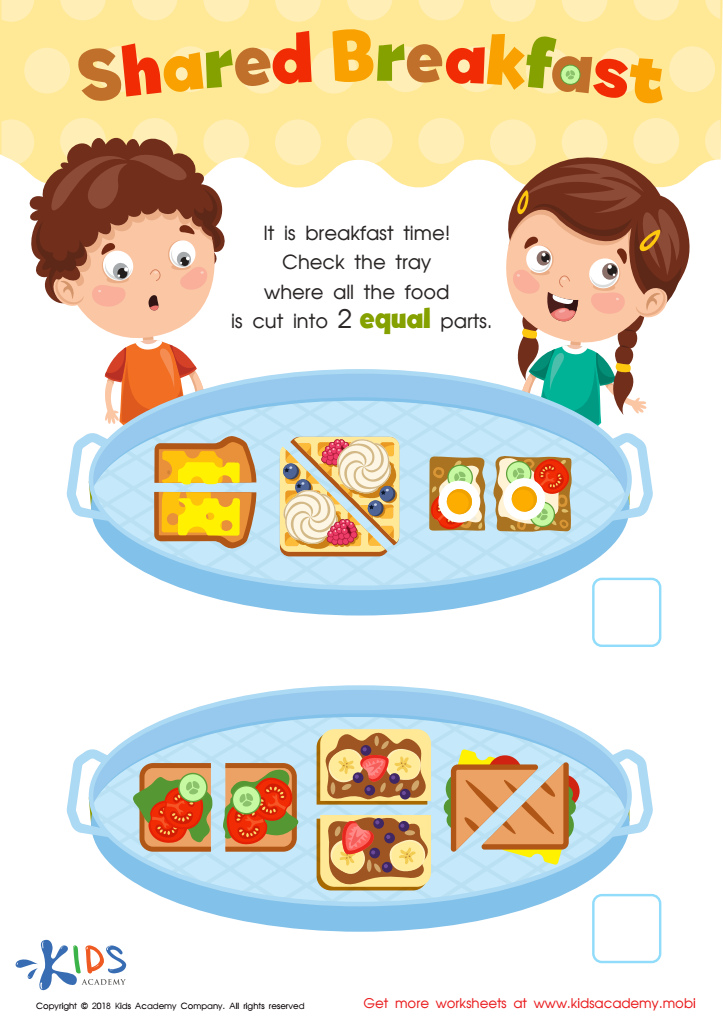
Shared Breakfast Worksheet
 Assign to My Students











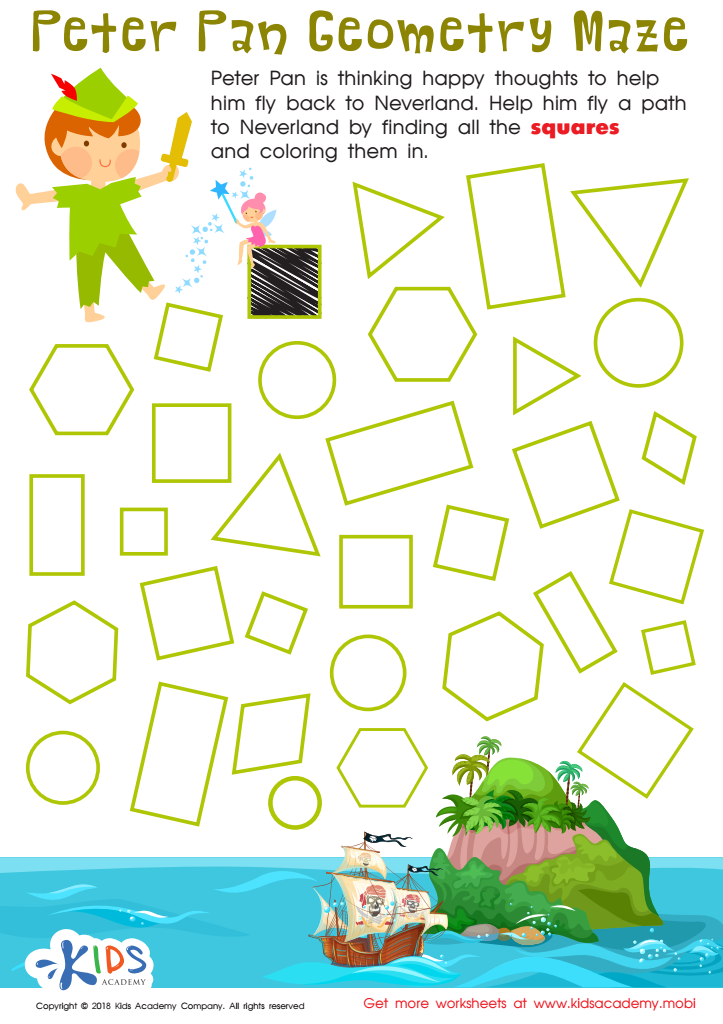
Peter Pan Worksheet
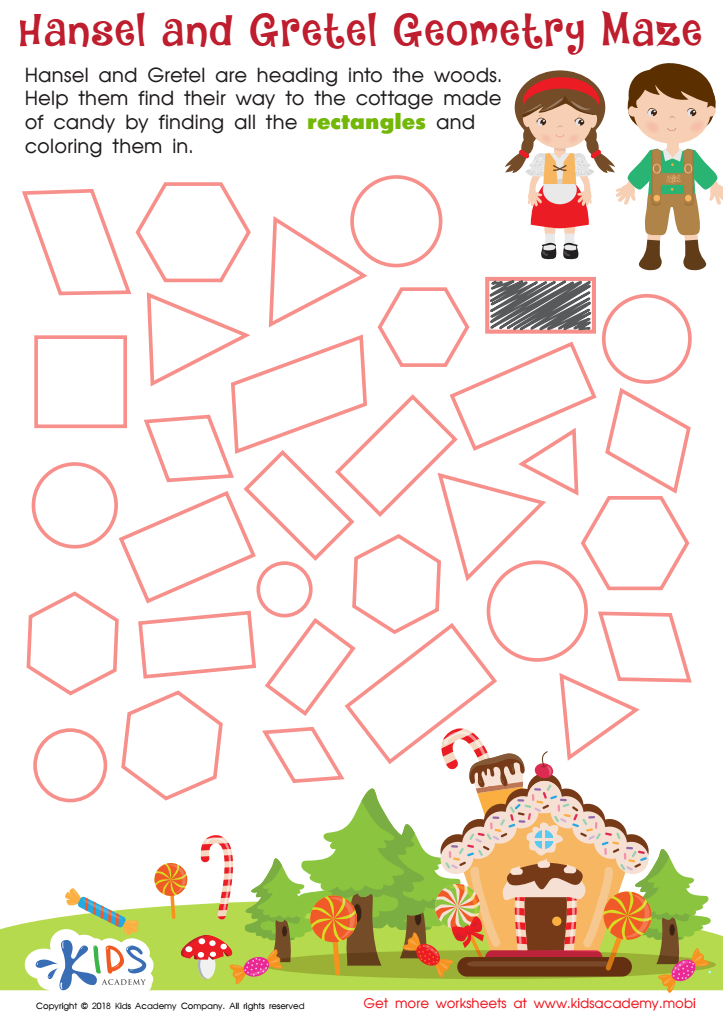
Hansel and Gretel Geometry Maze Worksheet
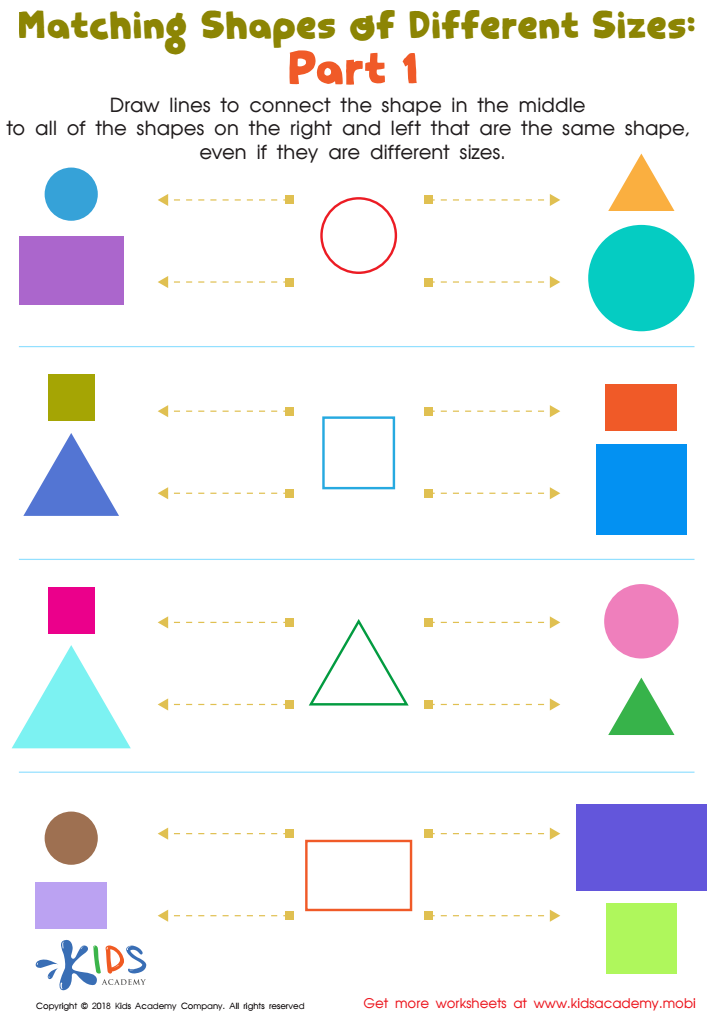
Geometry: part 1 Worksheet
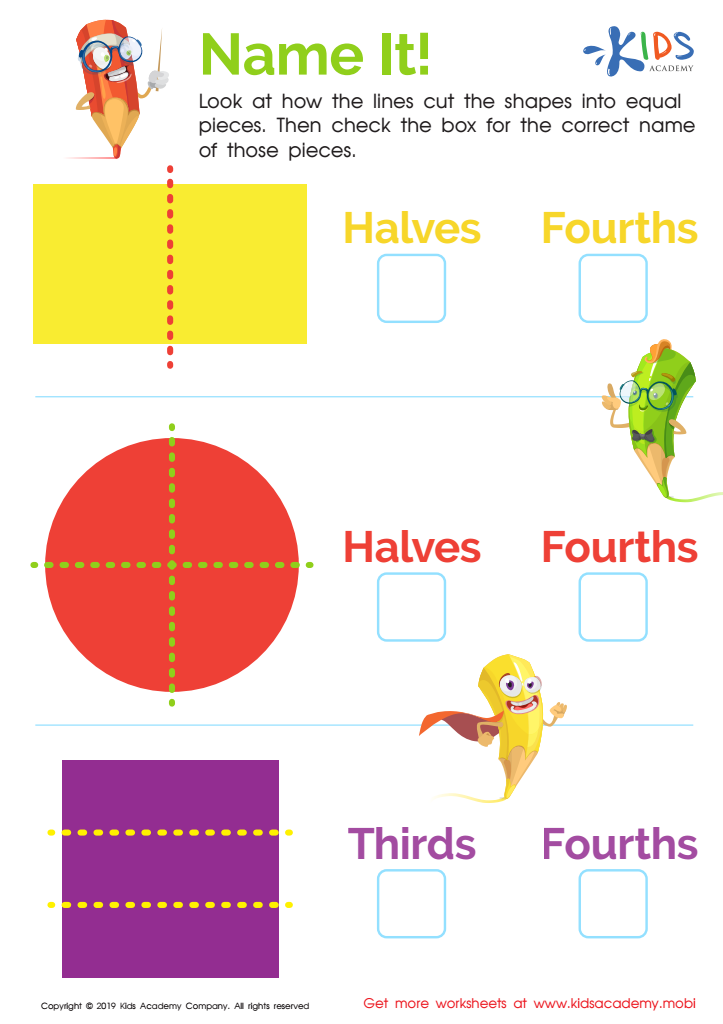
Name It! Worksheet
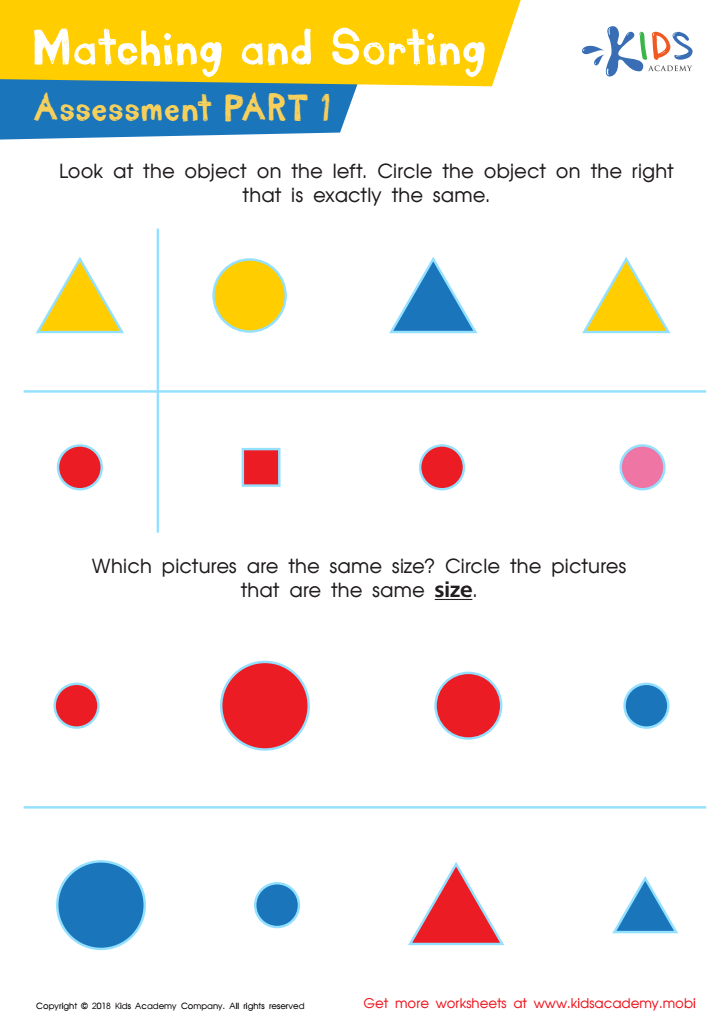
Matching and Sorting for Kindergarten: Assessment 1 Worksheet
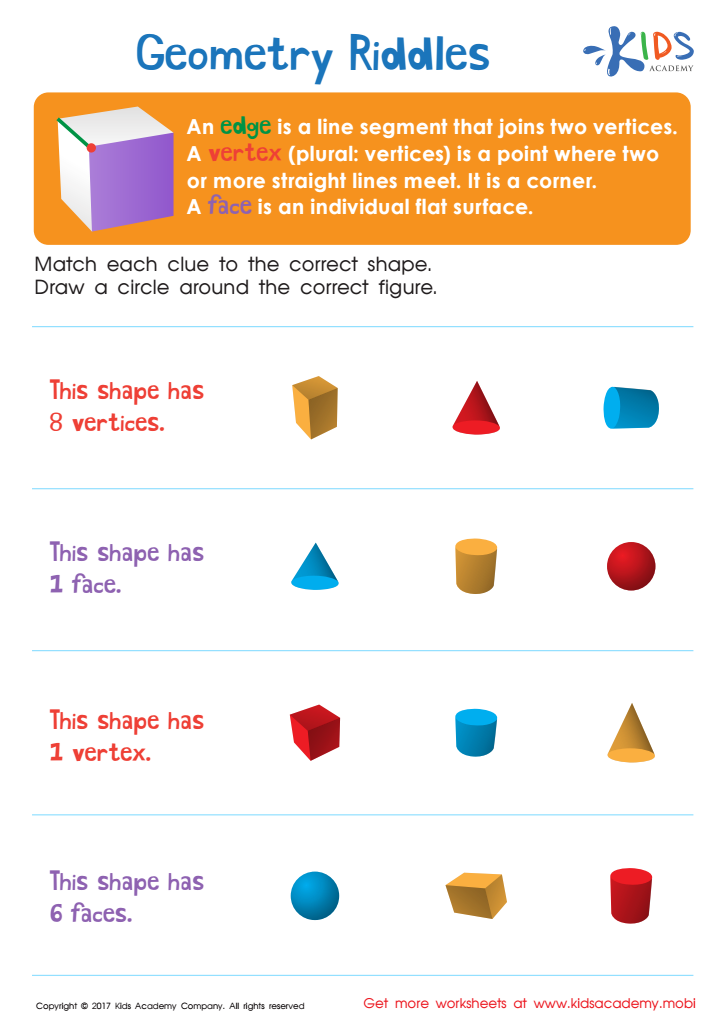
Geometry Riddles Printable








Parents and teachers play a crucial role in laying the educational foundation for children aged 3-7, and this extends to early instruction in both reading comprehension and basic geometry. During these formative years, young minds are exceptionally receptive to learning, and developing skills in reading comprehension and geometry can have profound and lasting benefits.
Reading comprehension is essential because it empowers children to understand and engage with the world around them. At ages 3-7, kids are learning to decode words, grasp simple sentence structures, and build their vocabularies. By focusing on reading comprehension, parents and teachers can help children develop critical thinking skills, enhance their ability to learn independently, and foster a love for reading that will aid them throughout their academic and personal lives.
Basic geometry introduces children to various shapes, spatial awareness, and problem-solving skills. It enhances visual-spatial reasoning—a cognitive process crucial for understanding more complex mathematical concepts in later years. Geometry in early childhood can be seamlessly integrated into playtime activities, making learning both effective and engaging.
Encouraging proficiency in both these areas supports a balanced and robust academic foundation. Together, reading comprehension and geometry contribute to holistic cognitive development, preparing children for the more complex challenges they will face in school and beyond.








