Shape Recognition Geometry Worksheets for Ages 3-7 - Page 3
62 filtered results
-
From - To
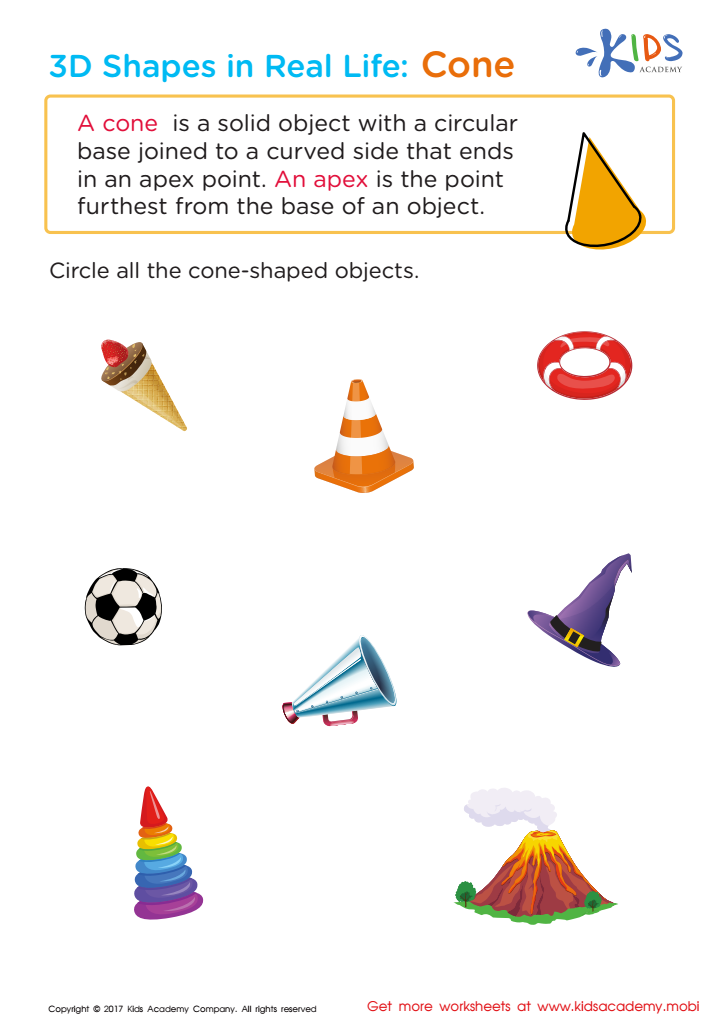
Shapes in Real Life: Cone Worksheet
 Assign to My Students











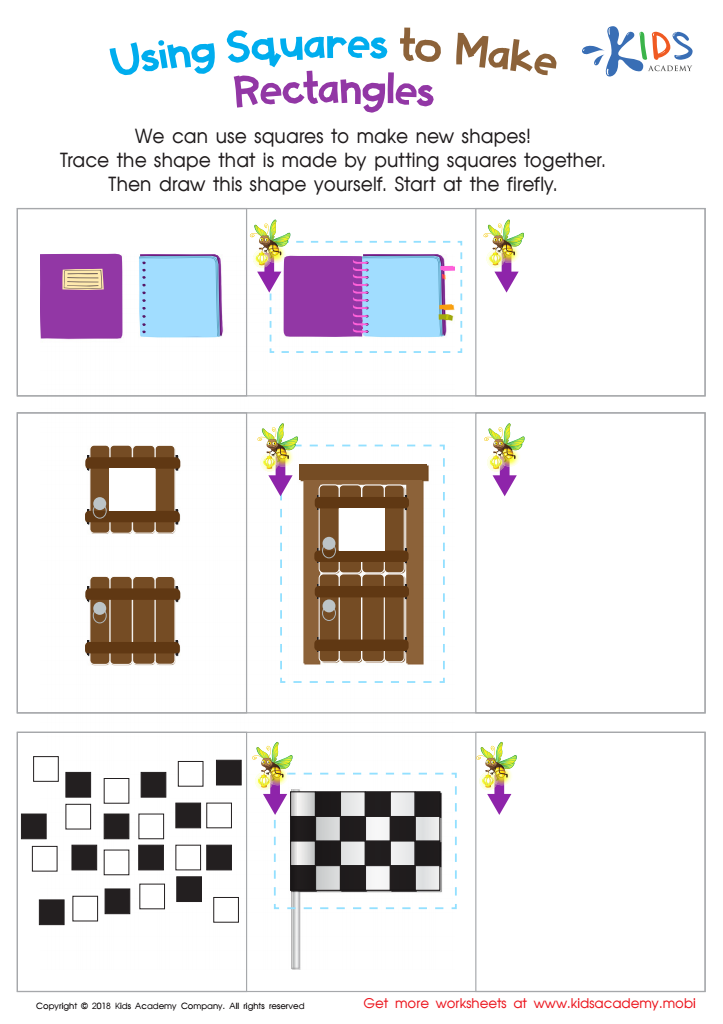
Using Squares to Make Rectangles Worksheet
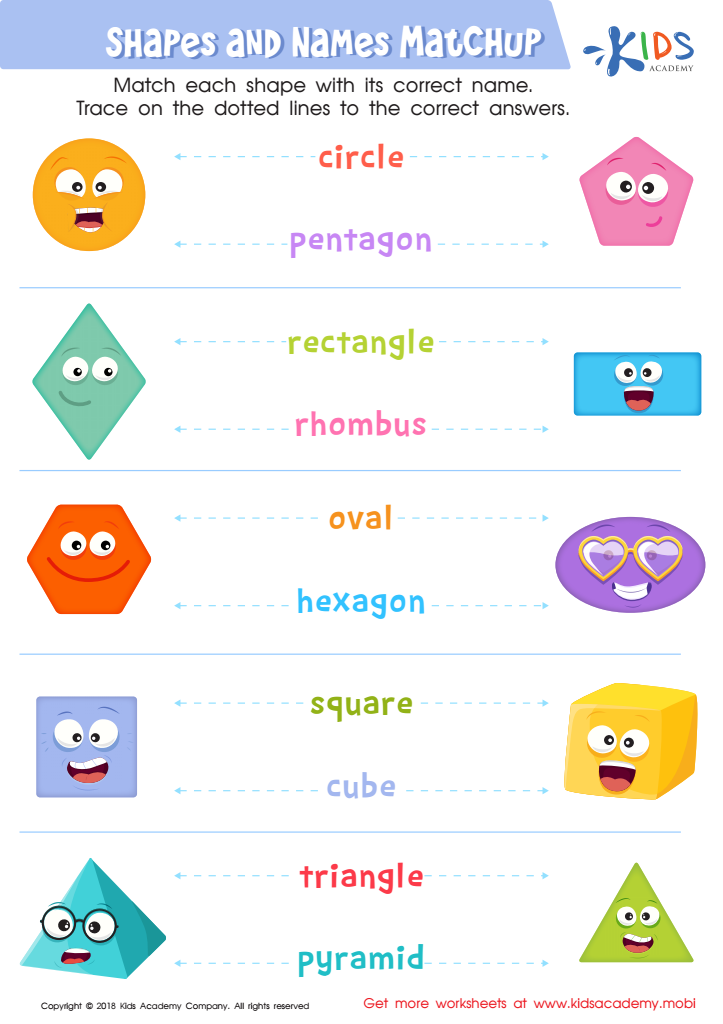
Shapes and Names Matchup Worksheet
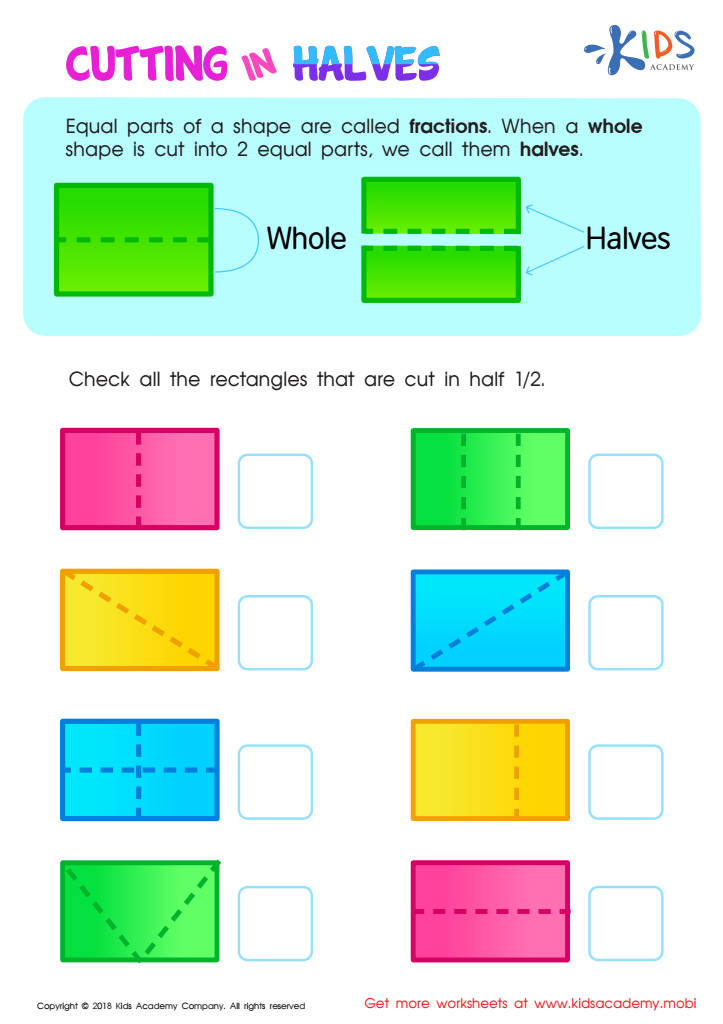
Cutting in Halves Worksheet
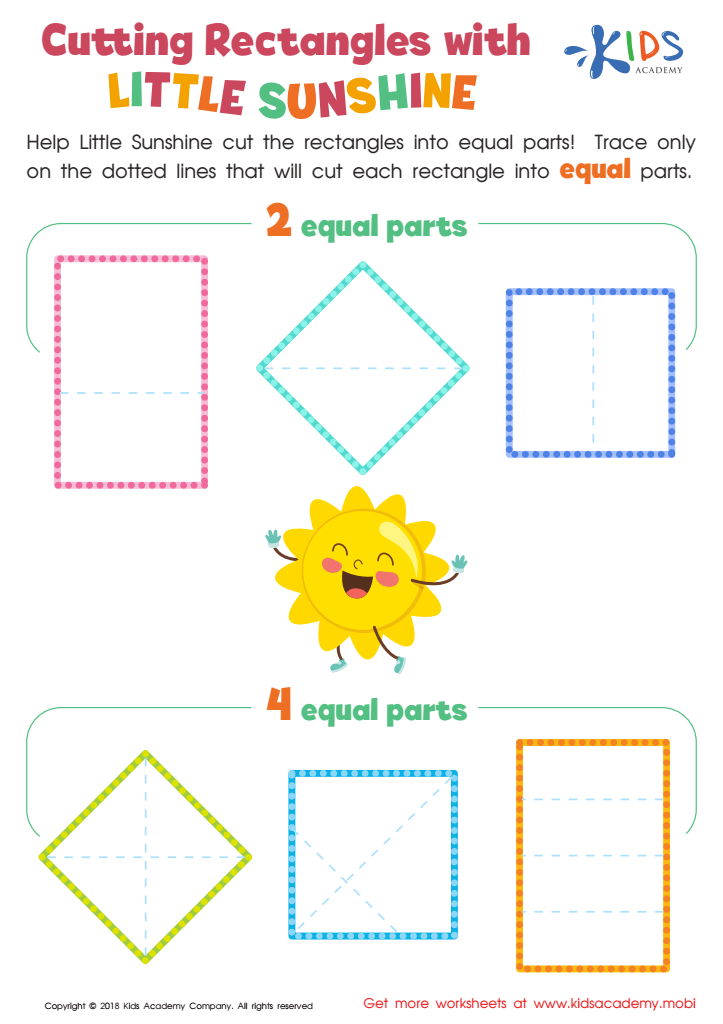
Cutting Rectangles with Little Sunshine Worksheet
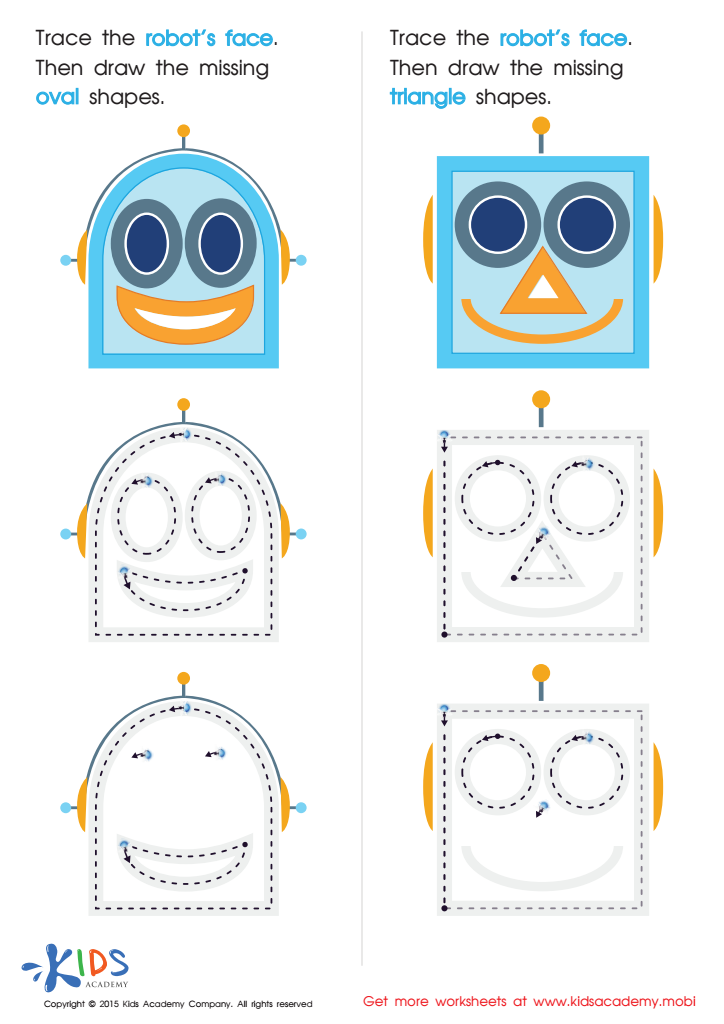
Drawing Ovals And Triangles with Fun Printable
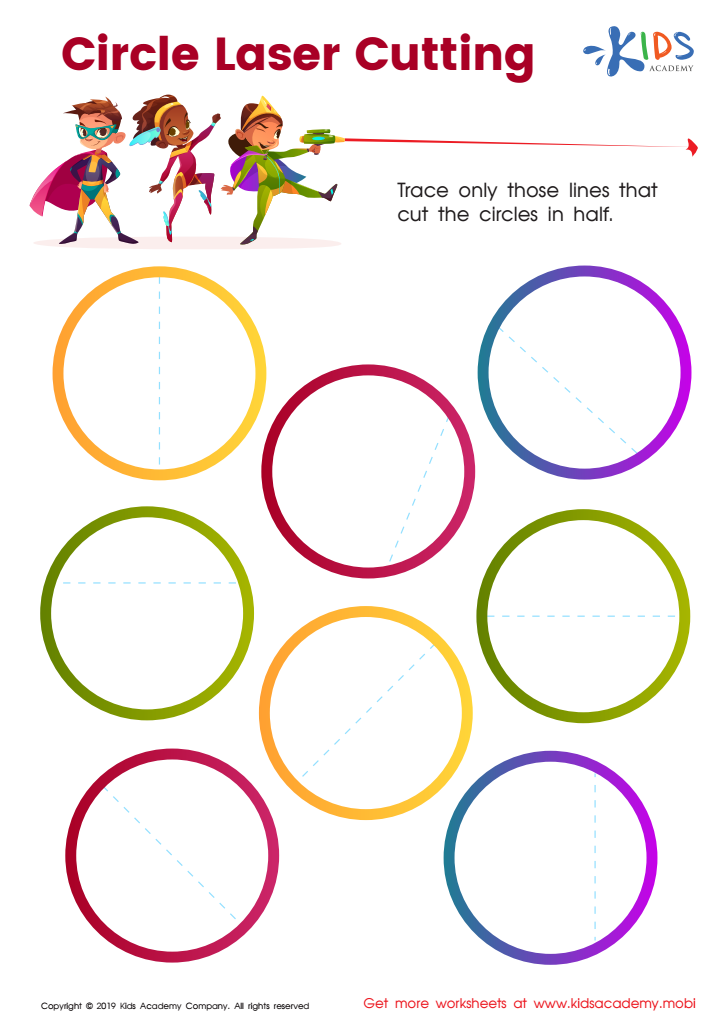
Circle Laser Cutting Worksheet
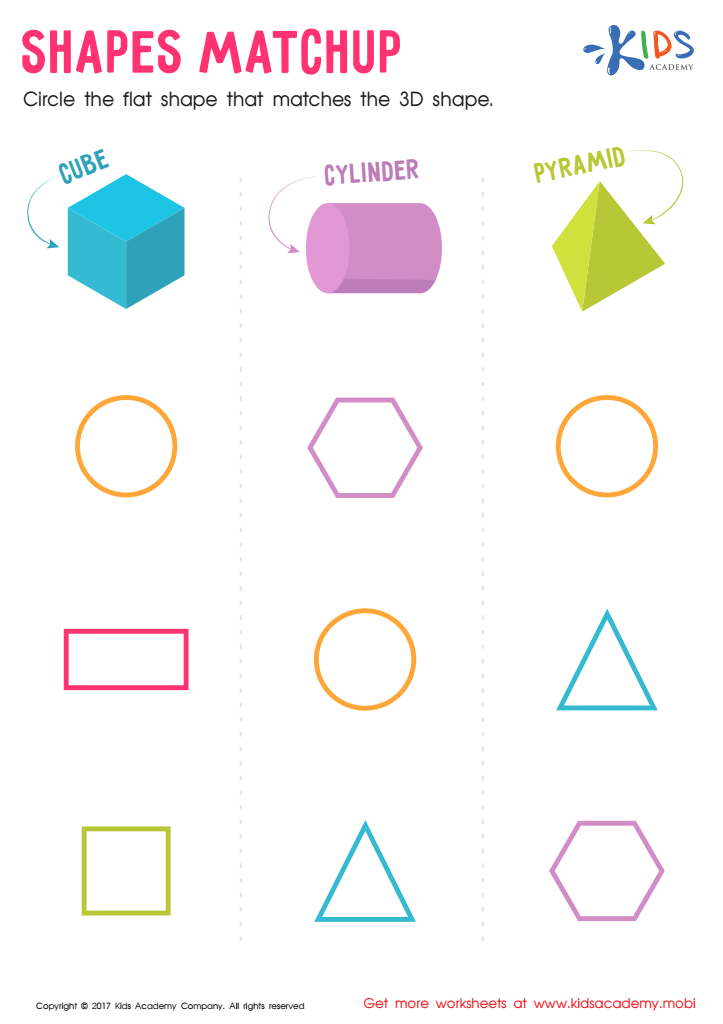
Shapes Matchup Worksheet
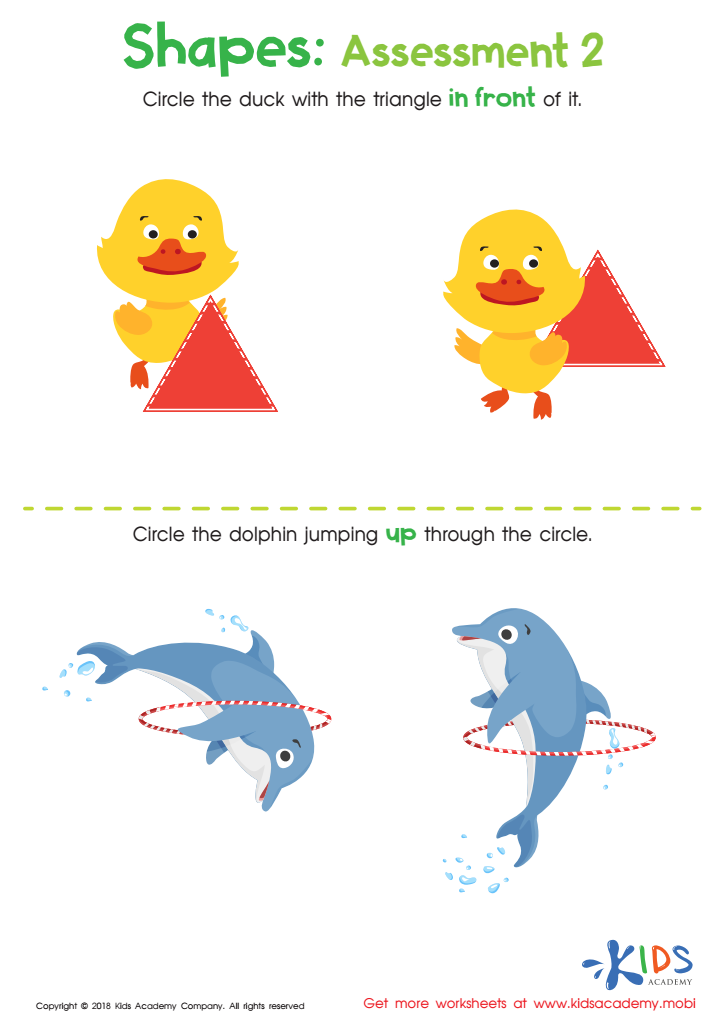
Geometry – Assessment 2 Worksheet
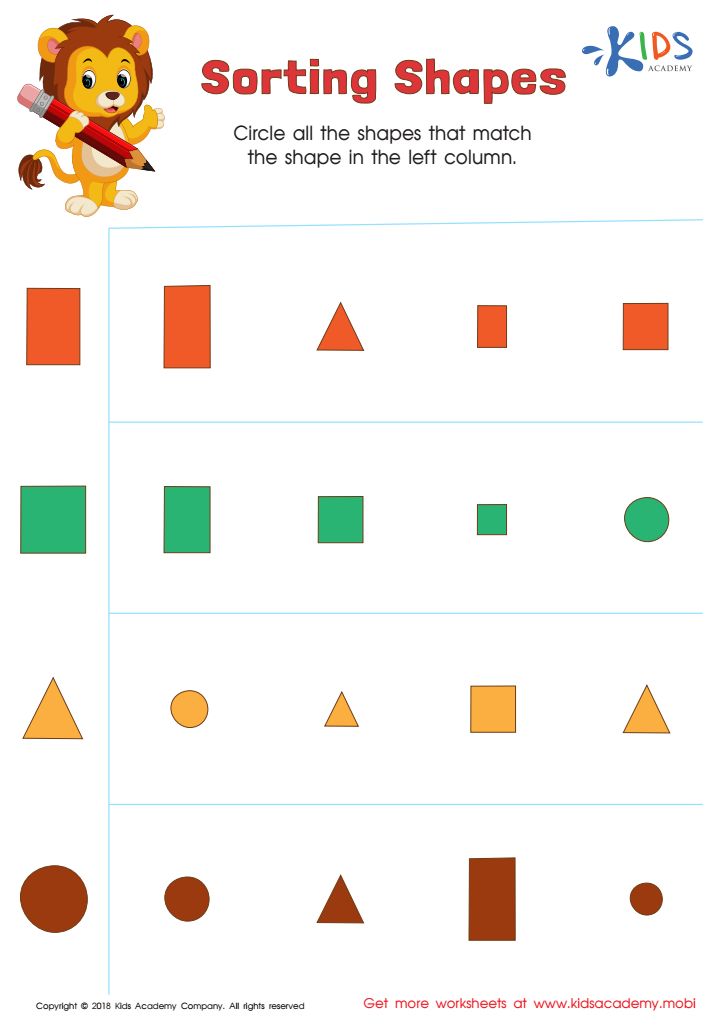
Sorting Shapes - Part 2 Worksheet
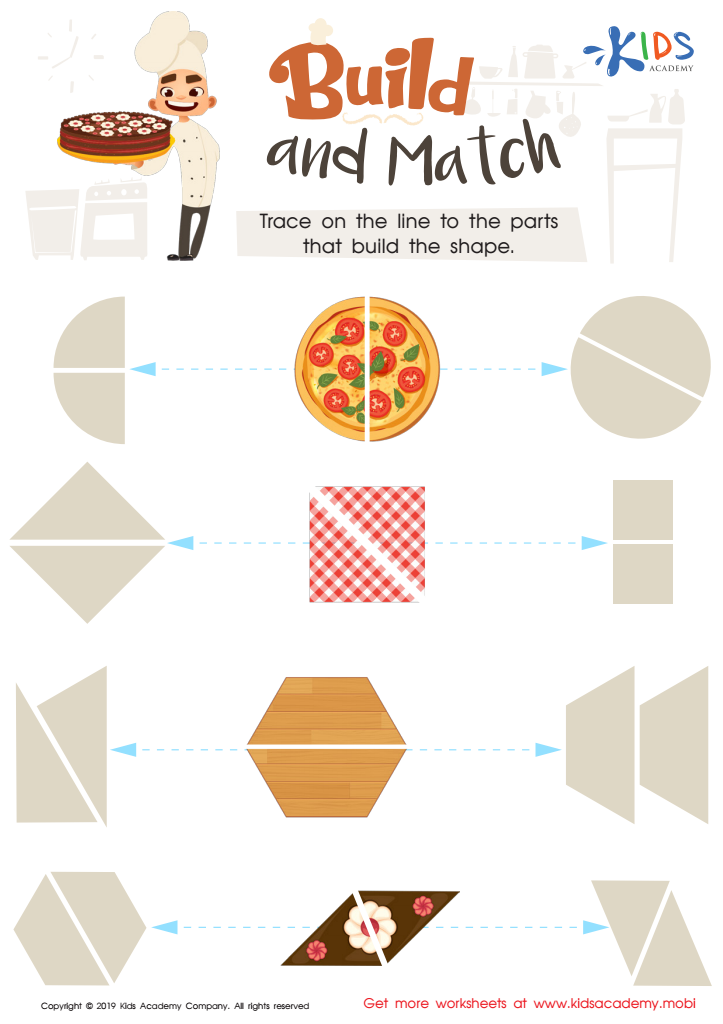
Build and Match Worksheet
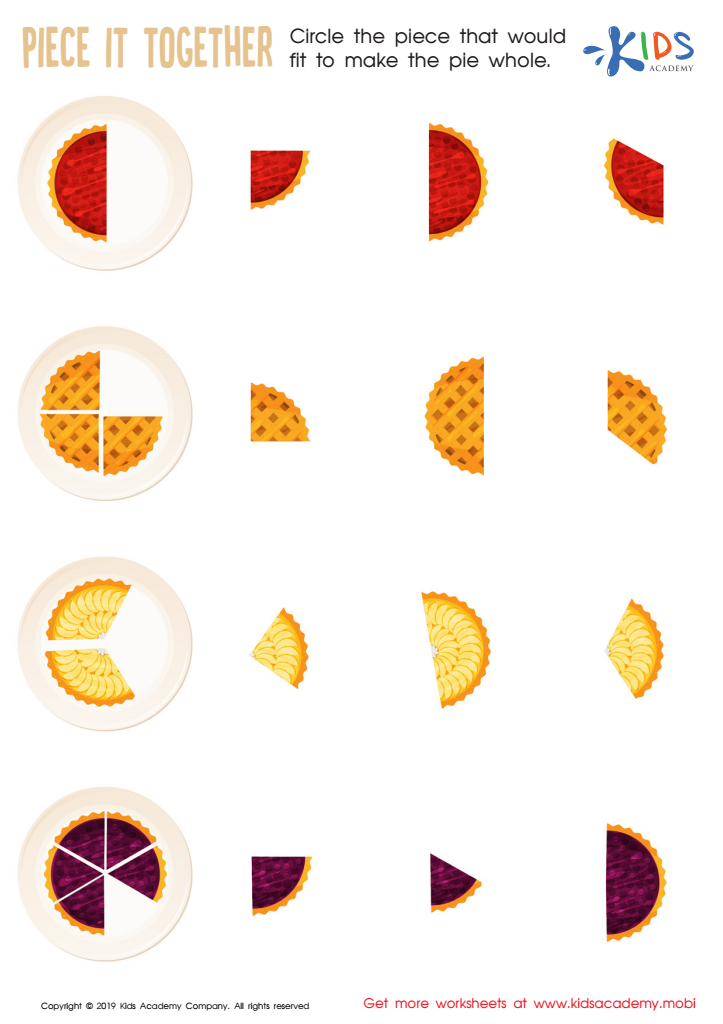
Piece it together Worksheet
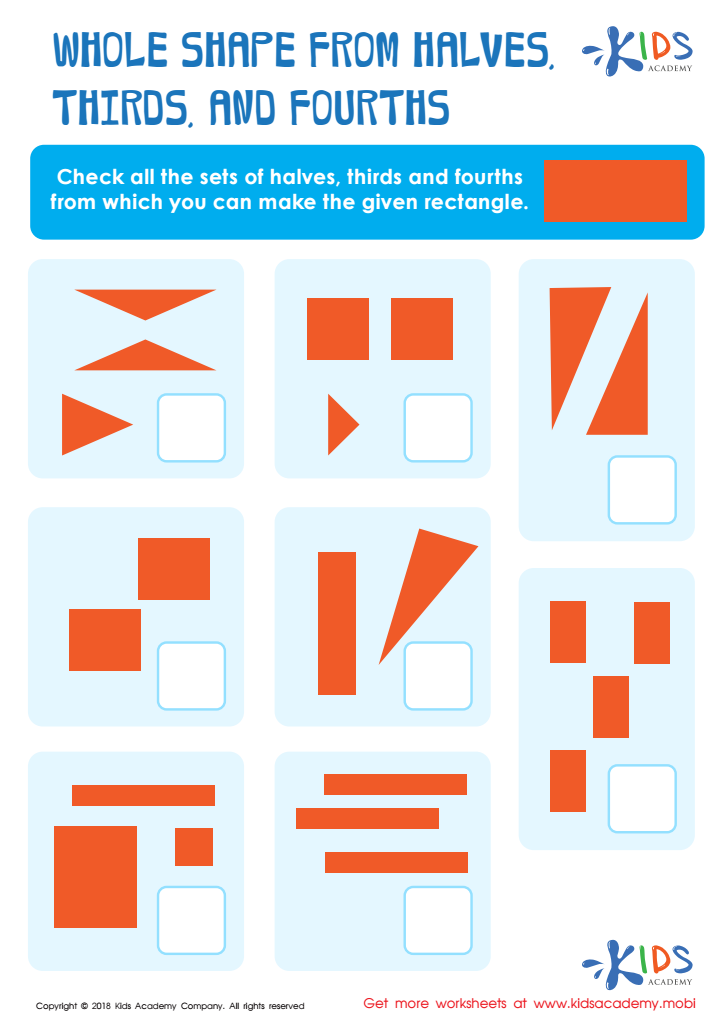
Whole Shape from Halves, Thirds and Fourths Worksheet
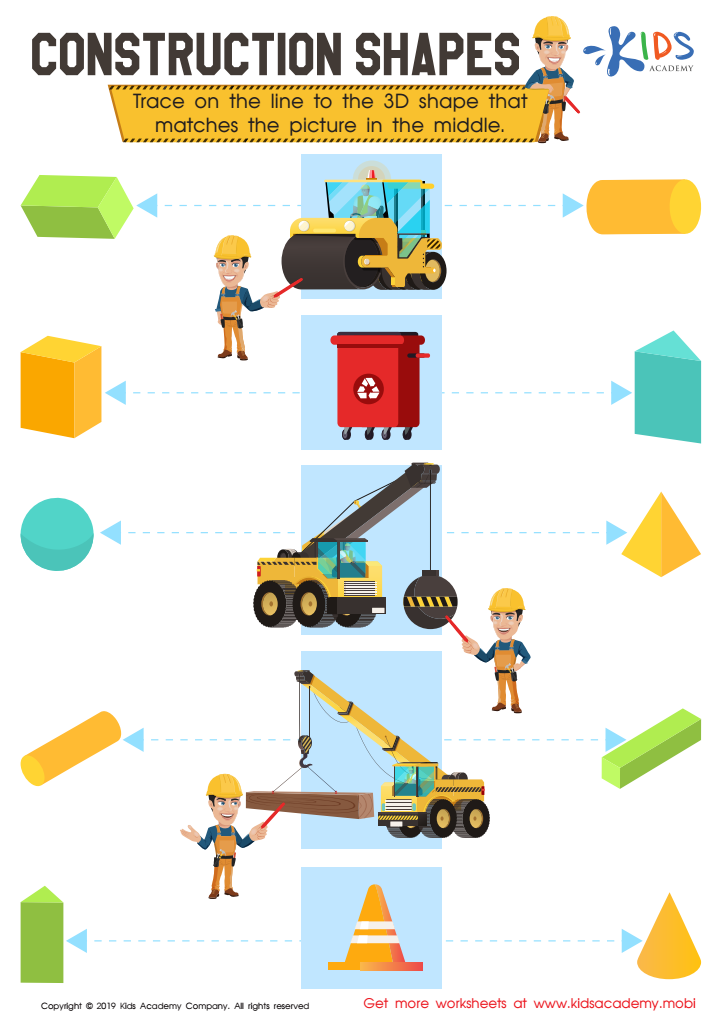
Construction Shapes Worksheet








Shape recognition is a crucial foundational skill for children ages 3-7. This early learning area prepares kids for more complex concepts in math and science, as well as enhancing cognitive development. Understanding shapes helps children categorize and describe the world around them, boosting their ability to communicate and comprehend their environment.
First, shape recognition nurtures spatial awareness, which is essential for geometry, art, and everyday tasks like navigating spaces and understanding maps. This spatial understanding also supports problem-solving and critical thinking skills. When children explore shapes, they learn to distinguish attributes like size, symmetry, and angles, which are vital for future academic success.
Moreover, shape recognition is intertwined with the development of fine motor skills. Activities like drawing and constructing shapes sharpen a child's ability to control movements, aiding in tasks like writing. Recognizing and naming shapes also builds vocabulary and language skills, forming connections between visual information and words.
Shape recognition is more than identifying circles and squares; it lays a framework for understanding patterns, structures, and logical systems. Encouraging this in early childhood fosters curiosity and sets the stage for lifelong learning. Thus, parents and teachers should prioritize shape recognition to give children a bright academic start and a well-rounded developmental foundation.








