Understanding fractions Geometry Worksheets for Ages 3-7 - Page 2
31 filtered results
-
From - To
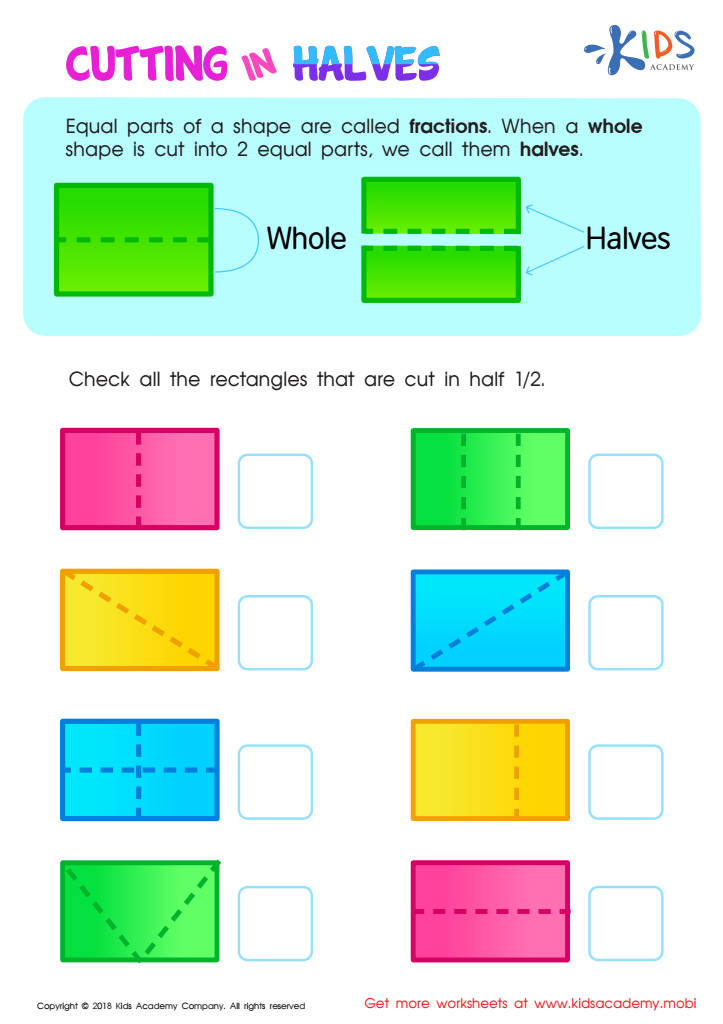
Cutting in Halves Worksheet
 Assign to My Students











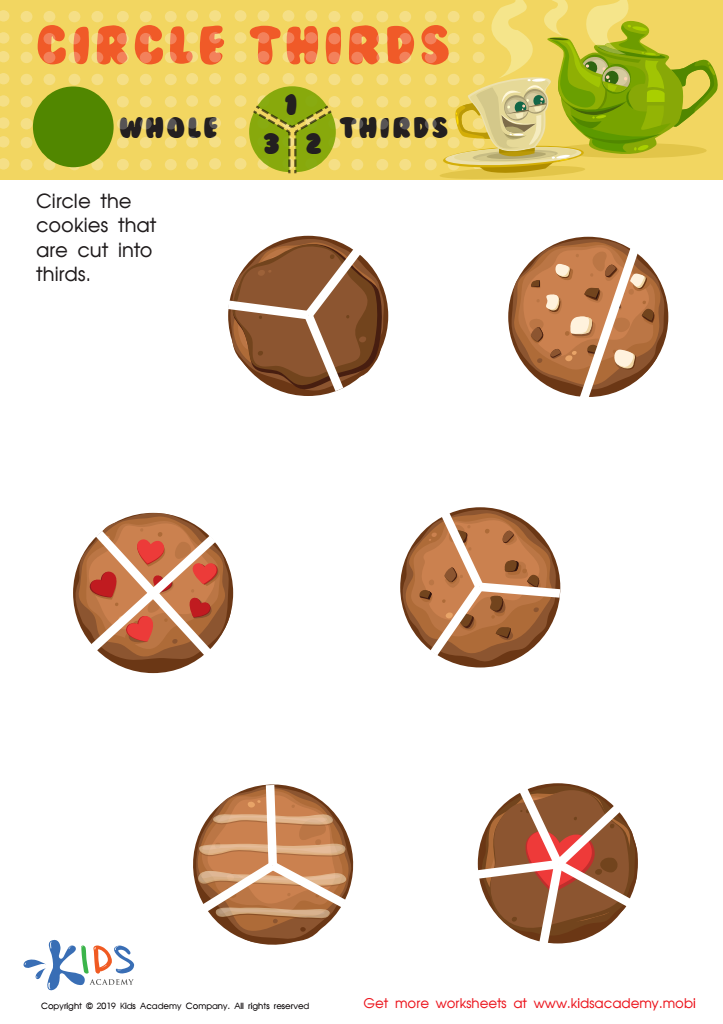
Circle Thirds Worksheet
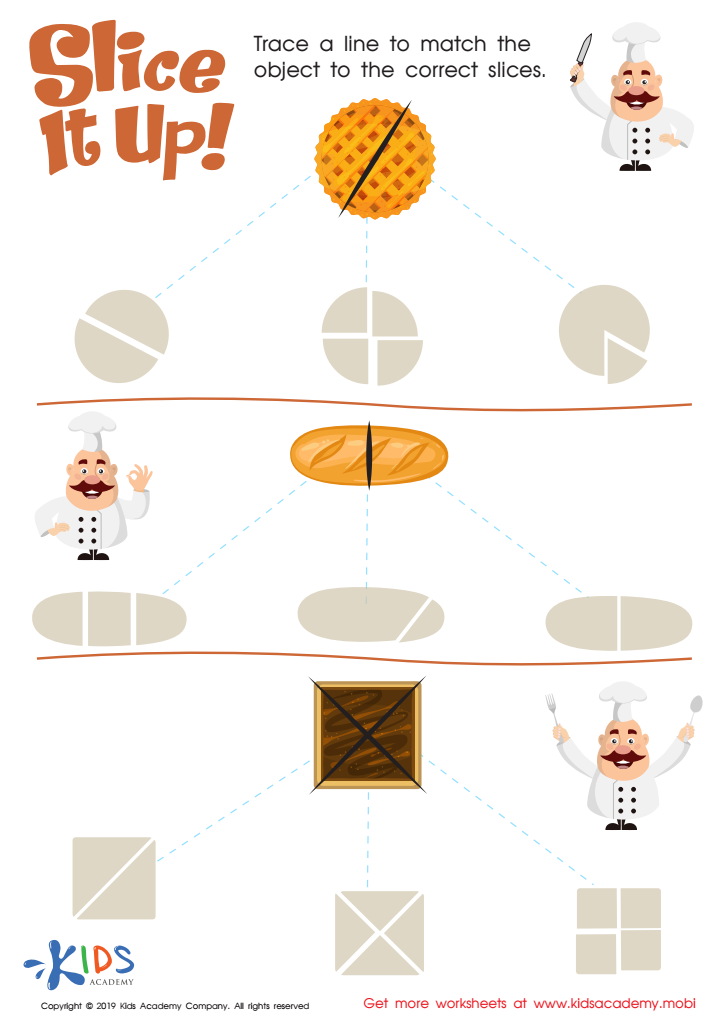
Slice It Up Worksheet
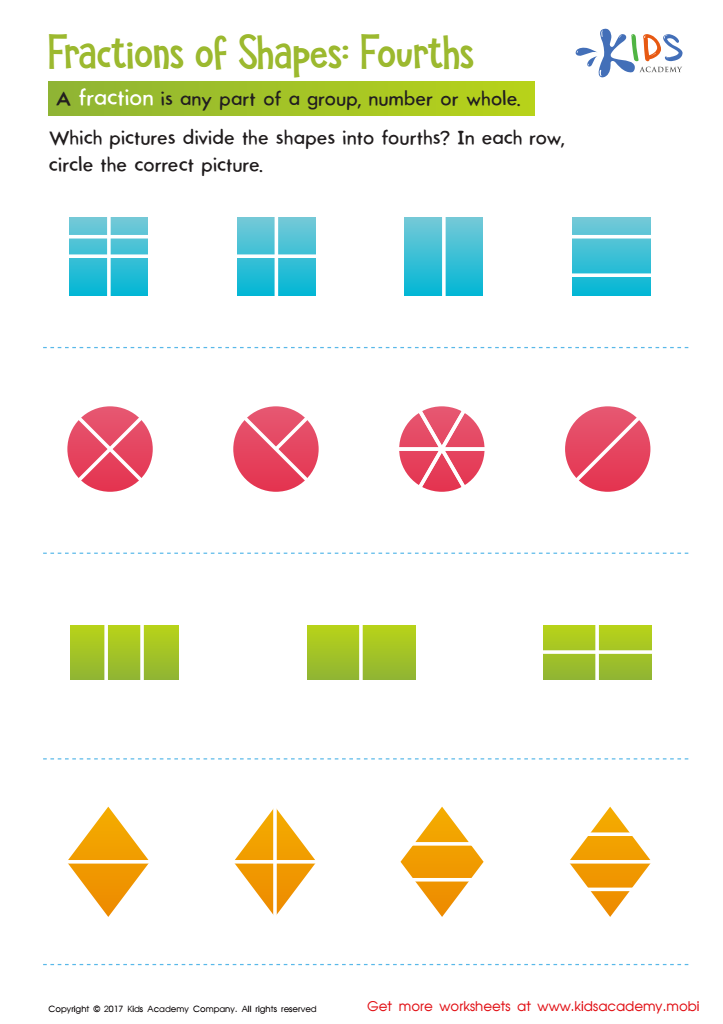
Fractions of Shapes Worksheet
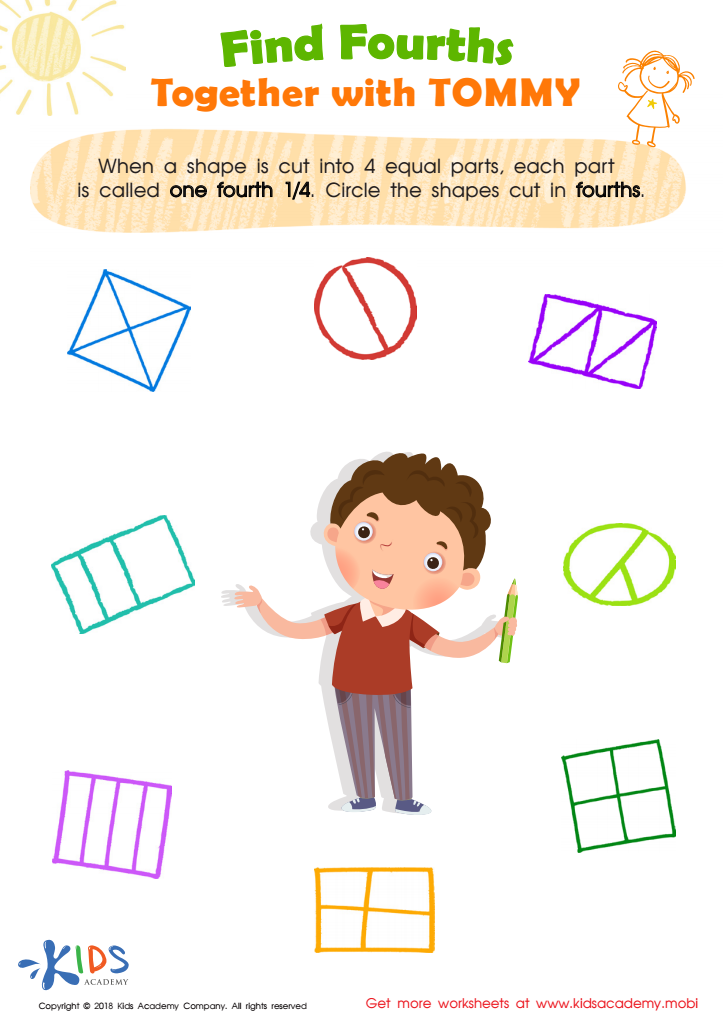
Find Fourths Together with Tommy Worksheet
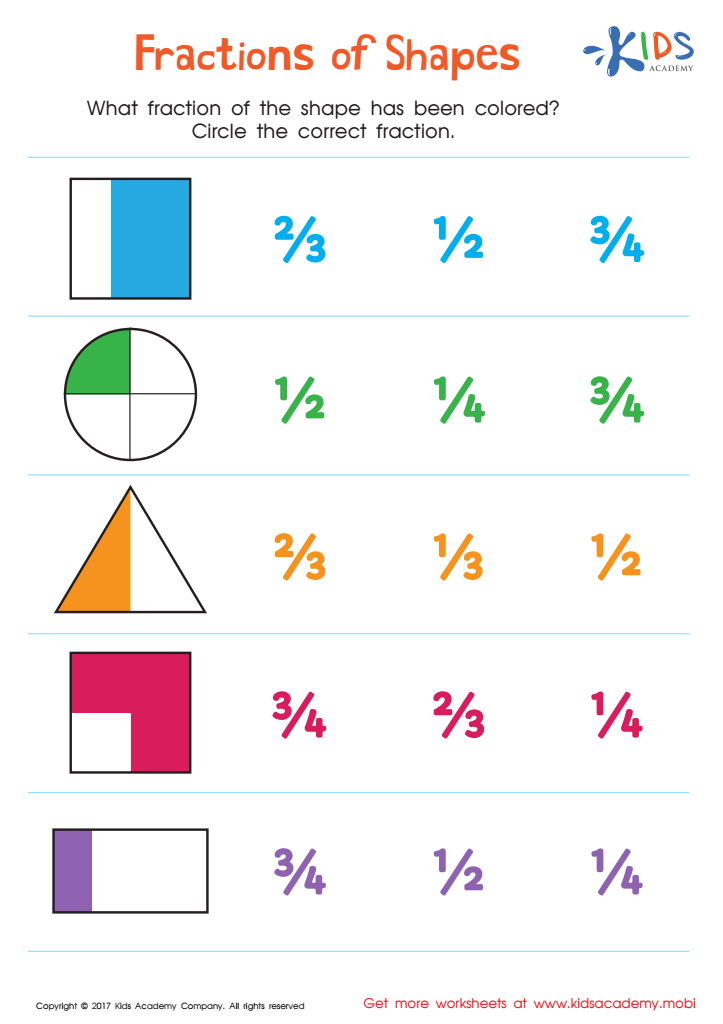
Fractions of Shapes: Math Concept Worksheet
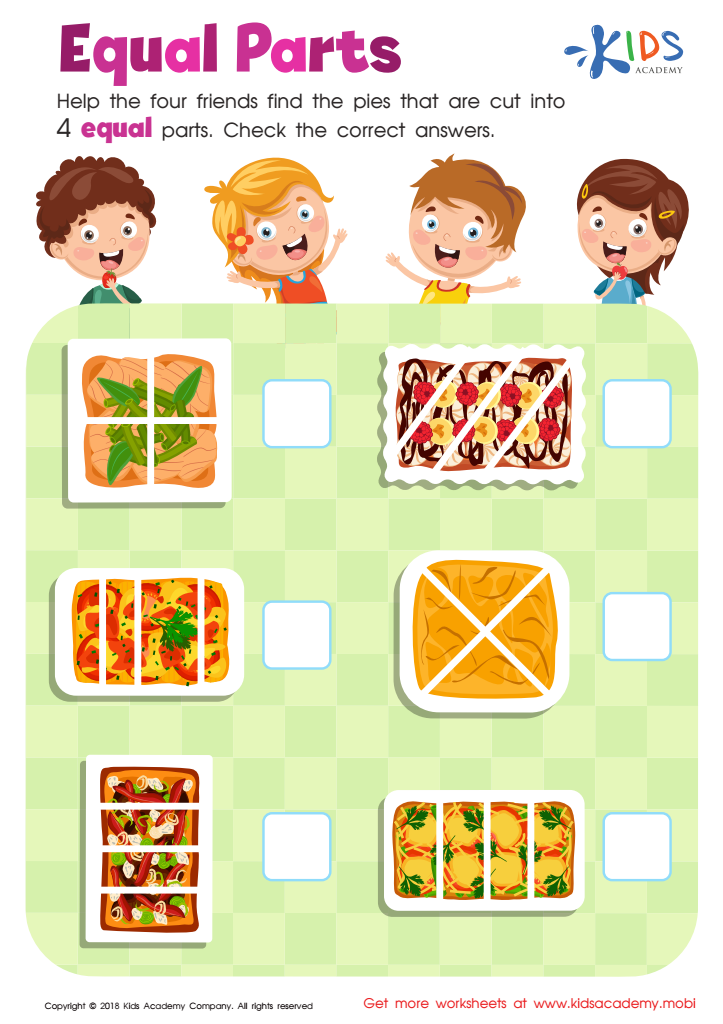
Equal Parts: Food Worksheet








Understanding fractions and geometry at an early age is essential for parents and teachers to focus on because it lays the foundation for advanced mathematical concepts and critical thinking skills. For children aged 3-7, early exposure to these ideas does more than prepare them for school requirements; it helps develop problem-solving abilities, spatial awareness, and logical reasoning.
Fractions introduce ideas about dividing and sharing, which are fundamentally important in both daily life and more complex math. Concepts like 'half' or 'quarter' teach children how pieces fit together to make a whole, fostering both numeracy and a deeper comprehension of parts and wholes. Geometry, through shapes like circles, squares, and triangles, is equally important. Recognizing and describing these shapes helps children understand their environment, improve fine motor skills, and even language development through the correct terms.
Incorporating these mathematical concepts from an early age can make future learning smoother and more intuitive. They don't just learn math—they see the beauty and applicability of it in everyday contexts, from cutting a pizza to organizing their toys. That early, enthusiastic engagement makes a huge difference, helping set the stage for lifelong curiosity and academic confidence. Hence, the care and effort parents and teachers invest in teaching fractions and geometry can have long-lasting, positive impacts on a child's academic journey and general life skills.








