Associative learning Numbers Worksheets for Ages 3-7
3 filtered results
-
From - To
Unlock the power of math for young minds with our Associative Learning Numbers Worksheets designed for ages 3-7. These engaging, printable sheets are crafted to enhance number recognition, counting skills, and early math concepts through fun, interactive activities. Perfect for preschoolers and early elementary students, each worksheet combines visual and hands-on methods to build a strong foundational understanding of numbers. Ideal for both classroom and home use, these worksheets will make learning numbers an exciting adventure while promoting cognitive development and associative thinking. Explore our comprehensive resources to spark a love for math in your child today!
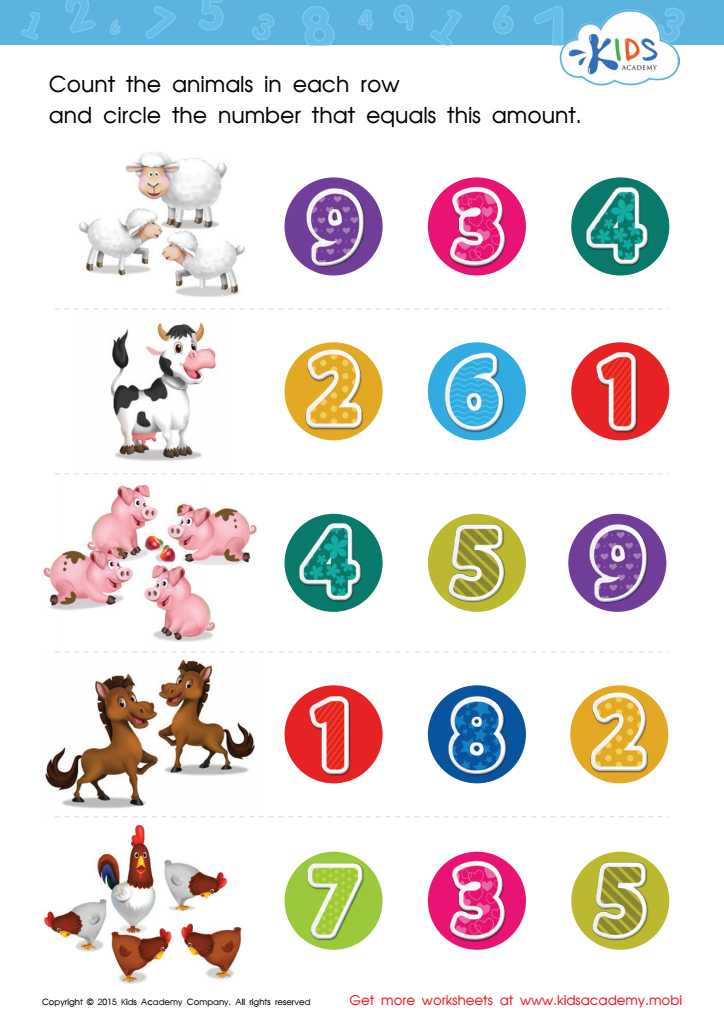
Count and Match 1 – 5 Math Worksheet
 Assign to My Students
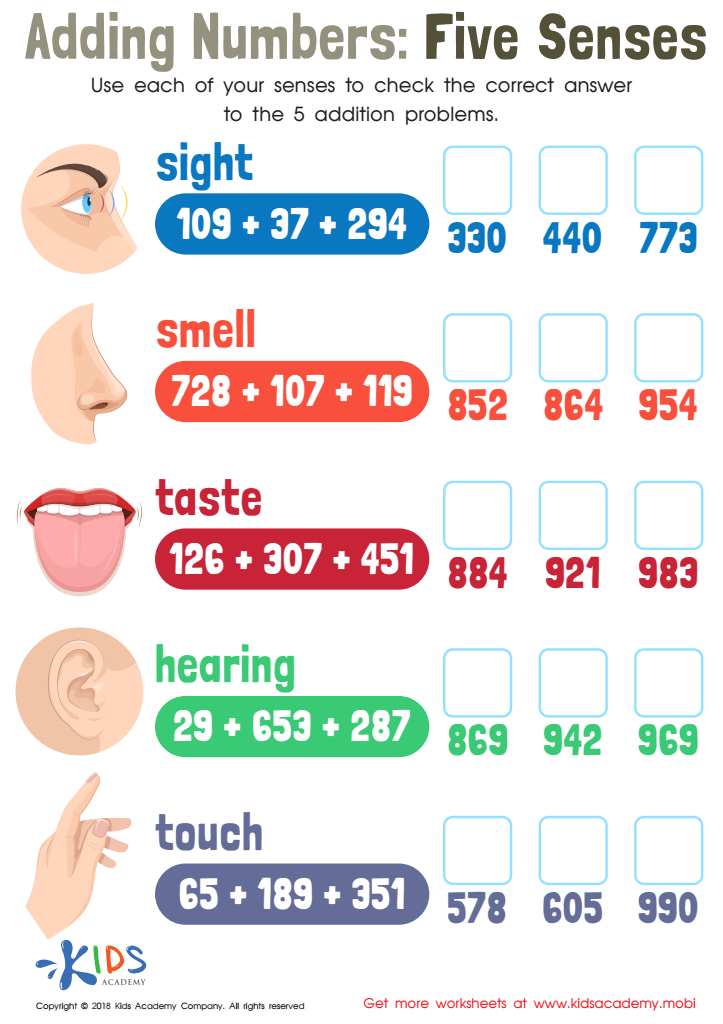
Adding Numbers: Five Senses Worksheet
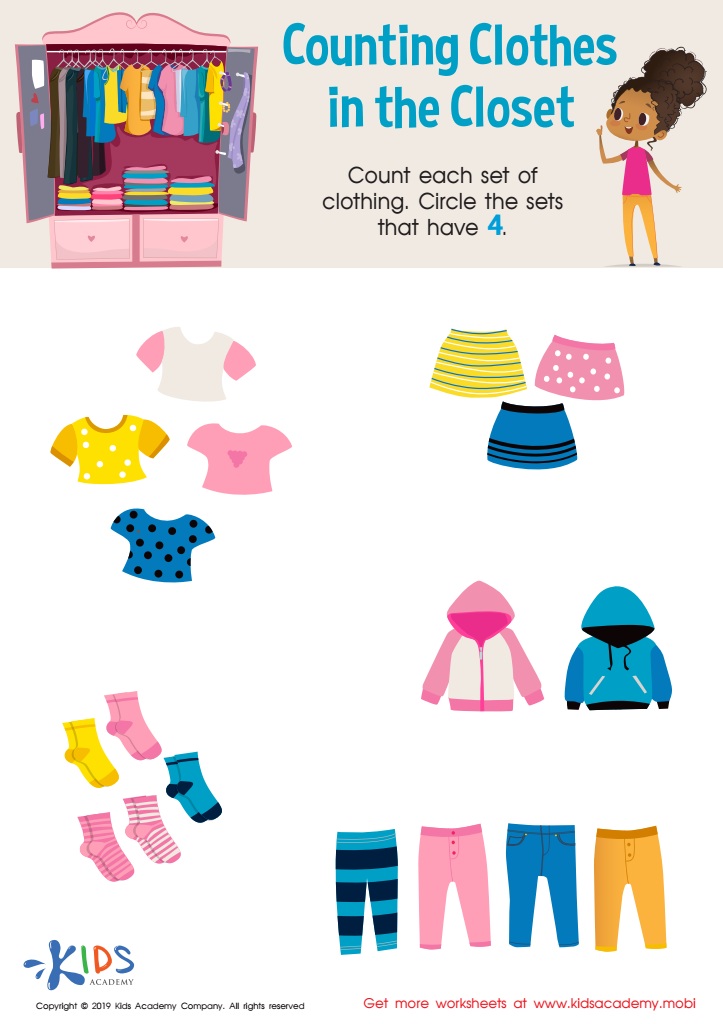
Counting Clothes Worksheet








Associative learning in numbers for ages 3-7 is fundamental for early childhood development as it lays a solid foundation for future mathematical understanding. At this developmental stage, children naturally begin to explore and recognize patterns, which is essential for mathematical thinking.
Parents and teachers should prioritize associative learning because it helps children make connections between numbers and real-world concepts, aiding cognitive development. For example, associating the number "5" with five apples reinforces numeric value and counting skills, crucial for learning addition and subtraction later on. This type of learning also improves memory and retention, as students often remember numbers better when they are linked with tangible objects or enjoyable activities.
Moreover, early engagement with associative learning nurtures problem-solving abilities and logical thinking. When children interact with numbers in a variety of contexts — like puzzles, games, or everyday situations — they learn versatility in applying mathematical concepts. This versatility is instrumental as they encounter more complex math scenarios in higher grades.
Finally, fostering an early love for number learning through associative techniques builds a positive attitude toward math. When children experience success and fun with numbers early on, they are more likely to continue enjoying and excelling in math, setting the stage for academic achievement across all subjects. For these reasons, both parents and teachers should enthusiastically support associative learning of numbers for young children.








