Developing math skills Numbers Worksheets for Ages 3-7
6 filtered results
-
From - To
Discover an engaging collection of numbers worksheets to develop math skills for children aged 3-7. These educational resources from Kids Academy are designed to make learning numbers fun and interactive. Our worksheets cover essential math concepts such as counting, number recognition, and basic arithmetic. Each activity is thoughtfully created to suit young minds and cater to different learning styles. By practicing with these worksheets, children build a strong foundation in math, boost their confidence, and enjoy the learning process. Help your little ones achieve math proficiency with our expertly crafted numbers worksheets.
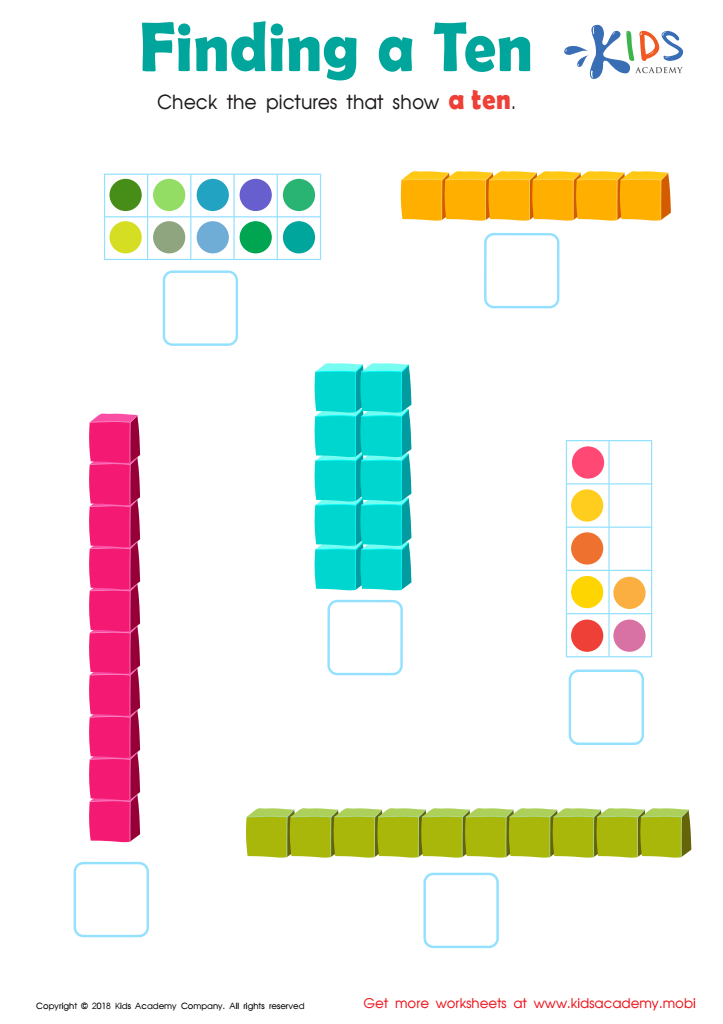
Finding a Ten Worksheet
 Assign to My Students
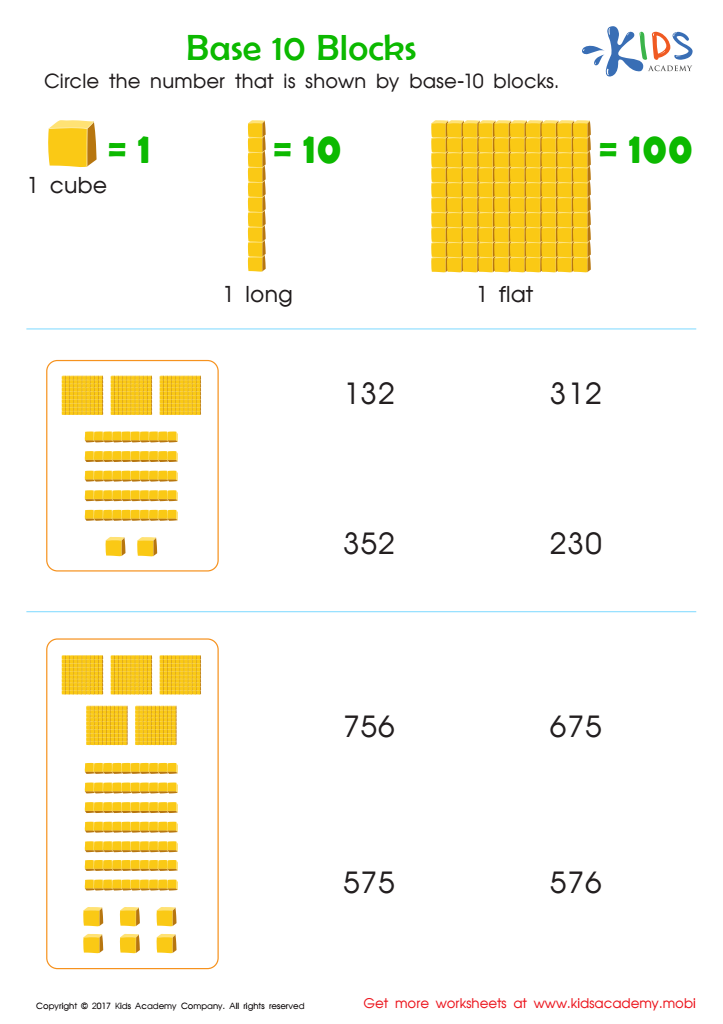
Base Ten Blocks Worksheet
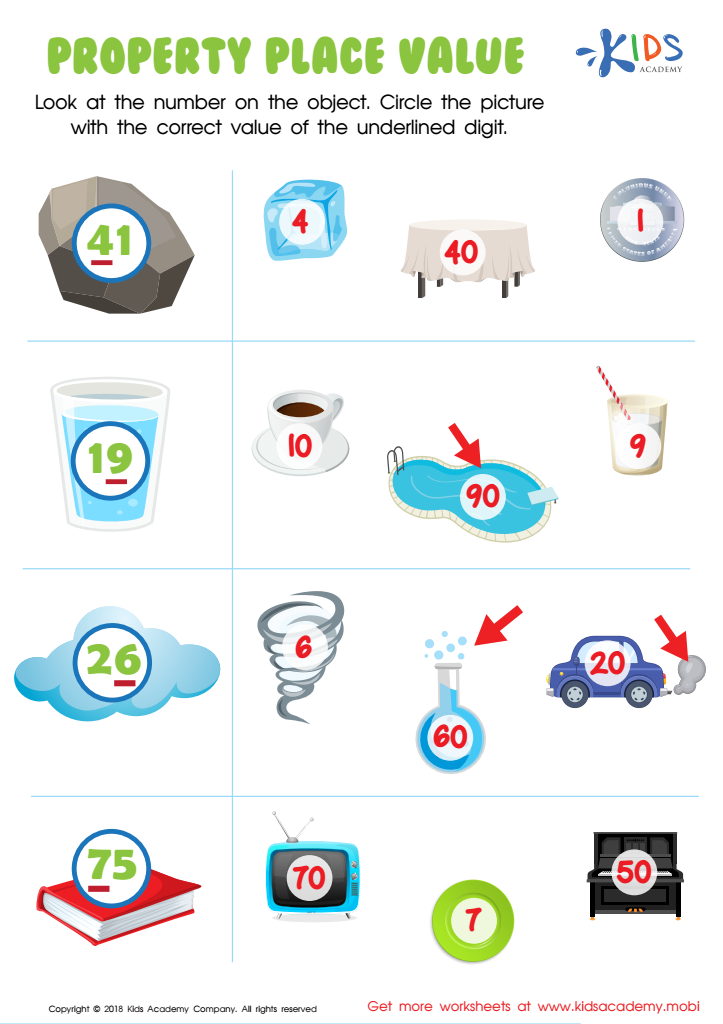
Property Place Value Worksheet
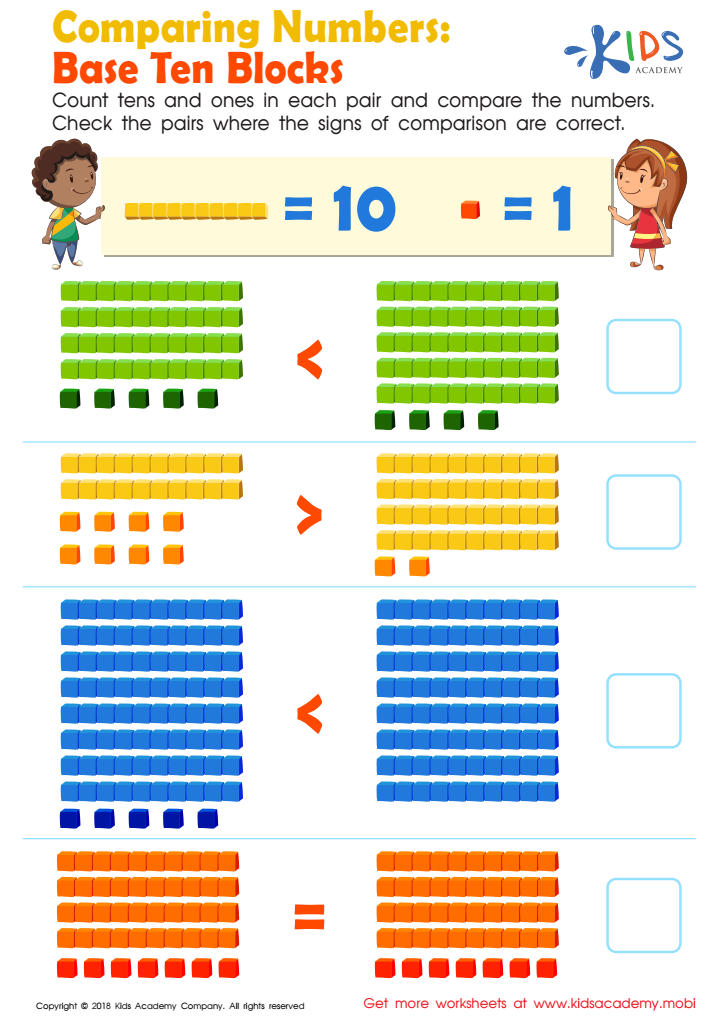
Comparing Numbers: Base Ten Blocks Worksheet
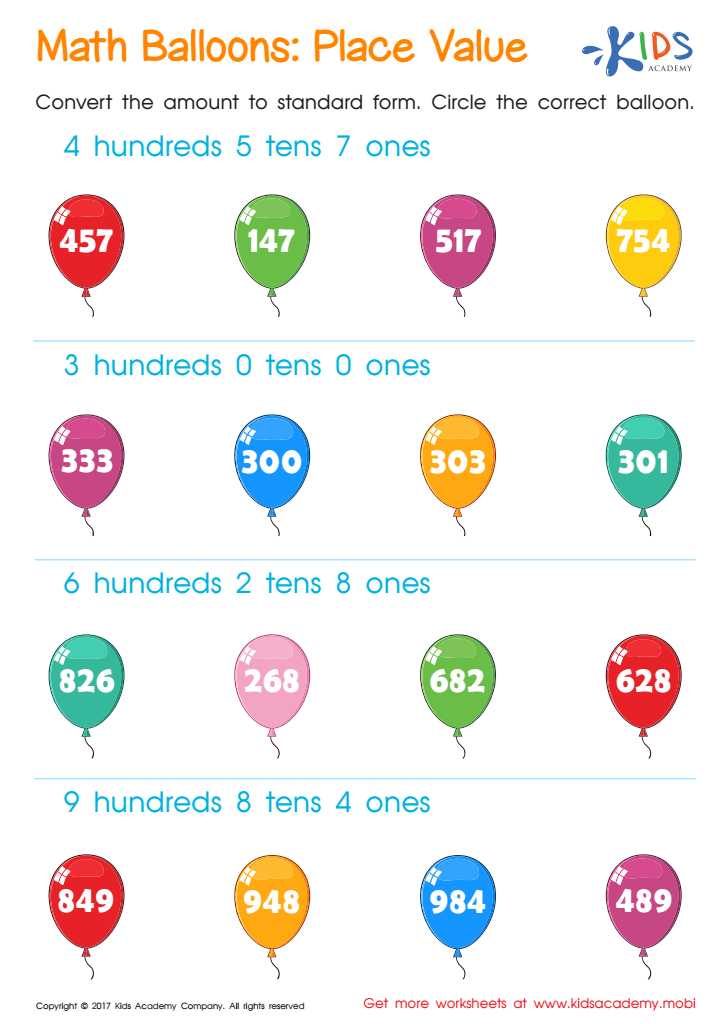
Place Value Printable Worksheet
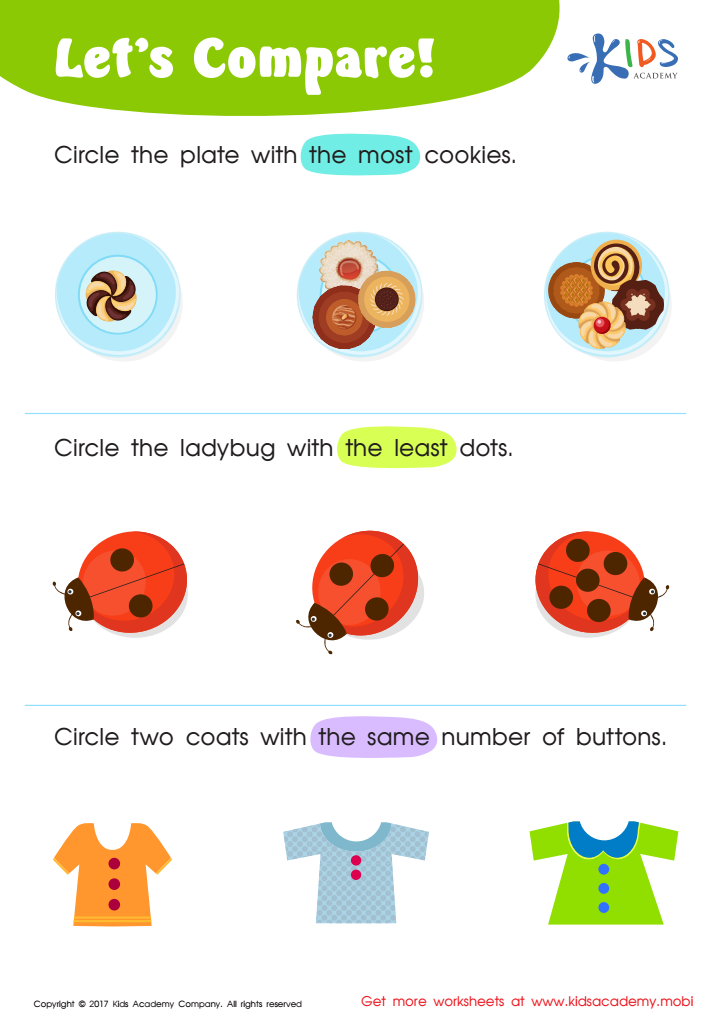
Matching: Classifying Toys by Size Worksheet




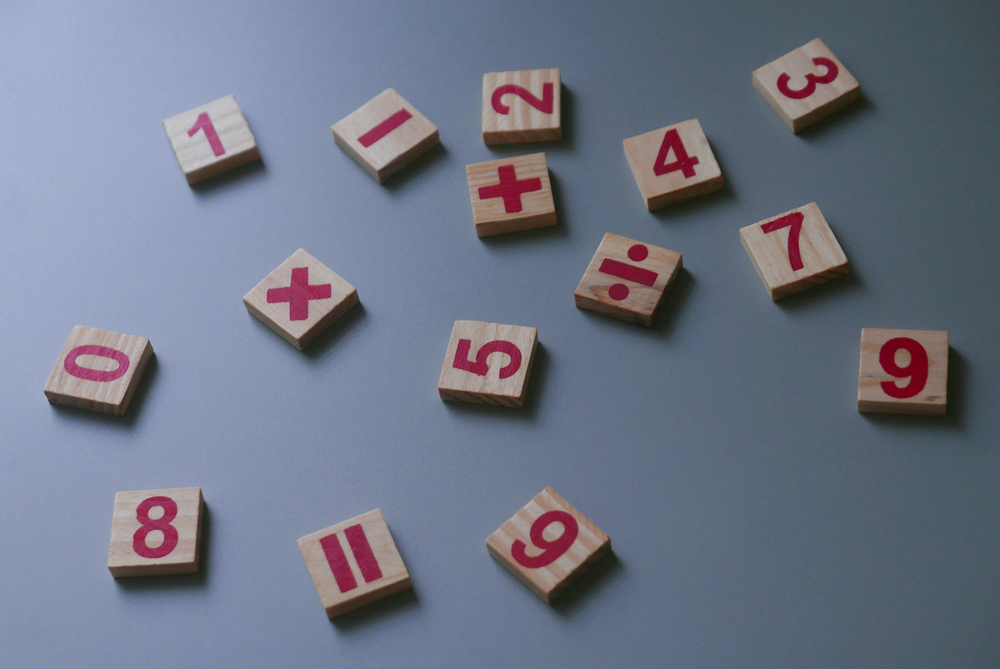



Developing math skills for children aged 3-7 is crucial for several reasons. During these formative years, young minds are highly receptive and capable of acquiring new skills rapidly. Introducing math concepts early helps build a strong foundation for future learning, as early math proficiency is closely linked to later academic achievement, particularly in STEM (Science, Technology, Engineering, and Mathematics) subjects.
Mathematics teaches problem-solving, reasoning, and critical thinking skills, which are essential across various aspects of life. By nurturing these skills from a young age, parents and teachers can help children become confident and independent thinkers. Early engagement with numbers, patterns, and spatial awareness can also boost memory and cognitive abilities, giving children a strong start in their overall intellectual development.
Moreover, exposure to math concepts in a playful and engaging manner can foster a positive attitude towards the subject, counteracting the common math anxiety prevalent in older children and adults. Parents and teachers play a vital role in creating a supportive and stimulating environment that encourages curiosity and exploration of math in everyday activities. Whether through simple counting games, puzzles, or measuring ingredients during cooking, integrating math into daily routines makes it a natural and enjoyable part of learning. Overall, investing in early math skills equips children with the tools they need for future success, both academically and in life.








