Analytical skills Math Worksheets for Ages 3-7
5 filtered results
-
From - To
Discover "Analytical Skills Math Worksheets for Ages 3-7" at Kids Academy, a fun and engaging way to enhance young minds. Our worksheets foster critical thinking and problem-solving abilities through exciting, age-appropriate math challenges. Designed to align with early education standards, these resources help children develop core mathematical skills, such as pattern recognition, sequencing, and logical reasoning. Each worksheet is crafted to captivate and inspire curiosity, making learning an enjoyable adventure. Perfect for parents and educators seeking to nurture a strong mathematical foundation from an early age, our printable activities are a valuable tool for preschool and early grade students.
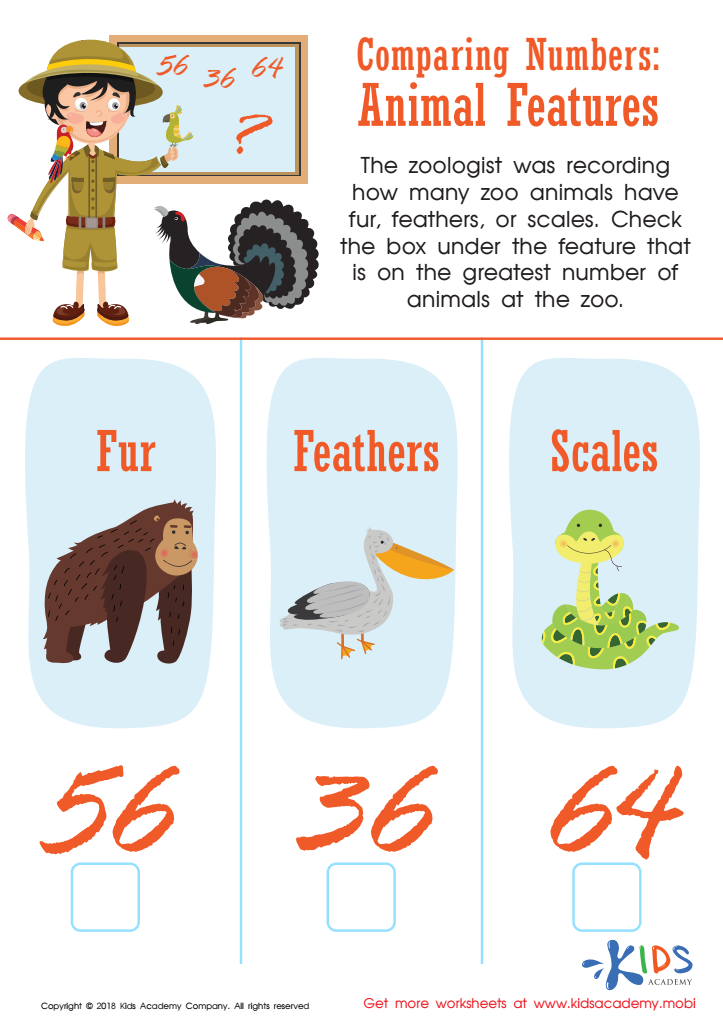
Animal Features Worksheet
 Assign to My Students
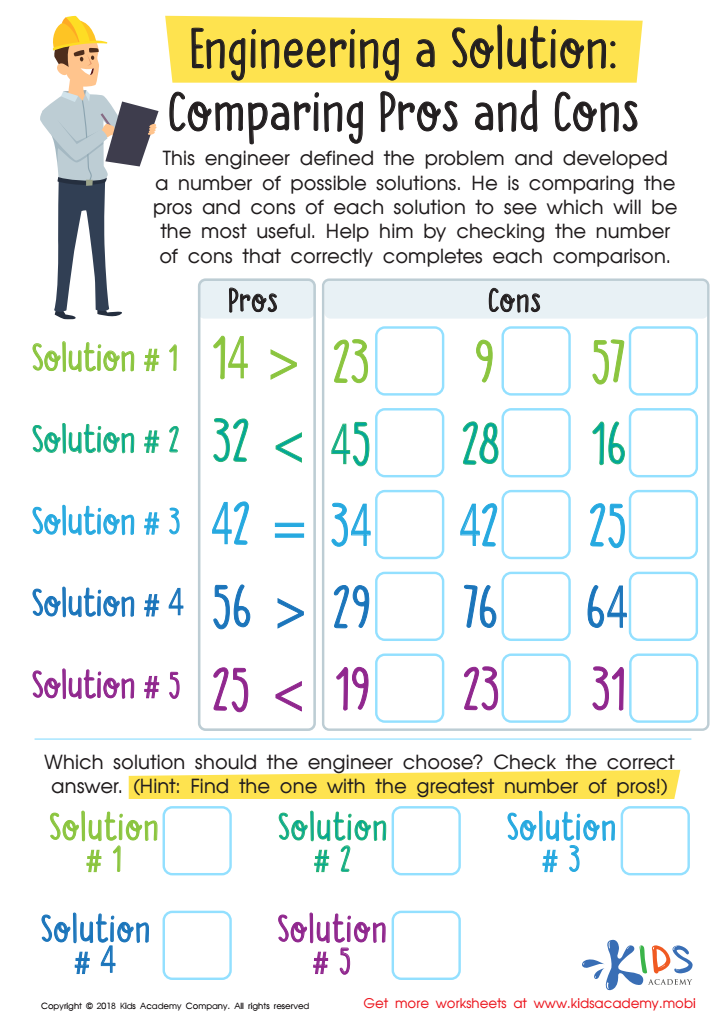
Engineering a Solution: Comparing Pros and Cons Worksheet
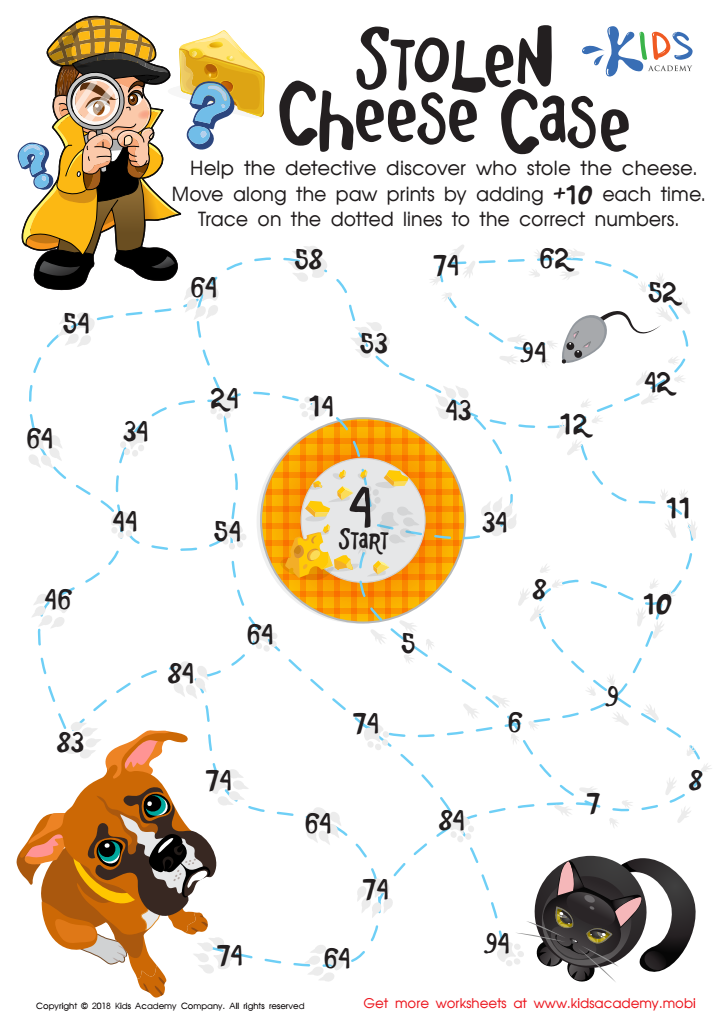
Stolen Cheese Case Maze Worksheet
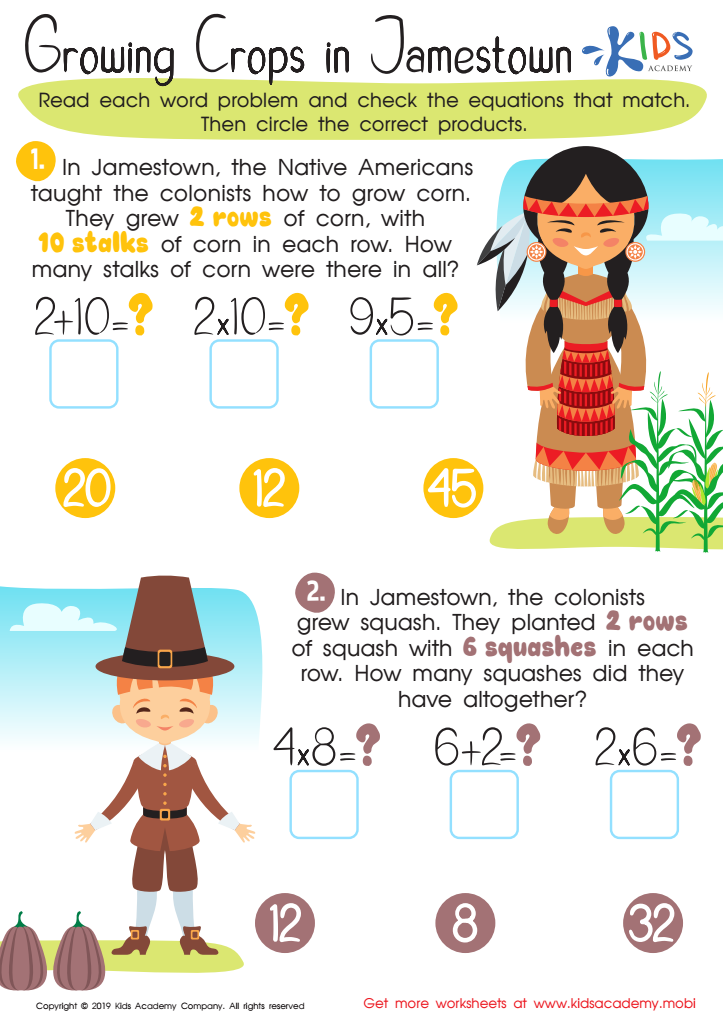
Growing Jamestown Worksheet
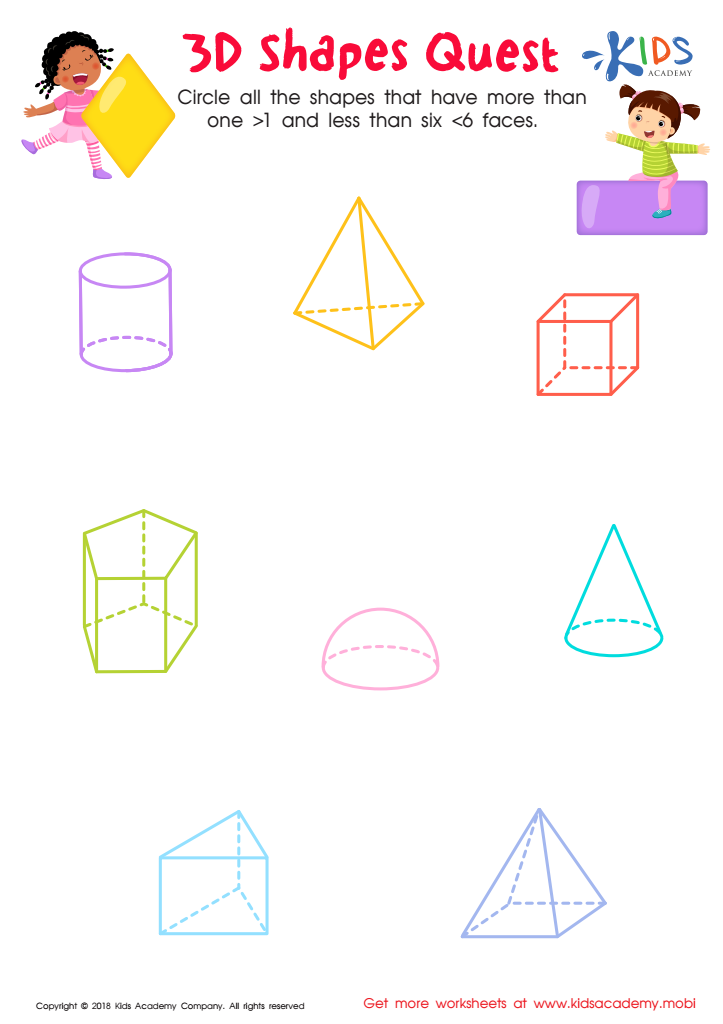
3D Shapes Quest Worksheet







Parents and teachers should care deeply about developing analytical skills in math for children aged 3-7 because these foundational years are crucial for cognitive development. At this stage, young minds are exceptionally receptive to learning and developing critical thinking skills that will serve them throughout their lives. Analytical skills in math involve problem-solving, logical reasoning, and the ability to understand and manipulate numbers and shapes.
By fostering these skills early on, children learn how to approach challenges methodically, break down complex tasks into manageable steps, and think critically about solutions. This not only aids in their mathematical understanding but also enhances overall cognitive flexibility, leading to improved performance in other subjects and real-life situations.
Moreover, building strong analytical foundations in math sets the stage for future academic achievement. Reports and studies consistently show that early math skills are strong predictors of later academic success. For parents and teachers, making math fun and engaging through games, interactive activities, and daily life examples can help sustain children's interest and enthusiasm for the subject.
In essence, emphasizing analytical skills in math for young children nurtures an inquisitive mindset, boosts self-confidence, and equips them with valuable tools to succeed academically and in everyday problem-solving.








