Animal recognition Math Worksheets for Ages 3-7
111 filtered results
-
From - To
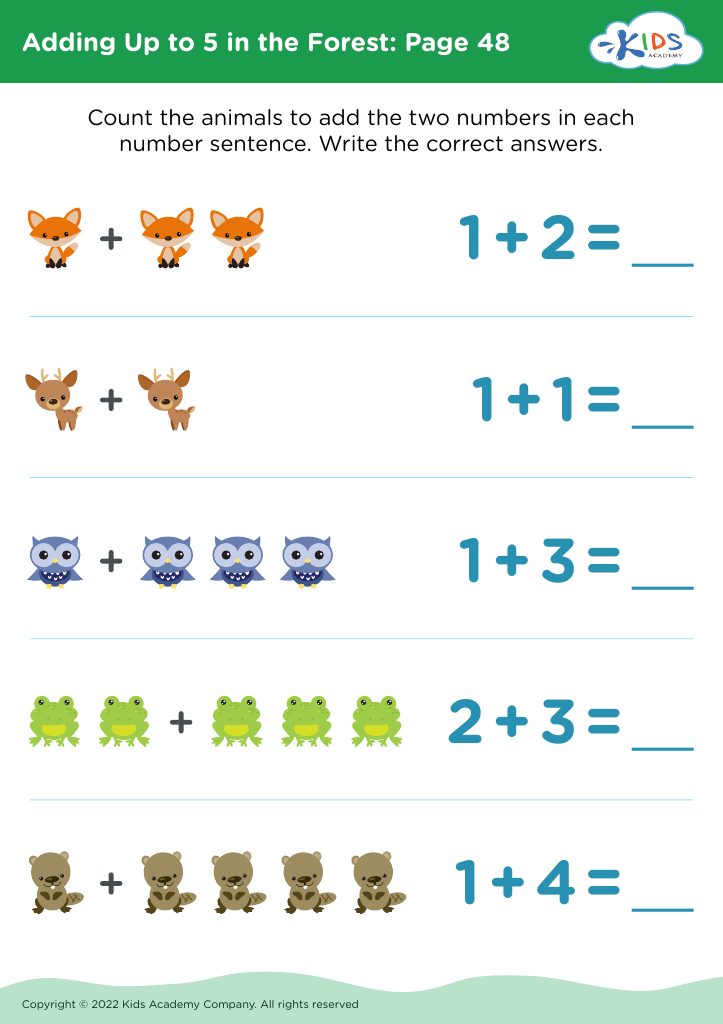
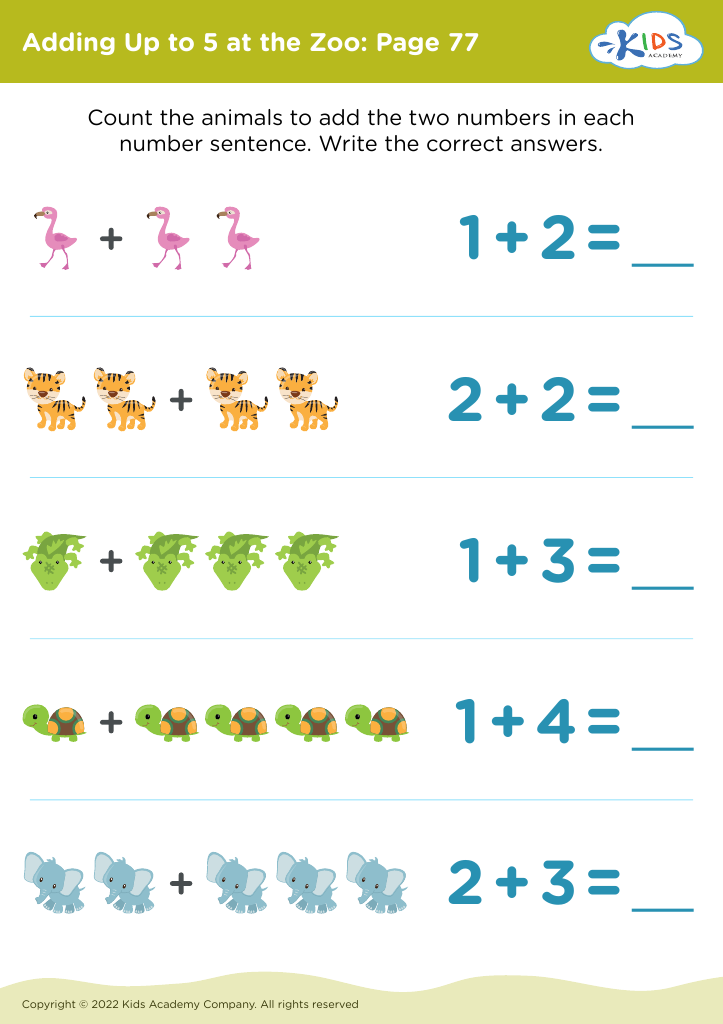
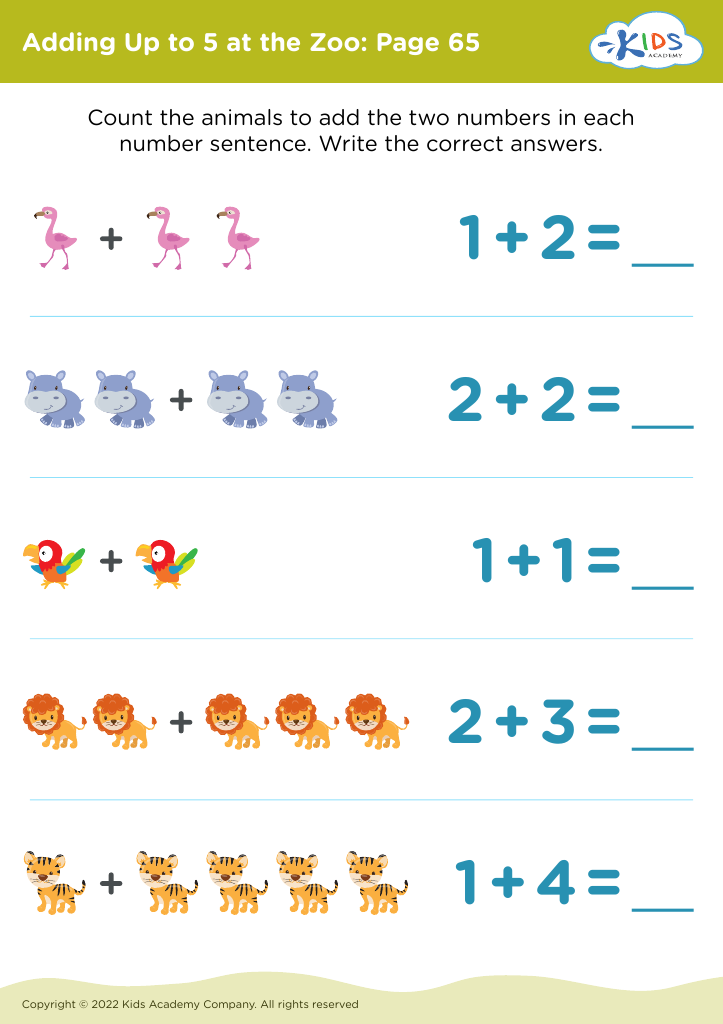
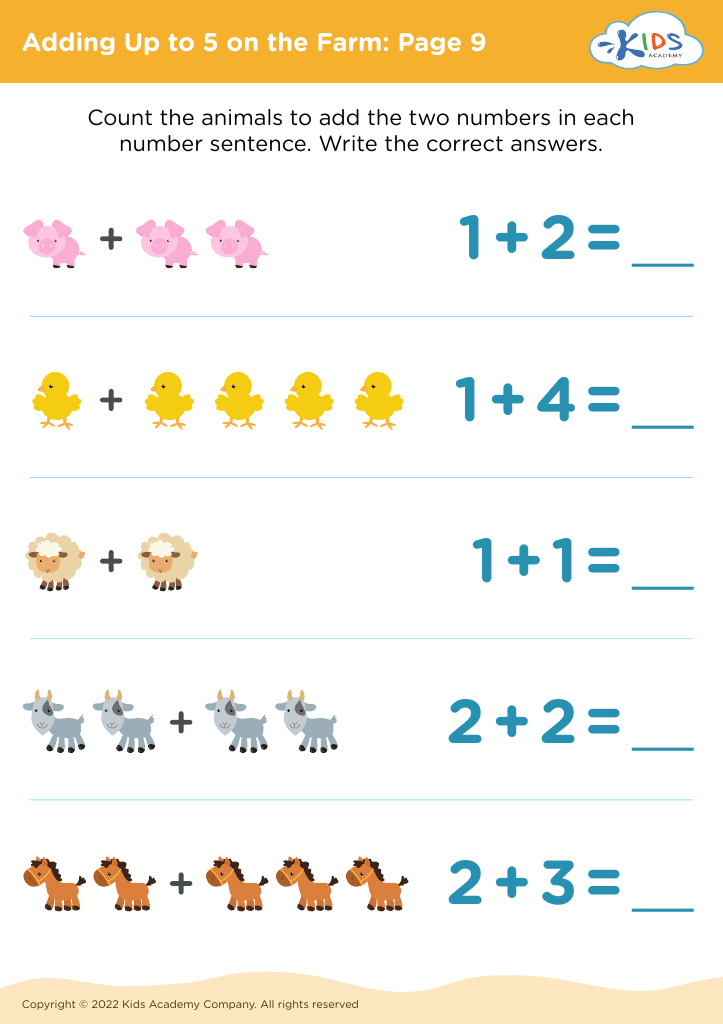
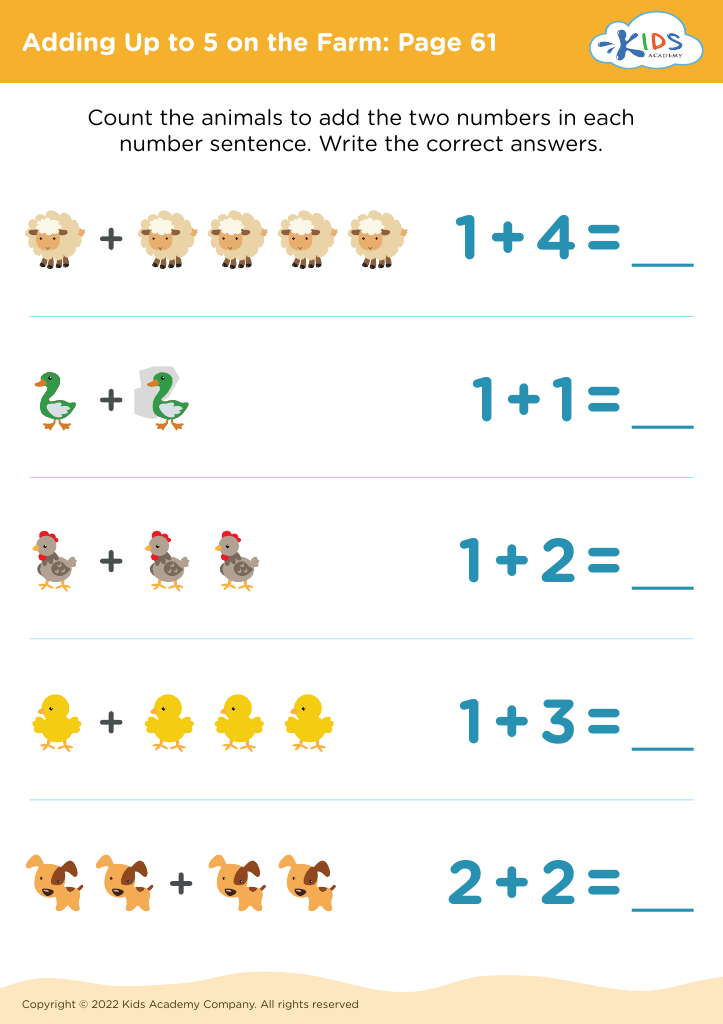
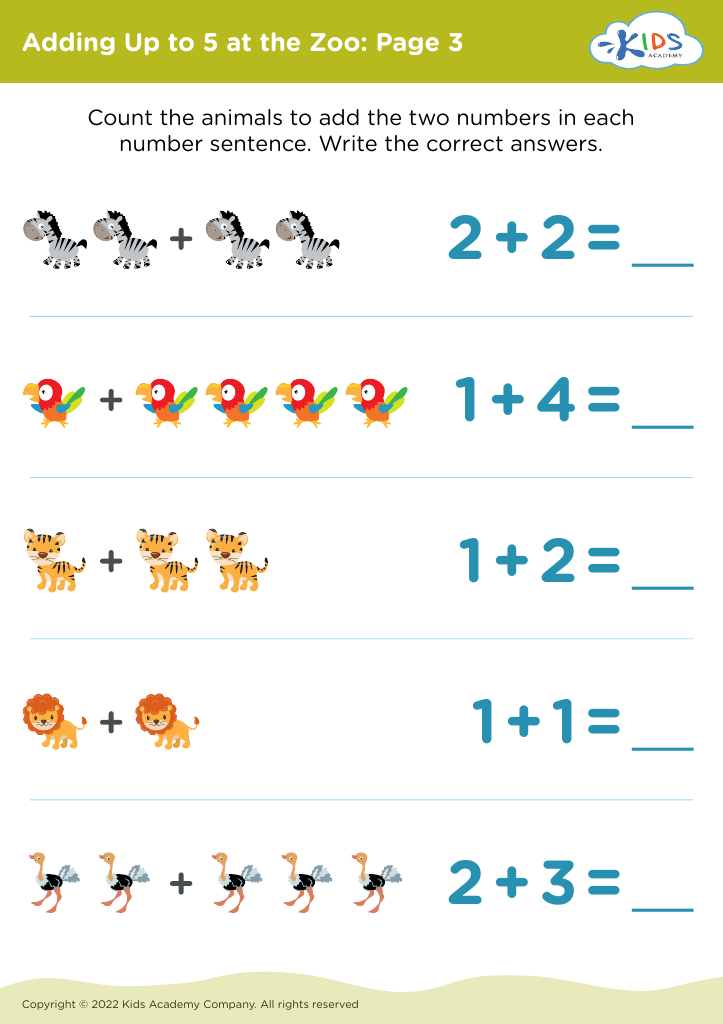
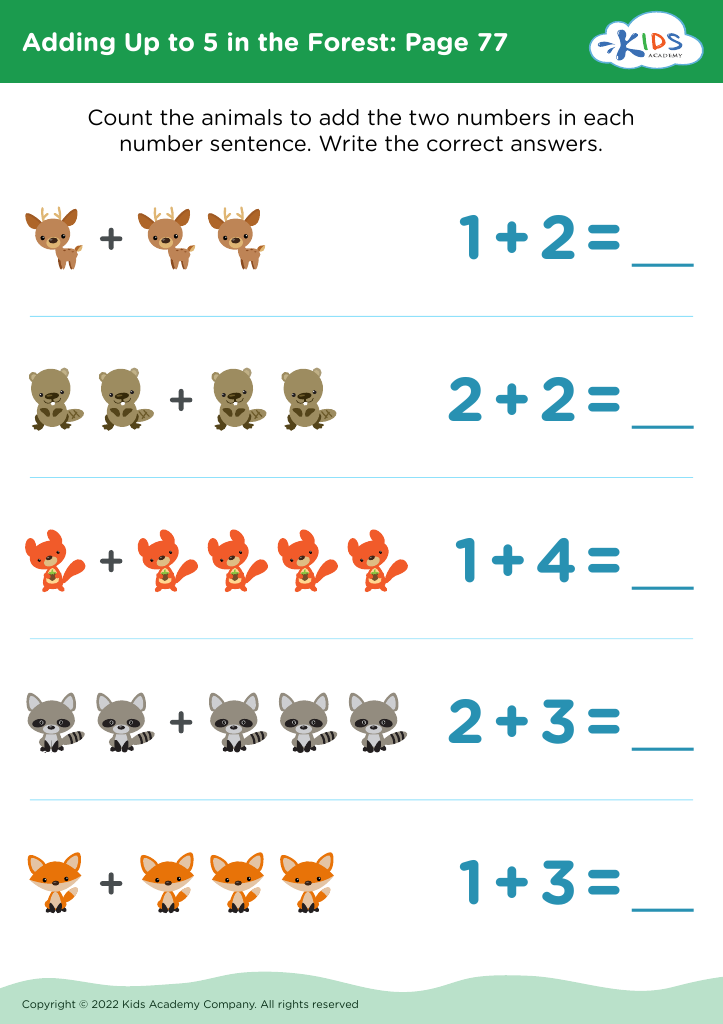
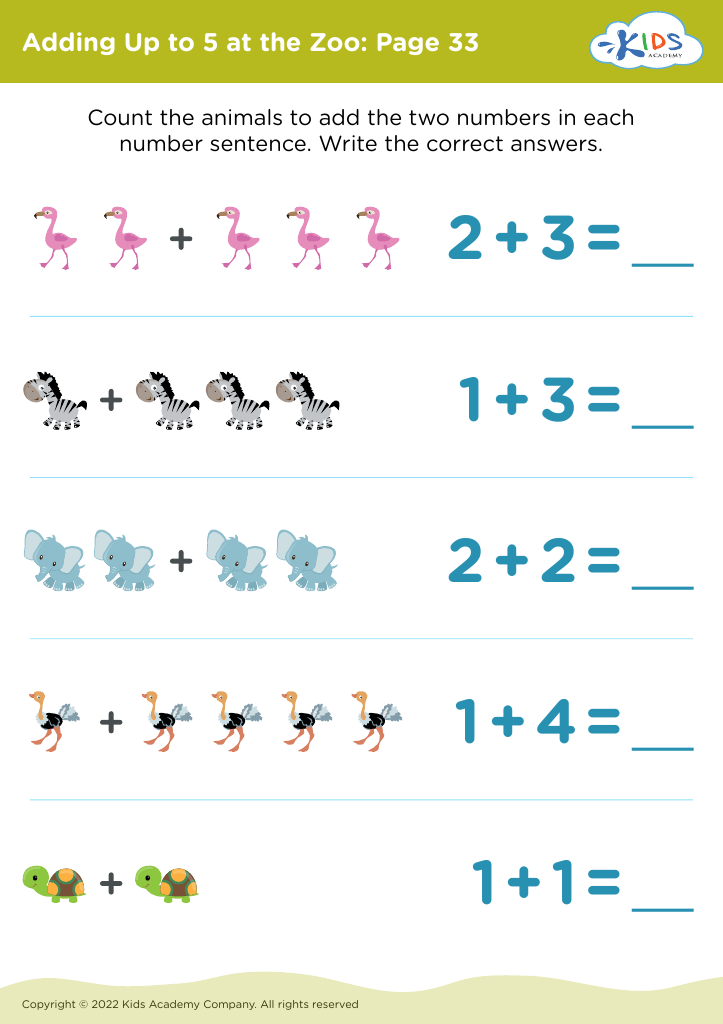
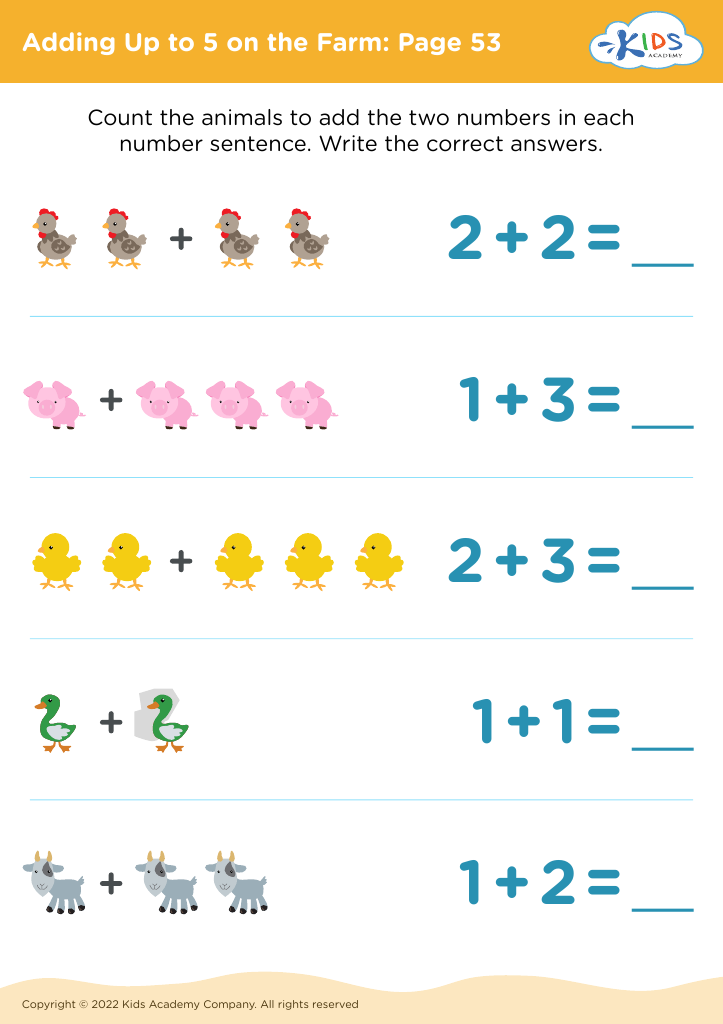
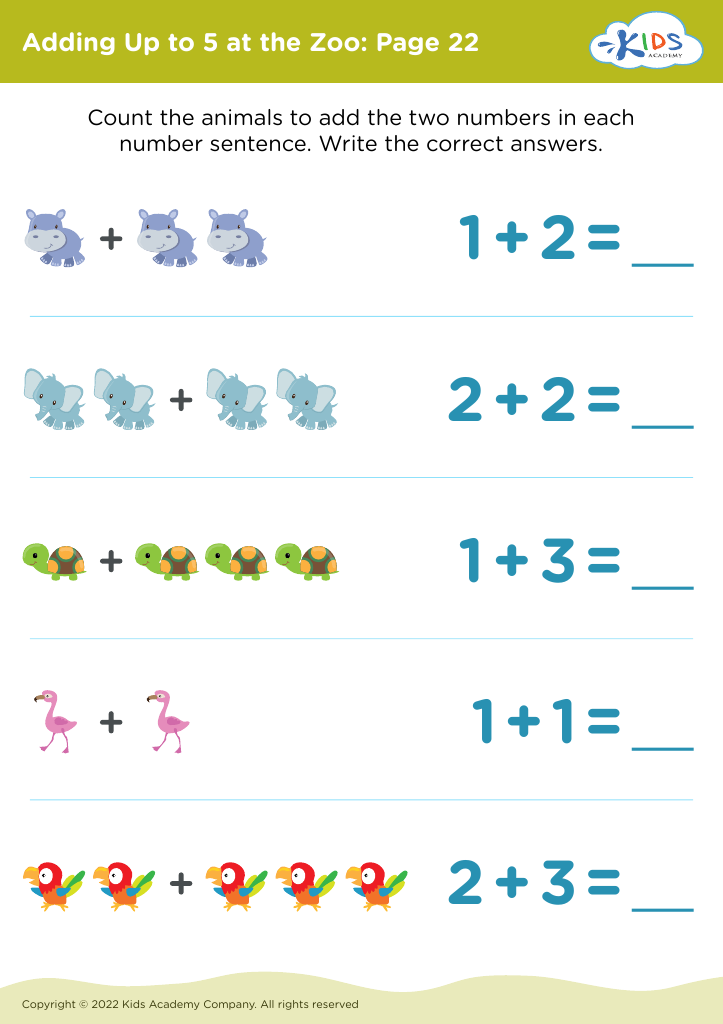
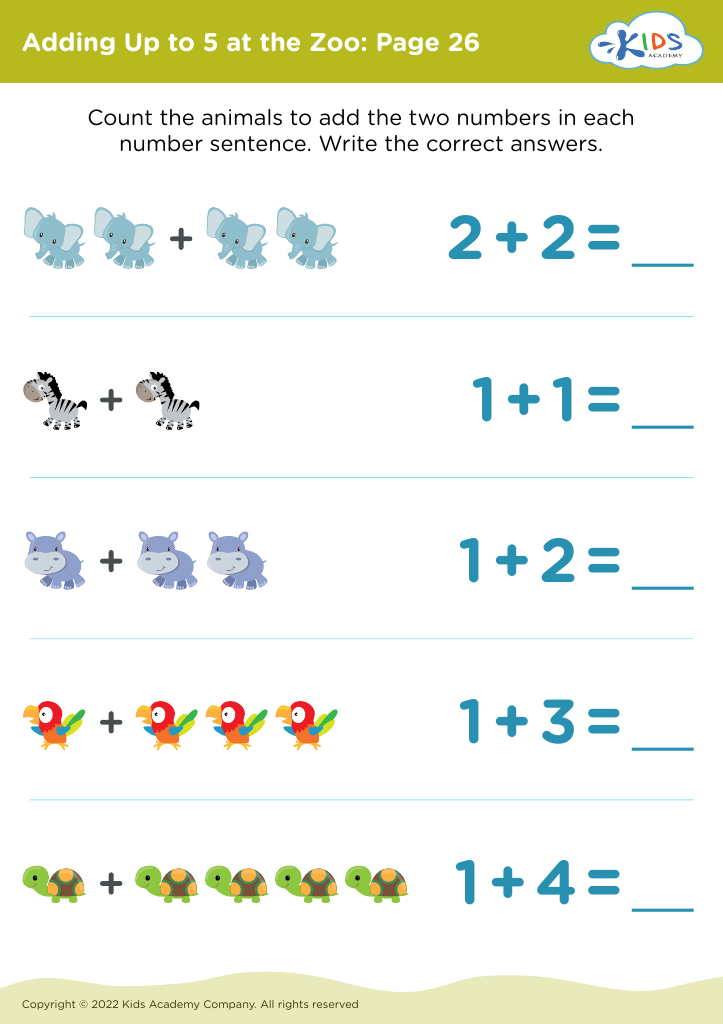
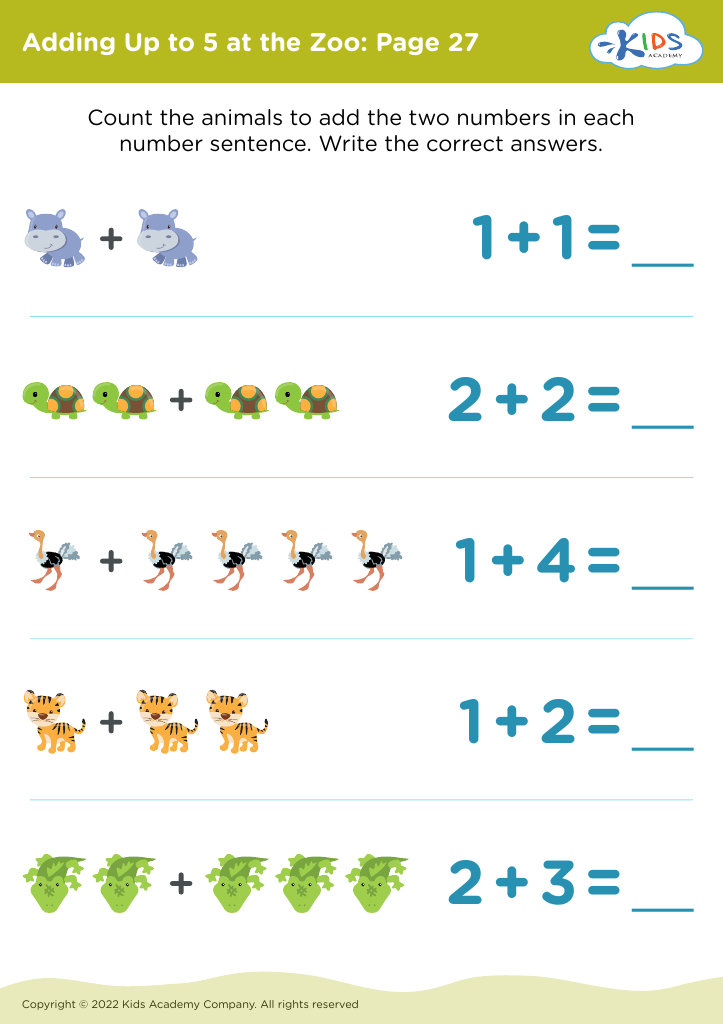
Discover our engaging Animal Recognition Math Worksheets designed specifically for kids ages 3-7! These fun, interactive worksheets combine essential math concepts with exciting animal themes to captivate young learners. Children will develop vital skills such as counting, sorting, and addition while identifying their favorite animals. The colorful illustrations and age-appropriate activities make learning enjoyable and stimulating. Perfect for classroom settings or home practice, these worksheets foster early mathematical understanding, boost confidence, and inspire a love for learning. Explore our wide range of animal-themed math challenges and watch your child thrive in both math and animal recognition skills!
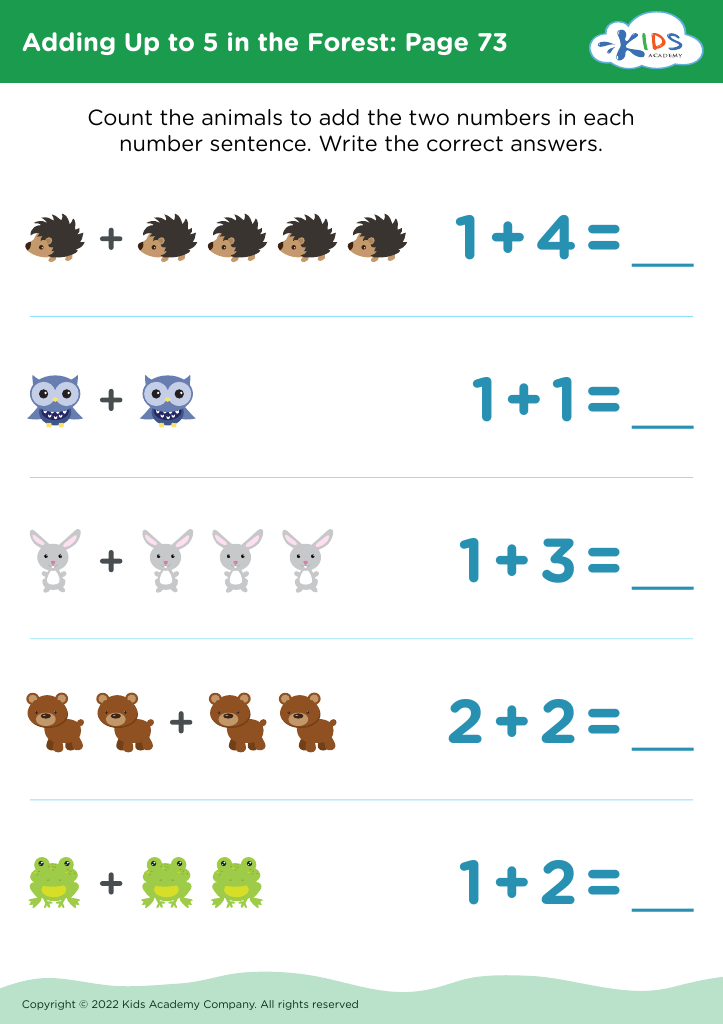
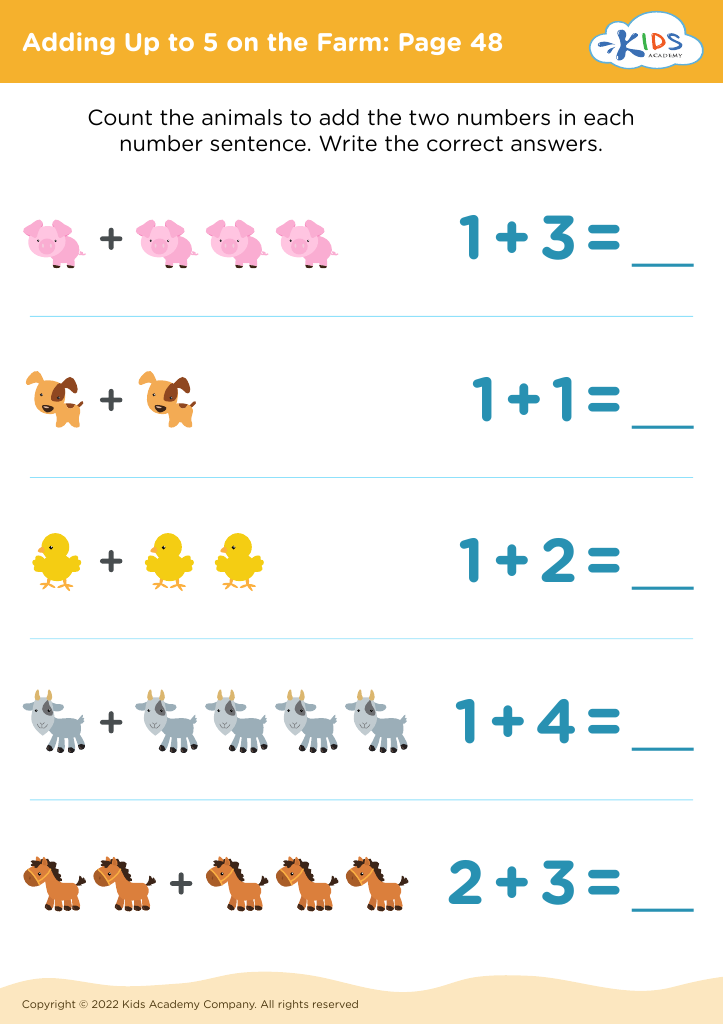
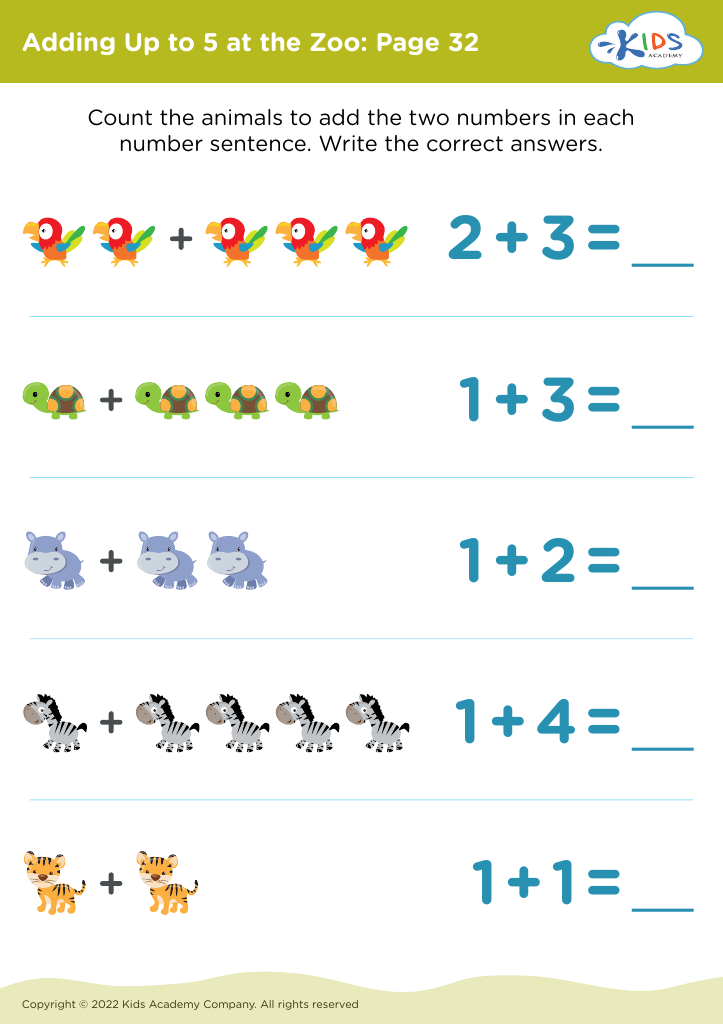
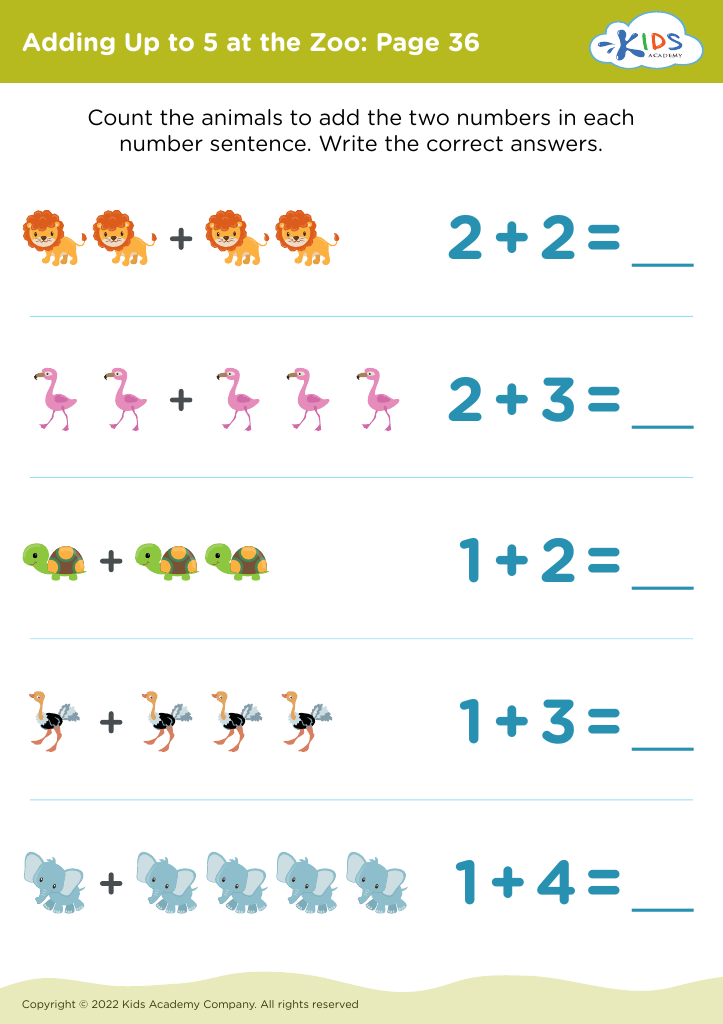
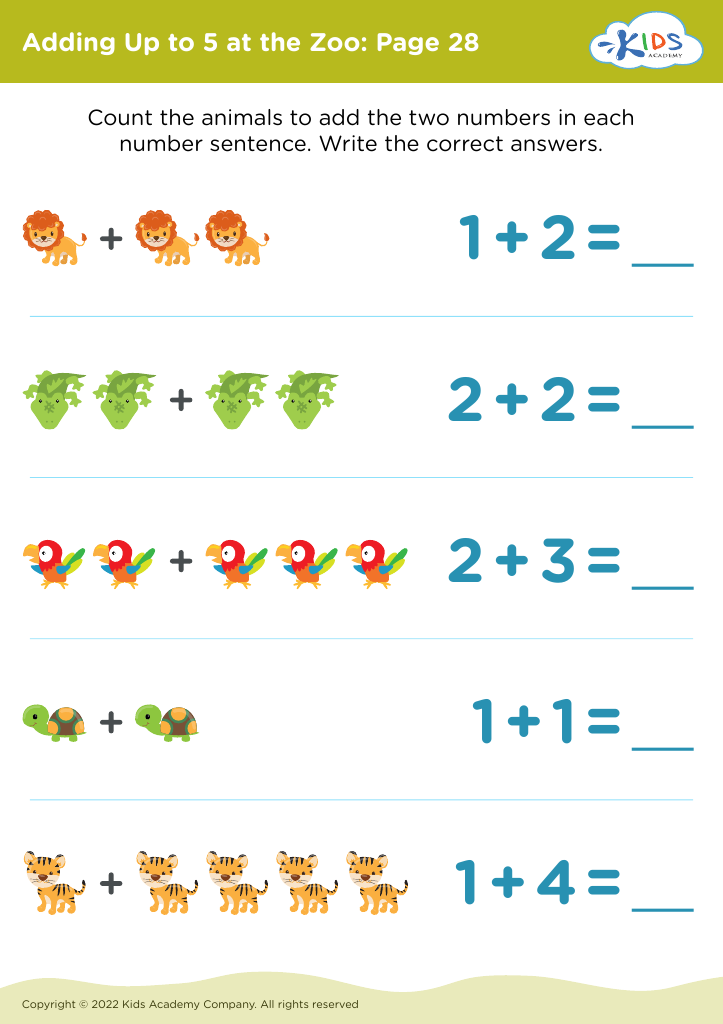
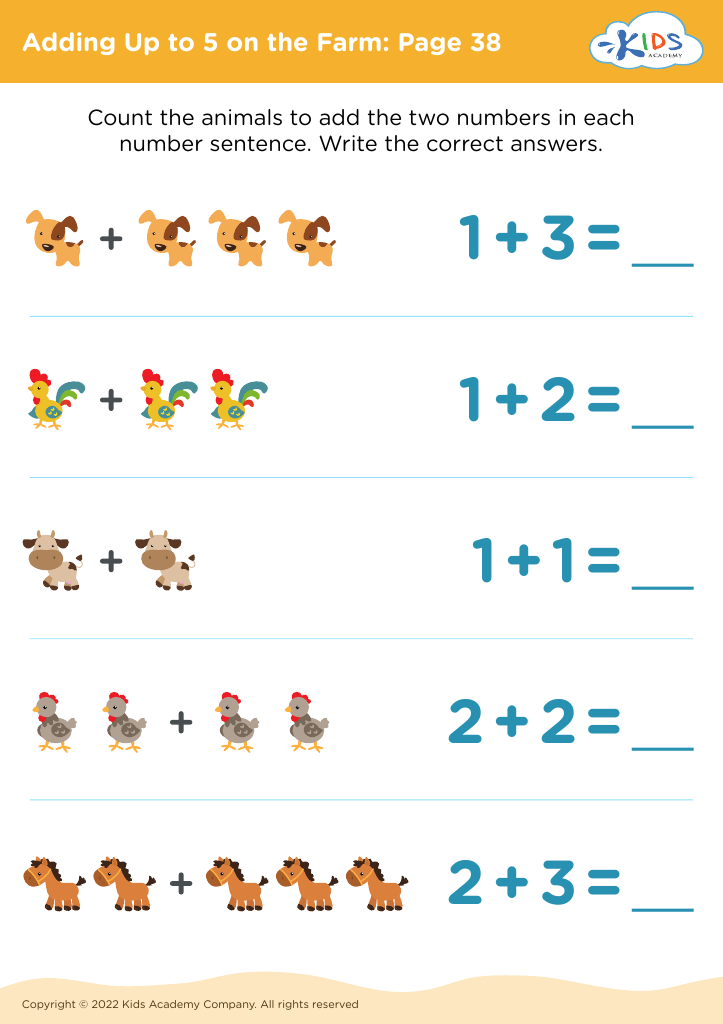
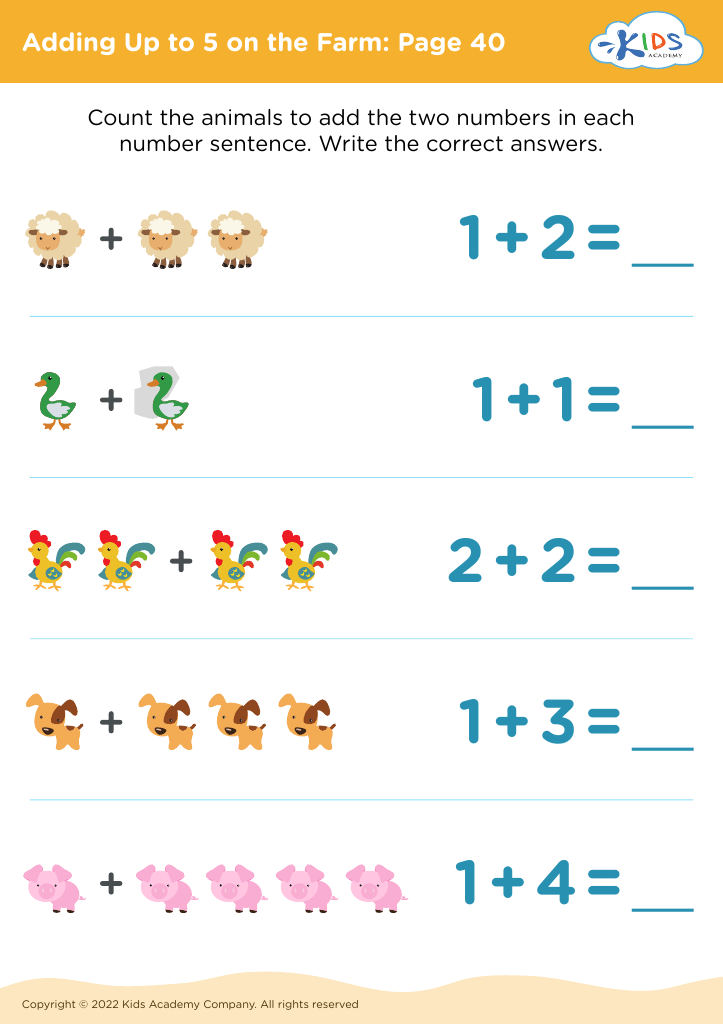
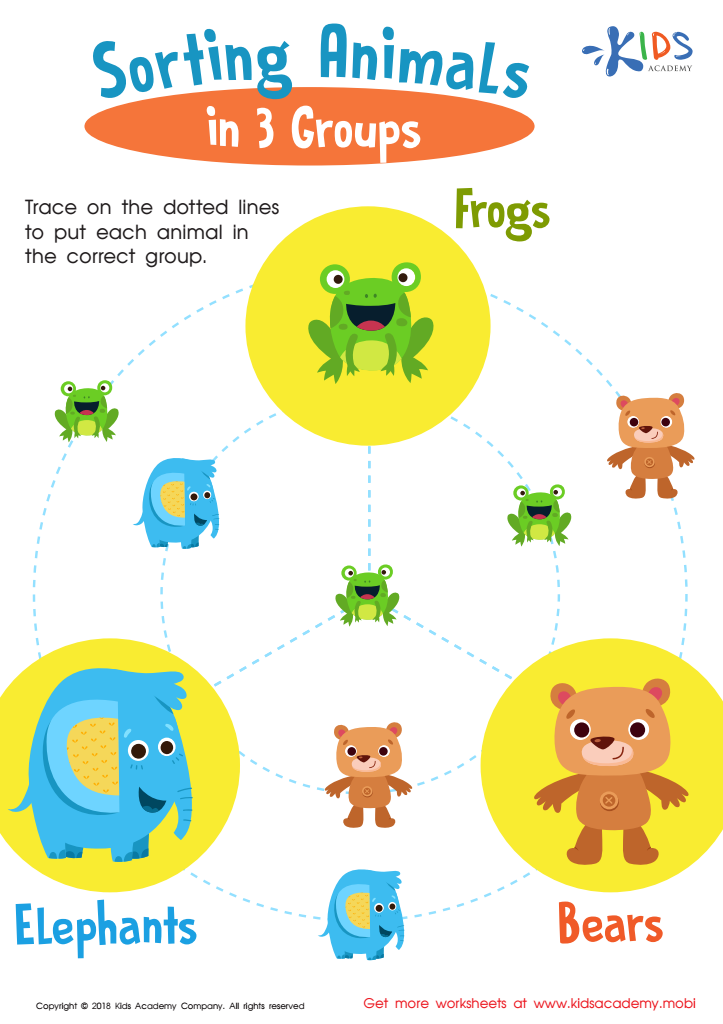
Sorting Animals in 3 Groups Worksheet
 Assign to My Students
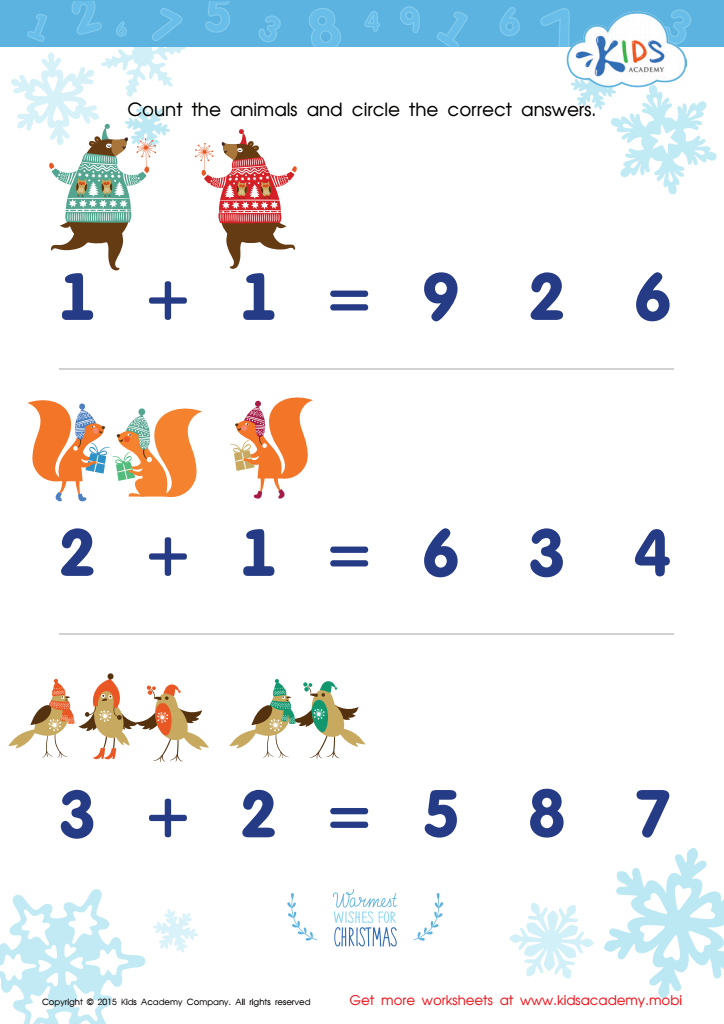
Count Funny Animals Worksheet
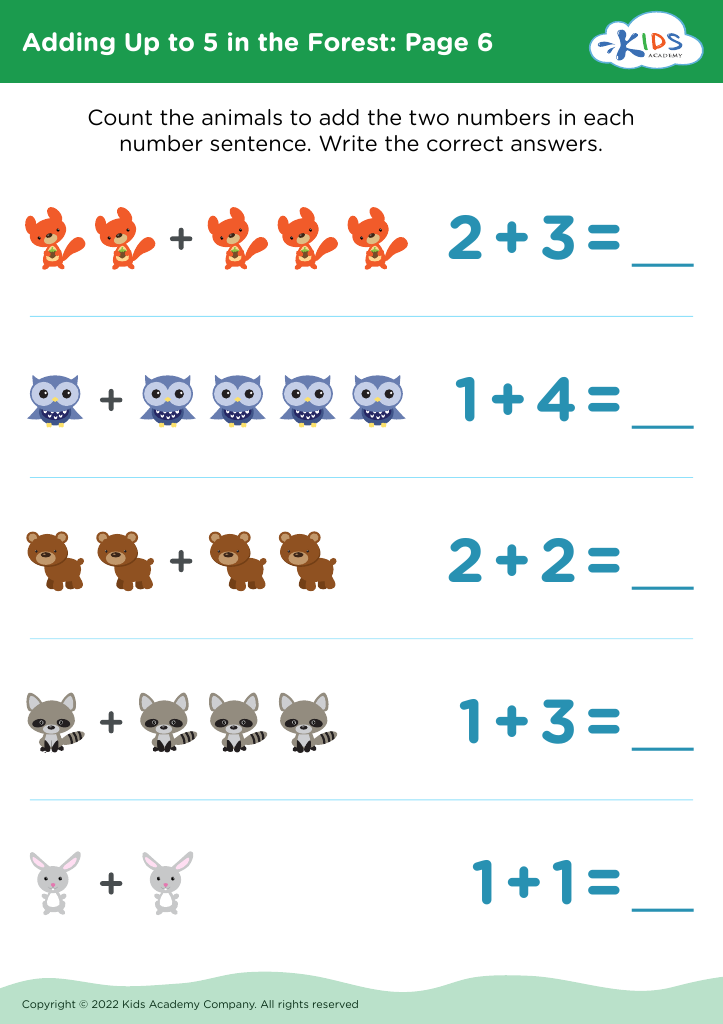
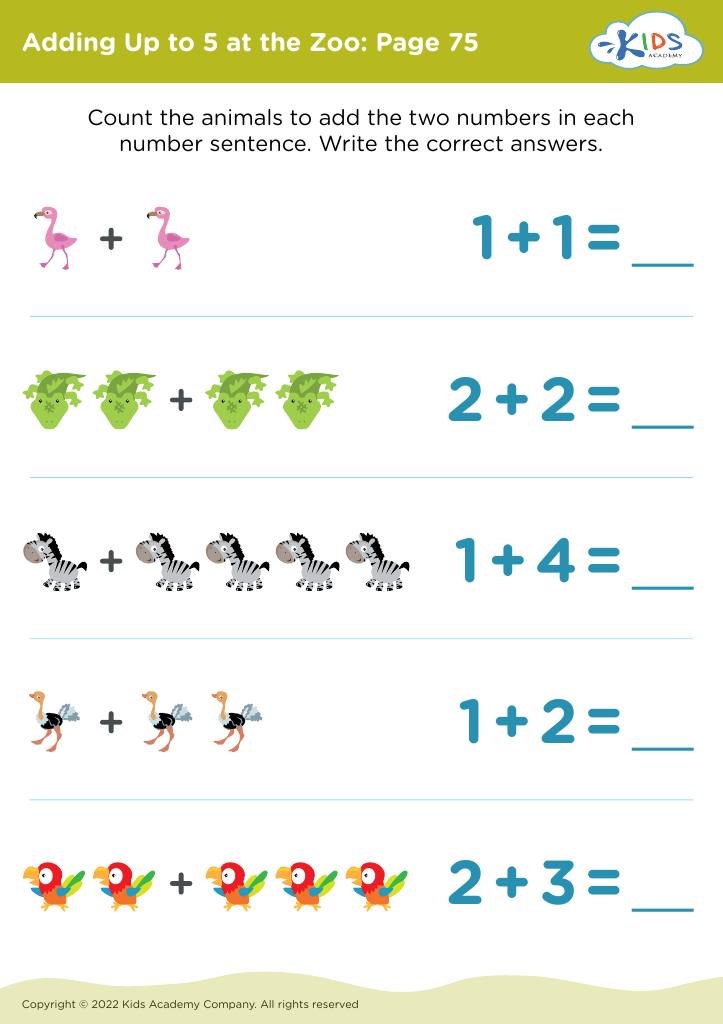
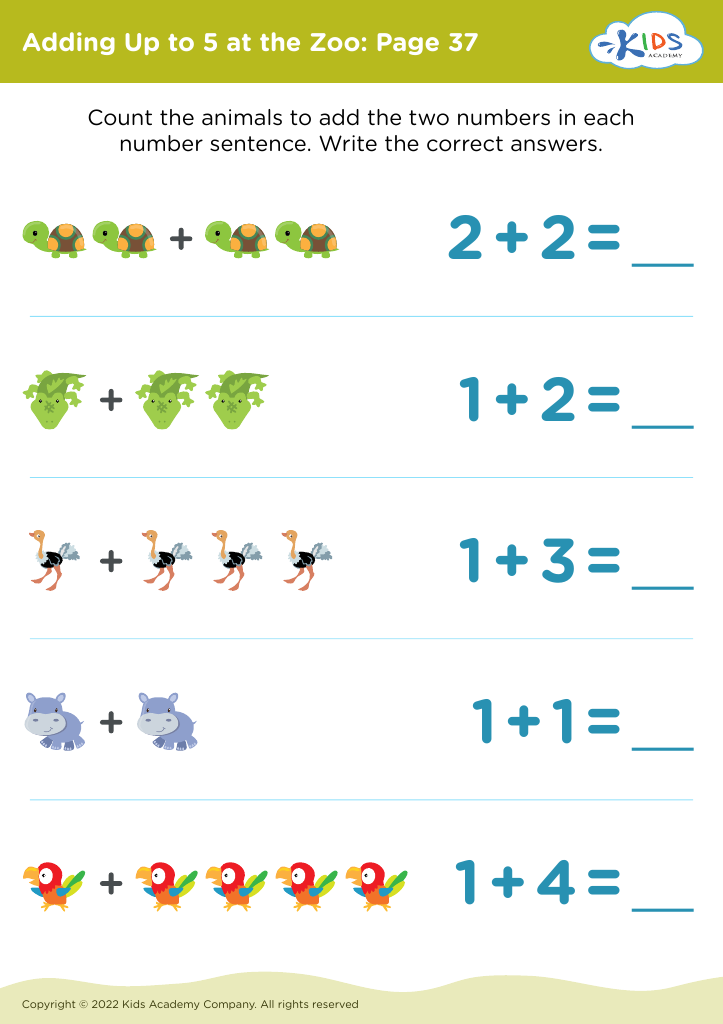





Animal recognition math for children ages 3-7 is important for several reasons. First, it integrates fundamental math skills with the universally appealing theme of animals, making learning enjoyable. Young children are naturally curious about animals, which can spark their interest in counting, sorting, and basic arithmetic.
Incorporating animal recognition into math fosters cognitive development. As children categorize animals, they practice critical thinking and problem-solving skills. Additionally, associating numbers with familiar animals—like counting ducks or adding up elephants—allows children to visualize concepts, making abstract math concepts more tangible and relatable.
This approach also supports language and vocabulary development. While discussing different animals, children expand their knowledge of names, habitats, and behaviors, which enriches their overall language skills.
Moreover, animal recognition math promotes social skills. Children often engage in group activities, encouraging collaboration and communication as they work together on games or math-focused projects.
Ultimately, parents and teachers who focus on this integration of animal recognition with math are providing a dynamic learning experience that nurtures a child’s innate curiosity while building essential academic skills, laying a strong foundation for future learning. This interdisciplinary, adaptive learning approach can significantly enhance a child's educational journey.








