Division practice Math Worksheets for Ages 3-7
7 filtered results
-
From - To
Boost your child's math skills with our "Division Practice Math Worksheets for Ages 3-7." Tailored for young learners, these engaging worksheets introduce basic division concepts using fun and interactive exercises. Designed to build confidence and foundational skills, our resources make learning math enjoyable and stress-free. Featuring colorful illustrations and simple problems, these activities help children grasp the essentials of division through hands-on practice. Perfect for early grade students, our printable worksheets support classroom learning and continuous practice at home. Unlock your child's potential with Kids Academy's comprehensive division worksheets today!
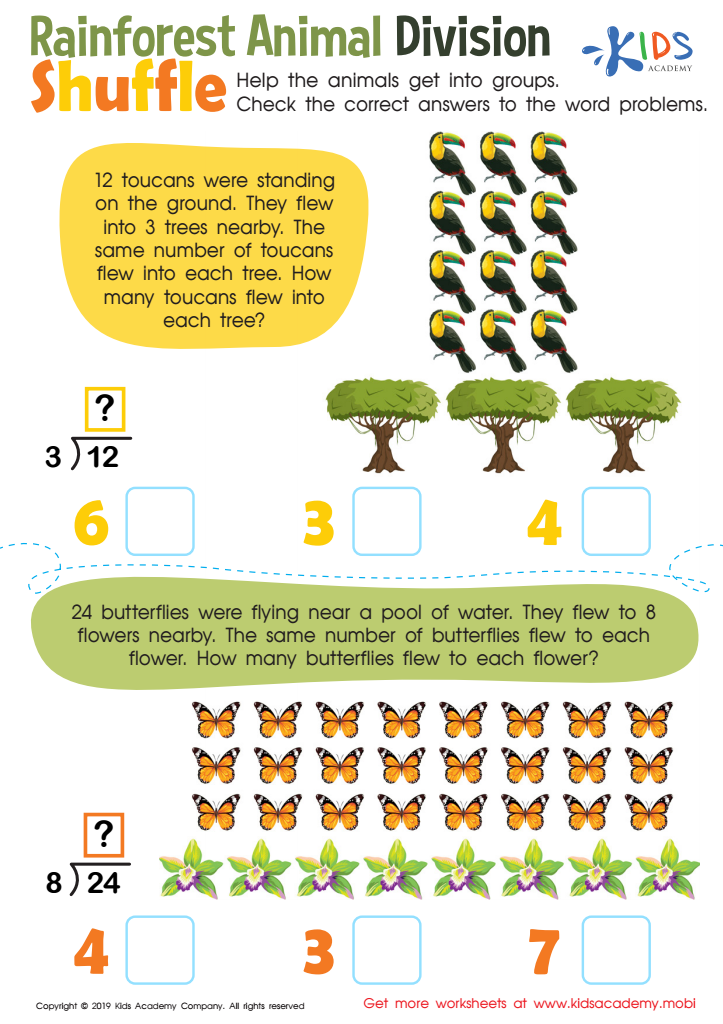
Rainforest Animal Division Worksheet
 Assign to My Students
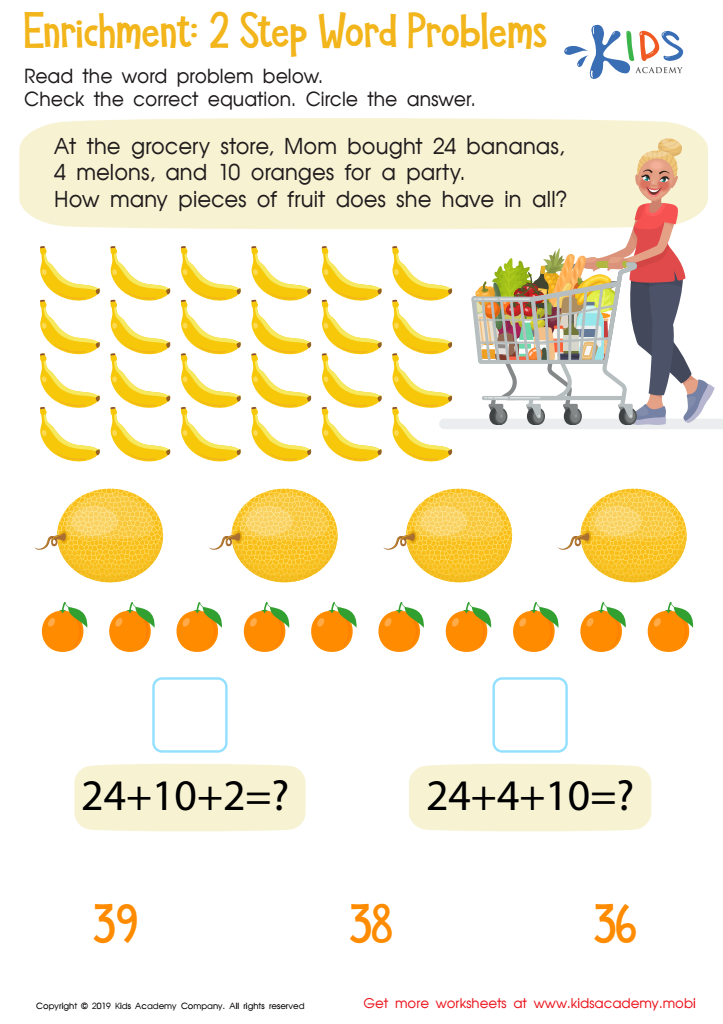
Enrichment -2 Step Word Problems Worksheet
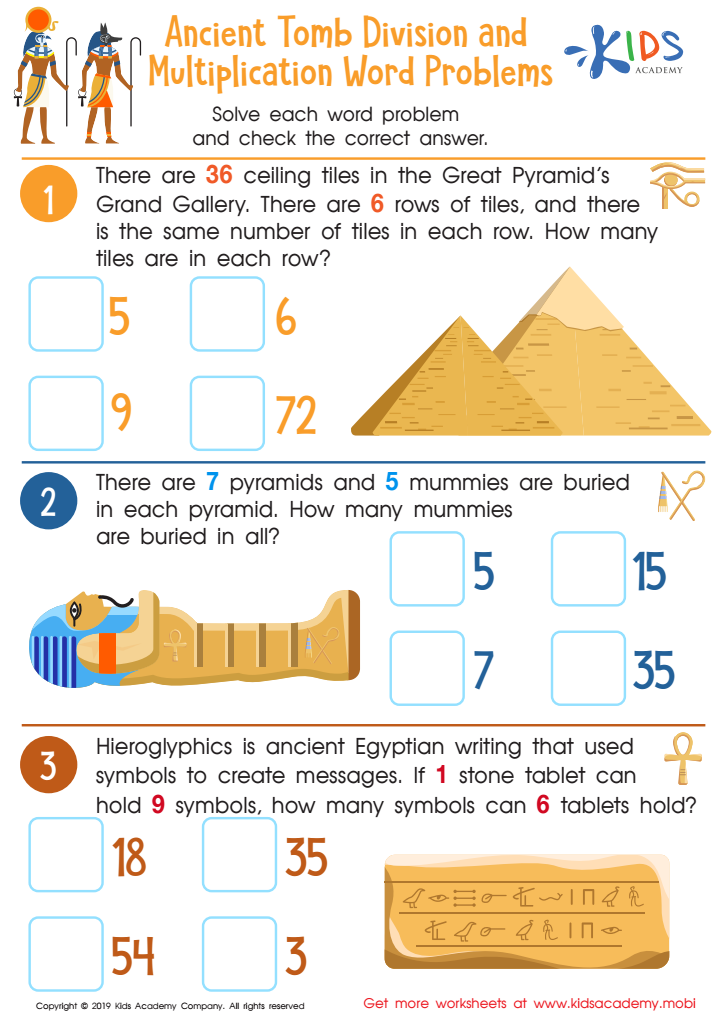
Ancient Tomb Division and Multiplication Word Problems Worksheet
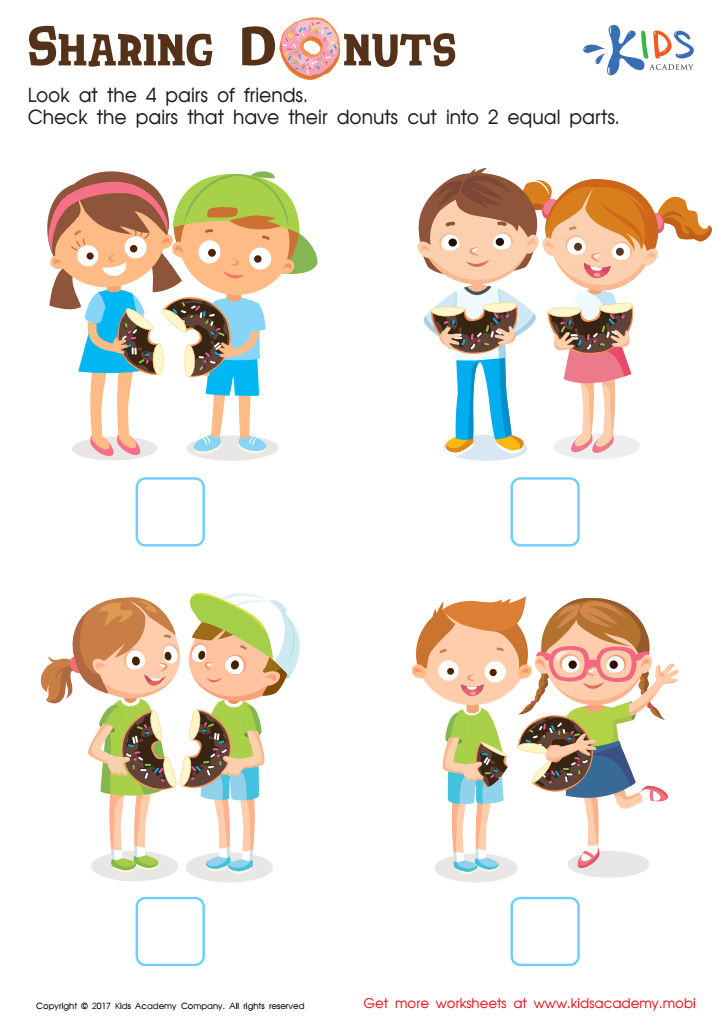
Sharing Donuts Worksheet
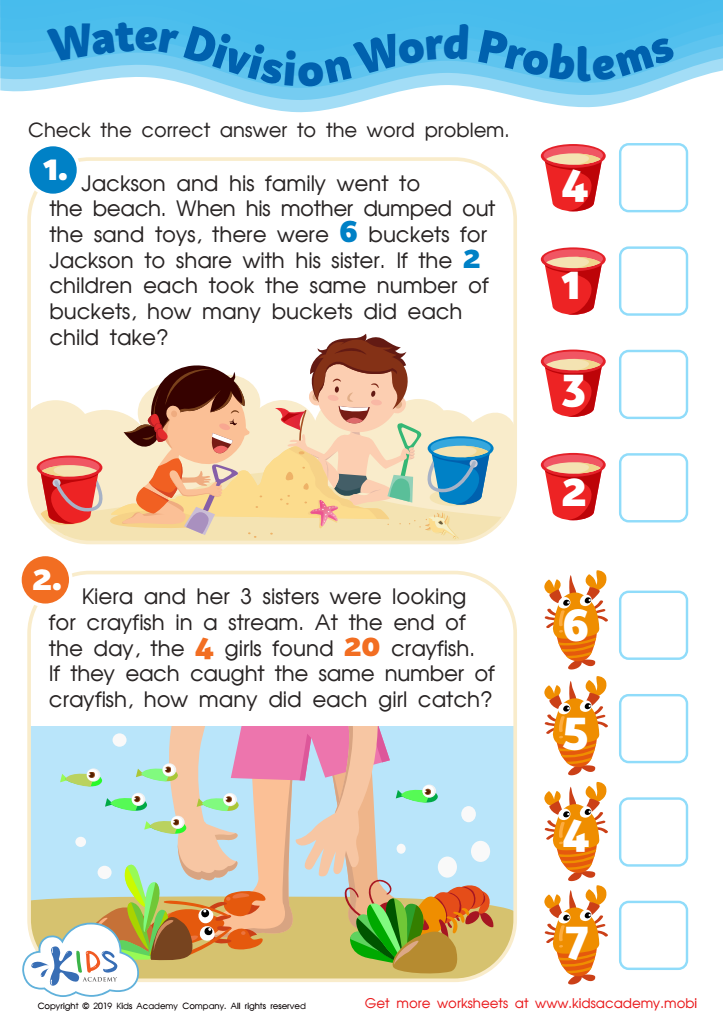
Water Division Word Problems Worksheet
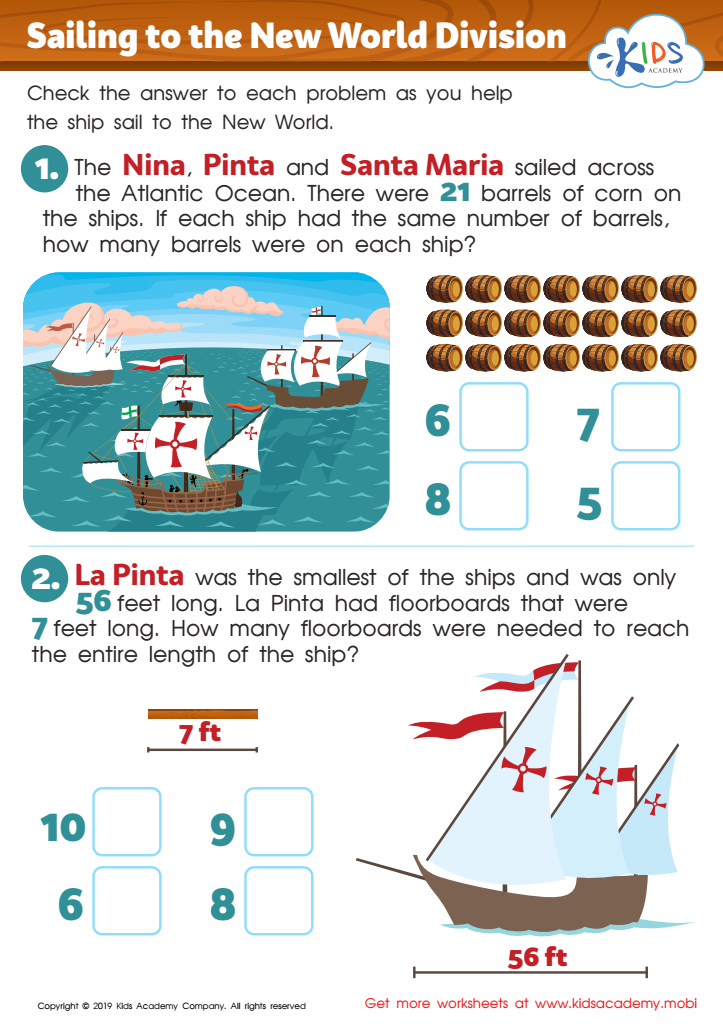
Sailing to the New World Division Worksheet




.jpg)
Parents and teachers should care about division practice for children aged 3-7 because it lays a critical foundation for future mathematical understanding and problem-solving skills. Early exposure to division concepts, even in simple forms like sharing objects equally, helps young children develop a strong number sense. This foundational skill is essential for grasping more complex math topics in later grades, such as fractions, ratios, and algebra.
Incorporating division practice in early education also enhances cognitive development by strengthening logical thinking and reasoning abilities. For example, when children are given tasks such as distributing toys or snacks evenly among friends, they start to learn the basics of division in a tangible, engaging manner. This hands-on experience helps solidify abstract concepts.
Furthermore, developing proficiency in division at a young age boosts children's confidence in their mathematical abilities. Positive early experiences in math can foster a love for the subject, reducing math anxiety and promoting a growth mindset.
Additionally, division practice serves to enhance problem-solving skills and patience, as children learn to approach challenges methodically and think critically. Given the importance of these skills in all areas of life, early division practice can have lasting benefits beyond the realm of mathematics. Thus, prioritizing division practice for young learners sets the stage for academic success and confidence in their abilities.








