Enhancing analytical thinking Math Worksheets for Ages 3-7
3 filtered results
-
From - To
Enhance your child's analytical thinking skills with our engaging Math Worksheets designed for ages 3-7. These worksheets feature fun and interactive activities that promote critical thinking, problem-solving, and logical reasoning through age-appropriate math concepts. Each worksheet encourages children to explore math in a hands-on way, making learning enjoyable and effective. From counting and sorting to simple addition and pattern recognition, our resources help young learners build a strong foundation in mathematics. Spark curiosity and develop essential skills with our carefully crafted materials, perfect for both classroom use and at-home learning. Start your child's mathematical journey today!
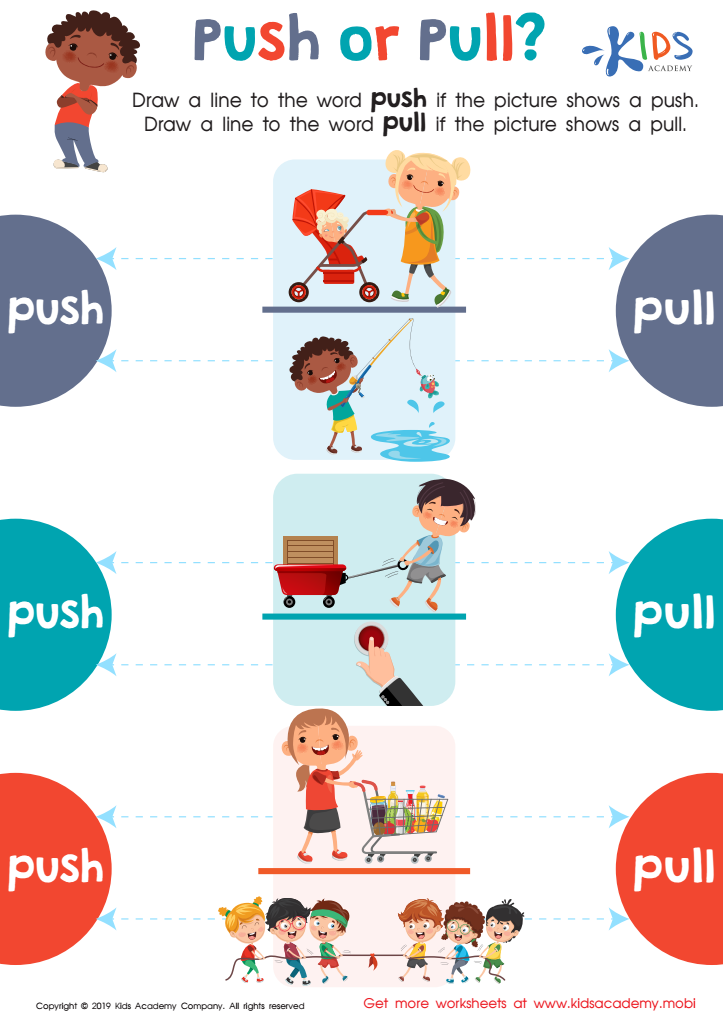
Push or Pull? Worksheet
 Assign to My Students
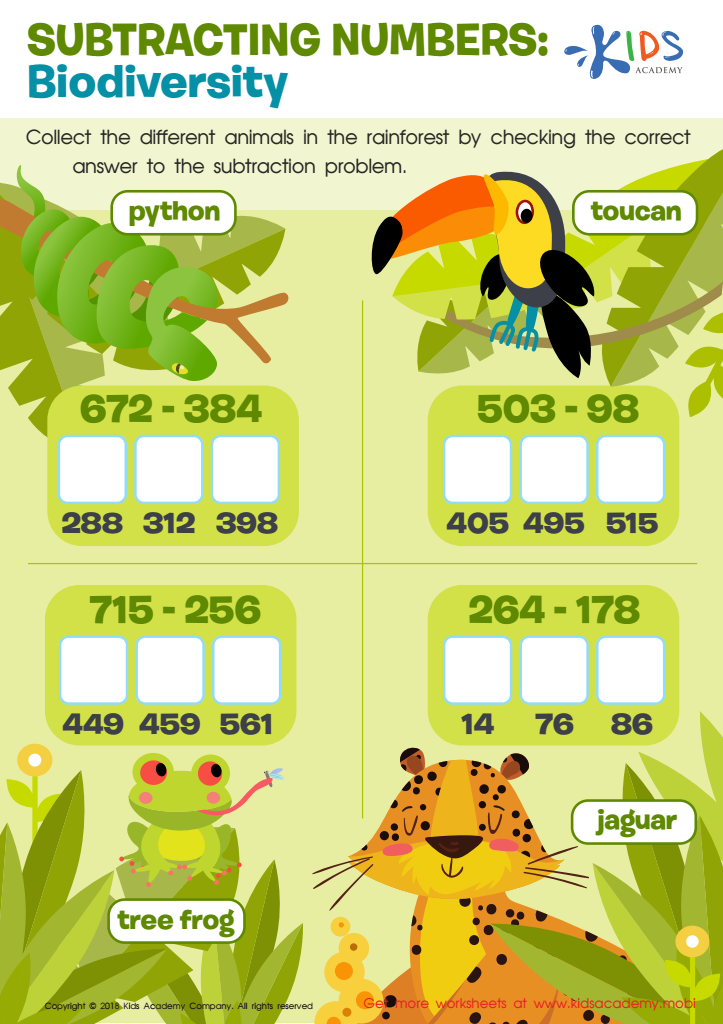
Subtracting Numbers: Biodiversity Worksheet








Enhancing analytical thinking in math for children aged 3-7 is crucial for several reasons. First, this formative stage lays the foundation for future learning. Children develop their cognitive skills rapidly during these years, and engaging them in analytical thinking activities promotes problem-solving abilities, logical reasoning, and critical thinking, which are essential for advanced mathematics and everyday decision-making later in life.
Additionally, early exposure to analytical math fosters a positive attitude towards mathematics. When kids learn to enjoy puzzles and logical challenges, it can dispel common anxieties associated with math in later education. They develop a growth mindset, seeing challenges as opportunities for improvement.
Moreover, enhancing these skills encourages creativity. Analytical thinking is not just about numbers; it teaches children to think outside the box, explore different solutions, and approach problems from various angles. This holistic approach to math nurtures well-rounded cognitive skills essential in various subjects, including science, engineering, and even the arts.
Finally, involved parents and teachers who focus on analytical thinking in math contribute significantly to a child's academic success. Engaging activities can strengthen a child's confidence and motivation, establishing a strong academic foundation that benefits them in all future learning endeavors.








