Shape comparison Math Worksheets for Ages 3-7
4 filtered results
-
From - To
Our Shape Comparison Math Worksheets for ages 3-7 provide an engaging way for young learners to develop crucial math skills. Designed by experts, these printable worksheets help children recognize, compare, and contrast different shapes while fostering their spatial awareness and critical thinking abilities. Featuring fun and colorful activities, kids will enjoy completing each worksheet as they learn to identify similarities and differences between various shapes. Perfect for homeschool or classroom settings, these resources support early childhood education, making learning math concepts both exciting and effective. Help your child build a strong mathematical foundation with our shape comparison worksheets!
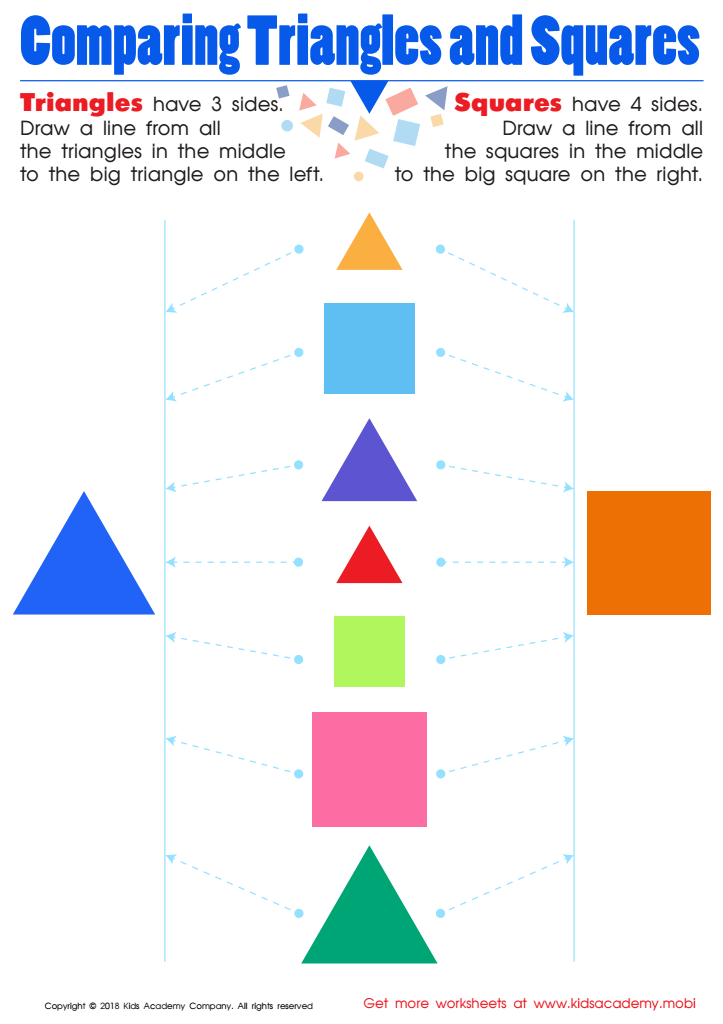
Comparing Triangles Squares Worksheet
 Assign to My Students
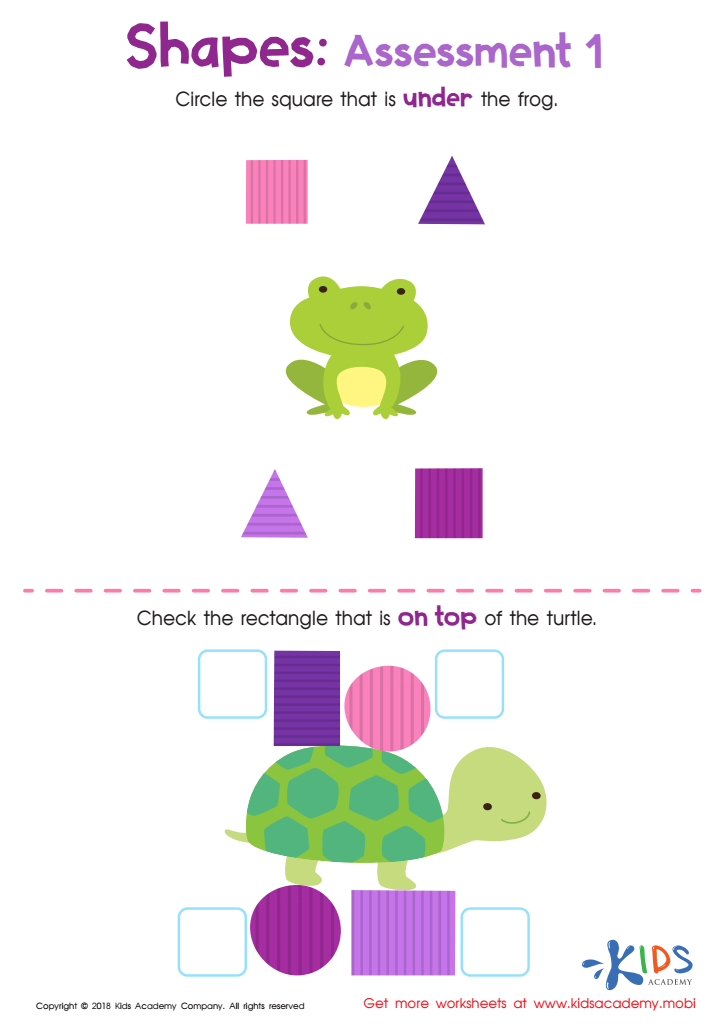
Geometry – Assessment 1 Worksheet
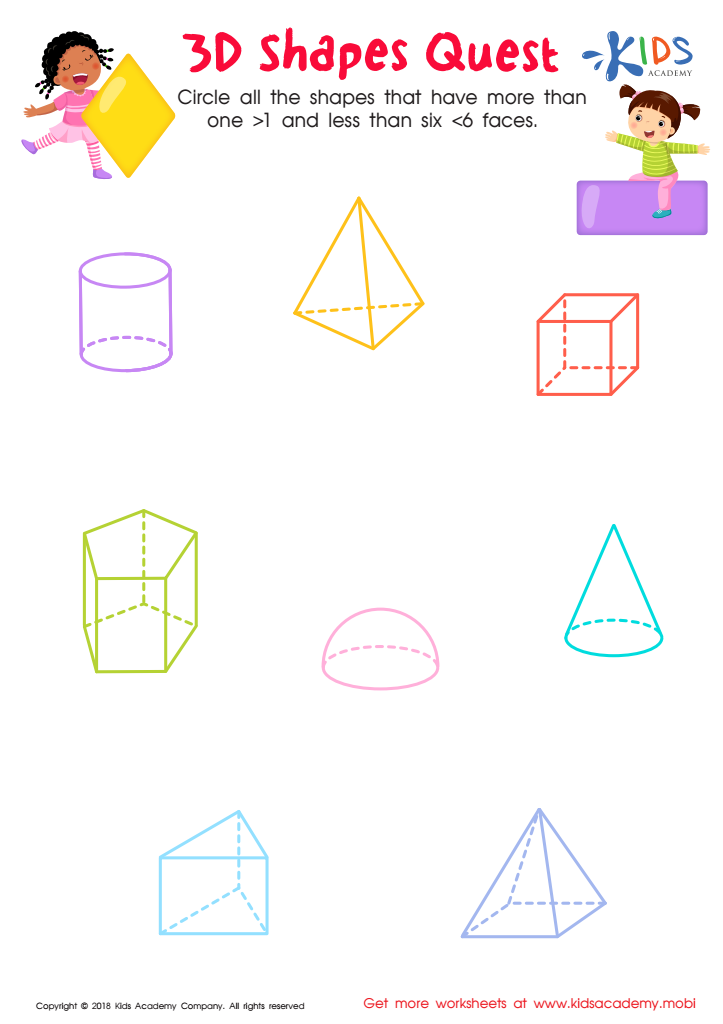
3D Shapes Quest Worksheet
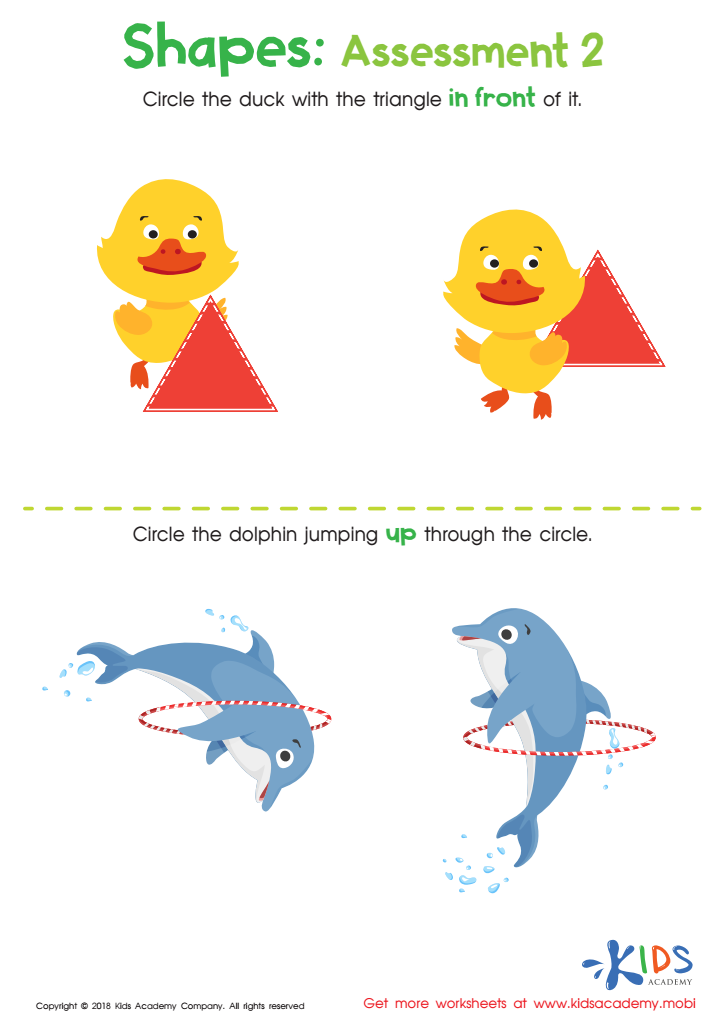
Geometry – Assessment 2 Worksheet







Shape comparison is a foundational aspect of early math education for children aged 3-7, and parents and teachers should pay close attention to it. First, learning to compare shapes develops critical cognitive skills such as observation, classification, and spatial reasoning. Children begin to differentiate between shapes like circles, squares, and triangles, which helps them recognize and categorize objects in their environment.
These skills are directly linked to problem-solving abilities and logical thinking, which are essential for more advanced mathematical concepts and everyday tasks. Engaging in shape comparison also aids in vocabulary development. Children learn and use descriptive language, like "smaller," "bigger," "corner," and "side," which enriches their linguistic and cognitive repertoire.
Furthermore, shape comparison is an early introduction to geometry, laying the groundwork for understanding more complex geometric principles later in their education. It also fosters creativity and imagination as children manipulate and compare different shapes during play and structured activities.
Incorporating shape comparison in early education supports a well-rounded development. Children not only gain early math skills but are also better prepared for future learning. Teachers and parents play a crucial role in guiding these explorations, ensuring children enter their formal schooling years with confidence and a strong foundation in basic math concepts.








