Subtraction practice Math Worksheets for Ages 3-7 - Page 4
88 filtered results
-
From - To
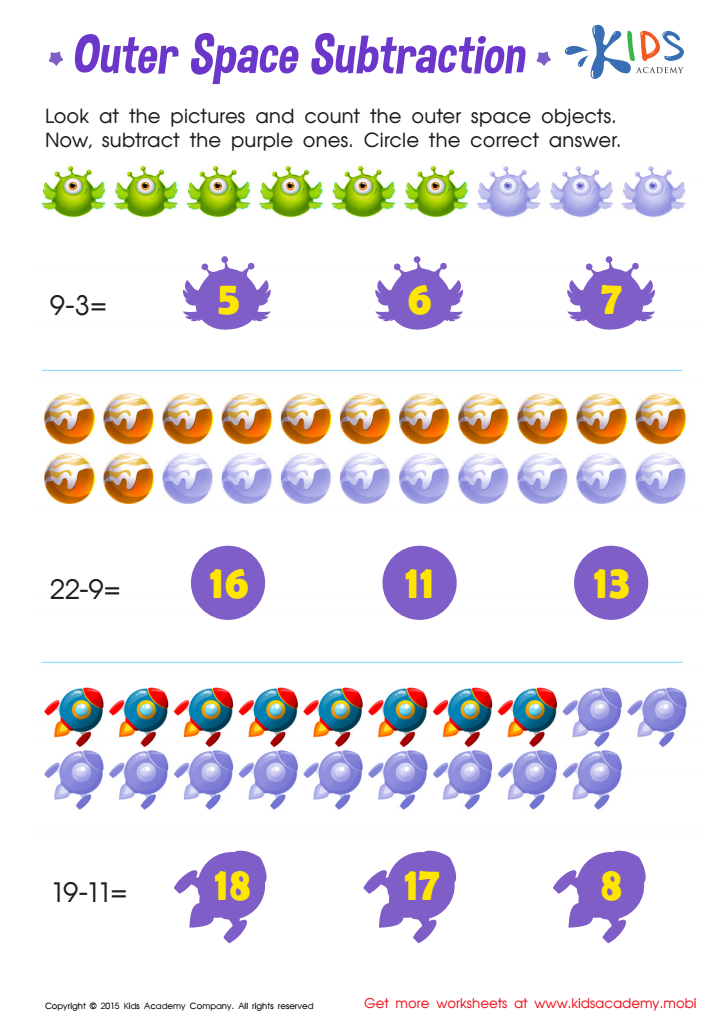
Outer Space Substraction Worksheet
 Assign to My Students
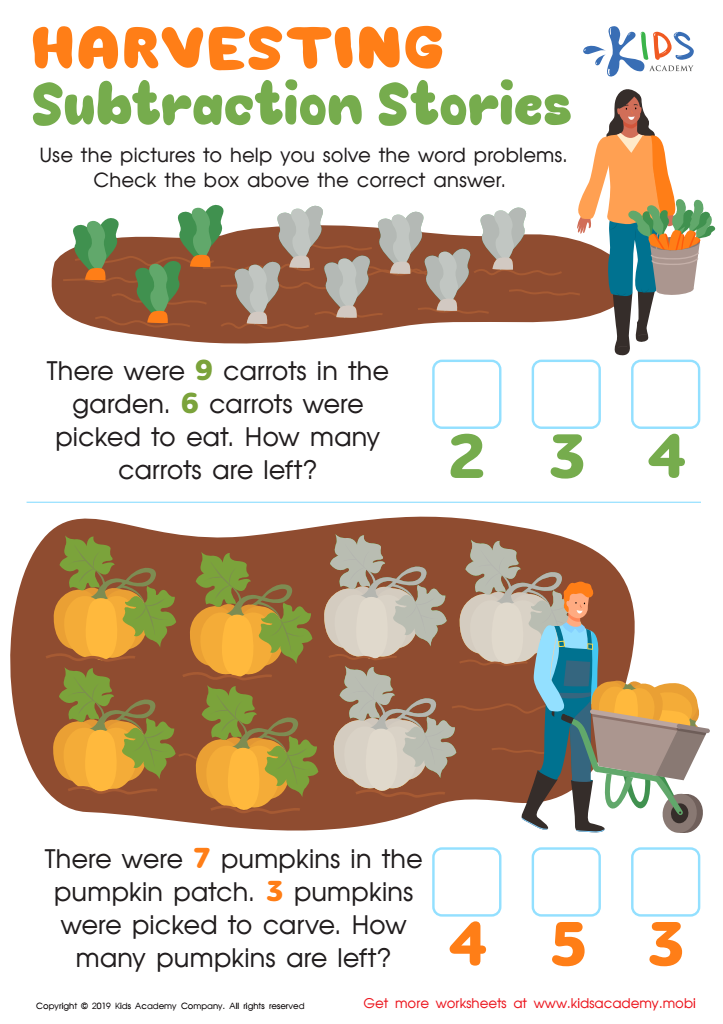
Harvesting Subtraction Stories Worksheet
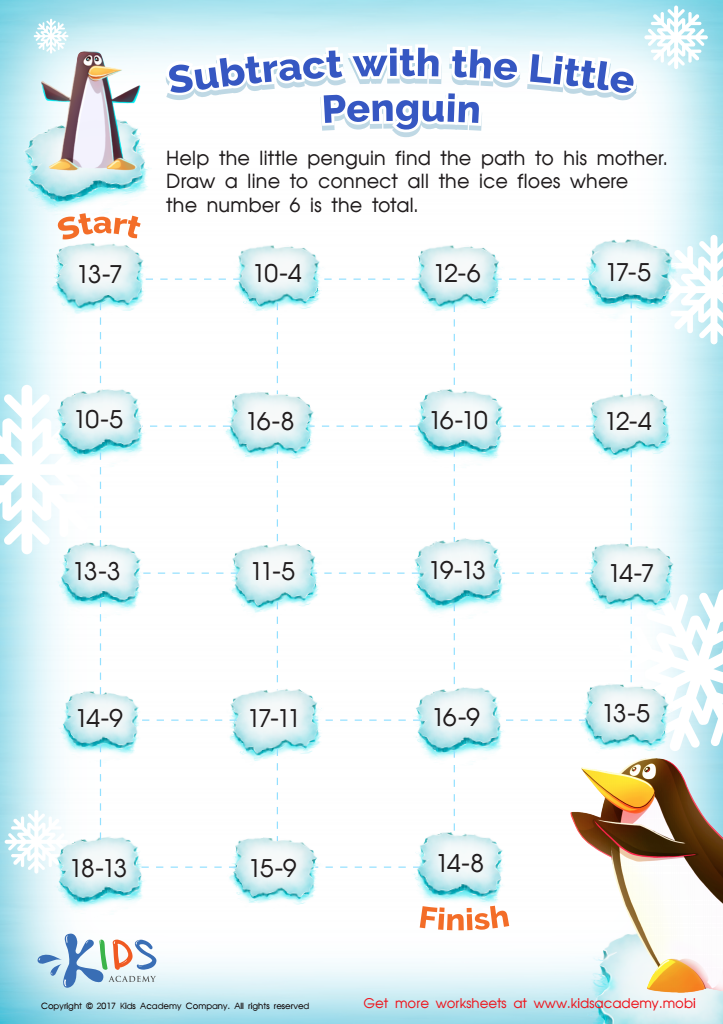
Subtract With The Little Penguin Substraction Worksheet
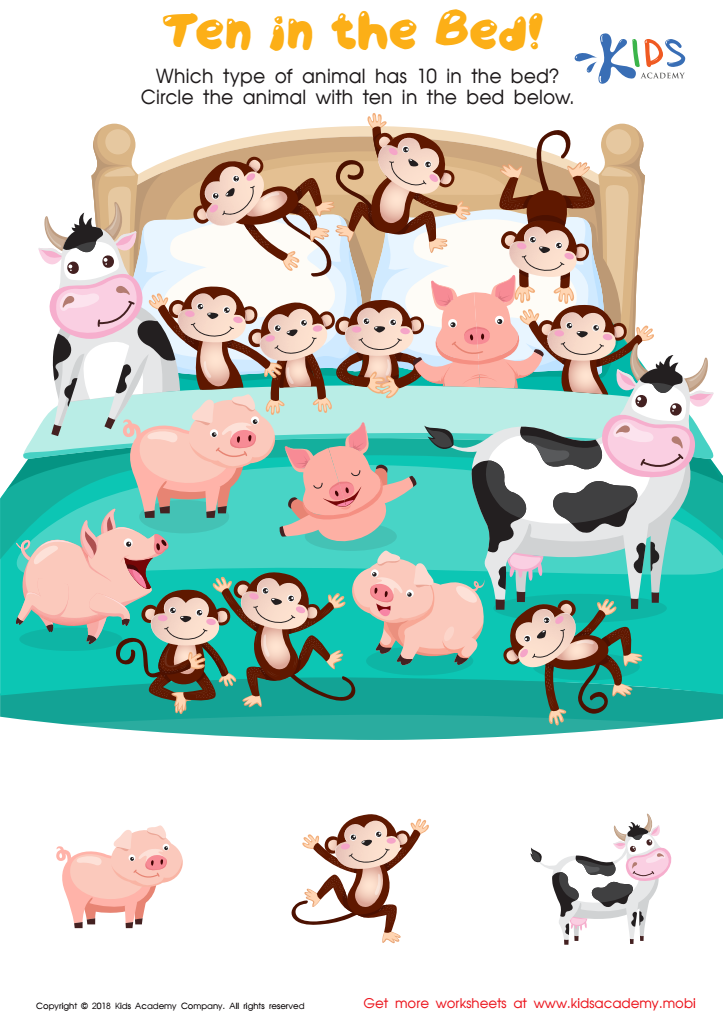
Ten in the Bed Worksheet
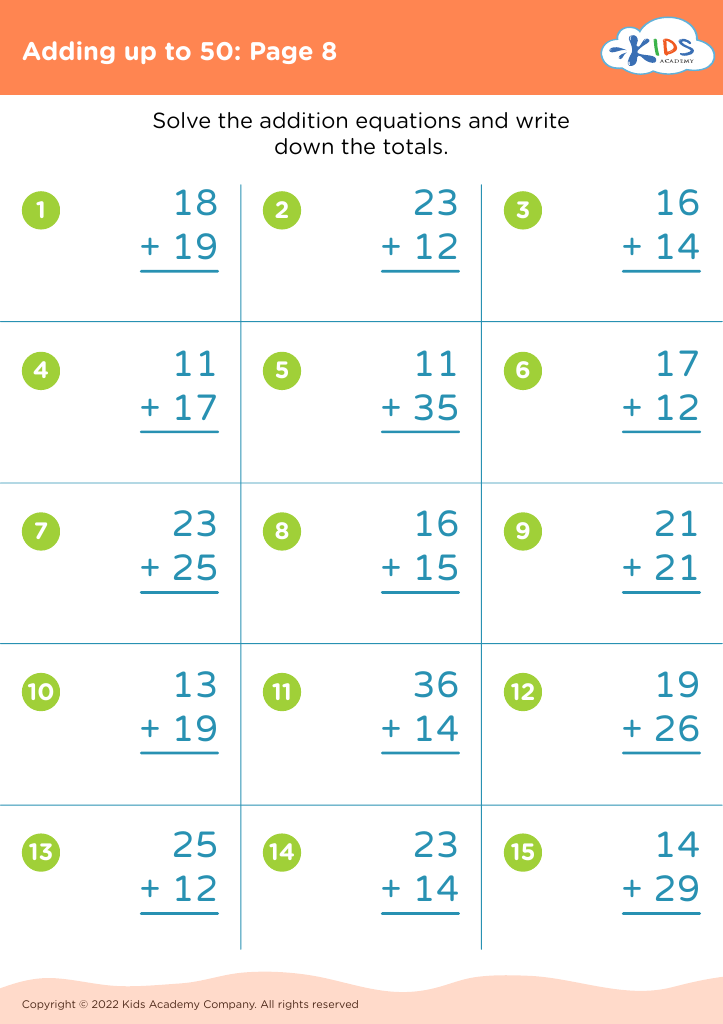
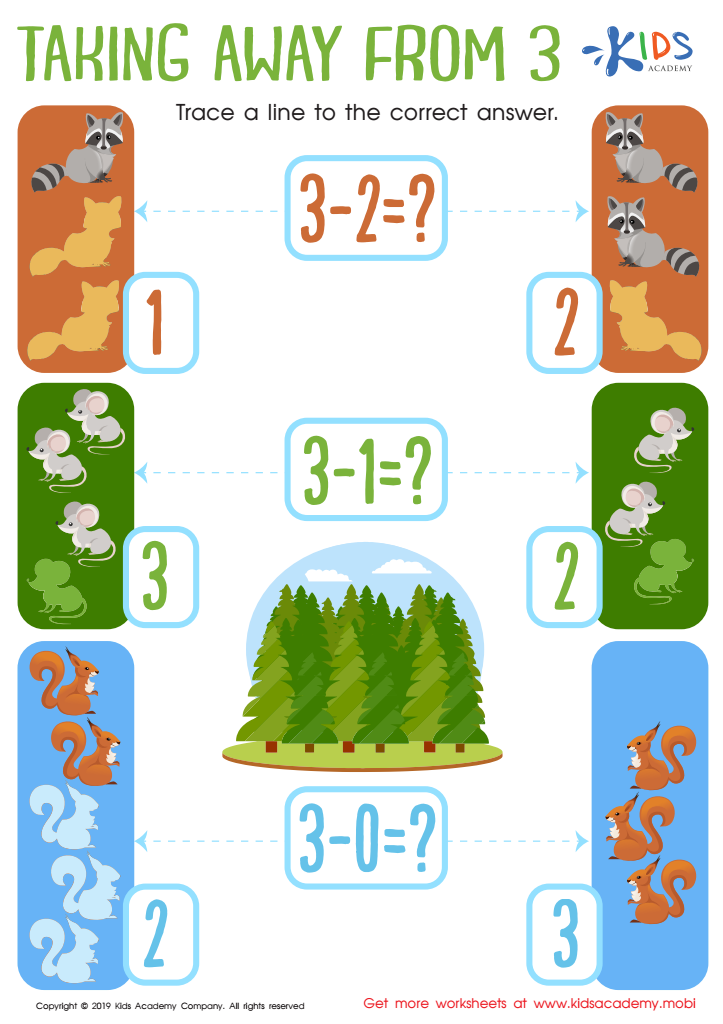
Taking Away From 3 Worksheet
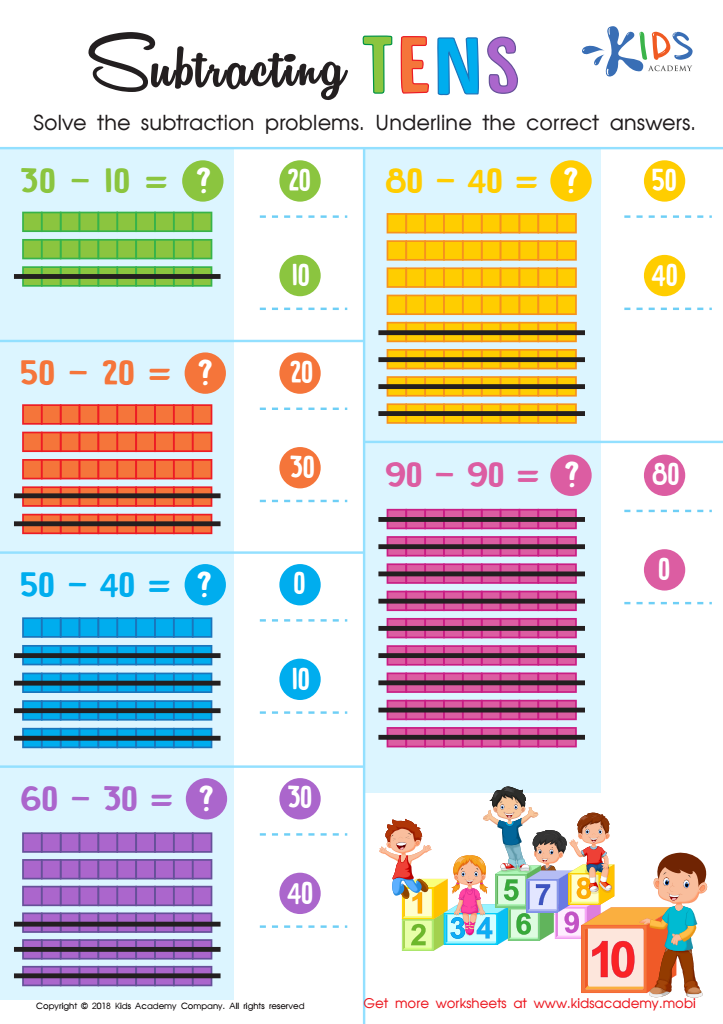
Subtracting Tens Worksheet
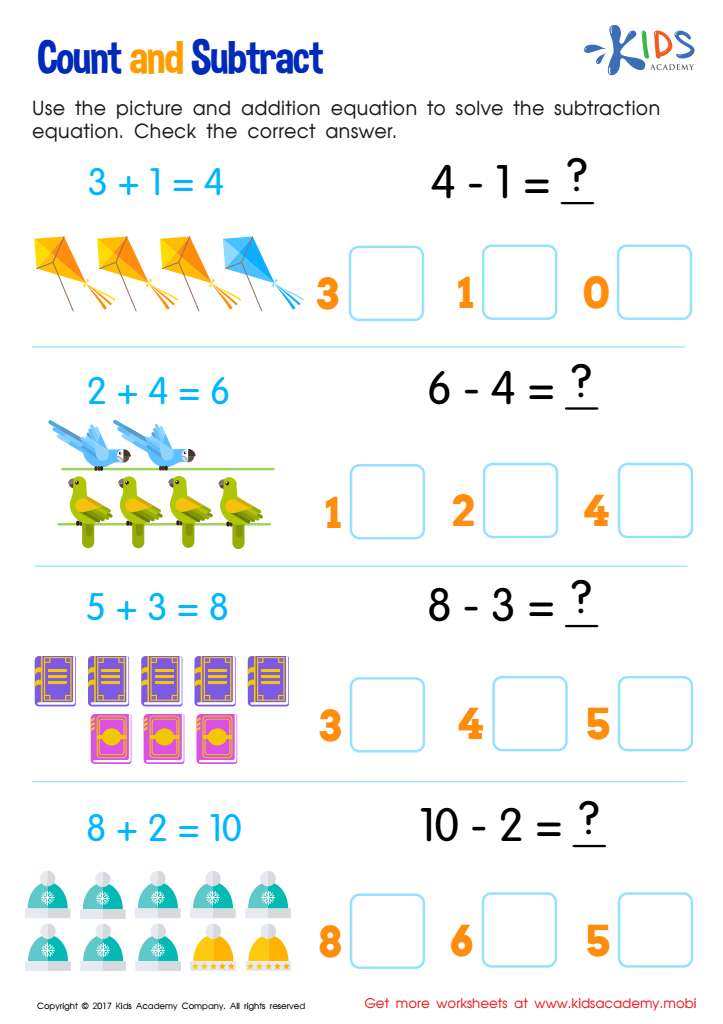
Count and Subtract Worksheet
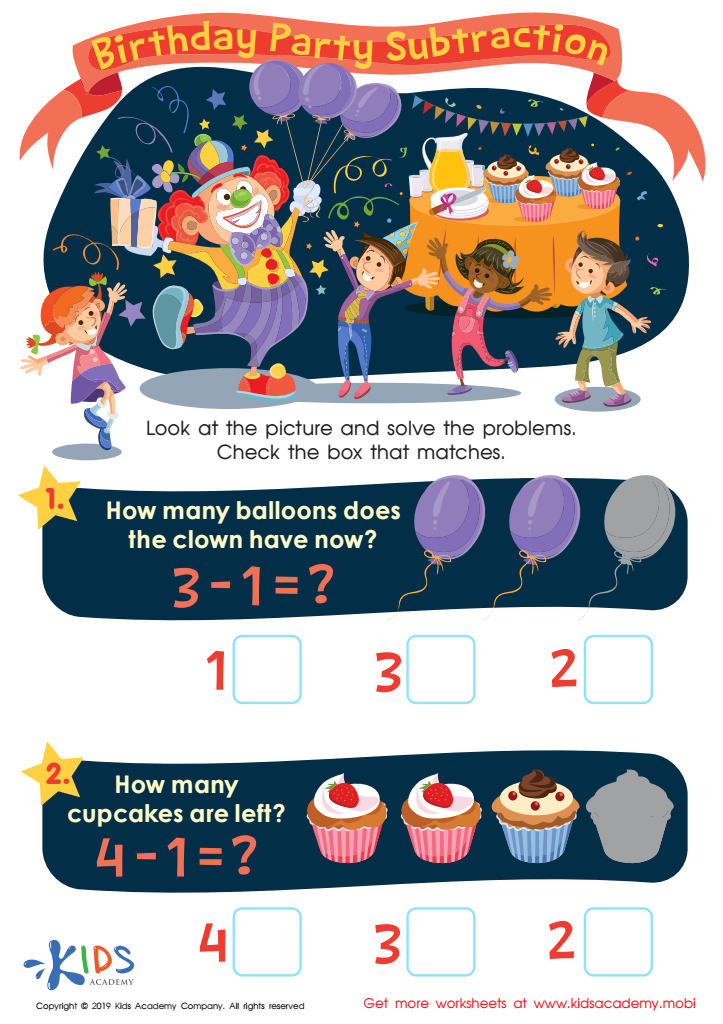
Birthday Party Subtraction Worksheet
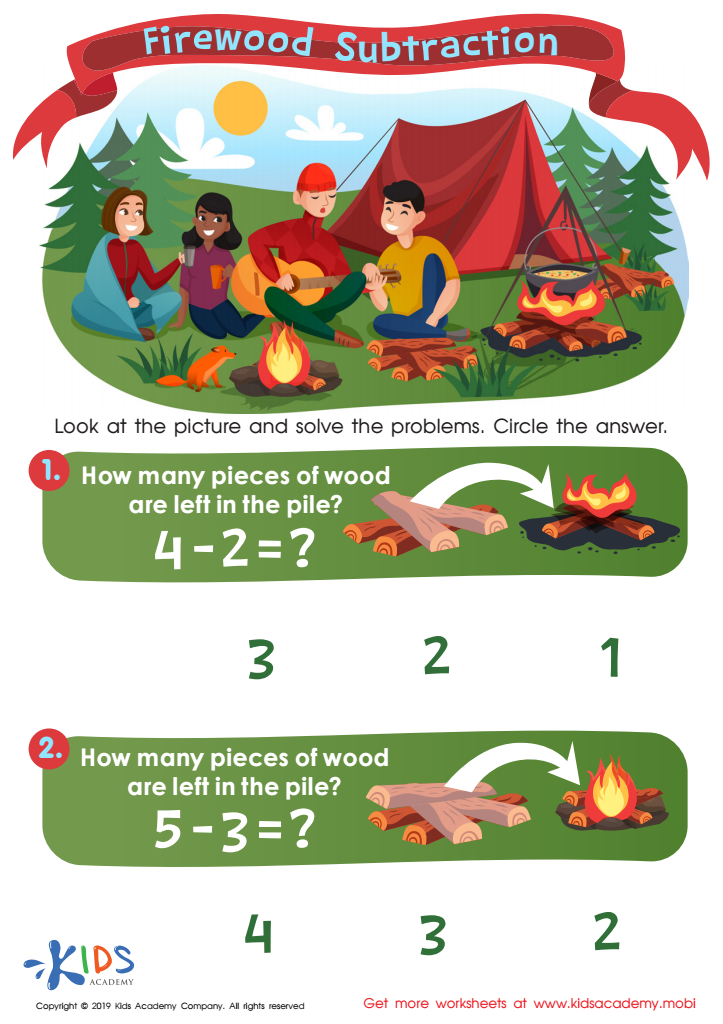
Firewood Subtraction Worksheet
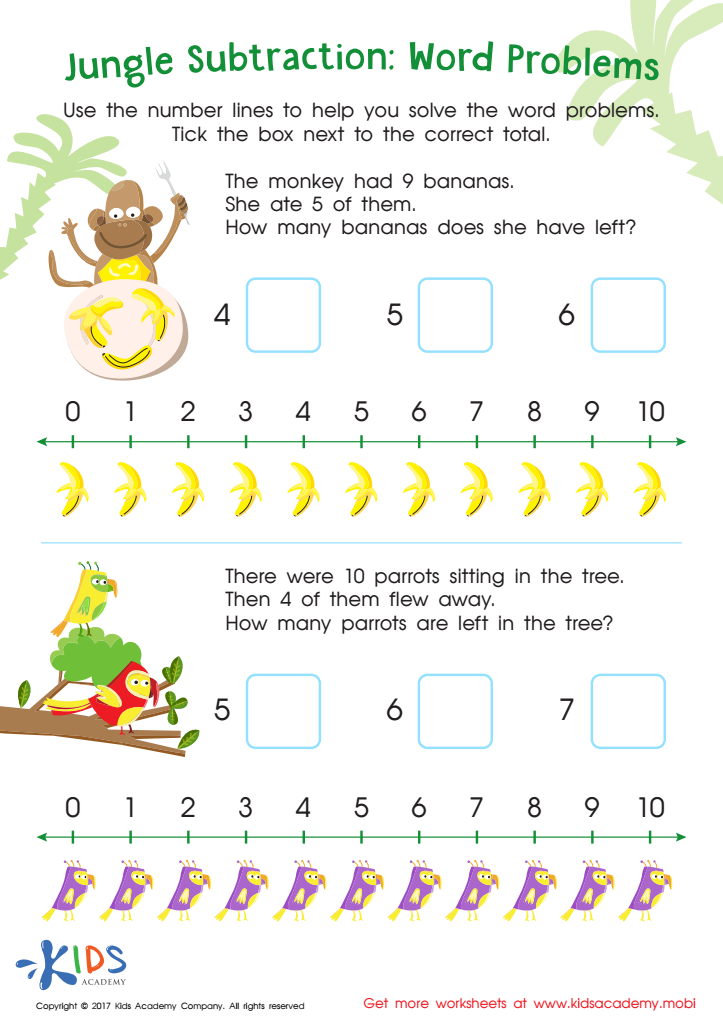
Jungle Subtraction Word Problems Substraction Worksheet
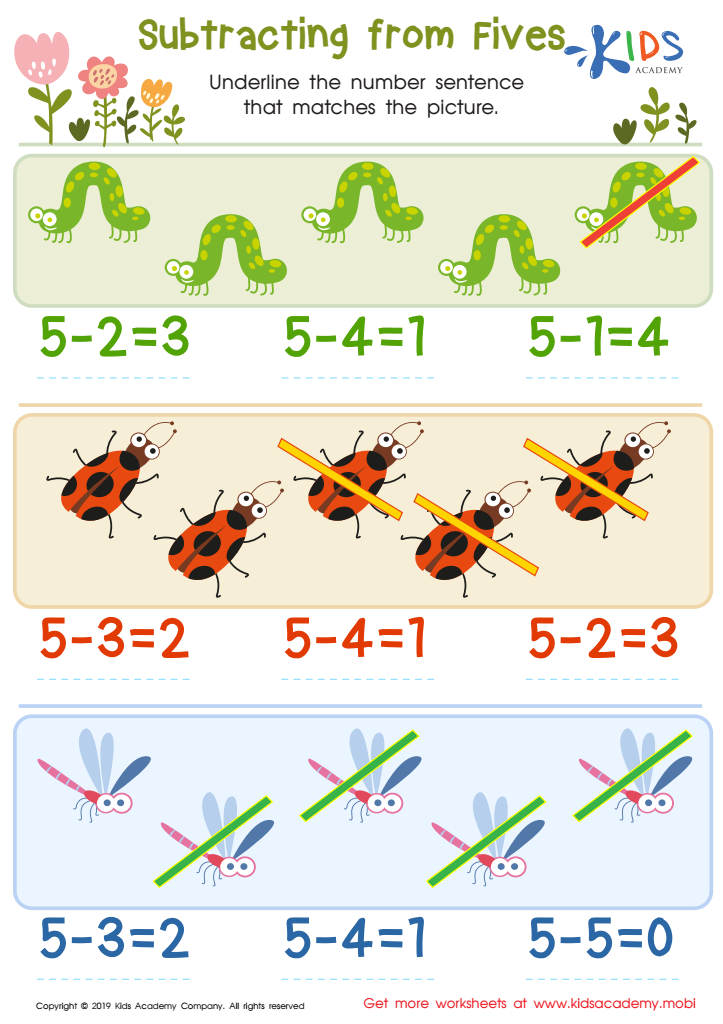
Subtracting From Fives Worksheet








Parents and teachers should care deeply about subtraction practice for children aged 3-7, as it forms the bedrock for their future math proficiency. This early numerical skill is not merely about learning to take away; it builds critical problem-solving abilities and logical thinking. When children understand subtraction, they gain a sense of number relationships and patterns, which are crucial for higher-level math concepts such as multiplication and division.
Engaging in subtraction practice helps young learners develop mental math and memory skills. It encourages them to see mathematics as a tool for everyday life, building confidence and reducing anxiety around math as they grow older. Moreover, consistent practice helps children grasp the fundamental idea that subtraction is essentially the inverse of addition, an insight that is pivotal for advancing their arithmetic skills.
Children within this age group often learn best through play and experimentation, so making subtraction practice fun and interactive not only holds their attention but also deepens their learning. For teachers, creating a structured yet engaging environment where subtraction is practiced routinely can significantly influence a child's academic trajectory. For parents, participating in and supporting their child's math practice at home can foster a positive attitude towards learning and create a partnership between home and school in promoting educational success.








