Matching skills Matching Worksheets for Ages 3-7
6 filtered results
-
From - To
Discover our engaging Matching Skills Worksheets designed for children aged 3 to 7! These printable resources help young learners develop essential cognitive skills while having fun. Perfect for early childhood education, our worksheets foster critical thinking, pattern recognition, and attention to detail. Kids will enjoy vibrant illustrations and interactive matching activities that make learning enjoyable. Suitable for both home and classroom use, these worksheets encourage independent problem-solving and reinforce key skills necessary for academic success. Start boosting your child's matching abilities today with our thoughtfully crafted exercises that make skill-building an exciting adventure! Explore our collection and watch your little ones thrive!
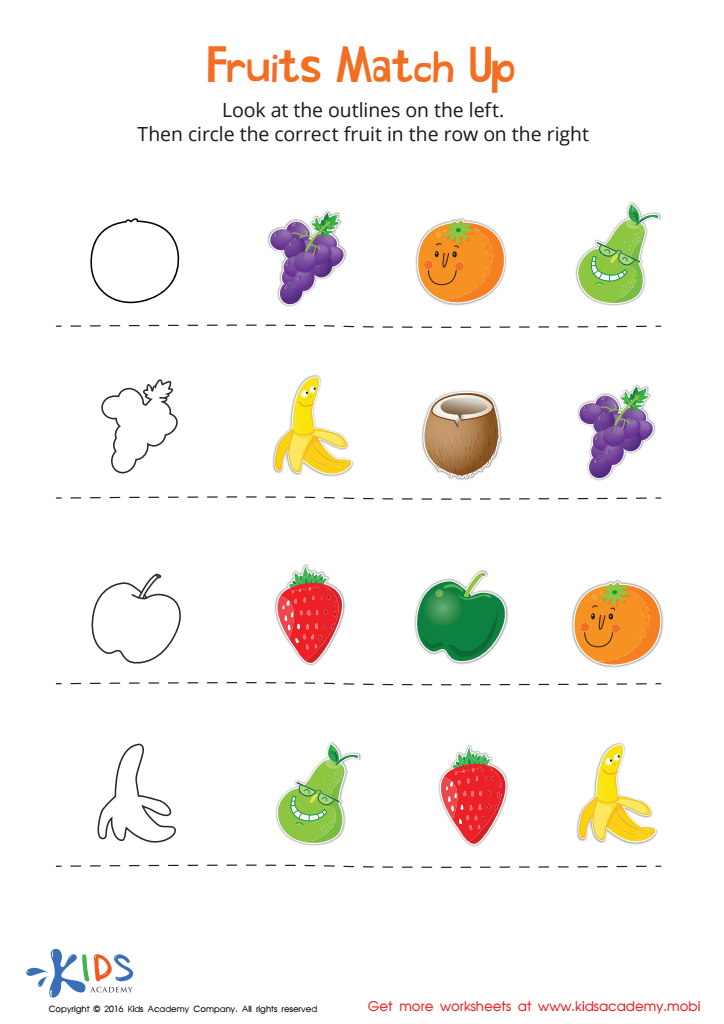
Fruits Match Up Worksheet
 Assign to My Students
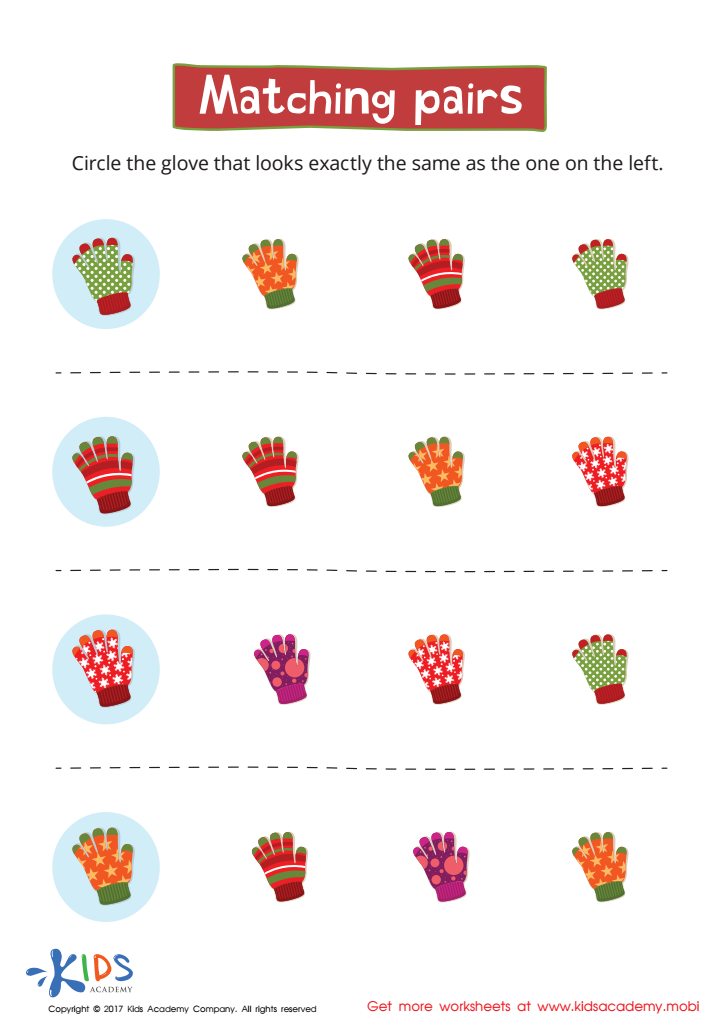
Matching: Matching Pairs Worksheet
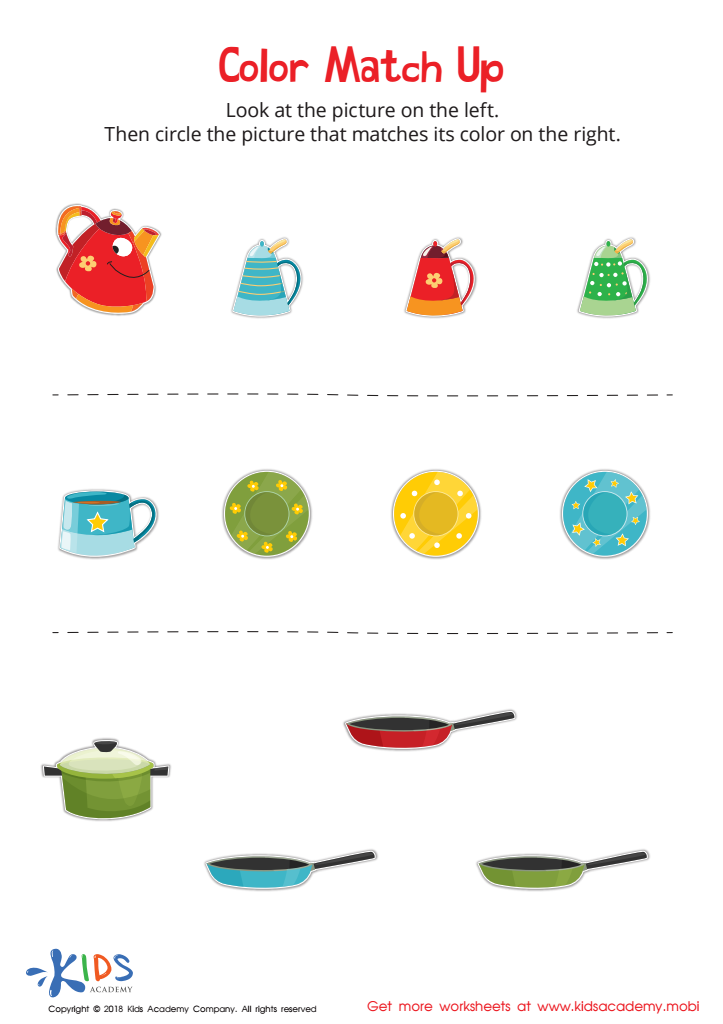
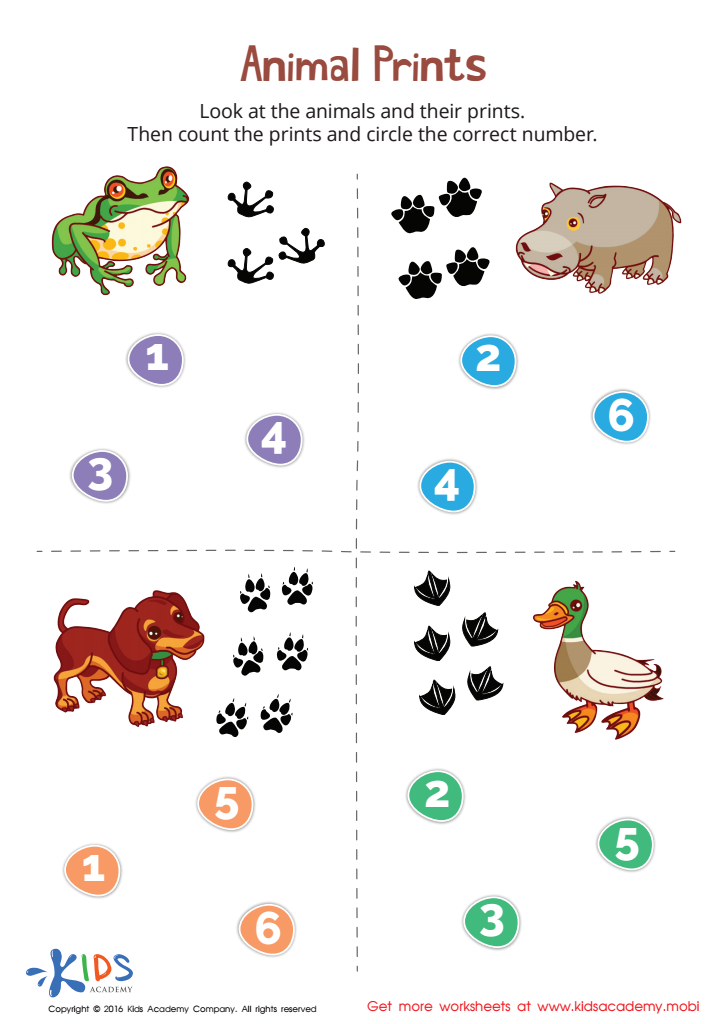
Animal Prints Match-Up Worksheet
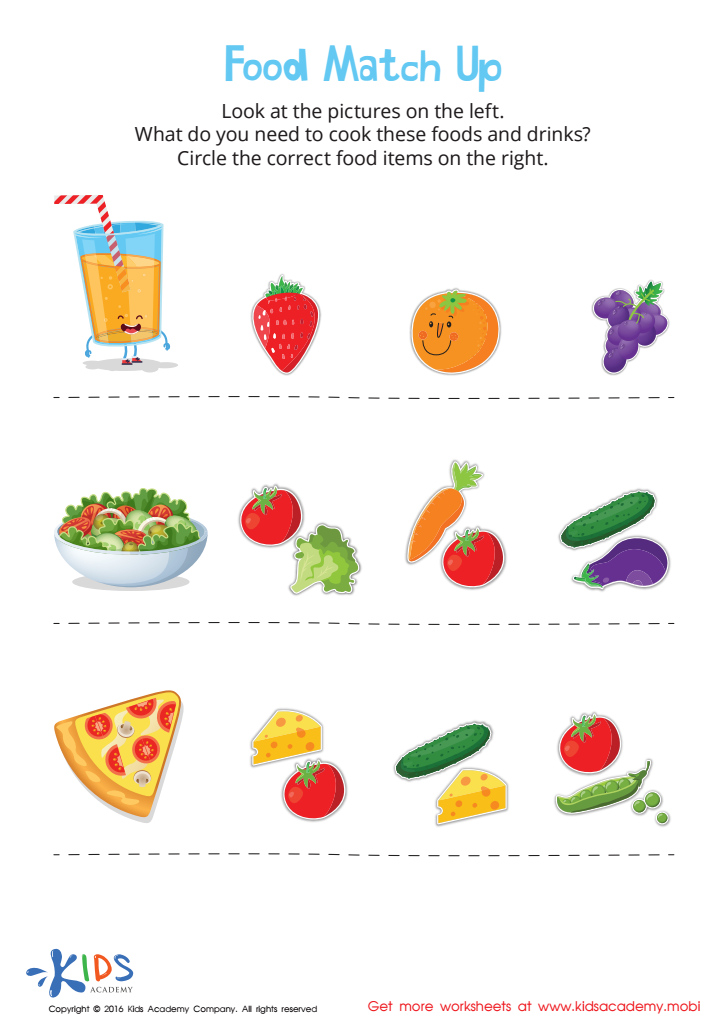
Food Match Up Worksheet
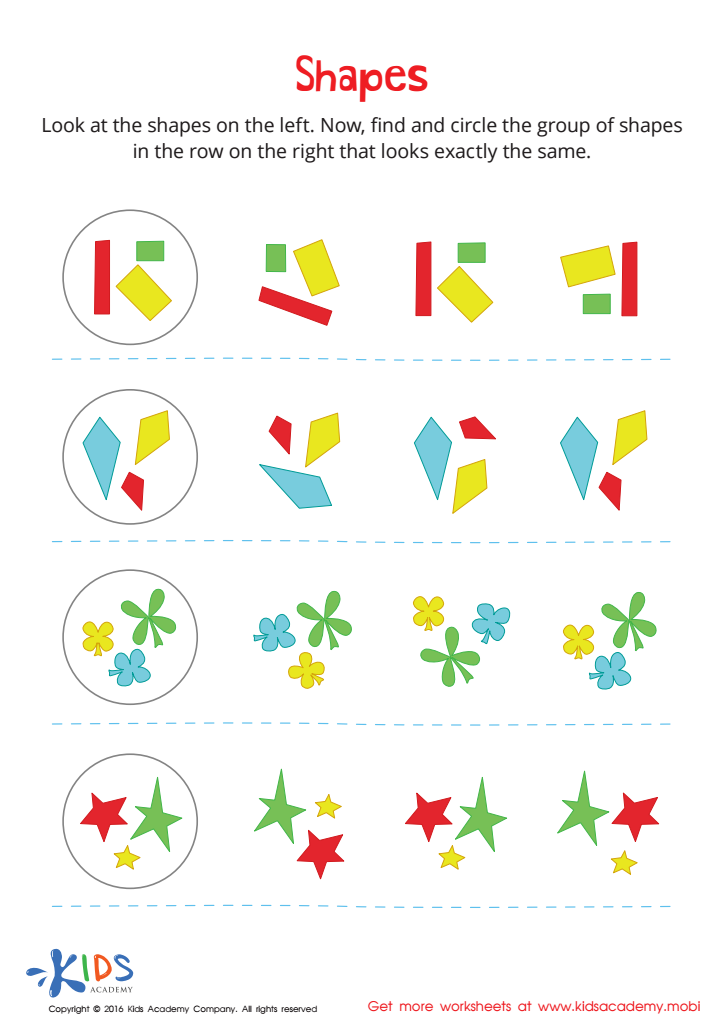
Shapes Worksheet








Matching skills are vital for children aged 3-7 as they play a crucial role in cognitive development and early learning. These skills involve recognizing similarities and differences between objects, symbols, or shapes, forming the foundation for problem-solving, reasoning, and critical thinking.
For parents and teachers, fostering matching skills can enhance children's learning experiences. In this age group, children are naturally inclined to explore and categorize their world. Activities such as sorting games or puzzles not only engage them but also encourage their observational skills. As children successfully match items, they improve their memory and focus, essential skills for later learning experiences.
Furthermore, matching activities serve as an educational bridge. They can connect to broader concepts such as colors, numbers, and letters, providing a fun way to introduce academic content. These skills also promote social interaction when done in groups, helping children learn to collaborate, take turns, and communicate effectively.
Investing time in developing matching skills lays a solid groundwork for more complex learning, making it an essential focus for parents and teachers alike. Ultimately, supporting children in mastering these skills fosters their confidence and love for learning, which are crucial for their future educational journeys.








