
Time recognition Measurement Worksheets for Ages 3-7
3 filtered results
Difficulty Level
Grade
Age
-
From - To
Subject
Activity
Standards
Explore our engaging Time Recognition Measurement Worksheets designed specifically for children ages 3-7! These interactive resources help young learners grasp essential concepts of time. Through fun activities, kids will develop skills in reading clocks, differentiating between hours and minutes, and understanding daily routines. Our worksheets are tailored to promote cognitive growth while making learning enjoyable. Ideal for parents and educators alike, these printable worksheets seamlessly blend play and education. Strengthen your child's mathematical foundation and boost their confidence in time recognition. Start your journey towards time mastery today and watch your little ones flourish with each turn of the clock!
Favorites
With answer key
Interactive
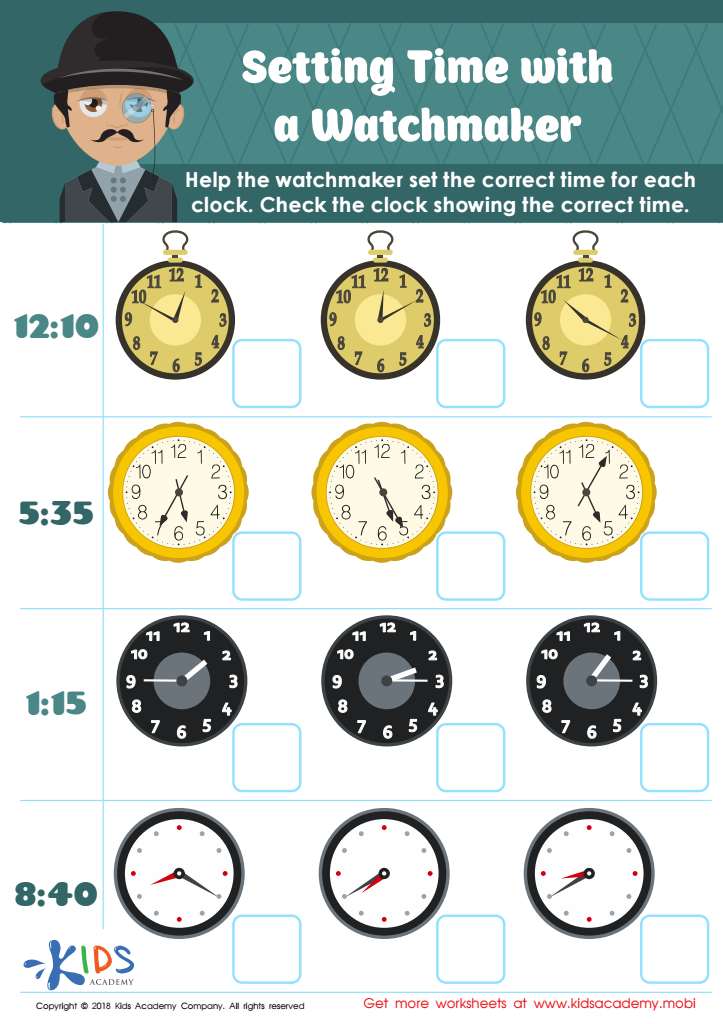
Setting Time with Watchmaker Worksheet
Can your kids tell the time? If so, this worksheet should be easy. Help them set the time for each clock: look at the time written on the left side and find the clock on the right side that matches.
 Assign to My Students
Setting Time with Watchmaker Worksheet
Worksheet
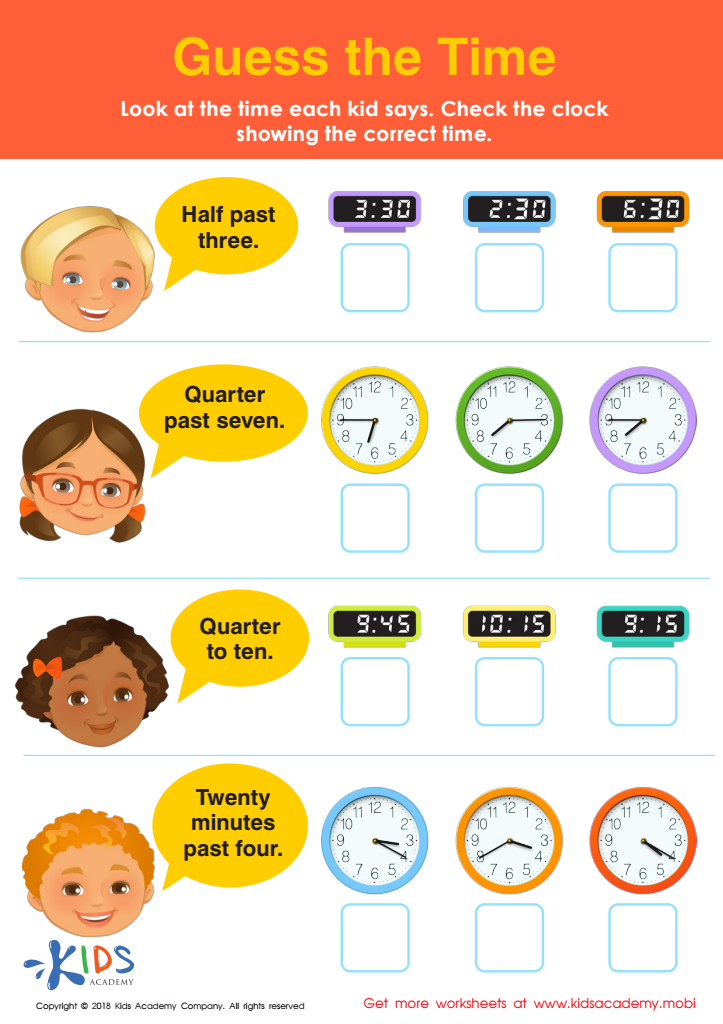
Guess the Time Worksheet
Help students tell the time accurately with this fun exercise. Read the time each person says and find the corresponding clock. Check the options on the left and have students guess the right time. This worksheet is sure to sharpen their time-telling skills.
Guess the Time Worksheet
Worksheet
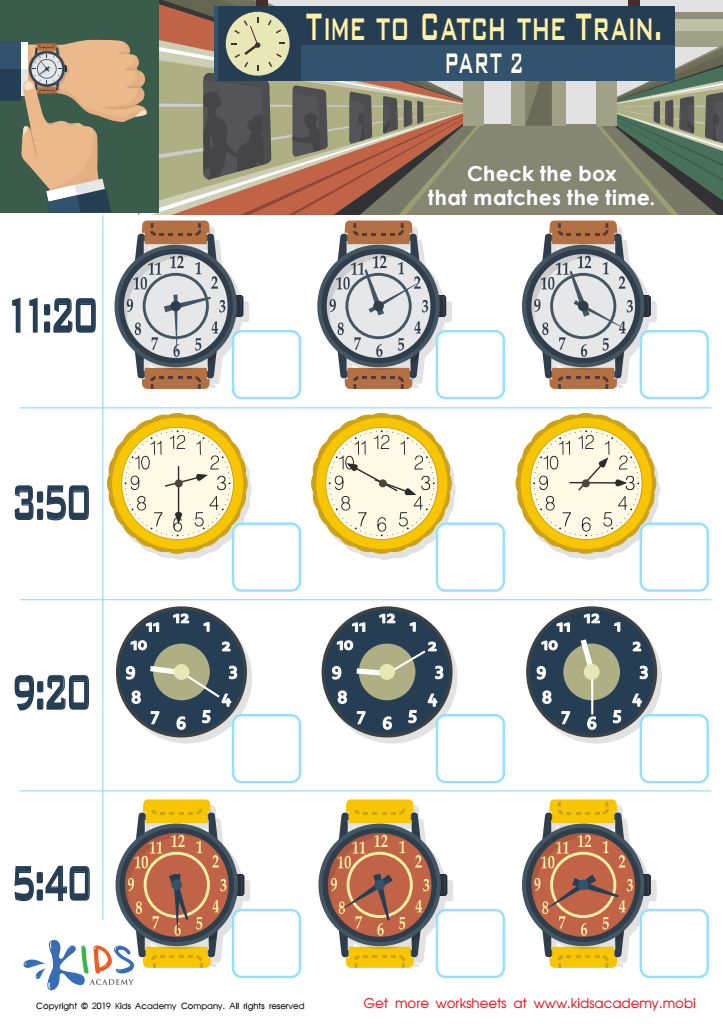
Time to Catch the Train Part 2 Worksheet
Teach your kids the importance of telling time and how to do it. Explain that there are multiple ways to show the time, such as written on the left side or watches in the picture. Guide them to check the box that matches the time. Knowing the time is essential to get things done and create order. Ensure your kids understand this and they will reap the benefits.
Time to Catch the Train Part 2 Worksheet
Worksheet
Join Kids Academy for Free
Who is primarily going to use this learning content?








Time recognition measurement is crucial for children aged 3-7 as it lays the foundational skills for understanding and interpreting time—a key life competency. At this early stage, children are naturally curious about their environment, and introducing them to the concept of time helps them make sense of their daily routines and experiences. Understanding time allows children to organize their activities, anticipate events, and manage expectations, fostering better self-regulation and independence.
For parents and teachers, prioritizing time recognition contributes to various developmental benefits. Enhanced time awareness helps children develop memorization and sequencing skills, which are instrumental for literacy and numeracy growth. Recognizing time reinforces vocabulary development, such as terms related to days, weeks, and routines (e.g., "breakfast time," "playtime"), enriching their language skills.
Moreover, it cultivates an appreciation for a structured environment and the notion of responsibility. Activities like learning to read a clock, understanding schedules, or participating in timed games promote cognitive development and create meaningful learning experiences. Ultimately, nurturing time recognition not only prepares children for academic success but also equips them with practical skills they will use for a lifetime—making it a vital focus for parents and educators alike.








