Problem-Solving Skills Sorting Worksheets for Ages 3-7
4 filtered results
-
From - To
Unlock your child’s potential with our engaging Problem-Solving Skills Sorting Worksheets, designed for ages 3-7. These worksheets foster critical thinking and enhance cognitive development as young learners sort and categorize various objects, honing their problem-solving abilities. With colorful visuals and interactive tasks, children will enjoy exploring shapes, sizes, and categories while building essential skills for academic success. Ideal for home or classroom use, these versatile worksheets offer a fun way to stimulate young minds. Encourage creativity, enhance logical reasoning, and promote independence as your child tackles these problem-solving challenges. Dive into a world of learning today!
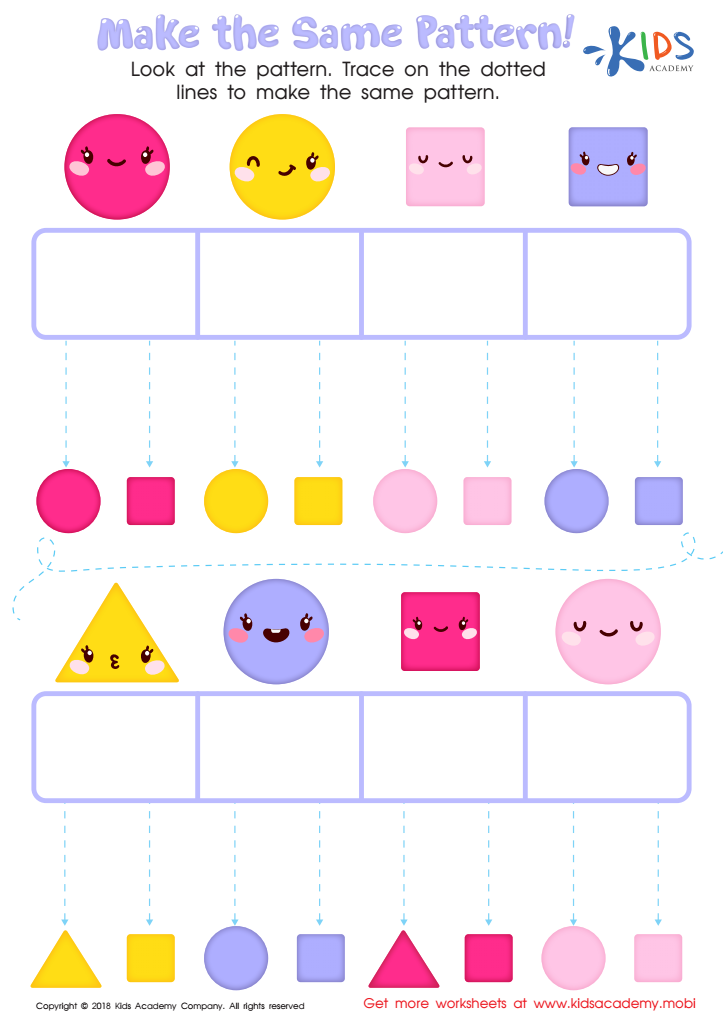
Make the Same Pattern Worksheet
 Assign to My Students
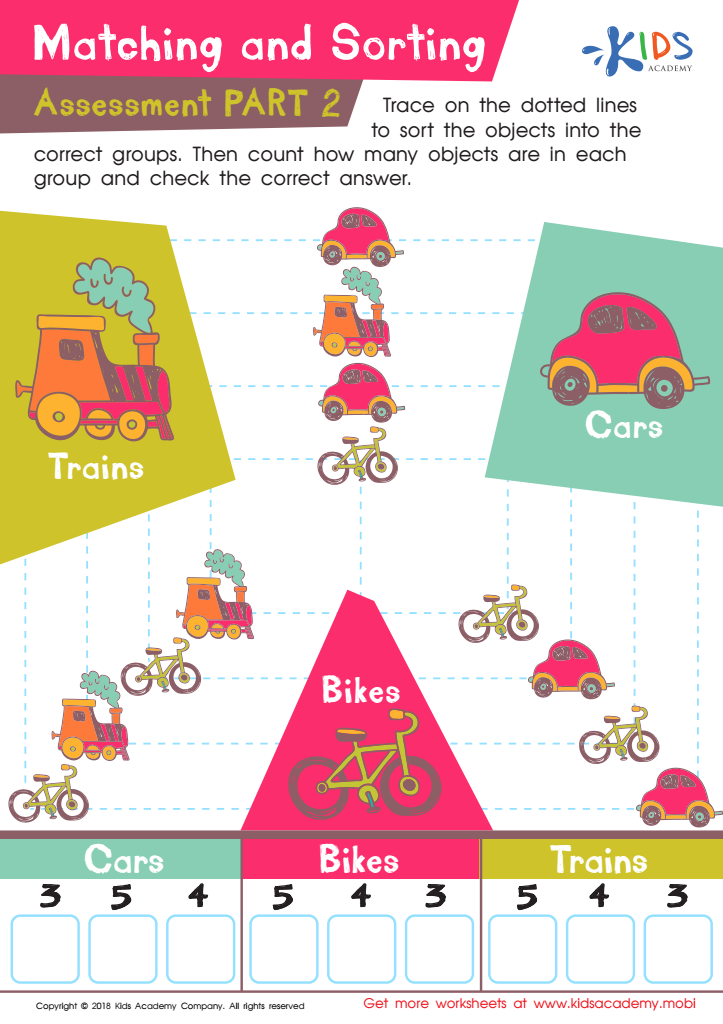
Matching and Sorting for Kindergarten: Assessment 2 Worksheet
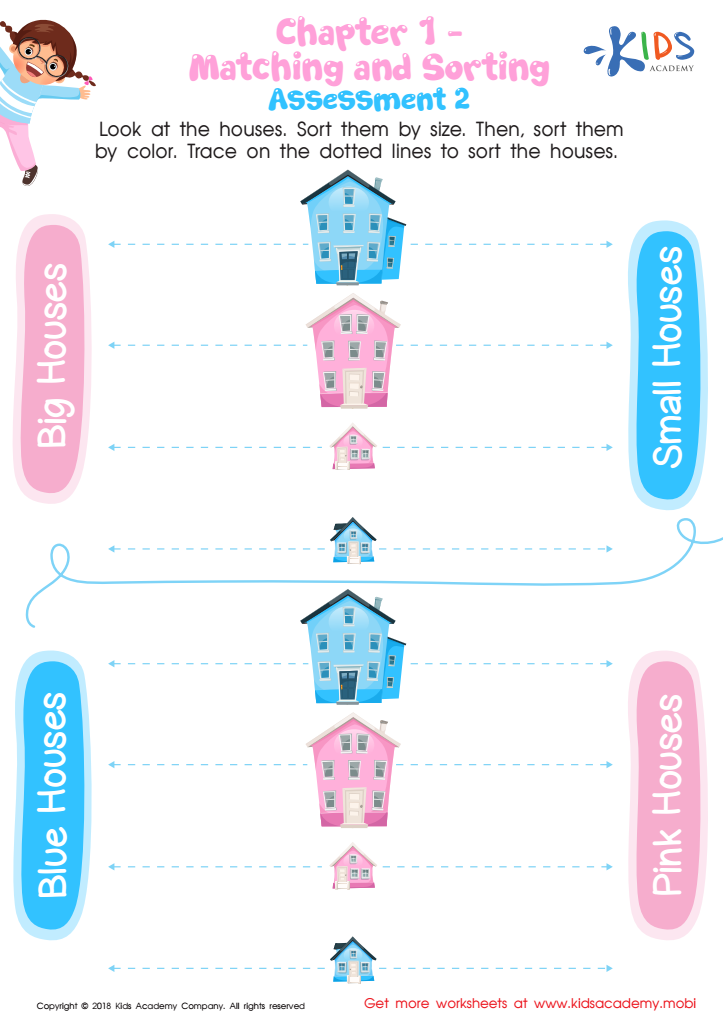
Matching and Sorting for Preschool: Assessment 2 Worksheet
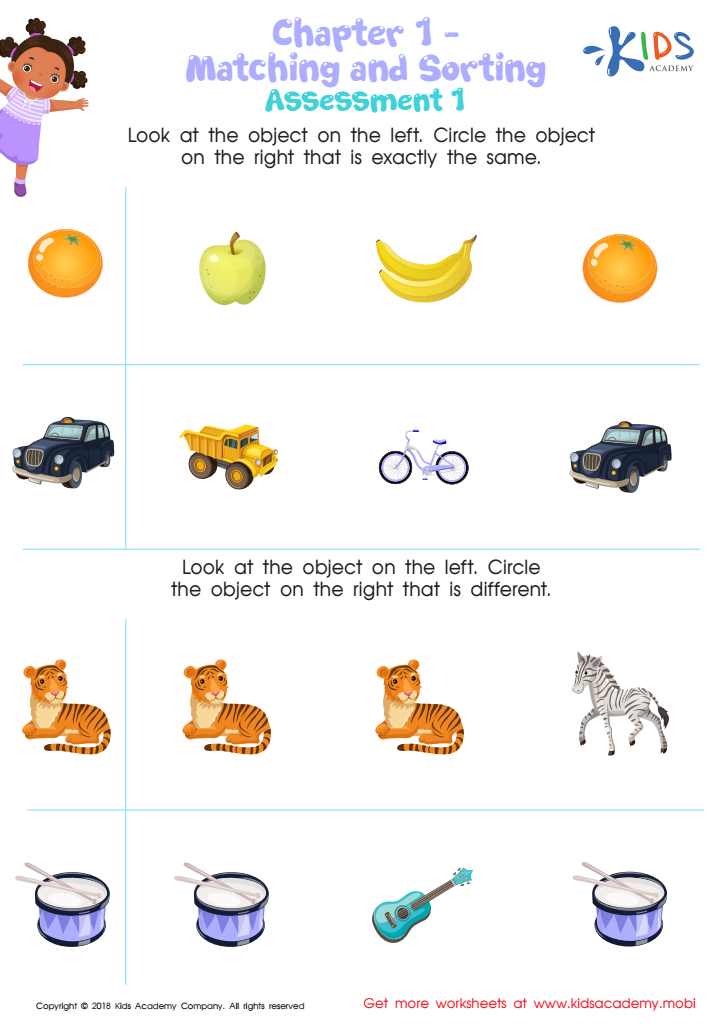
Matching and Sorting for Preschool: Assessment 1 Worksheet








Problem-solving skills are foundational for children's cognitive development, particularly for ages 3-7 when their brains are rapidly developing. Parents and teachers should care about these skills, as they not only foster critical thinking but also build independence and resilience in young learners. Engaging children in sorting activities helps them categorize, analyze, and make quick decisions, strengthening their ability to tackle various challenges—whether through puzzles, play, or real-life situations.
Furthermore, sorting activities enhance language development, as they encourage children to articulate their thought processes and reasoning behind their classifications. As they explain why they grouped certain items together, they expand their vocabulary and improve their communication skills. These activities also promote social skills, as children often work collaboratively, learning to respect different viewpoints and negotiate solutions.
Furthermore, problem-solving skills at this age are crucial for later academic success. Children learn how to approach tasks systematically, leading to greater competency in more complex subjects such as math and science. Ultimately, nurturing problem-solving skills through sorting activities equips children with essential tools that foster creativity, logical reasoning, and a lifelong love of learning. By prioritizing these skills, parents and teachers lay a solid foundation for future success.








