Problem-Solving Skills Tracing Shapes Worksheets for Ages 3-7
4 filtered results
-
From - To
Discover our engaging "Problem-Solving Skills Tracing Shapes Worksheets" designed for children aged 3-7! These worksheets provide a fun and interactive way to help kids develop crucial problem-solving skills while mastering shape recognition. Through tracing various geometric shapes, young learners enhance their fine motor skills, improve hand-eye coordination, and cultivate critical thinking. Perfect for early childhood education, our worksheets are easy to use and can be printed at home or in the classroom. Encourage your child's curiosity and creativity with these valuable resources that make learning shapes an enjoyable experience. Start building a strong foundation in math and problem-solving today!
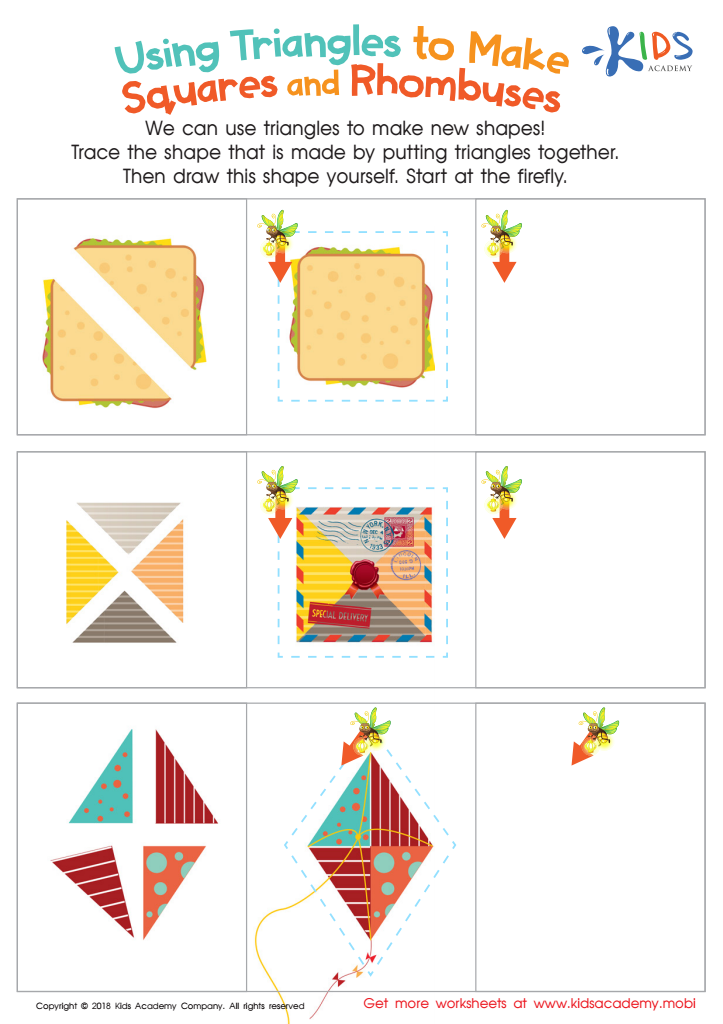
Using Triangles to Make Squares and Rhombuses Worksheet
 Assign to My Students
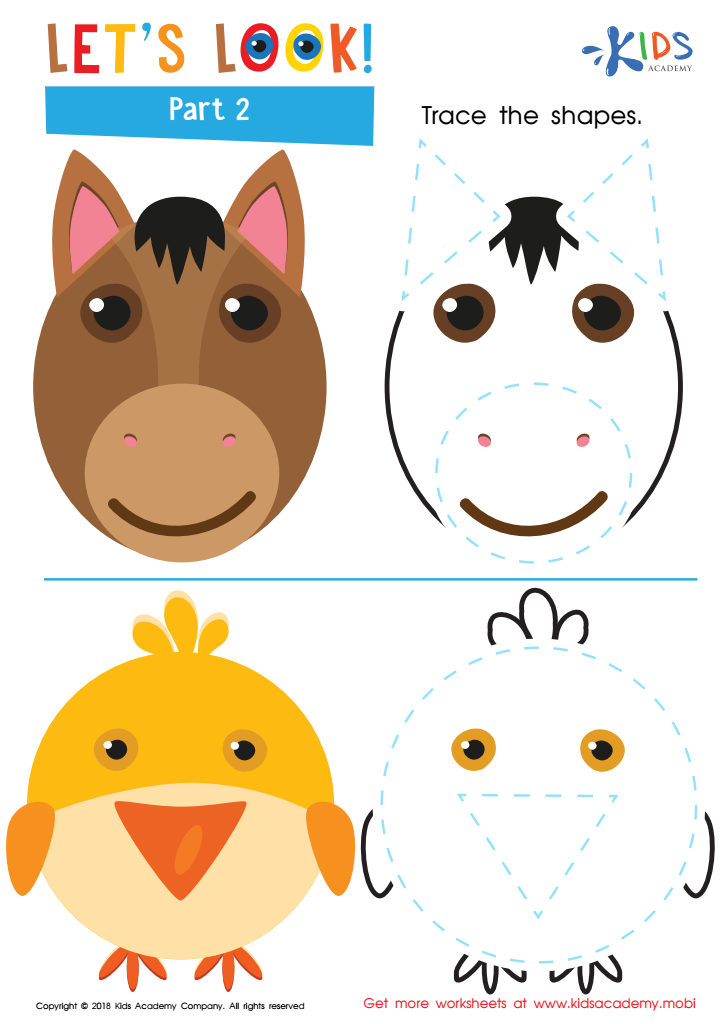
Let's Look! Part 2 Worksheet
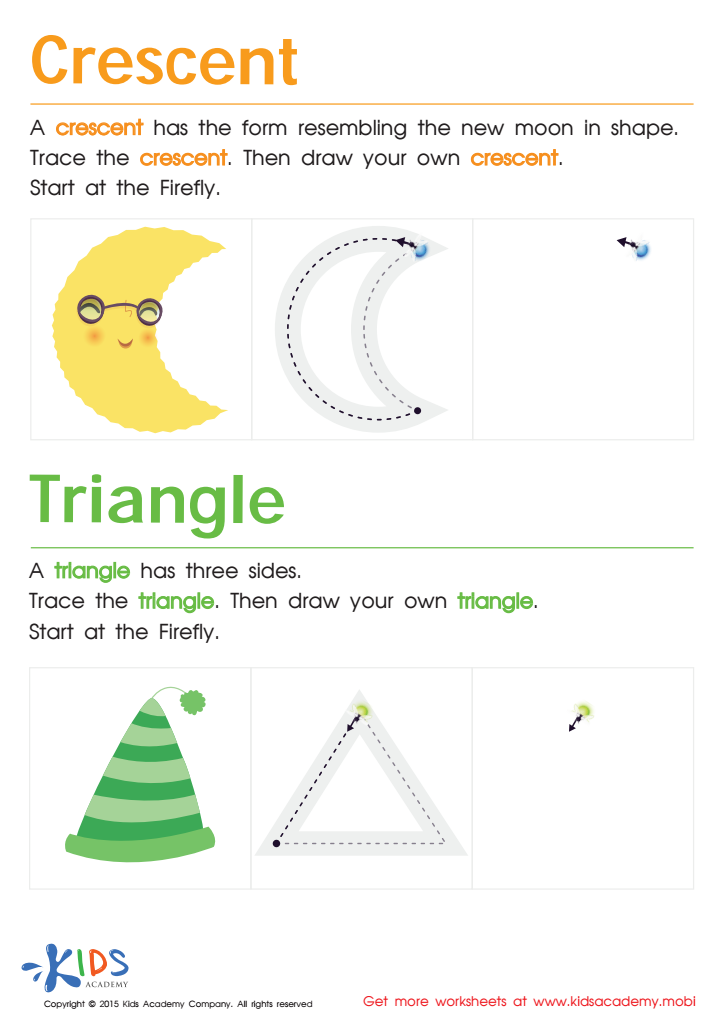
Learning to Draw Crescents And Triangles Worksheet
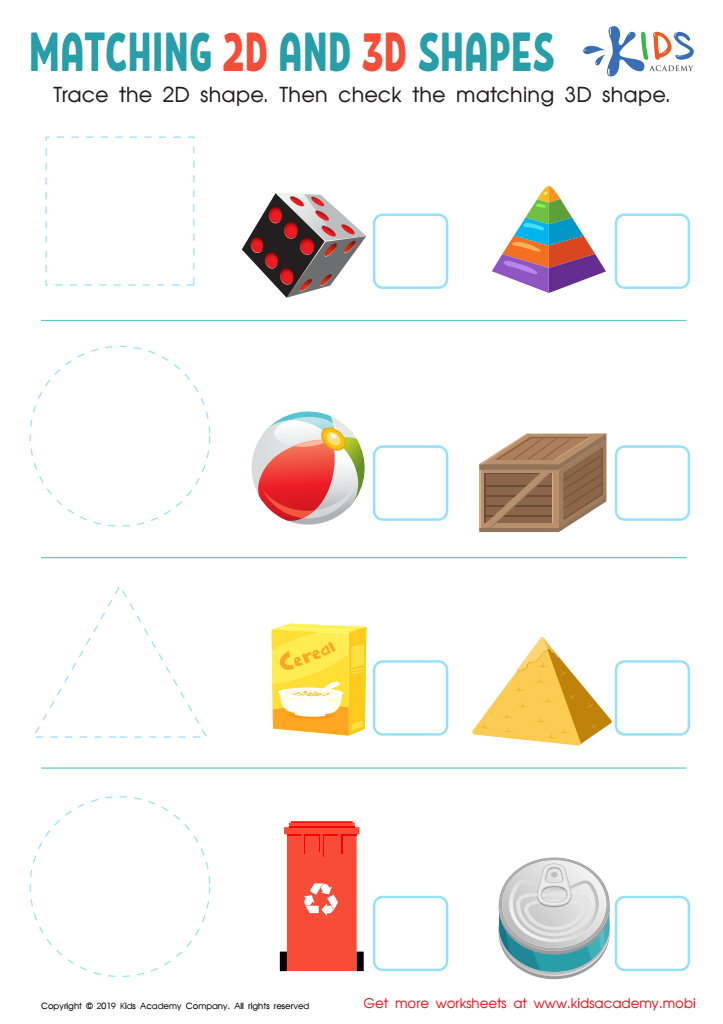
Matching 2D and 3D Shapes Worksheet








Parents and teachers should prioritize problem-solving skills through activities like tracing shapes for children aged 3-7 because these foundational skills play a critical role in early cognitive development. At this age, children are naturally curious and eager to explore their surroundings. Tracing shapes helps enhance fine motor skills essential for writing and daily tasks, while engaging children in shape recognition and spatial awareness, which are vital for math and logical reasoning later on.
Furthermore, tracing shapes encourages critical thinking as children learn to analyze and navigate through challenges, fostering perseverance and resilience. It also supports hand-eye coordination and cognitive connections between visual and physical movements. By encouraging this early form of problem-solving, we lay a groundwork for more complex skills and confidence in tackling future challenges.
Moreover, activities like shape tracing can serve as a medium for parent-teacher interaction, promoting a collaborative approach to learning. Parents can reinforce these skills at home, enhancing children’s understanding while paving the way for richer educational experiences. Overall, supporting tracing shapes is not just about learning shapes; it’s about fostering essential problem-solving skills that children will carry into their academic futures and daily lives.