Animal identification Reading Worksheets for Ages 3-7
5 filtered results
-
From - To
Welcome to our engaging Animal Identification Reading Worksheets, specially designed for children ages 3-7! These interactive resources help young learners develop their reading skills while exploring the fascinating world of animals. Through vibrant illustrations and simple text, kids will enjoy matching animals to their names, enhancing vocabulary and comprehension in a fun way. Our worksheets cater to various learning styles, promoting both visual and kinesthetic engagement. Ideal for classrooms or home learning, these activities provide an exciting opportunity for kids to explore different animals while building essential literacy skills. Dive into the adventure of reading and discovery with our worksheets today!
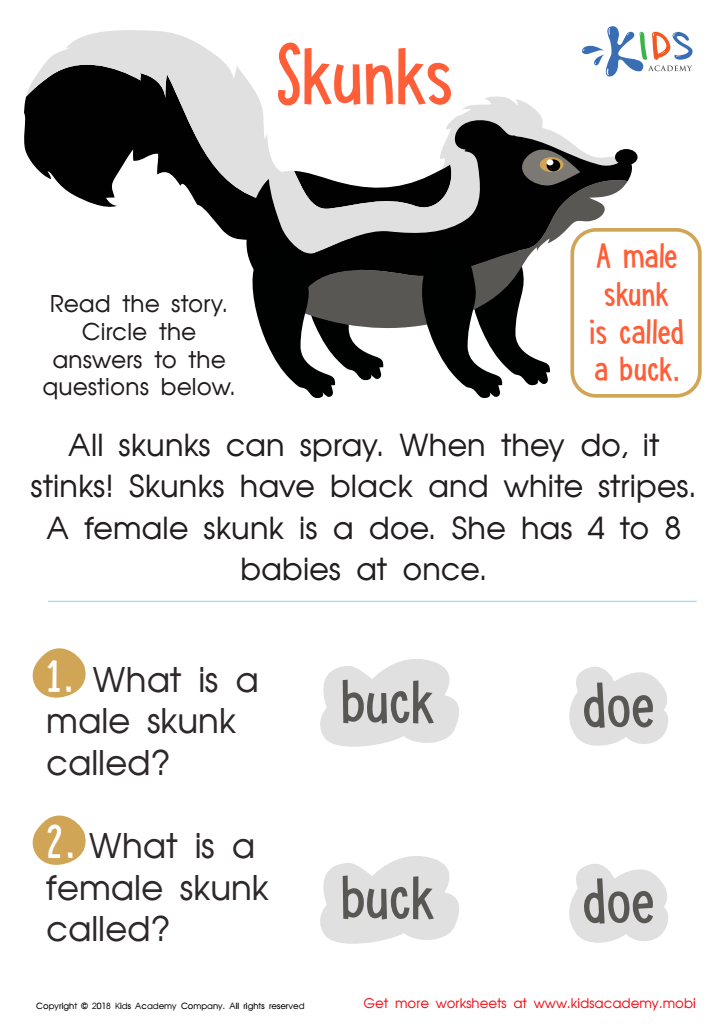
Skunks Worksheet
 Assign to My Students
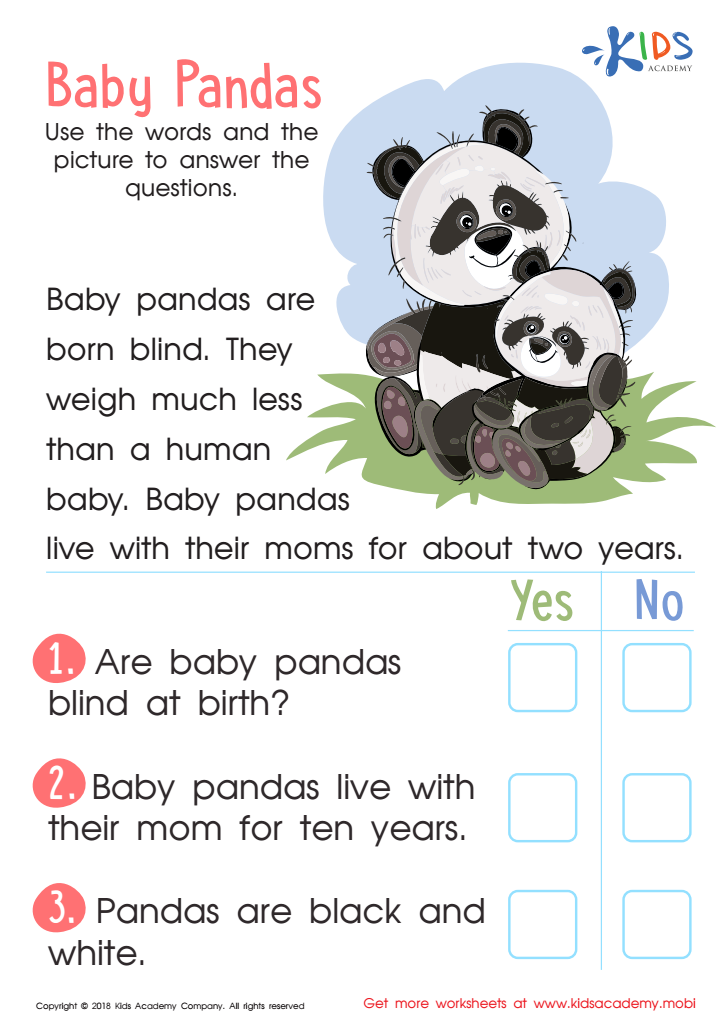
Baby Pandas Worksheet
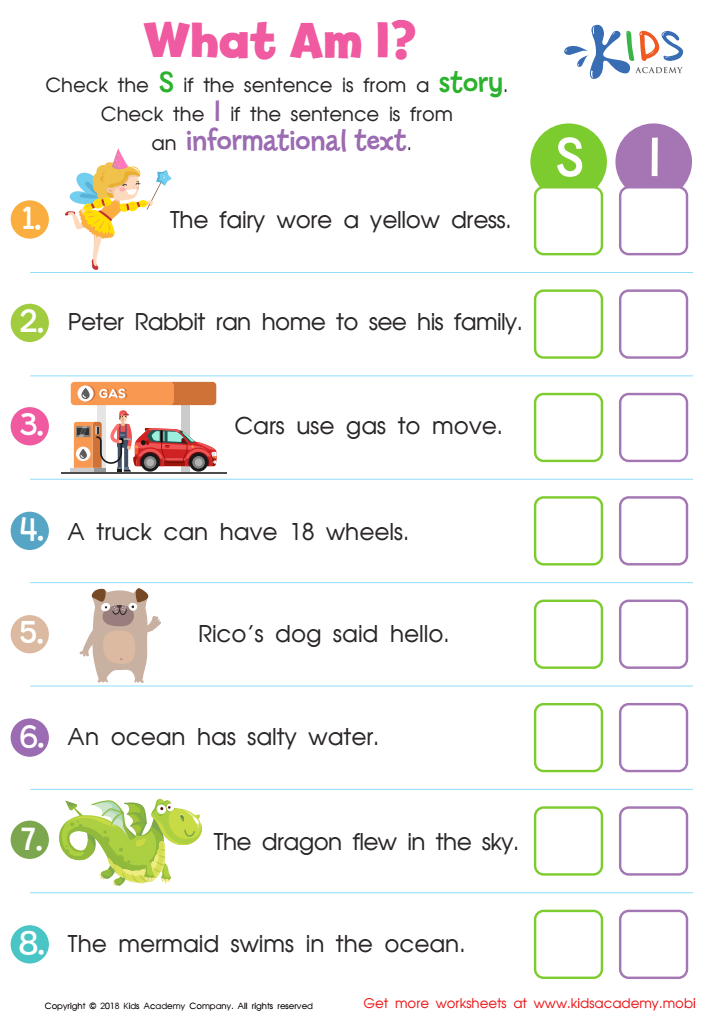
What Am I? Worksheet
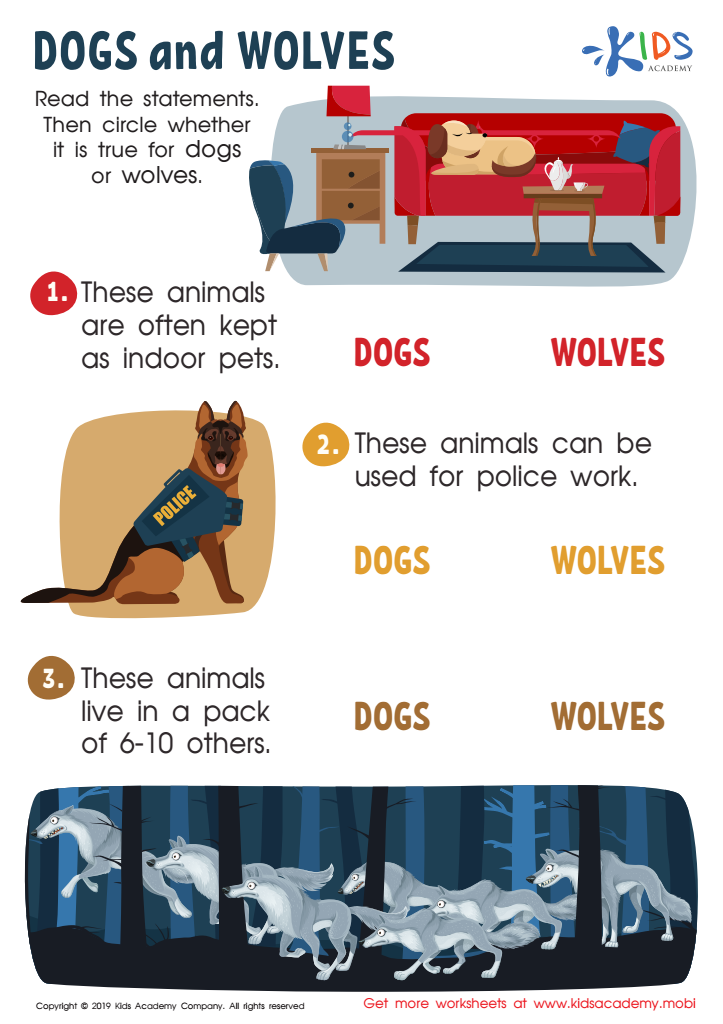
Dogs and Wolves Worksheet
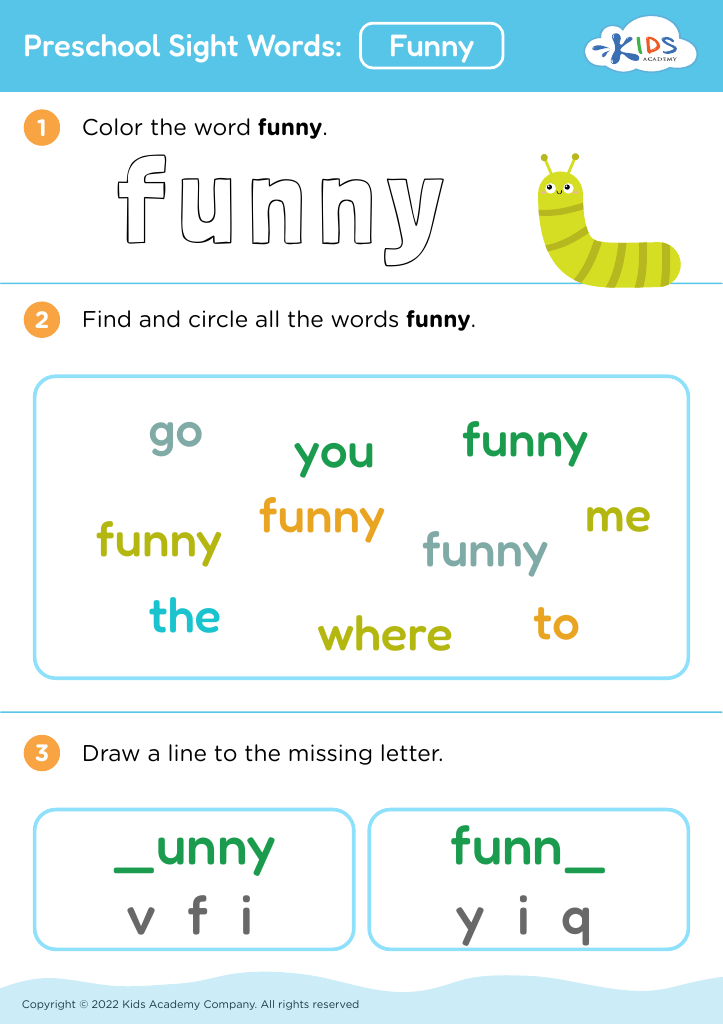








Parents and teachers should prioritize animal identification reading for children ages 3-7 for several impactful reasons. Firstly, this foundational activity fosters early literacy skills. Learning to read and recognize animal names introduces children to phonics, vocabulary, and comprehension, helping them develop critical language abilities.
Additionally, animal identification heightens curiosity about the natural world. Young learners are naturally inquisitive, and this topic encourages exploration and questions about various species, habitats, and behaviors. As they learn about animals, children engage in science concepts in a fun and relatable way.
Moreover, these reading experiences enhance cognitive development. Identifying animals supports memory recall and categorization skills, as kids learn to differentiate between species and understand similarities and differences.
Animal identification reading also provides an excellent opportunity for social learning. Parents and teachers can use these moments to discuss empathy, conservation, and respecting wildlife, enabling children to develop responsible attitudes toward animals and the environment.
Ultimately, animal identification reading serves as a springboard for diverse learning experiences, promoting literacy, critical thinking, and emotional development. By highlighting this engaging subject, parents and teachers can nurture a lifelong love for reading, learning, and the wonders of nature.








