Categorization skills Reading Worksheets for Ages 3-7
5 filtered results
-
From - To
Enhance your child's cognitive development with our Categorization Skills Reading Worksheets designed for ages 3-7. These engaging activities will help young learners understand how to group objects based on common characteristics, fostering critical thinking and organization skills. Each worksheet offers colorful illustrations and simple instructions, making learning both fun and effective. Ideal for home or classroom settings, these resources aim to build a strong reading foundation while developing essential categorization abilities. Explore our wide selection of professionally crafted worksheets to give your child the educational advantage they deserve. Start your educational journey with Kids Academy today!
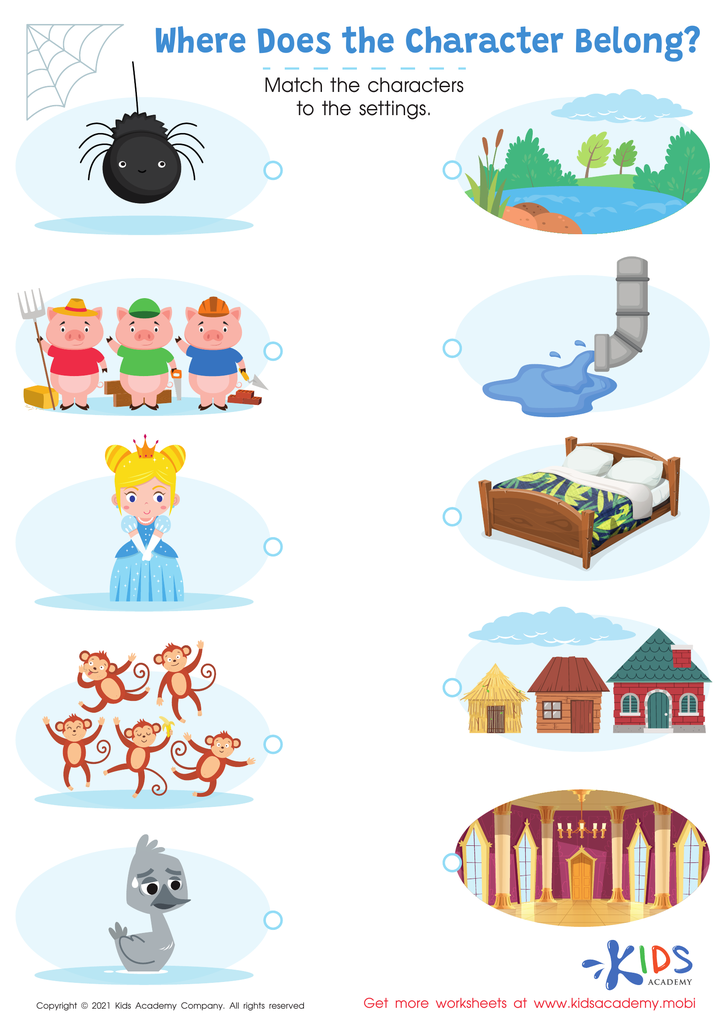
Where Does the Character Belong? Worksheet
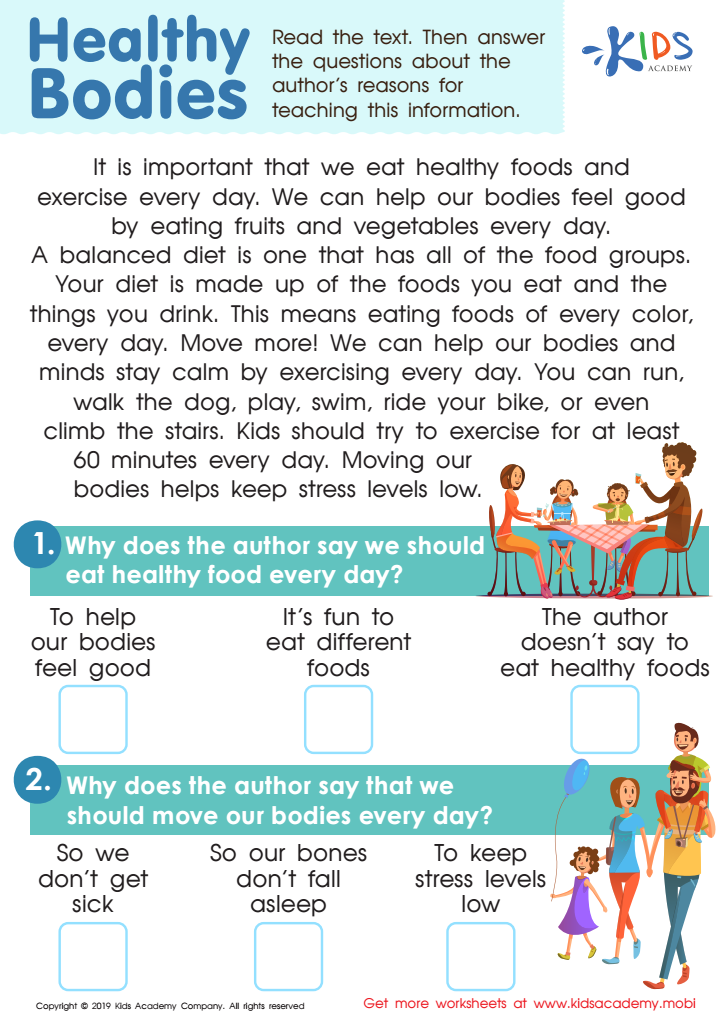
Healthy Bodies Worksheet
 Assign to My Students
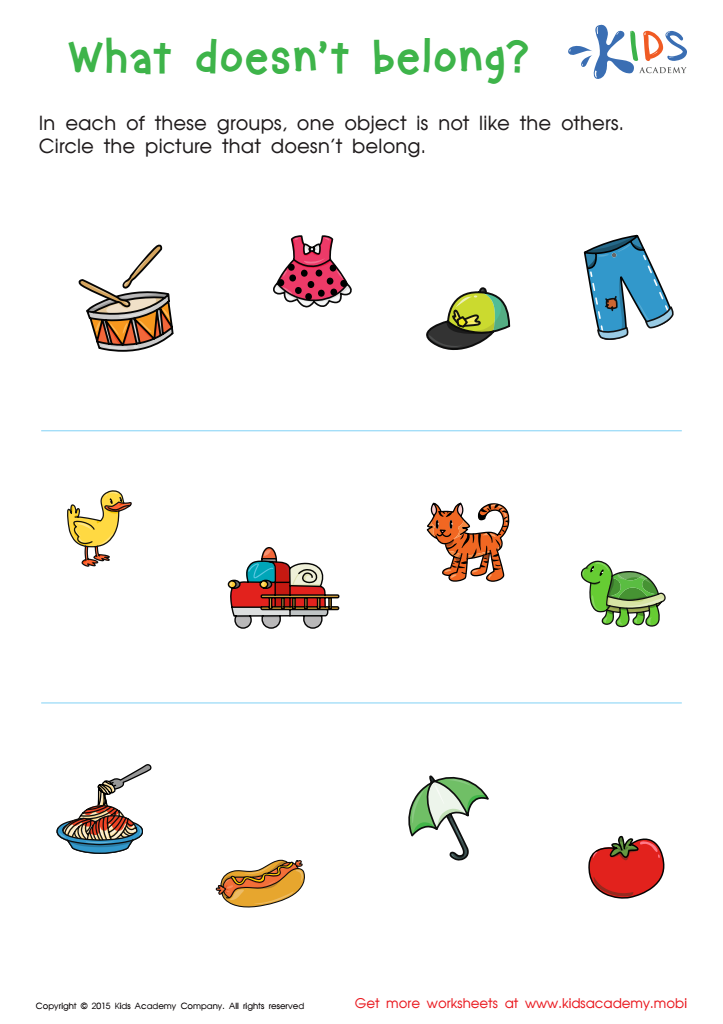
First Words: What Doesn't Belong Worksheet
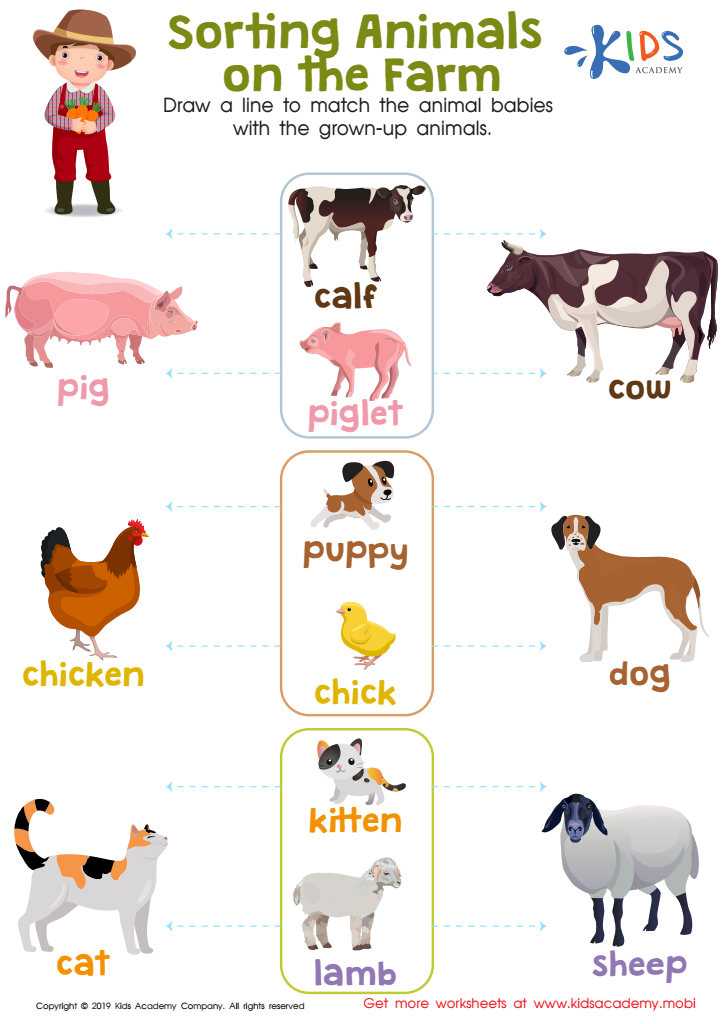
Sorting Animals on the Farm Worksheet







Categorization skills are fundamental cognitive abilities that involve grouping similar items, ideas, or information together. For children ages 3-7, developing these skills through reading is crucial as it forms the basis for logical thinking, mathematical concepts, and efficient learning.
When children engage in categorization activities within reading, such as sorting picture cards, recognizing patterns, and identifying themes, they enhance their ability to make connections between different pieces of information. This process streamlines cognitive functions allowing children to better understand and remember new content. For example, recognizing that certain animals belong to specific habitats helps kids understand broader ecological concepts later.
Moreover, effective categorization skills support language development. When children categorize words, they build vocabulary and understand semantic relationships, enabling them to communicate more effectively. Storybooks that emphasize sorting and classifying encourage children to ask questions, use descriptive language, and predict outcomes, all of which are essential literacy skills.
For teachers and parents, fostering these skills through age-appropriate books and activities is essential for holistic development. Activities like sorting objects, spotting differences and similarities, and reading books with repetitive, categorized content can significantly strengthen a child's cognitive framework. Investing in these foundational skills paves the way for more complex thinking processes, setting children on a path for academic success and lifelong learning.








