Identification skills Reading Worksheets for Ages 3-7
3 filtered results
-
From - To
Boost your child's early literacy with our Identification Skills Reading Worksheets designed for ages 3-7! These engaging worksheets provide young learners with essential skills for recognizing letters, words, and symbols. Tailored to foster comprehension and analytical abilities, each activity encourages children to identify various visuals, matching them to corresponding letters and words, thus enhancing vocabulary and cognitive development. Our user-friendly format ensures an enjoyable learning experience, perfect for teachers and parents alike. Explore the joy of learning while nurturing your child's reading skills with these fun and educational resources! Perfect for at-home practice or classroom use!
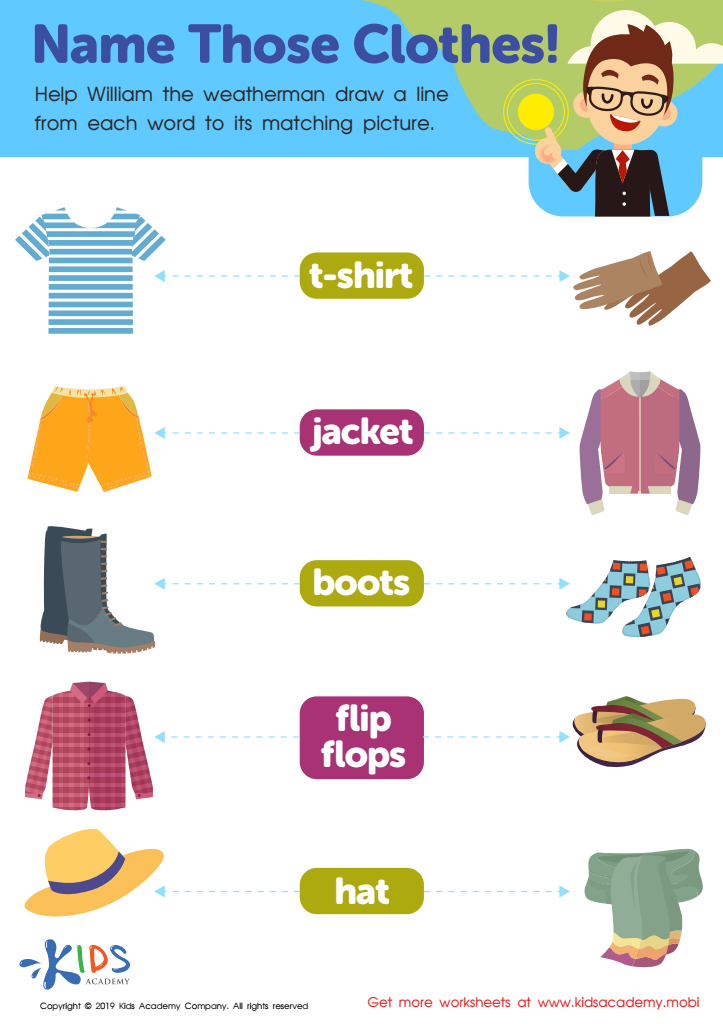
Name Those Clothes Worksheet
 Assign to My Students
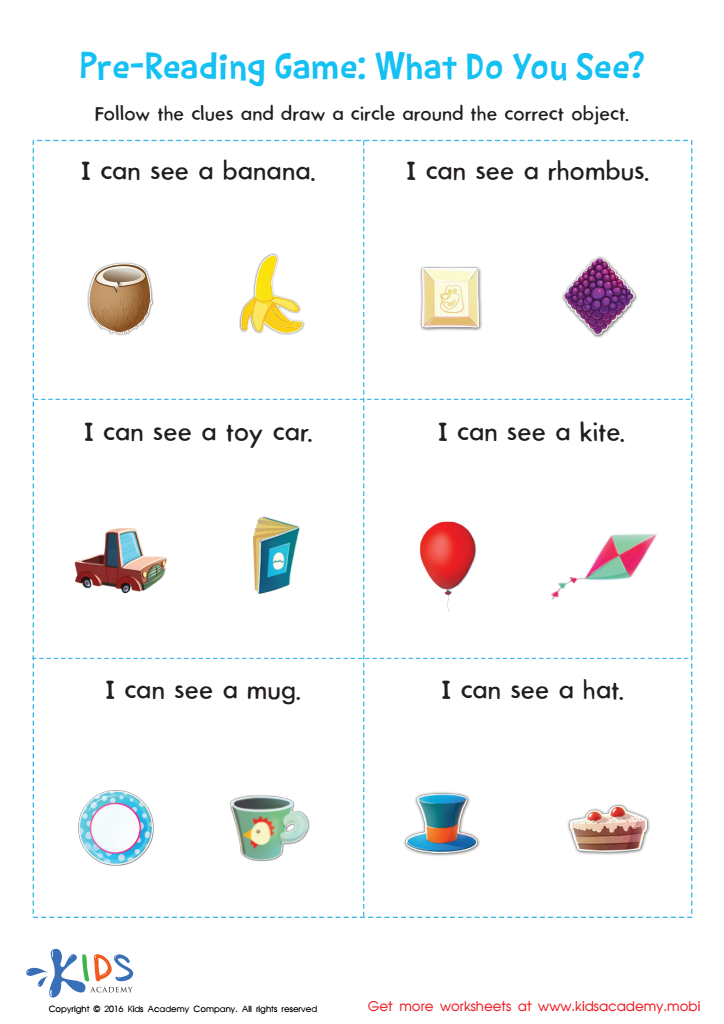
Pre–reading Worksheet: What Do You See?
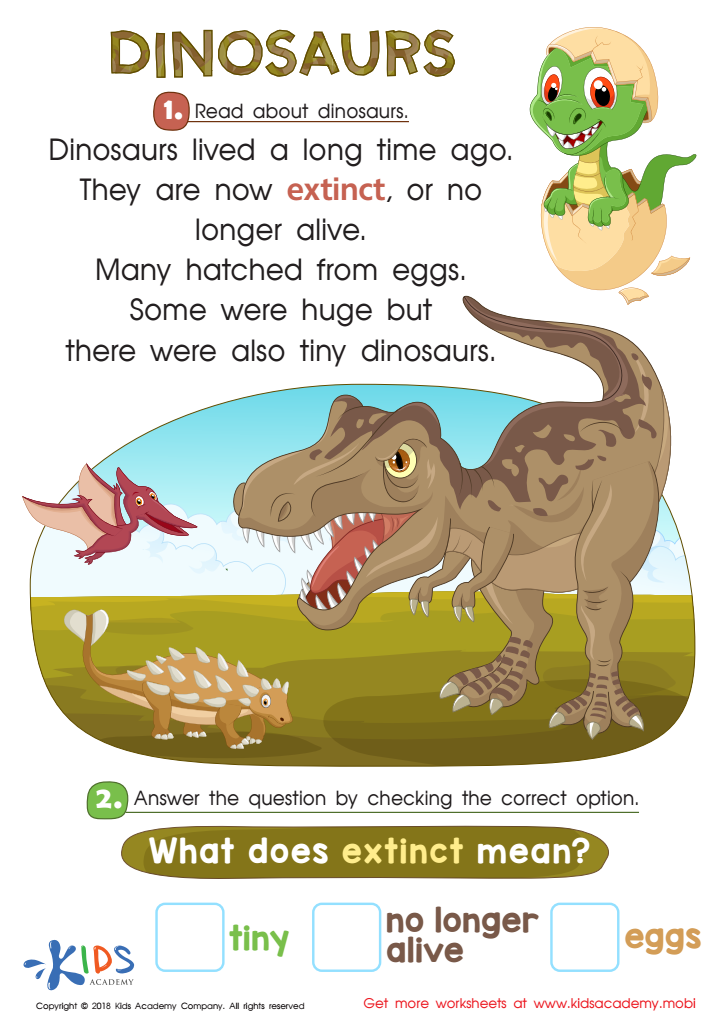
Dinosaurs Worksheet


.jpg)





Identification skills are crucial for early readers aged 3-7, providing a foundational literacy framework essential for future academic success. During these formative years, children develop the ability to recognize letters, sounds, and words, which are vital components of reading. Strong identification skills contribute to phonemic awareness, allowing children to understand how sounds form words, thus fostering a love for reading.
Parents and teachers should prioritize these skills, as they directly influence a child's confidence and motivation to read. Engaging young learners in identifying letters and sounds can stimulate cognitive development and enhance memory, language skills, and vocabulary. Moreover, early identification skills can aid in minimizing reading difficulties later on, setting a positive trajectory for ongoing education.
Supporting the development of identification skills also promotes a more inclusive learning environment. Children who struggle with these foundational skills may experience frustration and disengagement, which can lead to broader educational challenges. By focusing on these early literacy skills, parents and teachers can create an engaging atmosphere that nurtures a lifelong appreciation for reading. Ultimately, fostering identification skills in young children not only empowers them academically but also enriches their emotional and social development as confident learners.








