Identifying story elements Reading Worksheets for Ages 3-7
4 filtered results
-
From - To
Discover our engaging "Identifying Story Elements" reading worksheets designed for children ages 3-7. These worksheets help young learners explore the fundamental components of stories, including characters, settings, and events. By using interactive activities, children can enhance their comprehension skills while fostering a love for reading. Our carefully crafted resources encourage critical thinking and creativity, making learning fun and effective. Each worksheet offers age-appropriate exercises that can easily fit into your teaching plan or home learning activities. Encourage your child's literary growth today with our captivating story elements worksheets and watch their confidence and understanding flourish!
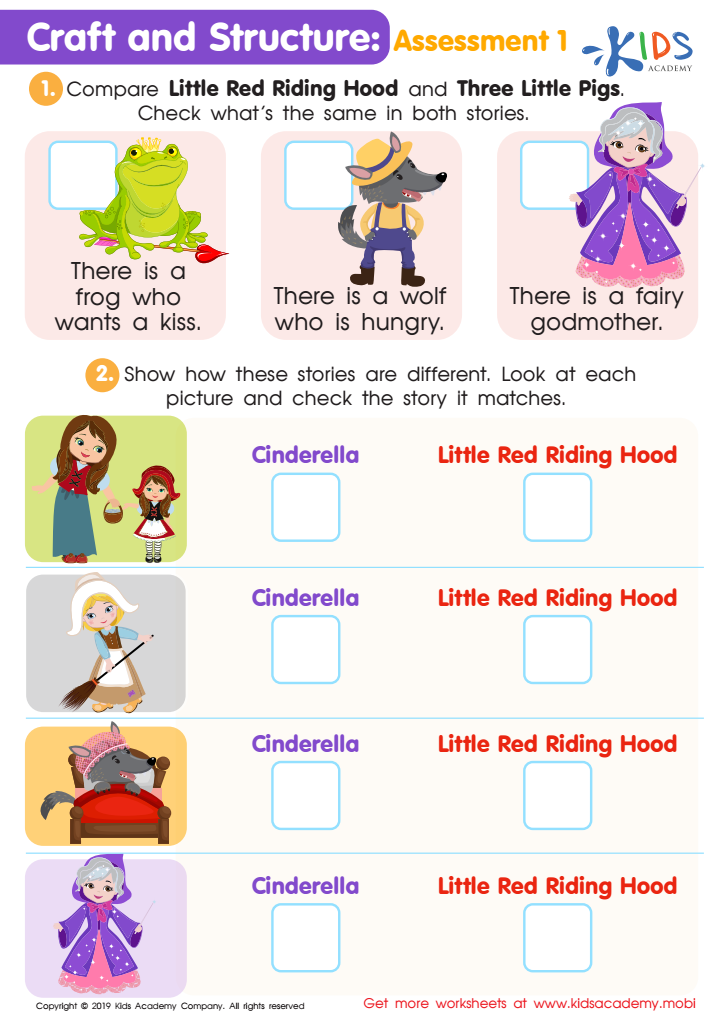
Craft and Structure: Assessment 1 Worksheet
 Assign to My Students
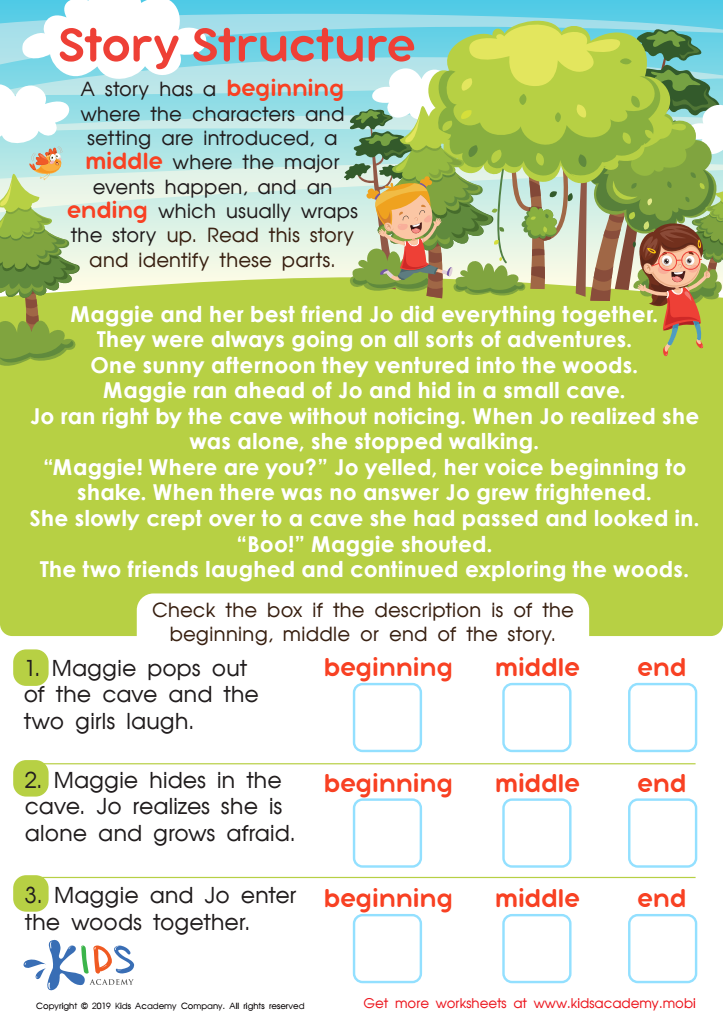
Story Structure Worksheet
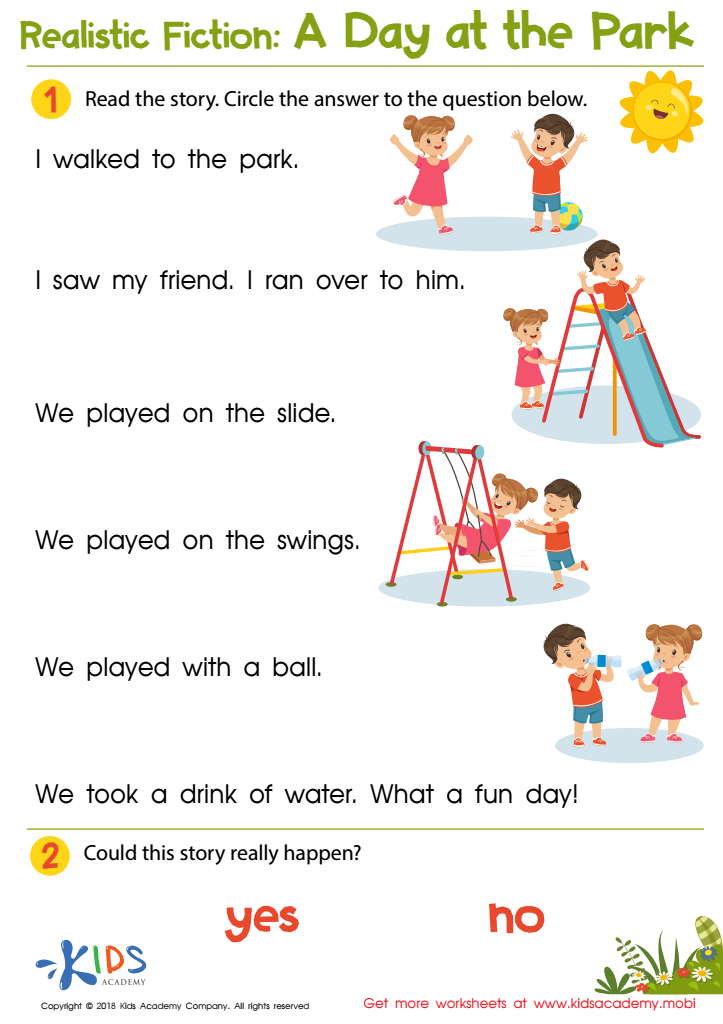
A Day at the Park Worksheet
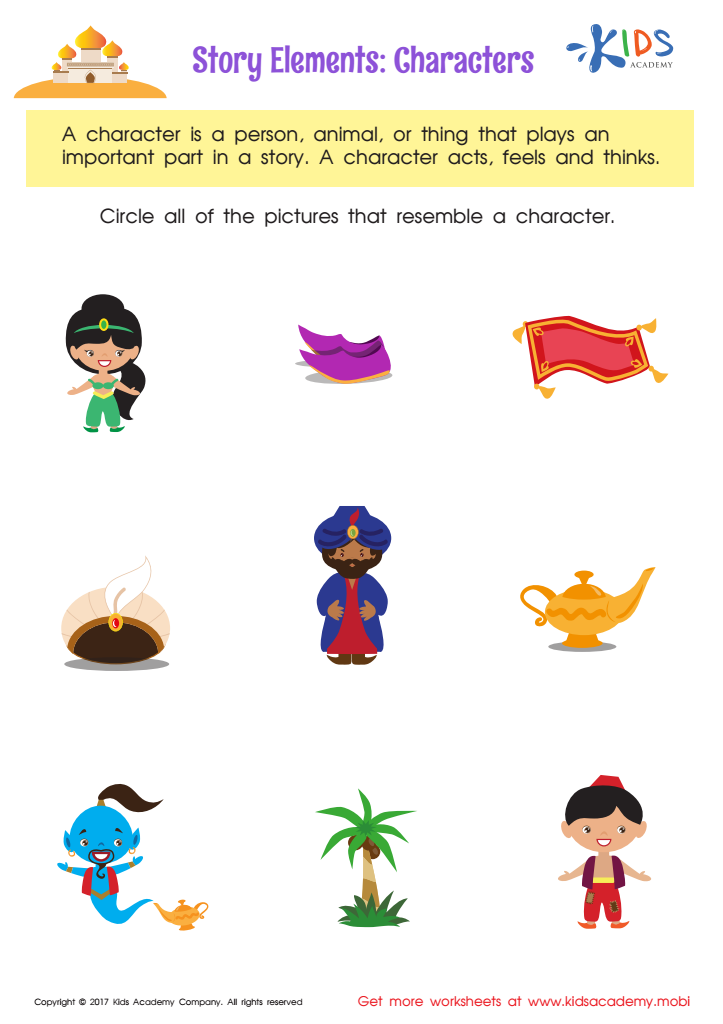
Story Elements Printable








Identifying story elements—such as characters, setting, plot, conflict, and resolution—is crucial for fostering literacy skills in children aged 3-7. For parents and teachers, this foundational aspect of reading serves multiple purposes. First, recognizing these elements enhances comprehension, allowing children to grasp the narrative arc and understand the relationships between parts of the story. This comprehension is essential for building a love of reading, as children feel motivated to engage with texts they can understand.
Second, story elements provide children a framework for critical thinking and creativity. When they learn to identify these components, they begin to analyze not only what they read but also how to craft their own stories, thereby enhancing their narrative skills and imagination. Furthermore, discussing story elements encourages dialogue between adults and children, promoting verbal skills and emotional intelligence as they express their thoughts and ideas.
Lastly, understanding story elements aids in making connections to life experiences, helping children relate stories to their own lives, cultures, and emotions. By prioritizing the identification of story elements, parents and teachers create a comprehensive literacy program that not only improves reading skills but also nurtures a child's overall cognitive and emotional development.








