
Understanding multiplication Reading Worksheets for Ages 3-7
4 filtered results
Difficulty Level
Grade
Age
-
From - To
Subject
Activity
Standards
Explore our "Understanding Multiplication" reading worksheets designed specifically for children aged 3-7. These engaging, age-appropriate resources aim to introduce young learners to the basics of multiplication in a fun and accessible manner. Each worksheet features colorful illustrations and interactive exercises that encourage critical thinking and improve literacy skills intertwined with mathematical concepts. Perfect for both classroom settings and home activities, these worksheets help kids build a strong foundation in multiplication while enhancing their reading comprehension. Join us in making learning an enjoyable experience for your little ones as they embark on their mathematical journey!
Favorites
With answer key
Interactive
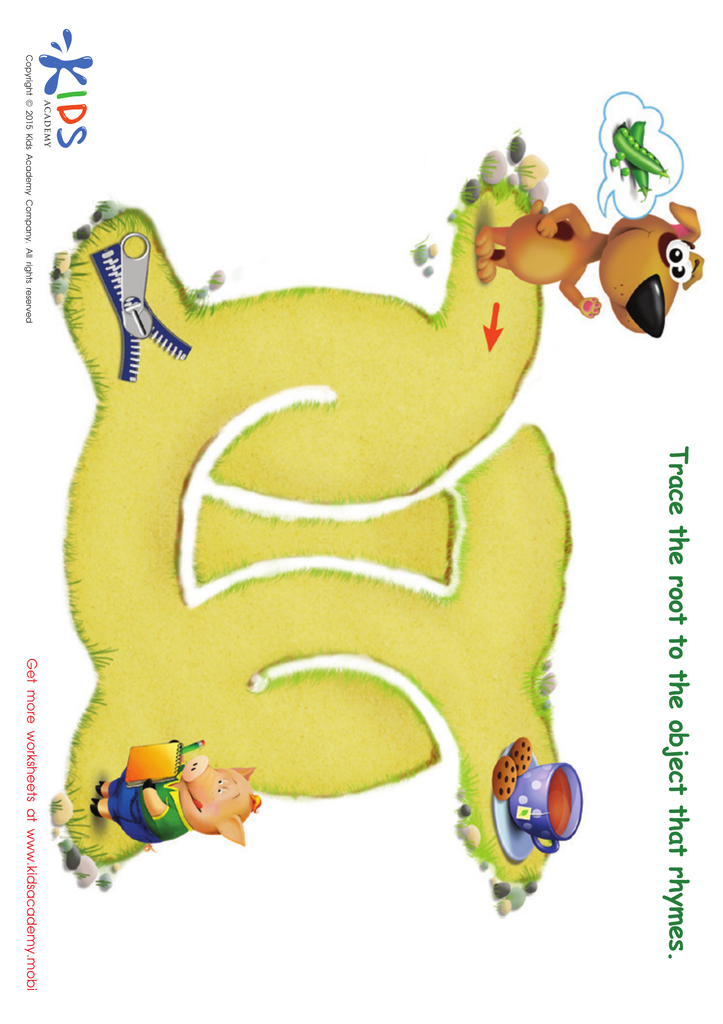
Pea Rhyming Words Worksheet
Check out our free printable worksheet that helps kids learn new words through rhyming. Your child needs to trace the root between the rhyming words and remember them better. Enjoy learning!
Pea Rhyming Words Worksheet
Worksheet
Join Kids Academy for Free
Who is primarily going to use this learning content?








Understanding multiplication from an early age is crucial for children, as it sets the foundation for their future mathematical skills. During the ages of 3 to 7, children are highly impressionable and show a natural curiosity about numbers and patterns. Introducing multiplication concepts can enhance their number sense, fostering an early appreciation for mathematics.
Reading books that incorporate multiplication in engaging ways can spark children's interest and provide relatable context, making the learning experience fun. For example, stories that involve sharing items among friends or organizing objects into groups help them visualize multiplication as repeated addition. This approach demystifies the concept and helps solidify understanding.
Additionally, developing multiplication skills early encourages critical thinking and problem-solving abilities. Having a solid grasp of these skills can help build confidence in mathematics, reducing future math anxiety. As they progress in their education, these foundational skills become instrumental in tackling more complex mathematical concepts, setting the stage for academic success.
Parents and teachers play a pivotal role in this learning journey, providing support, encouragement, and resources that can make a profound difference in children's attitudes towards math. Recognizing the importance of multiplying and integrating this learning in everyday activities can greatly benefit their overall educational experience.








