Understanding prepositions Reading Worksheets for Ages 3-7
6 filtered results
-
From - To
Unlock the power of prepositions with our engaging reading worksheets designed for ages 3-7! At Kids Academy, we recognize that mastering prepositions is crucial for young learners' language development. Our worksheets provide fun, interactive activities that promote understanding of spatial relationships, guiding students through concepts like "in," "on," and "under." Each resource is thoughtfully designed to cater to early readers' needs, featuring colorful illustrations and relatable scenarios. Parents and educators can easily use these worksheets to enhance vocabulary and comprehension skills. Start your child's journey to linguistic success and make learning prepositions a playful adventure! Explore our worksheets today!
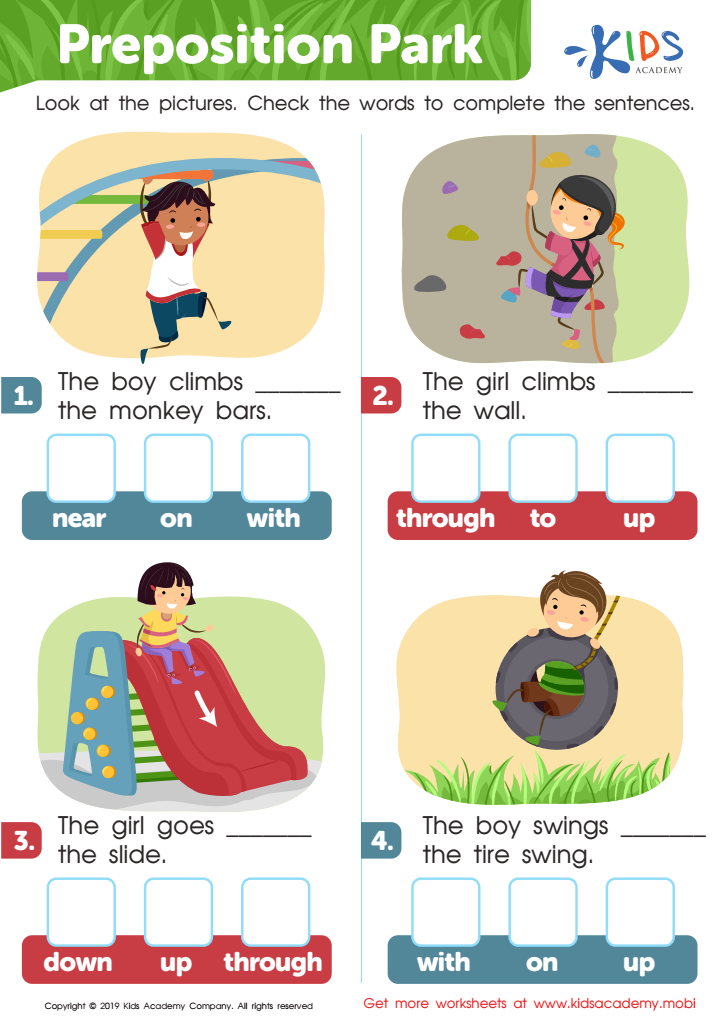
Preposition Park Worksheet
 Assign to My Students
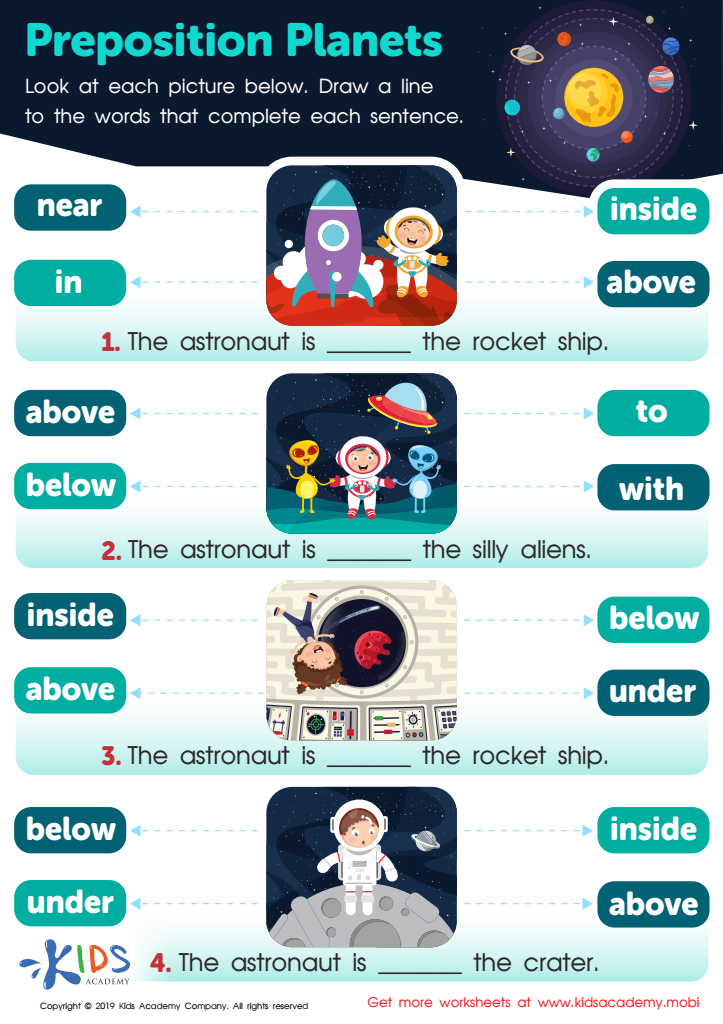
Preposition Planets Worksheet
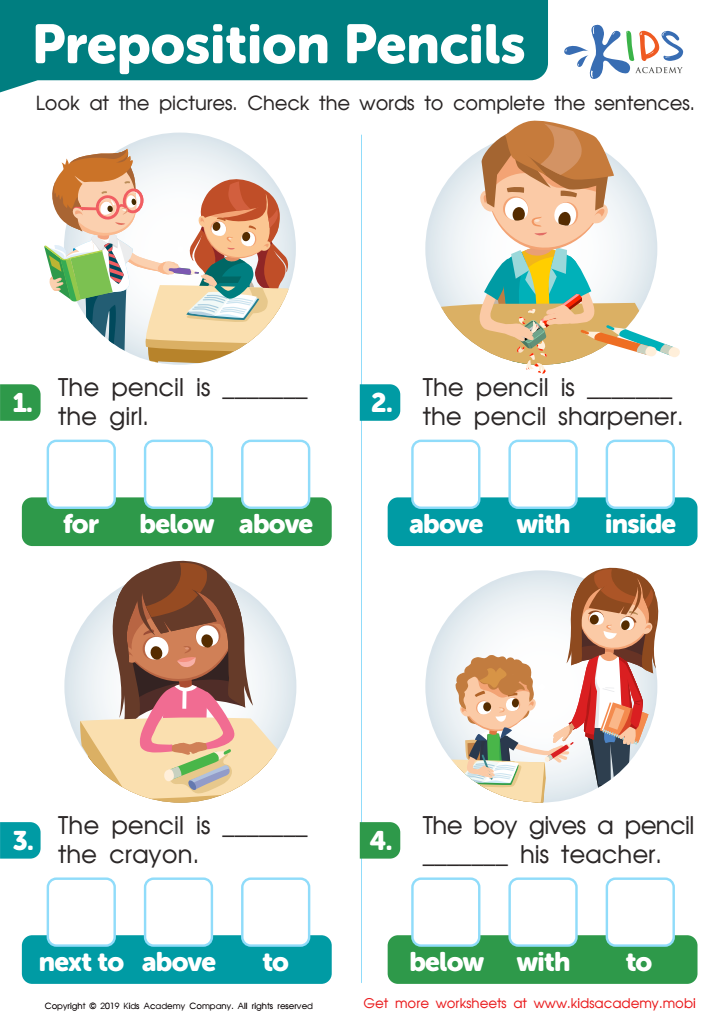
Preposition Pencils Worksheet
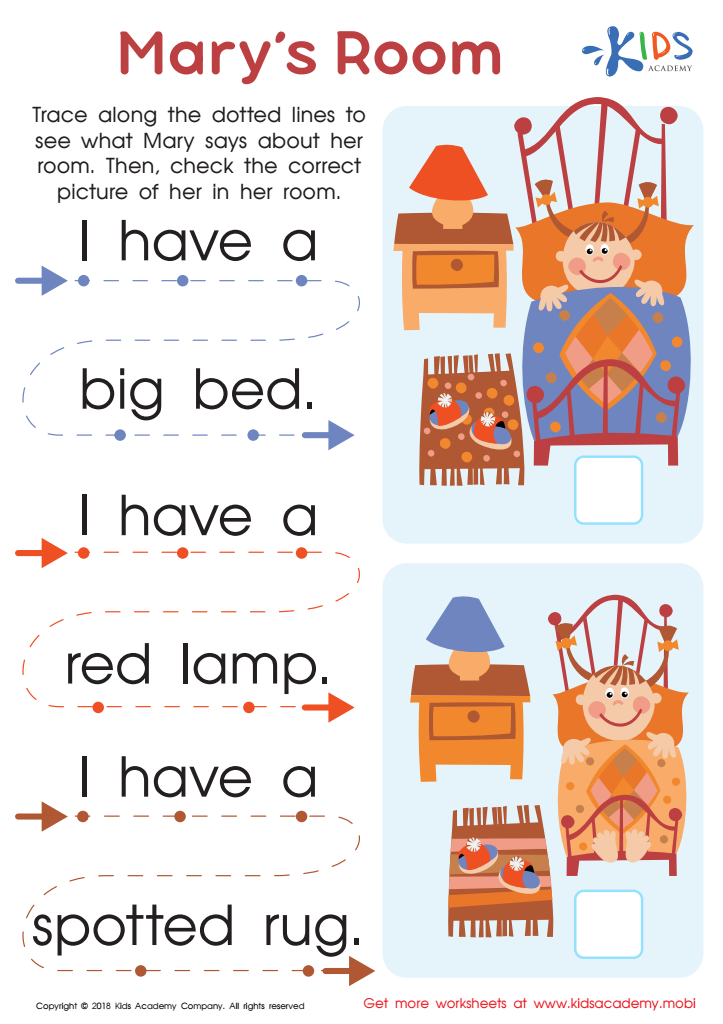
Mary's Room Worksheet






Understanding prepositions is crucial for children aged 3-7 as they lay the groundwork for effective language development and comprehension. Prepositions help children describe relationships between objects and locations, enhancing their spatial awareness and communication skills. For parents and teachers, emphasizing prepositions during reading activities fosters vocabulary expansion and enriches literacy experiences.
When children grasp prepositions, they improve their ability to follow directions, understand narratives, and engage in discussions. For instance, a child can better understand a story when they know terms like "under," "over," and "between." This understanding also aids in developing cognitive skills, as children learn to visualize scenarios, thus improving critical thinking.
Moreover, embedding preposition practice in fun reading sessions encourages engagement and makes learning enjoyable. This playful approach can promote positive associations with language, leading to overall academic success. Parents and teachers should actively integrate prepositions in everyday conversation, reading, and storytelling to nurture these essential skills, ensuring that children not only become proficient readers but also confident communicators. By prioritizing prepositions, adults equip young learners with tools that are foundational for future learning and expressive capabilities.








