Boost your child's analytical skills with our engaging Reading Comprehension Worksheets designed for ages 3-7. These worksheets focus on developing critical thinking by encouraging young learners to analyze stories, answer questions, and make connections. Our interactive and age-appropriate activities promote comprehension and inspire a love for reading. Each worksheet is crafted to challenge your child’s understanding, helping them identify key details, infer meanings, and draw conclusions. By practicing regularly, children will enhance their analytical abilities while having fun! Perfect for parents and educators seeking to enrich early literacy skills, these worksheets are a valuable tool for educational growth. Explore now!

Check out this FREE Trial Lesson on Reading Comprehension for age 3-7!

Describe Connection Between Two Events/ Pieces of Information in a Text

Favorites
With answer key
Interactive
  • 3-7
  • Analytical skills
  • Reading Comprehension
Finding the Details and Connections: Assessment 2 Worksheet

Finding the Details and Connections: Assessment 2 Worksheet

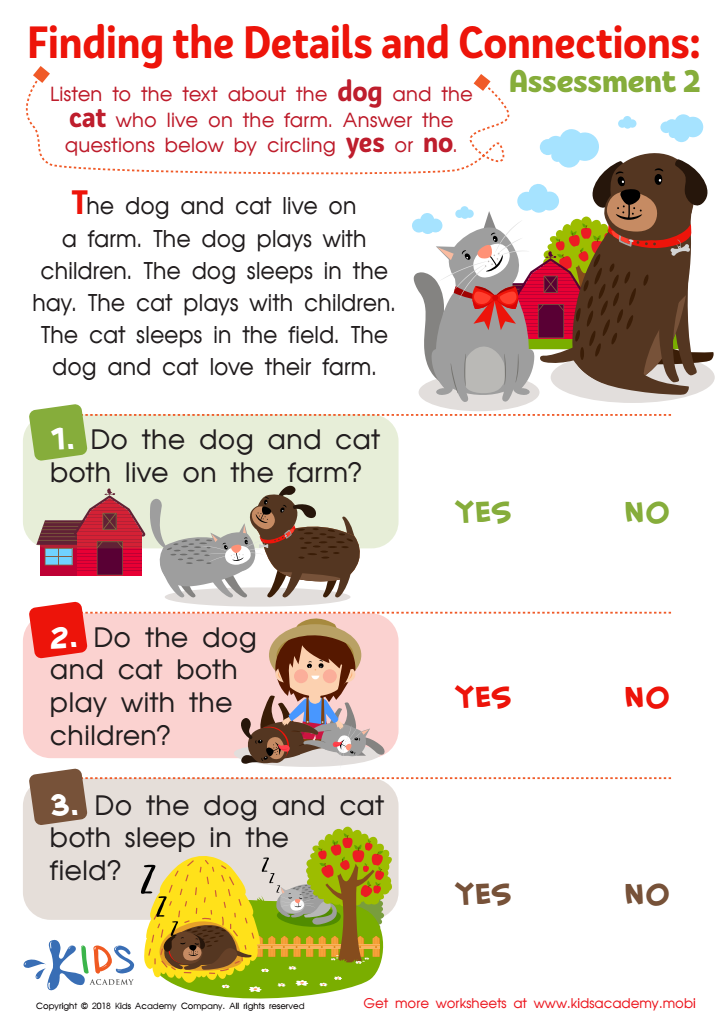
Does your child love animals? If you have pets, they'll relate to the text in this worksheet. Read it aloud to them and help them answer the simple questions by circling yes or no. The story is about a dog and cat living on a farm. Let your child read it aloud to you if they can.
Finding the Details and Connections: Assessment 2 Worksheet
Worksheet
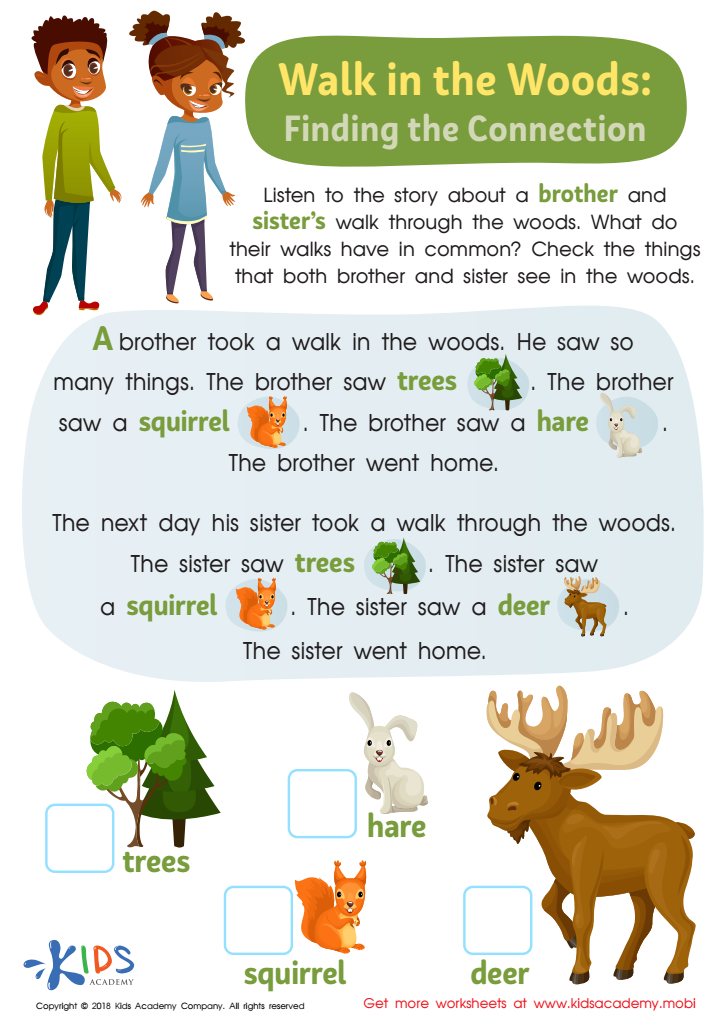
Walk In the Woods: Finding Connections Worksheet

Walk In the Woods: Finding Connections Worksheet

Brother and sister took a walk in the woods to connect with nature and get some exercise. As they went, they noted different things like birds and plants, which they share in this story. Read it to your little ones, and help them check off the items the two saw. It's a great way to learn about nature and enjoy the outdoors.
Walk In the Woods: Finding Connections Worksheet
Worksheet
Questions About Stories: Assessment 2 Worksheet

Questions About Stories: Assessment 2 Worksheet

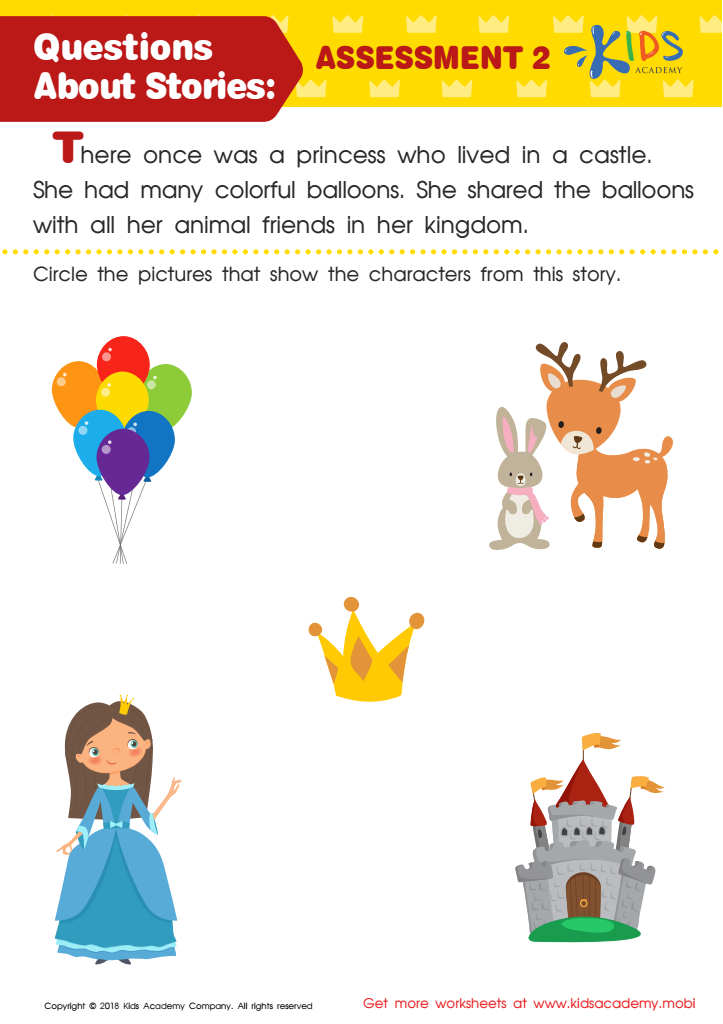
Talk to your child about what a princess is and what activities they associate with that word. Then, read the story to them and help them identify characters in the pictures. Look out for details and ask them questions to ensure they understand.
Questions About Stories: Assessment 2 Worksheet
Worksheet
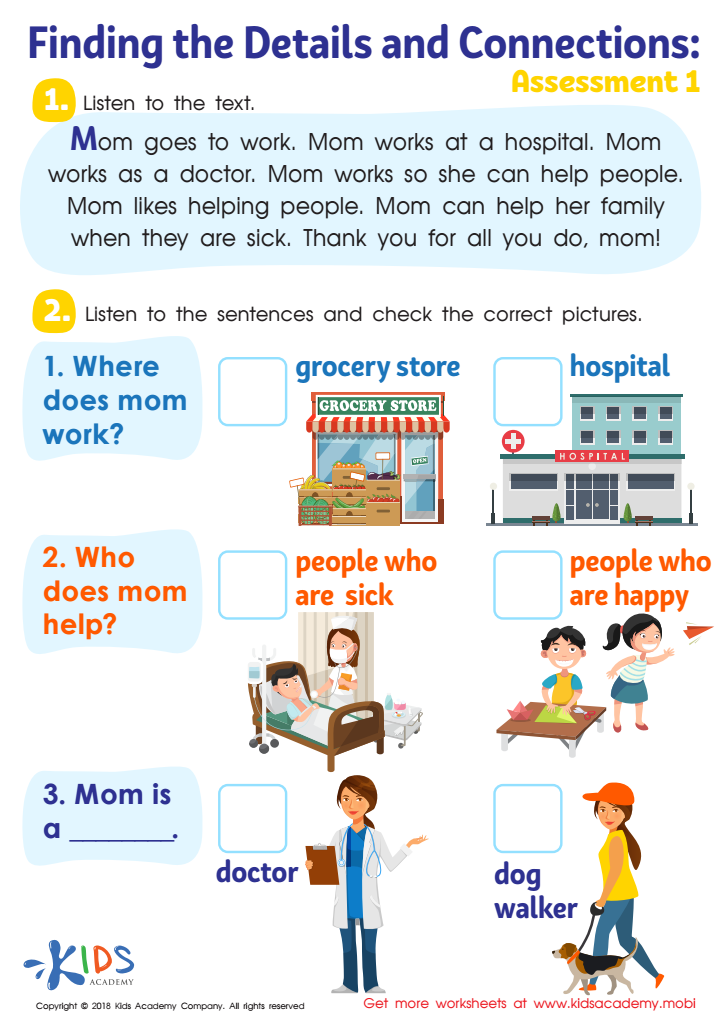
Finding the Details and Connections: Assessment 1 Worksheet

Finding the Details and Connections: Assessment 1 Worksheet

Ask your students what their parents do for a job. Do they know what profession their mom is in and where she works? Professionals have places they go to do their job. In this task, Mom goes to a hospital and is a doctor. Read the text and help them check the right pictures.
Finding the Details and Connections: Assessment 1 Worksheet
Worksheet
Questions About Stories: Assessment 1 Worksheet

Questions About Stories: Assessment 1 Worksheet

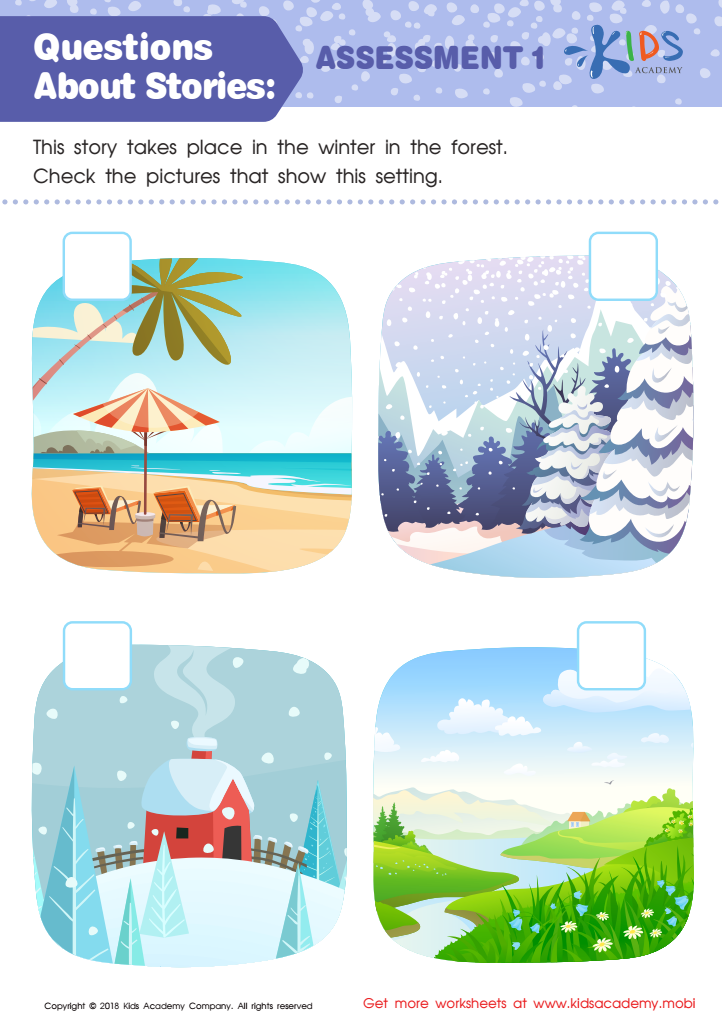
Winter brings snow, cold, short days, and darkness. Schools can even close due to heavy snow. Ask your child what their favourite winter activities are and what color they associate with 'winter'. This worksheet takes place in a winter forest. Look at the 4 pictures with your child, and help them identify which one shows the correct setting.
Questions About Stories: Assessment 1 Worksheet
Worksheet
Rapunzel Characters Worksheet


Rapunzel Characters Worksheet

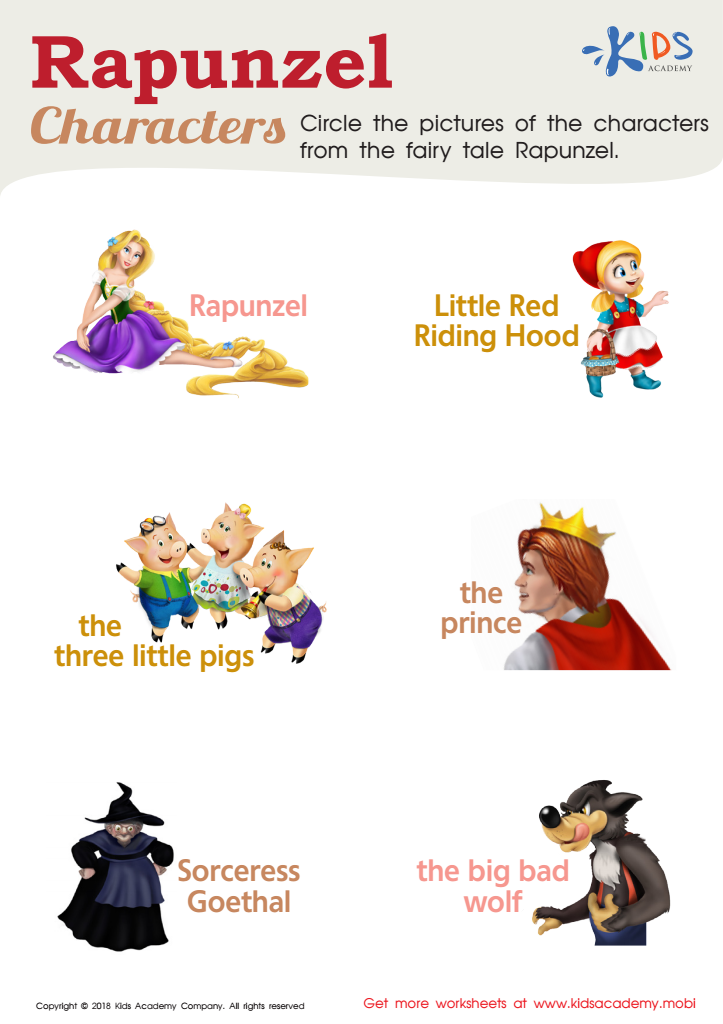
This fun and colourful worksheet is perfect to see what your kids have learned from story time. Test their knowledge with a Rapunzel-themed exercise! Ask them to circle the pictures of the characters from the fairy tale. Helping them to remember the lessons taught in the stories you have read.
Rapunzel Characters Worksheet
Worksheet


Parents and teachers should prioritize developing analytical skills and reading comprehension in children ages 3-7, as these foundational abilities significantly contribute to future academic success and effective communication. At this early stage, children are naturally curious and eager to explore the world through stories and texts. By fostering analytical skills—such as critical thinking and problem-solving—educators and caregivers equip children to engage deeply with the material, make connections, and draw conclusions based on what they read.

Reading comprehension goes beyond simply understanding words; it involves interpreting context, recognizing narratives' structure, and drawing inferences, which are essential skills across all subjects. Enhancing these skills early on encourages a lifelong love for reading, self-confidence in learning, and an ability to articulate thoughts clearly.

Moreover, research shows that strong literacy skills contribute to social-emotional development, helping young children understand the perspectives of others and empathize through characters’ experiences. Ultimately, prioritizing analytical reading comprehension lays the groundwork for critical thinking, responsible citizenship, and adaptability in an increasingly complex world, making it a crucial focus for parents and educators alike.